Showing posts with label Richard Burton. Show all posts

Thursday, July 4, 2024

Becket (1964)

 
"In the year 1066, William the Conqueror crossed from France with his Norman army and conquered the Saxons of Britain at the Battle of Hastings. Henry II, his great grandson, continued to rule over the oppressed Saxon peasants, backed by the swords of his Barons and by the power of his imported Norman clergy."

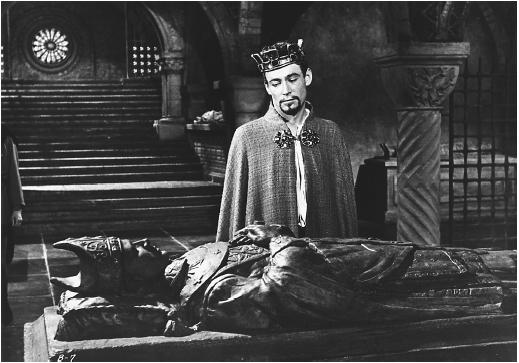
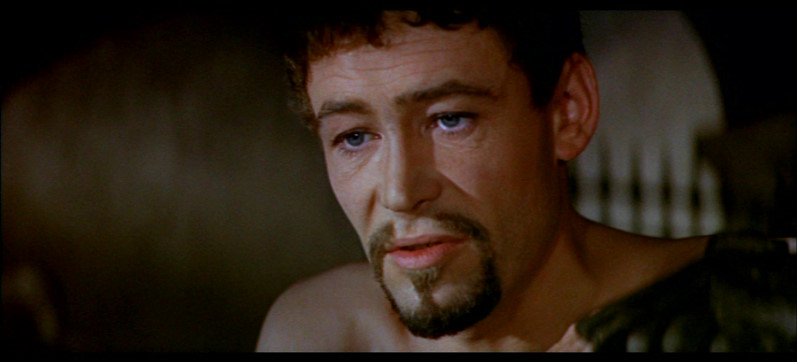
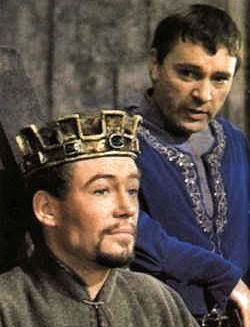
Why bother about religion when there's so much wenching to be done? Wenching and bellowing at the TOP of your lungs while you're at it! King Henry II (Peter O'Toole, who would play the role again a few years later in The Lion In Winter) is having a bit of trouble with his Archbishop of Canterbury—who objects to his lands being taxed. So when the elderly Archbishop dies ("He'll be much more use to God than he ever was to me"), Henry appoints as his replacement his old friend, fellow debaucher, and new chancellor Thomas Becket (Richard Burton)—"He's read books, you know, it's amazing. He's drunk and wenched his way through London but he's thinking all the time." A cozy and advantageous arrangement for both parties. What could possibly go wrong with that?

Well, Becket, actually. And it's a matter of going right. Thomas, being a Saxon—actually, he was Norman, the original playwright Jean Anoulih got it wrong—causes some grief to Henry's Court, when he should be winning his people over to the King's side. And then Becket finds religion as archbishop and gets all self-righteous on Henry, taking the Church's stance on conflicts with the King.
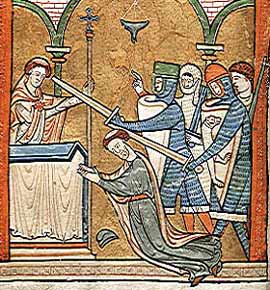
This turn of events—and character—does not sit well with the "perennially adolescent" first Plantagenet King, and in a drunken rage shouts, "Can no one rid me of this meddlesome priest?" and he has
barons who are perfectly willing to take on the job. Becket, in death, becomes a folk-hero to the Saxons, and Henry, in his remorse, and for political expediency, has himself flogged and petitions for Becket's sainthood. 
Am I giving anything away? The story's only 800 years old
! O'Toole and Burton have a fine time playing "Can you top this?" with each other in scene after scene, Burton controlled and stentorian and O'Toole indulgent and capering. Add John Gielgud as the King of France and you have some of the best British actors doing top-notch work rolling around some very rich dialogue abetted by some glorious cinematography by Geoffrey Unsworth. Yes, it's talky (in the best way), but with this cast, it sure is entertaining conversation.
These days, one can't help but be reminded of the stark contrast between the story of Becket and the far-in-the-future States in that Kings have the prerogative of "offing" their opponents and it is only Henry's largese and his own self-loathing that makes him accept a punishment for his actions, narcissist though he may be. Oh, those were the good old days.


Wednesday, January 20, 2021

Where Eagles Dare

Where Eagles Dare (Brian G. Hutton, 1968) Another one of those movies that I've just never seen—amazing how many of them are written by Alistair McLean—although they have been readily available, I have had ample opportunity to see them, and when I did come across them on "the tube" I always seemed to hit the same point in the movie (in this case, Burton and Eastwood are riding the roof of a cable-tram heading for a mountain-top castle over-populated by Nazi's).

The history of the production was a case of need—Richard Burton wanted to make an action movie his kids could see. Producer Elliott Kastner thought an Alistair McLean novel would be good, but film-makers had, by this time, run out of Alistair McLean novels (or Ian Stuart novels, which McLean wrote under a nom de plume if they veered off the "heroic adventure" genre-line)—all of them having been filmed, bought for filming, or about to be filmed. The solution (you might think) would be to find a really good adventure yarn by another author, but, instead, the producers asked McLean to write an original screen-story upon which they could base their film.
McLean was given the instructions "a World War II story, a group of men on a rescue mission, a ticking clock and a couple of females," a down payment of $10,000 (with $100,000 to come later) and screenplays by William Goldman (probably Harper) and the writers Robert and Jane-Howard Carrington (probably Kaleidoscope) as format guides. McLean, rather famously, hated writing—but thought the money was good—so undertook the screenplay assignment (screenplays being notoriously more skimpy to write than novels), although he would subsequently type out a "tie-in novel." 

Where Eagles Dare involves a group of British commando's, lead by British Major John Smith (Burton)...and one American recruit, U.S. Army Ranger Lt. Shaffer (Clint Eastwood) ...to rescue an Army Brigadier General whose plane was taken down not far from the German stronghold, Schloß Adler, in Austria—where he has been taken for interrogation. The urgency is that the General is a major planner for the Western Front, and Smith's group must rescue him before he cracks under torture.
And that is all the description you'll get out of me because anything else would give away any of the enumerable "secrets" that the film has enfolded in it.  It's just one of the weaknesses of the film—the castle isn't nestled on a mountaintop so much as on a flimsy house of cards, that, if a logical finger was applied to it, would send the thing crashing in on itself. 
One may wonder, for instance, why a U.S. Ranger is involved in the Mission devised by MI6, as he sticks out like Clint Eastwood in a Parliament of Brits. It's a big question. Eastwood, himself, found the script "terrible," and subsequently requested a lot of his lines cut—he was never a great expositioner and the type of actor who was better the fewer words he said—which is why one gets the impression that Burton's Smith yaps and yaps and yaps, while Eastwood's Shaffer just squints and glowers.
My reactions were similar.

I wanted to like the film. One of the reasons why is that the second unit director doing the action sequences is the fabled Yakima Canutt—first director Brian Hutton doing rather dull work, hampered perhaps by Burton's erratic schedule and Eastwood's lack of initiative (he's a bit like Chewbacca in this, just running and shooting...re-loading and shooting some more). The two stars took to calling it "Where Doubles Dare" as Canutt's second unit of stunt-people did more and more of the movie, probably to its betterment. But, for all the splintering near-misses of perimeter guards and check-point Charlies from escaping vehicles, nothing prevents them from running into the middle of the street to become easy targets for Eastwood's retreating machine-gun.
Truth be told, it bored the socks off me. It would have bored the socks off me even if I were wearing Army boots. Burton is less than compelling throughout and, sadly, he has the M-G-M lion's share of the dialogue, and Eastwood becomes the recipient of too many "Why is he even THERE" questions, as any of the commando's must have been trained to shoot. At one point, Eastwood is knocked unconscious and he doesn't recover for the longest time, merely to give Burton an extended sequence on the castle's sole transport—that dodgy air-tram.

It just boils down to McLean's conceit of the purpose of the mission itself—a lot of planning and a lot of people being killed for something that a cyanide capsule could have fixed. And those of you who have seen the movie know that I'm just being facetious on that last point. But, McLean seems to be of the mind that "the best kept secrets are military secrets" and that one should go to the most elaborate lengths to prove something so obviously wrong. It is one of those movies where the term "military intelligence" really IS mutually exclusive.

Thursday, June 6, 2019

The Longest Day (1962)

The Longest Day (Ken Annakin, Andrew Marton, Bernhard Wicki, Gerd Oswald, Darryl F. Zanuck, 1962) Darryl F. Zanuck's mega-production based on Cornelius Ryan's 1959 best-seller documenting the D-Day invasion which occurred on this day seventy five years ago. It was Zanuck's last big production (although he had a hand in Tora! Tora! Tora!) in a career where he supervised production on countless pictures while he was the head of production and and 20th Century Fox Studios. Filmed in European locations (Corsican beaches substituted for Normandy), the film's budget (competing for the studio's funds with the over-budget Cleopatra), part of which was taken on by Zanuck himself when 20th board members limited him to $8 million, was off-set by casting it extensively with audience-attracting star-power represented by an international cast of box-office draws and pop-icons. Ryan wrote the screenplay (with episodes supplied by Romain Gary, James Jones, David Pursall, and Jack Seddon) to create a scenario of, like the war, many fronts, each overseen by its recognizable movie star or personality so that audiences could keep track of the progression of each story-line. I would list them, but it would take more time to create links than to write this.
The movie follows the efforts of the Allies—American, British, Canadian—and members of the French resistance attacking by foot, sea and air, while the Germans pace around their pristine offices and board-rooms studying maps and disbelieving incoming reports. It's one of those "dry" war movies with a lot of strategizing, sub-titles scrupulously used in the German and French scenes (but not Scottish—although a version was shot entirely in English) and rare opportunities to see the grand scale of things—except for a couple of notable shots—a plane's perspective (shot by helicopter) of Normandy and a continuous crane shot of the French assault on German troops in the port city of Ouistreham.
The filming is definitely old-school—scenes are shot in long-takes with inserts, the youngest actors are Richard Beymer, Paul Anka and Fabian (Fabian?), while the rest of the actors are in their forties or fifties (far older than their real life counterparts during the actual battle) and are well-established actors, all of whom had previously worked for Zanuck in some capacity. This also proves beneficial besides navigating through the various incidents, as the characters have little character depth besides the job at hand and the actors provide an over-arching persona that fills in some of the character gaps. 
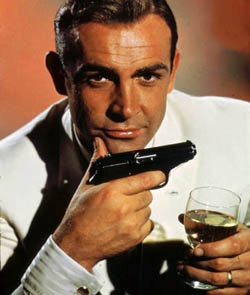
I've seen it several times—once in a theater, sometimes in piece-meal fashion where you can walk away and pick up the thread of the story later, always managing to make it through the long introductory sequence waiting for the weather to clear, and remember mostly Red Buttons' parachutist and his horrific night mare hanging from a steeple watching his fellow soldiers being shot down in mid-flight, John Wayne and his "cricket" designed to signal to a friendly (sorry, Sal Mineo), Richard Burton's morose performance filmed during a break in Cleopatra, and Sean Connery's wise-acre grunt filmed in a hurry so he could fly to Jamaica to become a star as James Bond in Dr. No.
It was a herculean effort in movie-making, almost quixotic in scope. It could not show the carnage that Ryan described in his book—a depiction that wasn't fully realized until Spielberg made Saving Private Ryan in 1999 and somewhat eclipsed The Longest Day as a representation of the assault.
But, it pales in comparison to the real event. The D-Day invasion was a "Hail Mary" pass, a make-or-break maneuver that turned the tide of the war against a German government that was refusing to hear bad news, even while it was stretching itself thin on all fronts. They were entrenched, established and confident in their superiority. And we threw men at them, knowing full well that vast numbers would die...but some would make it through, enough, hopefully, to overcome a complacent enemy, a European enemy who disrupted the established order of things and bullied their way across the continent.
What film could do justice to that? For that matter, what memorial or ceremony could?  What words can you say? The landings at Normandy were something of a miracle, albeit one awash in blood and horror and viscera—a Hell on Earth, born of desperation.

I had a grandfather-in-law who went through it, and I asked him "What was that like?" He paused—long pause—"Welll," he said "I'm here." I left it at that. That was enough. And so, too, are we all, thanks to him and everybody else and it.

Thank you.


Friday, December 29, 2017

The Spy Who Came In From the Cold

Over Christmas, I had great fun reading "A Legacy of Spies," the new novel by John le Carre. In it, the events of le Carre's earlier book "The Spy Who Came In From the Cold" come back to haunt the British Secret Service—The Circus, as le Carre dubbed it—as those who are still living are sued by living relatives for damages incurred by the events of the story. Is it some Russian plot? No. It is mere gold-digging. The plaintiffs are blackmailing the Service to reveal what they know...or suspect...if they are not payed handsomely. It is always fun for me to read le Carre but the nostalgia factor of coming back to the old characters, even if in passing, was a bit of a thrill. And whenever Alec Leamas was mentioned in the book, I still had trouble imagining Richard Burton's face and manner. I wrote this in 2011, some time before Tomas Alfredson's excellent version of Tinker Tailor Soldier Spy reached theaters—I should post my review of that here when I'm done with the clutch of Holiday released movies.

The Spy Who Came In From the Cold (Martin Ritt, 1965) With the anticipation of the Christmas release of a film version of Tinker Tailor Soldier Spy, it would do well to revisit the world of George Smiley, "Control," and the duplicity of agent-turned-novelist John le Carré's "kitchen-sink" version of spies. Although Smiley and the others would loom large in his later novels (especially the "Karla Trilogy"), they're mere background characters in The Spy Who Came In From the Cold, the focus of the tale being operative Alec Leamas (Richard Burton), former head of the West Berlin branch of "The Circus," who must go behind enemy lines—in fact, one of the toughest of them, the Berlin Wall—as a potential "mole"* to ferret out who, among their Cold War equivalency on the other side, might be a double agent for the Soviets, the one who is responsible for the death of one of Leamas' contacts. To "Control" (Cyrilm Cusack), the head of "The Circus"  it is a rare opportunity to do some damage control and, possibly, if they can take advantage of an agency power-struggle, some harm. 
His identity is kept the same—The Circus wants Leamas and his background history out in the open—but he is demoted in rank and stature, and, depressed and drinking heavily, he becomes bait for Soviet recruitment to betray information. That's the mission, become a decoy on the "inside," another "double" feeding the Soviets false information, while trying to find out if there's a player on the other side in The Circus feeding information to the Russians.** 

Oh, what a tangled web the Cold War weaves.

Taken to East Berlin, Leamas is interrogated by a suspicious Russian administrator named Fiedler (Oskar Werner) who (rightly) suspects Leamas of being a "plant." Fiedler suspects a British "mole" already underground in the Soviet service and so sweats Leamas for any information to discover who that might be. Ultimately, Leamas is undone by what so many of le Carré's heroes or anti-heroes are susceptible to, the warmth of human contact—a failing that trips up a lot of the author's protagonists. Leamas "comes out of the cold," the world of spies, and his friends, relations or lovers—the thread of decency and honesty they provide—are used against him.
For the fact of the matter is the Spymasters of "The Circus" are cold-hearted bastards ("without sympathy" as "Control," played by Cyril Cusack, ponders)—they have to be to combat their enemies—and they're just as capable of betraying their own as those they fight.  
Case in point: George Smiley (played here by Rupert Davies). He would become le Carré's most celebrated character, but here he's a bit of a functionary, and he's just as cold-hearted as the rest. In the "Tinker, Tailor..." timeline, "Control" was long since dead, having been driven out by "the new broom" from his station, which had left him suspicious and paranoid (ultimately with good reason) with Smiley his only trusted colleague. 
When the BBC made a television mini-series of "Tinker...", Smiley was famously played by Sir Alec Guinness and (as le Carré amusingly notes in his new forward to "Tinker, Tailor...,") because of that he "lost control" of the character. But Smiley (however sympathetically Guinness played him) is also a "cold-hearted bastard"—if he wasn't, he wouldn't have lost the vital clue that was exploited by his enemies. He gives as bad as he gets, and, even at his most triumphant, takes little joy in what he does.
Davies as George Smiley in The Spy...
In such a world, Ritt's direction is entirely appropriate—low-key, almost documentary in feel on the streets of London—in drab black-and-white, not the high-contrast color of other spy films of the era. There is nothing glamorous about it, and the circumstances play out slowly and subtly—in fact, after a debriefing by his boss, the shift in tone is so dreary one suspects one is watching a different film. It is part and parcel of the subterfuge—it works on us as it does for Leamas' Sov' recruiters (most prominently Michael Hordern).
And the script—now there's an interesting tale. A beginning draft was written by Hollywood veteran Guy Trosper, who died subsequently. Taking over was poet-playwright Paul Dehn. Dehn had written the final polish on the James Bond spy film Goldfinger (amusingly, as the two films could not be more polar opposite), and was the mainstay-writer for the "Planet of the Apes" sequels. But, Dehn knew the world of spies well—during the second World War, Major Paul Dehn was the "Political Warfare" officer at the BSC training headquarters "Camp X" (where among the trainees were Roald Dahl and Bond creator Ian Fleming). *** Dehn was well-versed in spy-craft, deceit, and keeping secrets and his distillation of le Carré's novel brings the moral duplicity to the fore, while keeping the audience guessing on whose side is whom.
If the film has one flaw, it is the casting of Burton as Leamas. Burton was too good, too charismatic an actor/star to play a functionary like Leamas (it's about the same as "buying" Sean Connery as a spy (which was part of the joke of the Bond series)—he's someone you'd notice walking into a room, and thus, hardly spy material. But, Burton's presence, no doubt, got the film made, so the point is a bit moot. Still, if its ideas and mysteries of the State and the heart you want more than action and fireballs (shall we say if you want to be "stirred and not shaken?"), The Spy Who Came in From the Cold is a fine, bracing tonic.

Smiley's before they were emoji's: Alec Guinness and Gary Oldman

* The term "mole" is a le Carré invention—his spy-circles code-name for a double agent hiding in plain sight within one of the other spy agencies, Soviet or British, and relaying information to "the other side."

** There has been a rich history of double agents throughout the annals of spy-dom, the most significant of which were "The Cambridge Five"—Kim Philby, Donald Duart Maclean, Guy Burgess, Anthony Blunt, and a fifth (and possibly more)—who'd been recruited during their college years, passed information to the Russians during WWII, and subsequently during the post-War years through the early 1950's. "Tinker, Tailor, Soldier, Spy" (and the other two of the le Carré "Karla" novels) and le Carré's subsequent "A Perfect Spy" are inspired by "The Five" and their Russian puppet-master.

*** And, interestingly, one of the people who asked, and was briefly considered, to run Camp X...was Kim Philby!