Showing posts with label Politics. Show all posts

Wednesday, April 5, 2023

All the King's Men (2006)

Written at the time of the film's release. Recent events have compelled an update.

All The King's Men (Steven Zaillian, 2006) The story goes that Robert Rossen, the director of the 1949 version of All the King's Men was not happy with his film. Too long, too talky, and too boring, Rossen was unsure of what to cut to get it down to length. A plan was drawn up: he told his editor to take 30 seconds from the beginnings of scenes and 30 seconds from the end. What was left came in under two hours of running time and moved at a jarring pace, but it won Oscars for its star Broderick Crawford, Best Supporting Actress Mercedes McCambridge...and as Best Picture.

All the King's Men was already a great film, but there were too many compromises to the Hays Code to get it to the screen. Steve Zaillian (a fine screenwriter, who directed a favorite film of mine Searching for Bobby Fischer) decided to make a new film of Robert Penn Warren's Pulitzer Prize winning book, and sadly, wasted the opportunity in a film convinced of its own importance.
*
From the crack of thunder that appears before the opening credits, to the thudding
James Horner score that telegraphs (with hammers) each imminent plot-point (Horner uses one dirge-like theme which, by its third appearance, I had assigned lyrics "This-is-a-sad-sto-ry/A-bout Lou-i-si-an-na"), to the subdued lighting and the art design in shades of "Godfather" mordant, everything about this movie promises great portent, but merely meanders through its story of how nothing born of corruption can come to any good, be it man, ideals or building materials.
It's a frustrating film to sit through, because the pieces are there given a less respectful (as in funeral-respect) presentation. The cast is impressive.
Kate Winslet and Mark Ruffalo and Anthony Hopkins play the well-to-do Stanton clan. Kathy Baker and Jude Law are the blighted Burden clan, and Sean Penn, looking more and more like a young George C. Scott, plays the fictional surrogate of Huey Long, Willie Stark. As his flaks and flunkies, James Gandolfini, Patricia Clarkson and Jackie Earle Haley.
Good cast. But there are problems.
Penn, as he is wont to do, goes over-the-top in his speechifying, his arms waiving wildly in the air, his fingers doing filigreed dances. Where Penn got the inspiration to play it this way is a mystery, as footage of Long in speech-mode (below) shows him much more in control. Not even Adolph Hitler emotes this much. Jude Law, never the strongest of actors, falls into the dreariness of the film, staring at the other actors or nothing-in-particular with sad doe-like eyes.
** One suspects editing problems with this film—Zaillian did spend an inordinate amount of time in post-production on it. Subjects are brought up and dropped, like Stark's football-playing son, who figures prominently in the '48 film, is mentioned here and then never heard from again.*** We never do find out how Burden's mother acquires facts to make an accusation against him. Mark Ruffalo's character is left as a dissatisfying enigma.
What we do get is ponderous, and pretentious. Zaillian spends a lot of screen-time trying to show (visually) that the only thing that could unite the "hicks" and gentry of Louisiana is death. Again, that same lesson has been told in better films.

2023 Update: At the time the film came out, there was speculation that it was a "dig" at then-President George W. Bush. If so, it was bound to disappoint both sides, no matter where you came down on that particular president.

But, a re-watch today would make folks blanch—"well, that-tha-that's Donald Trump!"

Nope. Trump just borrowed from the same play-book that politicians have been using since politics became the world's "second oldest profession:" "Get elected by any means necessary. Cease power. Never let it go." That's the genius of Robert Penn Warren's book; he found inherent truths in the process and they continue no matter what generation after reads it. Sure, it seems like Trump—except for the details, the milieu, the accent. But, the autocracy is there. The crowd-whipping. The scandals. Warren could be accused of writing cliches. But, cliches are there because they're unerringly true and happen enough to become cliches.

For the truth is, politicians lie. And people look for a Messiah and want to be lied to. They eat it up. And the ultimate cliche. Absolute Power Corrupts Absolutely.

Just because it's a cliche doesn't make it not true.

* Given the awards-history of the cast and screenwriter it was assumed that this version of All The King's Men would be a top contender come Oscar-season, but its poor box-office reception scuttled those hopes.
** K (who likes Law) kept yelling out "accent-drop!" whenever his "Lawsiana" draw-el moved to Market Street. Anthony Hopkins, the sly old dog, doesn't even try.

*** Sadly, Zaillian, in an attempt to simplify his film, gutted some crucial scenes from it including the sub-plot about Stark's son, and an extended ending that provides the best scenes for Jude Law and Jackie Earle Haley.

Wednesday, February 2, 2022

The Iron Lady

I recently was pulled into a "Meryl Streep Draft" where, like sports brackets, the participants picked what they thought would be the best collection of movies featuring Meryl Streep to win the competition. Weird what film enthusiasts do.

If you want to listen to the podcast where they were selected, it is here.

If you want to vote for me, the ballot is here. If I lose, voting machines will be seized.

Curiously, I did not pick The Iron Lady—I don't think any of us did—although it is Streep's usual competent display (and she won an Oscar—that counts for...something).

Written at the time of the film's release.
 
Keeping Up Appearances
or
"Don't Want to Dig Around Too Much, M'. You Don't Know What You Might Find."

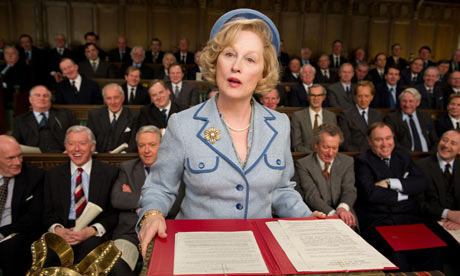
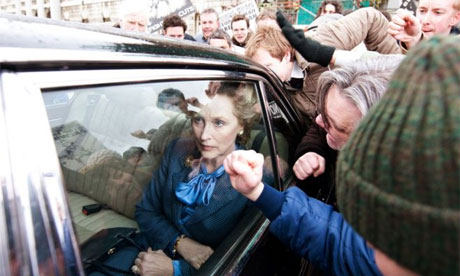
The Weinstein's last bid in 2011 to win an audience of Anglophiles seems a trifle desperate and might be a bit too early to give the subject proper justice, like Oliver Stone's Nixon or W.—we're still too close to the Thatcher years to have any sort of perspective, other than a cursory glance at the events that shaped the Conservative years of the '80's. What damage was done, what was gained, is still unknowable, especially given the subsequent Blair years and how British-American relationships changed and coalesced. We get highlights and lowlights, but no illumination, and, instead, we get a look-back, not unlike Nixon's drunken reverie, but this time filtered through Maggie's Alzheimic reflections, with the dementia-figure of her dead husband Denis' presence as a Iago-like devil's advocate (played by Jim Broadbent, in just the way you think he would, a little dotty, but with a puckish edge). Really, both of them deserve a little better, no matter what one thinks of the politics.
But, the Alzheimer's is a good tool if someone wants to do a hatchet-job.  The disease brings the past into crystal clarity (for the afflicted, not for the story-teller), while also undercutting the reliability of the narrator in the present day.  Hardly seems fair, as the two women who wrote and directed
The Iron Lady
(
Abi Morgan and Phyllida Lloyd) do seem sincere about presenting the hurdles that Thatcher had to overcome in her ambition to seek change, achieve office, and, in becoming a political animal, save her party and become PM. The role could have easily gone into caricature, were it not for Thatcher's best supporter in the film, Meryl Streep.
The role ultimately won
LaStreep another Oscar (and, say what you will about the "unfairness of it all," she does deserve it—this is an amazing performance) and it contains her hallmark studied approach with the same intricate nuances she brings to every role—the rock-solid accent, the filigreed gestures, the interesting way she fills up the pauses and held-shots with interesting choices that are unexpected, but deeply felt. In the elderly sections, she doesn't quite have the "thousand-yard-stare" I've seen in Alzheimer's patients, but the frailties are there, right down to the quaking-arms-under-pressure and the processing pauses that flash through without making a big deal of them. Streep's always good, good enough that one might take her for granted, but this one's practically a one-woman show and certainly the best thing in a film that's "too little-too soon."


Thursday, July 29, 2021

The Great McGinty

The Great McGinty (Preston Sturges, 1940) Guy walks into a bar in a "banana republic" and tries to ventilate his own head. Turns out he's an embezzler on the lam who's made one mistake and wants to end it all. The bartender manages to stop him, but doesn't give him any sympathy. 

He thinks he has problems? He used to be Governor of the State!

The rest of the movie is
Sturges' tall tale told in flashback that turns around the bar's doubters and the rolling eyes. 


Dan McGinty (Brian Donlevy at his most engaged and energetic) is a bum. He finds out that if he votes for a candidate for Mayor at a polling place, the candidates' "political advisers" will pay him two bucks. Sounds good to McGinty. 

But if he votes for the guy at 37 different polling places, he'll get 74 bucks! The politico's can't believe it. They're only petty criminals. They don't think "big" like McGinty.

So, after a brief turner as a mob "collector," he goes to the next logical career step—politics! Once Mayor, McGinty starts shaking down city fathers and handing out favored construction contracts, his "tough guy" tactics backed up by mayoral power. And nobody can argue with him, save the mob boss (Akim Tamiroff) with whom McGinty regularly has knock-down-drag-outs.
Oh, and his "
married-to-look-good-for-the-lady-voters" wife/former secretary (Muriel Angelus), she gives him a kick in the pants every so often. But, when McGinty becomes governor, she talks him into doing some good for a change, and...well, you know that the old saw that "no good deed goes unpunished." That saw may be rusty but it still has teeth.

The characters are Dickensian, the fable is Aesop turned on his toga. And drama turned on its head. A tragedy is a good man who does something wrong. And in Sturges' street-wise script, tragedy befalls a bad man who does the right thing. No moral codes are being broken—McGinty is taken down. But Sturges' view is a cock-eyed, if soberly cock-eyed, story of moral growth and the trouble it can cause, especially if you're working for the people.

Told with brass and a wisenheimer humor, it's a criss-crossed morality play told from the other side—an anti-Capra film, told with that director's straight-forwardness, but with more of a knockabout flavor. 

This was the first film Sturges directed—he sold Paramount Studios the screenplay for $10 on the proviso that he directed it-and it has sophisticated ideas (which seem quite contemporary) told in a scruffy manner. If there's pretentiousness, it's all in the background and the sub-text, buried where no one can nod sagely at it. One gets the impression Sturges would look at a movie aiming for the handkerchiefs and blow it a raspberry. 

Before the year fades away, we're going to be looking at a lot more Preston Sturges, a director who doesn't get near enough acknowledgement in the movie history books. There's not enough Sturges in my head, and we're going to rectify that.

Tuesday, August 18, 2020

W.

Written at the time of the film's release. I took out a long rant about the Bush Administration (when I wrote it Bush was still in office) and I wanted my prejudices out front. Here, the prejudices are for Oliver Stone's issues with film-making (for the most part).

Plus, the venom I spewed at that time, seems almost quaint considering what has come after him since. Bush has been heard to remark about Trump "He makes me look pretty good." Michelle Obama and he are "besties," insisting on sitting together whenever "the formers" must gather. And Clinton and he act like they're joshing brothers, after Clinton and his father became close friends, post-presidencies (Clinton BEAT Bush in in the 1992 presidential election, but it didn't matter...).

One must acknowledge grace in our leaders...when they lead...and show us the way.

"Somethin' 'Bout Bein' in the Barrel"

Oliver Stone is no one's idea of an objective film-maker, if there is such a thing. Once a screenwriter puts pen to paper, they've already started manipulating the movie to their point-of-view, whether it's from the left, right, center or upside-down (Why do you think they're called "directors?"). So, no one should be surprised that Stone has an ax to grind, with W..

Stone is a director of heart, but he frequently by-passes his brain when making his points. So,
Platoon, still his best film, hi-jacks the gritty depiction of grunt jungle-fighting with Stone's own conflicted "Daddy" issues, his "Pvt. Chris Taylor" having to choose between two superiors with different moral ways of engaging the enemy. Lincoln and every fantasist depicting moral choice has put angels and devils on our shoulders. Stone burdens us with His Old Man. That same scenario was transferred to High Finance, with his very next film Wall Street. I haven't seen every film of Stone's, but most of them are concerned, in some capacity, with paternal conflicts. And because he's a better propagandist than scenarist, most Stone films stop dead whenever we get to each Stone "thesis," invariably a Message being presented by a single character who has center-stage and our undivided attention. JFK, a dazzling technical exercise of photography and editing, comes positively unglued in its presentation of conflicting conspiracy scenarios for Pres. Kennedy's assassination (Kennedy being another Stone father figure--"Our murdered King," as he's described in the screenplay (completely by-passing any thought that we might, you know, be living in a democracy with a representative government), until Kevin Costner's prosecutor Jim Garrison places in his summation a theory on military-industrial conspiracy behind the Vietnam War, a Stone obsession.* In W. Dick Cheney—Richard Dreyfuss clearly enjoys being given the opportunity to play him**—stops an Iraq War strategy session to pontificate on securing Middle East interests for oil exploitation for a hundred years. Give the man points for passion, but his movies become such a glut of emotion that the point becomes lost in the gnashing of teeth and the wringing of hands. His bio-pic of Nixon was such a slap-dash affair, it seemed like a badly-cast TV-movie gloss-over, skipping from high-light to low-light in time to shoe-horn the next commercial (A weirdly fictional conversation between Chairman Mao and Nixon was Stone's show-stopper there). By the end, with its End-Credits playing over a Mormon Tabernacle Choir-rendition of "Shenandoah," one almost felt some sympathy for the man. Nixon, not Stone.

W. (his too-early summation of the second Bush Administration) suffers the same problems. It's a gloss of recent events, interspersed with flash-backs to the wastrel days of the young George W. Bush (played throughout by Josh Brolin),*** drunk with entitlement and just about anything else he could find. Particular heed is paid to his relationship with "Pappy" George H.W. Bush (James Cromwell, though he seems nothing like Bush the Elder, displays quiet bluster and submerged weakness), in which the good-for-nothing son is particularly eaten up, not by his own failures, but by his father's view of them.
The best part of the film—oddly for Stone—is Bush's conversion to The Faith. Struggling with his alcoholism, determined to become a Public Figure (as private industry success constantly eludes him), he is converted by Pastor Earl Hudd (Stacy Keach, playing it straight, and doing some of the best work of his long career), introducing Bush to the second "Daddy," the Divine One, slotting this film into the standard Stone scenario. One knew, as soon as Bob Woodward revealed that Bush, prior to the invasion of Iraq, didn't consult his father/former President, but, instead, relied on the advice of a "Higher Father to appeal to," that Stone would obsess on it and exploit it. The film-maker takes the one relationship as far as it will go, creating a fantasy sequence where Bush 41 challenges Bush 43 to fisticuffs, but Stone doesn't have "the stones" to have W. duking it out with his Savior, J.C.

That battle's still to come.
Stone starts "W." with a Sergio Leone close-up of Bush's steely gaze, what impressionist Frank Caliendo says "like he's always got the sun in his eyes." It's another fantasy sequence, where W. acknowledges the cheers of an empty baseball stadium from center-field--what he'll later reveal as "his favorite place on Earth." The movie will end back on those eyes, searching, confused, disoriented--having lost a pop-fly "in the lights." Those distorted lights show up twice more in the movie--in that previously mentioned conversion scene, as well as when a hung-over Bush collapses while jogging. That's it? That's what we get? A half-assed light show? Is Stone saying he's abandoned by God, or that Bush is overwhelmed by his circumstances? The metaphor's too half-baked to communicate as solid concept clearly.
One could look at W.'s story in Shakespearean terms, as a modern day Prince Hal, whoring and wenching in his oats-sewing days to become the Monarch his father couldn't be. The difference is Hal had Falstaff as guide to the back-alleys of Agincourt. George W. Bush is his own King. And his own Fool.
But Oliver Stone is too busy making room for his "Daddy" theories to create a proper condemnation. As with Nixon, you start to actually sympathize with the man. Any illumination into the man or the effect of his Administration is lost in the lights. To Stone, he is just another Yalie "poor little lamb who has lost his way."

Bah. Bah...and Bah.

* Any judge would have gaveled the irrelevancy, but Stone's judge was played by the real-life Garrison.

** Dreyfuss had a lovely phrase about working with Stone on W. when he was on "The View:" "You can still be a fascist...even if you're on the left."

**Josh Brolin does fine work, but the performance feels a bit "one-note," having to nail the too-familiar Bush mannerisms and vocal tendencies.


Tomorrow—merely by coincidence, another "period" film.

Wednesday, November 28, 2018

The Front Runner

Everybody Knows
or
Hart the Herald Scriveners Zing

Every review of a movie is an opinion-piece, by its very nature. 

This one, however, is of, for, and by...opinion and is, as such, suffused with it. Like politicians, one shouldn't put too much trust in it. Proceed with caution. 

One wonders what would be the reason to make and release The Front Runner at this time other than as an exercise in nostalgia. Jason Reitman (second film released in a year—the first was Tully) has made a film based on the 1987 scandal that ruined the campaign of Senator Gary Hart, while he was running for president. Said scandal involved the Senator being linked with a woman not his wife, a practice that had been overlooked in the past, but, at that time, was not only not overlooked but blared in the nation's headlines. 

One could almost call the scandal quaint in this day and age, when the current President pays off porn-stars, admits it, then denies it, then probably brags about it when the microphones are off (are they?) then denies that he said it even when the tapes show up (Really, now, does this seem sane to you?). But, it isn't quaint. It's the age-old story of abuse of power and betrayal of trust. In this day and age, it has a hash-tag followed by "MeToo."
But, that year, many factors were in play. The Watergate scandal of the early 70's had put the public on alert to the duplicity of it's leaders, while the press, most of whom took no lead in the uncovering of the Watergate break-in and resulting White House cover-up were on high alert to any wrong-doing—that is, any wrong-doing that didn't hurt their access or financial stability. It had long been a standard practice among reporters to look away at the suspected infidelities of Presidents—certainly with FDR, Kennedy and Johnson. It was an "understanding" that such things were to be kept out of the press. After all, "the press" were equally capable of transgressing, such as Washington Post reporter and Watergate investigator Carl Bernstein's cheating on his wife Nora Ephron. What was good for the goose was not necessarily good for the gander who was trying to dig up dirt on the goose. 
Gary Hart was another matter. He was a senator who'd made a run for Democratic nominee for President in 1984 and lost to Walter Mondale. In 1987, after Mondale lost to Ronald Reagan, he was considered "the front-runner" for the nomination in the next year's presidential race, and it was assumed he'd get the nomination. Then, the events on board the private yacht "Monkey Business" happened. 
Now, what happened is a bit vague—and not a little, a lot. To this day, nobody can say for certain what happened. Hart was invited aboard the yacht, ostensibly to work on an economics speech, by a lobbyist loyal to the Democratic Party. Afterwards, Hart (played in the film by Hugh Jackman without an awful lot of the Kennedy-esque charisma that Hart radiated) went back to the nation's capitol. Reporters from the Miami Herald were tipped off that "a friend"* of the caller was having an affair with Hart (even the identity of "the tipper" and what that particular person knew when they knew it has some holes in the details) and was travelling from Miami to Washington for a tryst, and plans were made by reporters to follow the woman "who looks like a model" on the flight. There are rumors that Hart is a "womanizer" and the tip seems like a good bet, to the point where, when they lose track of her, they immediately go to Hart's D.C. townhouse, so they can stake the place out, take some pictures.
That is until Hart notices the car outside his house, and leads them unwittingly to a back-alley confrontation behind his town-house. To the reporters, they've got him dead to rights, despite not noticing that someone could—could—leave the place unnoticed from the street. Hart's attitude is that they have no right to cover it, or question him about it. These aren't things he has to answer. 
It is an attitude he will stay with throughout the three weeks it takes for him to decide to call off the campaign, and it is something that the reporters and his own campaign staff (including J.K. Simmons and Molly Ephraim) have a hard time grasping, as the attitude he adapts seems irrelevant to the crisis—it's happening and it needs to be addressed with something better than the candidate's standard "I don't have to answer that!"

Everybody knows that you love me baby
Everybody knows that you really do
Everybody knows that you've been faithful
Ah, give or take a night or two
Everybody knows you've been discreet
But there were so many people you just had to meet
Without your clothes
And everybody knows
See what I did there? I merged from fact to movie plot, without skipping a beat. That's because Reitman and his team essentially tell the story as it has been laid out in the public record, without any speculation, without any editorializing—other than to put words in people's mouths in those instances when notes weren't being taken, and in scenes—especially between movie-Hart and wife Lee (played superbly by Vera Farmiga)—where issues brought up by audience questions can be handled by "writing to silence" (as nobody seems to want to protest the veracity). But, Hart's actions appeared to be those of a guilty man and that is what Reitman—and we—have to go by.
It is entirely plausible. Because the issue is about power and its abuse—just as it can happen in politics and in statecraft—so it happens when somebody entitled thinks they can take advantage and get away with it. The issue crosses all party-lines and is more evident now than it was "way back when" this story came out. It's a matter of class structure and the assuming of privilege "because they can." And it doesn't seem to matter how sanctimonious the perpetrators are, they see it as a right and an opportunity. Maybe even a divine right. That much can be known, because we see it every day. Even at the highest levels, there are low human beings.
Recently—too recently to have been made a part of this movie—there have been allegations that the circumstances were a "set-up" by a very prominent Republican operative with a history of such things. How much that can be believed can be argued about (and the reporters who covered the story have been extraordinarily quick to defend "their" records saying it wasn't possible because they weren't privy to it. What one cannot argue with is if it was a set-up, it was a good one, and worked very well to achieve the ends that were sought. You don't have to read too many spy-stories to know how effective honey-traps can be. But, it's just another aspect to a story about the inevitability of a weakness of character.
I found the whole thing a dissatisfying enterprise. The Front Runner provides facts, but no answers. It doesn't delve into all the facts, just the encapsulated time-line of what went down in those three weeks, regurgitating publicly available records supported by those with their own axes to grind and their own records to defend. One wonders, however, if it is the truth, the whole truth, and nothing but the truth.

Or merely what everybody knows.


And everybody knows that the Plague is coming
Everybody knows that it's moving fast
Everybody knows that the naked man and woman
Are just a shining artifact of the past
Everybody knows the scene is dead
But there's gonna be a meter on your bed
That will disclose
What everybody knows


* The movie ends with a line that says the Hart's are still together. Well, that's nice to know. They should have included what happened to "the other woman" Donna Rice, as well. She went back to her Christian roots, where she does advocacy work...and is an ardent Trump supporter. Donna, Donna, Donna. "Fool me once, shame on you; Fool me twice..."

Tuesday, July 10, 2018

Ninotchka

Ninotchka (Ernst Lubitsch, 1937) You don't often get to see a perfect movie—a movie of fine material: a great script, perfectly cast and executed, yet isn't calcified in pre-calculation, that lives and breathes and takes advantage of accidents. Something that feels like life, only written better. A movie that beguiles, while still acknowledging the real world, and that any interruption will just have to wait until "The End"...which comes far too soon. A movie that widens the eyes, expands the mind and tickles the funny bone. That's Ninotchka.

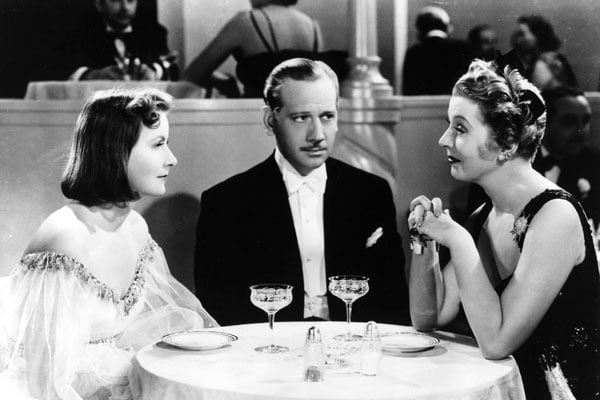
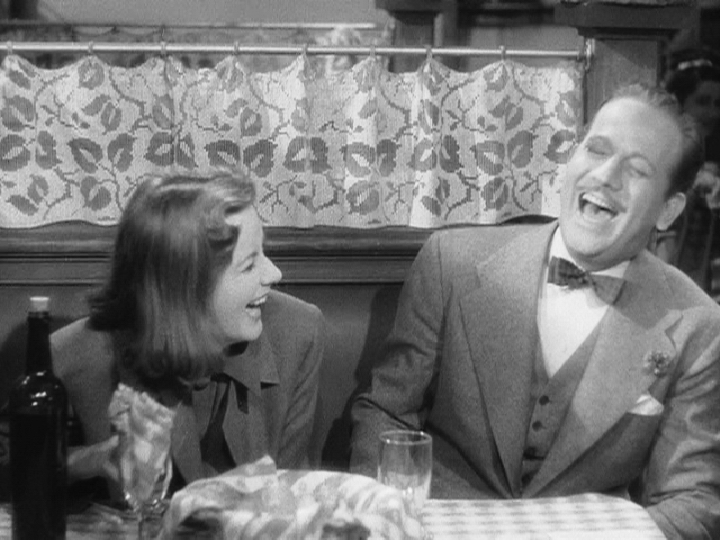
Three Russian emissaries (Sig Ruman, Felix Bressart, Alexander Granach) are in Paris on official business, hoping to get top dollar for some diamonds confiscated during the Russian Revolution. Out of the discriminating eye of the commissar, they decide to stay at Paris' most opulent hotel--the better to attract the interest of capitalist speculators, comrade. Of course. As luck would have it, it's also the domicile of the Russian Grand Duchess Swana (Ina Claire), in exile, and shy a few diamonds due to the Revolution. When her "kept man," the Count Leon D'Algout (Melvyn Douglas) encounters them, he plies them with the finest life Paris has to offer, stringing them along while the gears of the authorities grind slowly to take back the diamonds before they can be sold.

The delays in retrieving money for the Soviet State puts the Reds on high alert, and a by-the-book-politburo-crat,
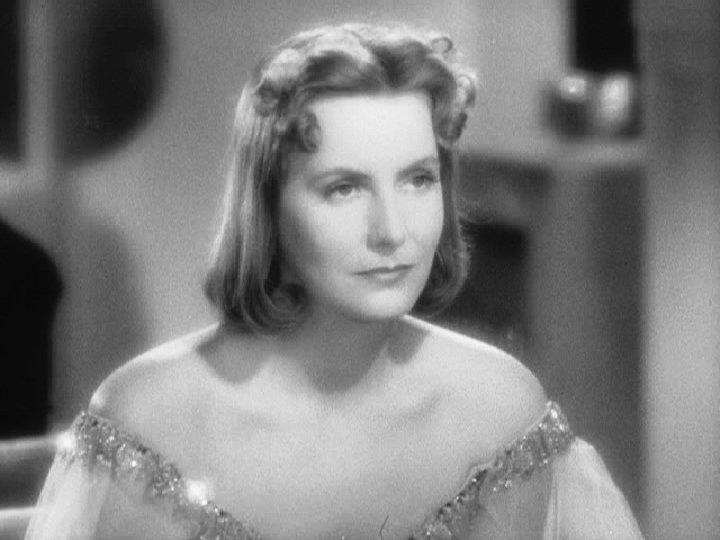
Nina Ivanova Yakushova (Greta Garbo) is dispatched to investigate.

She does not like what she sees.

Her humorless buttinski attitude might put things on the right track, and that's the last thing Count D'Algout wants, but
he finds his and Paris' charms are lost on "Ninotchka." She is so gray and humorless, with a suspicious look in her eye and expressionless of face, she is more than ideologically committed to the Socialist state, she is practically Vulcan (emphasis on "practical"). The Count must work overtime to beguile her, and overtime is something this representative of the Worker cannot abide. Like it matters. The Count becomes intrigued with her, and decides to make time on his own time.
Ninotchka is political satire as fairy-tale, complete with the converted princess and the pixieish subservients (all thing being equal, comrade, but some are more equal than others—or is that "fairest of them all?"). The conceit is charming, and add the star-power of Greta Garbo as "Ninotchka" and the thing practically fizzes. Garbo has always been a legendary presence, somewhat unapproachable. But her work in this film, with Billy Wilder and Charles Brackett's words and buoyed in its interpretation by "The Lubitsch Touch," is the effervescence that pops the film's cork. Again, the structure of the story helps. Garbo's no-bolshevik attitude at the beginning sets up a magical transformation from mugly ducklink to beautiful swana-be. That she is funny in both aspects and possessed of a comic timing with the accuracy of a Swiss watch, while still radiating the sex appeal that made her a box-office queen, is a bit of a miracle. It's my prejudice to think that such a lionized star couldn't possibly be such a fine actress. You learn something new every day.
Which is exactly the point. You might as well enjoy it. One can't help it when the lesson is so delightful.


Friday, February 16, 2018

The Last Hurrah (1958)

The Last Hurrah (John Ford, 1958) It seems unlikely that two of the most prominent Irishmen in Hollywood—John Ford and Spencer Tracy—would make only two movie together.* Whatever the reasons (and Hollywood legend claims that this one nearly didn't happen, either**), the two drinking buddies seemed to spark great work from each other.

Frank Skeffington, former governor and current mayor of "an unnamed New England town," has decided to run for Mayor for an unprecedented fifth term.
Ably supported by his mostly Irish Mafia (although other borough leaders are alluded to, the only one who has any speaking lines is Ricardo Cortez*** playing a Jewish bureau chief), and shunned and reviled by a WASP chamber of commerce (portrayed by veteran actors Basil Rathbone and John Carradine as cantankerous dried-up husks), Skeffington finagles and blarneys his way through getting his way (resorting to blackmail every once in awhile). But Skeffington isn't so full of hubris that he thinks he can go on forever. This campaign, he's decided, is his "last hurrah," and he wants his nephew, newsie Adam Caulfield (Jeffrey Hunter) to get a taste of the "old-style politics" of the glad-hand and the smoked filled room before radio and television do away with the personal touch—a prescient idea if ever there was one!

Pointedly, veteran Jane Darwell has more zeal than youngster Jeffrey Hunter
The film ingeniously shows the passing of an era with its scenes of vibrant oldsters and shallow youth and of the personal touch versus the cathode ray tube (Ford has a grand time lampooning staged political broadcasts that are only slightly clumsier than the spit-polished productions of today, a neat summing up of '50's TV usage in politics—everything from Kennedy's carefully cherry-picked history to Nixon's "Checkers" speech). For Ford, approaching his twilight years, emboldened by the fearlessness of age and determined to speak truth, it seemed like a good bet to take on politics and the changing landscape that media played in that change. The Last Hurrah, directed and produced by Ford, seemed a bit of a return to the old Ford films starring Will Rogers and the film is stacked, overstuffed actually, with character actors of Hollywood's past parading before the camera—specifically Ford's Hollywood past. Pat O'Brien, Donald Crisp, James Gleason, Jane Darwell, Anna Lee, Carradine, Wallace Ford, Frank McHugh—all veterans of past Ford films—cast adrift by the failing studio system that kept them employed, in an era of the independent production company. It is not insignificant that a good deal of the film takes place at a boisterous wake.
"The Parade's Gone By" — Skeffington's walk home

Much is made of the long shot of Skeffington's walk home through the park after his election defeat, while in the background a loud celebratory parade for the opposition marches down the street in the other direction, it's klieg lights brashly blasting the camera on occasion. No one could miss that message. But more significant—and more indicative of the kind of deep visual poetry that Ford brought to the screen—is the carefully composed last shot of Skeffington's leaderless contingent, shadows of men, marching up the stairs to pay their respects, but, just as surely, following their leader heavenward. 


* Those being Up the River (1930), which also featured Humphrey Bogart—I can't imagine Ford and Bogart getting along— and The Last Hurrah 28 years later. The two men were under contracts with competing studios until independents in the '50's made their second collaboration possible.

** Orson Welles claimed that John Ford talked to him about playing Skeffington (Welles and Ford were an intense mutual admiration society—their first fires across each others' bows is a story that will wait for another time), but while Welles was out of the country, his agent turned the offer down.


*** Ricardo Cortez played the original Sam Spade in 1931's version of The Maltese Falcon. In fact, The Last Hurrah could be seen as a lot of last hurrah's for many veterans of Hollywood movies. This cast is so top-heavy with so many scene-stealing character actors you'd think you were watching a Frank Capra movie!

The boisterous wake scene for an unloved fellow—all the burroughs are heard from.
Ford might be talking about Hollywood's efficient (but artist-reviled) studio system.