Showing posts with label Charlie Hunnam. Show all posts

Thursday, June 1, 2017

The Lost City of Z

In Memory Yet Green
or
"What's a Heaven For?"

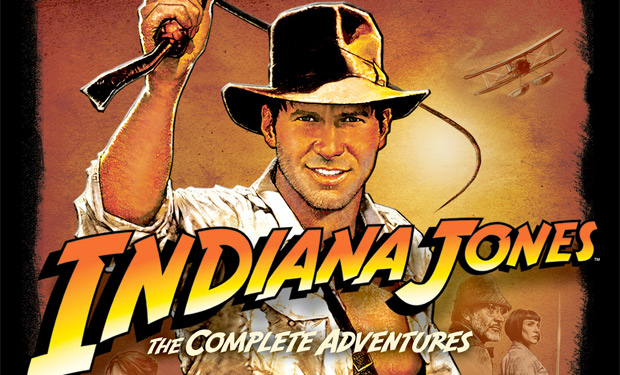
James Gray's new film, The Lost City of Z (I prefer to call it The Lost City of Zed, as it is articulated in the film), is not just "Based on a True Story (that cliche tag-line of so many movies these days), but "Based on the Incredible True Story." And it's about bloody time. Its protagonist, Col. Percival Fawcett (played quite effectively, if opaquely by Charlie Hunnam*) has been fictionalized enough times, being the inspiration for Challenger of A. Conan Doyle's "The Lost World," Quatermain of H. R. Haggard's "King Solomon's Mines," and their modern descendant of antiquities, Jones of Indiana. The original should get his due, because his story truly is incredible, filled with hardships and danger, both foreign and domestic, and proved a challenge to the complacent way of thinking about what makes a civilization among the class-conscious societies of England at the time. Fawcett was a forward thinker who became lost in the past. 

But it wasn't always so. When we first encounter Fawcett, he is long trek from legendary. A "lifer" in the British Army at the turn of the century, he has been passed over for promotion on numerous occasions—not through any dereliction of duty, not because he is untalented, he is, in fact, one of the best and boldest of his company. He overhears the reason after bagging the stag in an elk hunt held for the Archduke Ferdinand*—"He's been rather unfortunate in his choice of ancestors," as one of the stuffy dignitaries puts it. Dad was a bit of a drunk in his military career, so the sins of the father are visited upon the son. Class, and the lack of it, are married in one unfortunate summation. Geez, no wonder there's an America.
Skilled, he may be, and respectable, he certainly is, his career nevertheless is stalled, and so he accepts an assignment he's recommended for with the Royal Geographical Society (headed by former "Star Wars" Emperor Ian McDiarmid)—to map unexplored borders of the Amazon rain-forest and maybe, just maybe, find its source.
It is hazardous duty to be sure, from flora, fauna, disease, and natives, who have never advanced past the tribal stage (but, then, has anybody?) and might not take kindly to strangers. The Army offers him nothing and so he agrees, knowing full well it will be a journey of years; his wife Nina (Sienna Miller) knows the frustration of her husband and, rather reluctantly, agrees. Fawcett bids farewll to wife and child (with one on the way), taking with him Colonel Henry Costin (Robert Pattinson, unrecognizable and good enough to forgive anything he's done in the past), whose knowledge of the rain-forest proves essential, as well as a native guide Tadjui (Pedro Coello), picked up after a visit to a rubber plantation, run by the Baron De Gondoriz (Franco Nero), who warns him of the exploration parties that have not returned, but Fawcett forges ahead, determined to prove his mettle in the "uncivilized" world, a land without prejudice.
Tadjui tells him of an ancient city in the Amazonian jungle, a golden city with a large population, a city that Fawcett begins to call "Zed," and on his first mission, he finds pieces of pottery and figurines, artifacts that prove to him that, though there may not be a city of gold, there is one with a civilization that does more than hunt with spears, but is capable of art and practical tools. He finds the source of the river, but in their excitement at their find, Tadjui makes his escape.
Fawcett is welcomed back to England a hero and his accomplishments are lauded, but his theories about "the lost city of Zed" and that the natives of what he calls "Amazonia" are far more advanced than had been previously thought are controversial and met with scoffs and derision. It isn't long before he is enticed to go back to prove his contentions that the native populations have a sophistication and civilized organization that threatens the British imperialist image of savages.
There is also some controversy at home. His son Jack resents his time away, and his "equal wife" quickly realizes how far that goes when she wants to accompany him on his next trip—she has found an artifact in public records that alludes to a fabulous city somewhere in the Amazon. He tells her she is just not capable of it and steadfastly refuses to take her.
But, he does allow a renowned biologist James Murray (Angus McFadyen), late of Shackleton's Nimrod expedition and wants to reclaim his past glories on this latest endeavour that has so impressed the world. He should have taken his wife, instead, as Murray is quite ill-prepared to handle the tropics.

In a scene straight out of Apocalypse Now, the boatload of explorers sees another boat aground precariously on shore. by the time they notice a man aboard and that he's dead, the air becomes lethal with arrows and spears, too suddenly for some on the boat to avoid being killed. But Fawcett is determined to find the source of the attack and wades ashore, arms outstretched. One last arrow pierces his notebook and he stares at it in wonder, not just in that he was spared, but at the precision it took to hit and not go all the way through to kill him.
Fawcett walks up the bank. Soon, one warrior appears amidst the brush (which director Gray, like so many directors before him, treats as not merely a backdrop, but as one of the characters), then, another shows as back-up, then another. Soon, a half-dozen natives have emerged, and one goes back to report what has happened, while the others maintain eye contact. And with that, Fawcett achieves acceptance and discovers the tribe has a sophisticated defense mechanism to maintain its security. Despite his party's casualties, his trust is rewarded in kind.
A good thing, too, as the members of the tribe turns out to be cannibals, something that thoroughly repulses the biologist Murray. Fawcett and the veterans of the previous party know enough to keep quiet, lest they go from being the guests for dinner to being the main course. But, Murray, who has slowed the party down, and has been known to steal rations from others in the group. A knee wound leaves him raving and in need of medical attention, so the Fawcett thinks it best for all concerned if they send Murray packing to seek attention from the last known encampment on their journey as they go their own way. This will come back to haunt them when they return to England after they've found finished their expedition.
But, they've found no Zed—evidence of sophisticated farming and medicine, yes. But no golden city.

And, then World War I happens, even if doesn't turn out to be The War to End All Expeditions.
It is an "incredible true story." And all parties involved in The Lost City of Z do right by it. Filming in the jungle—the genuine jungle—is a logistical nightmare for a filming crew, but Gray is a fastidious director, but not so much so that he doesn't provide the telling grace note that moves the story from mere communication to the poetic. Because you cannot tell a story like Fawcett's without exploring how the quest becomes more than the goal, but about the journey itself, not only of the landscape, but also of the mind. Because the trek can have a profound effect on the traveler...as it did with T.E. Lawrence or Meriwether Lewis. What began for Fawcett as a way to gain acceptance transcended it beyond class, beyond family, beyond self...to the point where he became a man apart...unto himself. It is only appropriate...if unfortunate...that his last trip to find the lost city—one he took with his son—he never returned from...as if he disappeared into his own dream.
An incredible story, yes. A true story, as far as we have knowledge of.
But one could also say legendary, if it weren't for the mystery of the man at the center who lets life and love go by for a dream, thus making the story more..."proverbial." More cautionary. More universal. Do not lose your way. Do not lose your soul.

And in the end, the man and his goal became one. Fawcett's body was never found, nor has his lost city.
Fawcett in the jungle c. 1908


* Hunnam is much more appropriate for the role than the two who dropped out: Brad Pitt (whose Plan B Productions is behind the film) and Benedict Cumberbatch, who dropped out due to conflicts filming Dr. Strange) 

** I hear your arched eyebrows raise, history-buffs....

Wednesday, April 5, 2017

Pacific Rim

Have a review of Kong: Skull Island coming up...which was originally suggested to be directed by Guillermo del Toro. This was written at this film's release.

"Jaeger-Meisters of the Universe"
or
Gigantor versus Godzilla

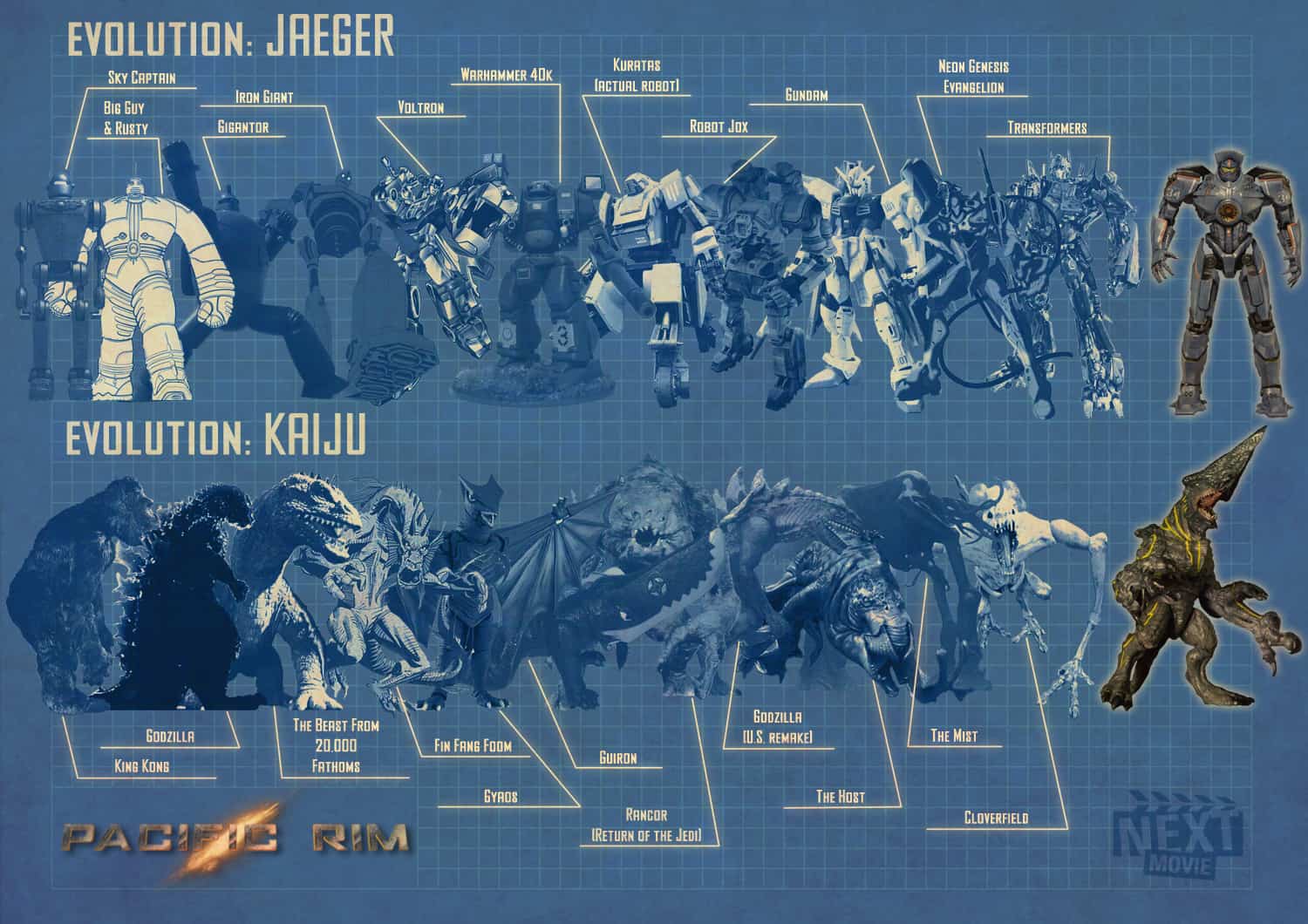
Oh, man. Guillermo del Toro's Pacific Rim may be the smartest dumb movie ever made, a direct descendant of the Japanese monster movies that became increasingly inane and family-friendly...but were not without their charms...and cultish admirers. Del Toro is obviously one of the latter, expanding from the menagerie of Big Creature Movies of the 1950's and '60's to posit "if we're getting so many of these things in our midst," what would the World do to combat them?

Build really big, hurkin' robots to beat 'em up, of course!  


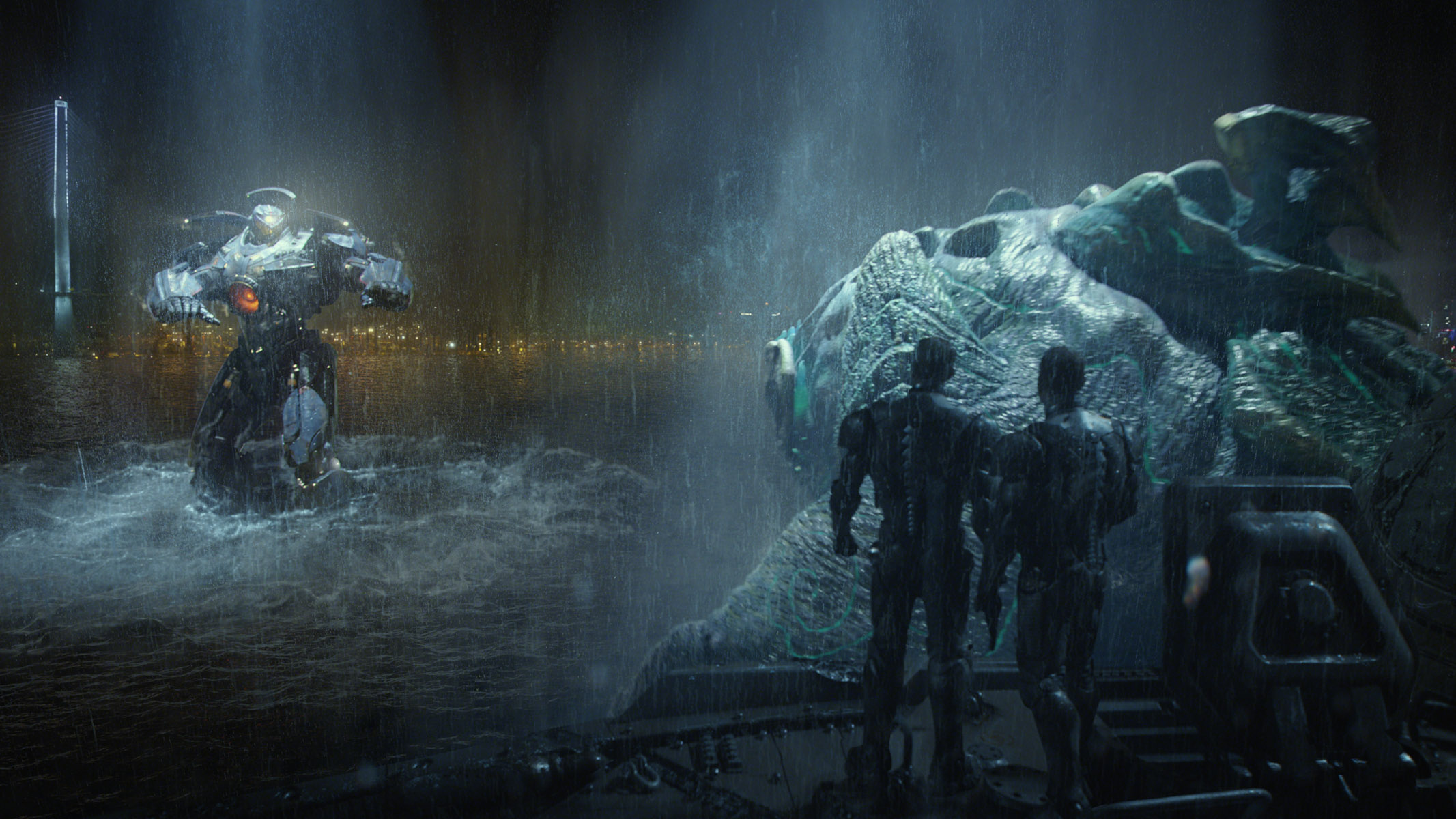
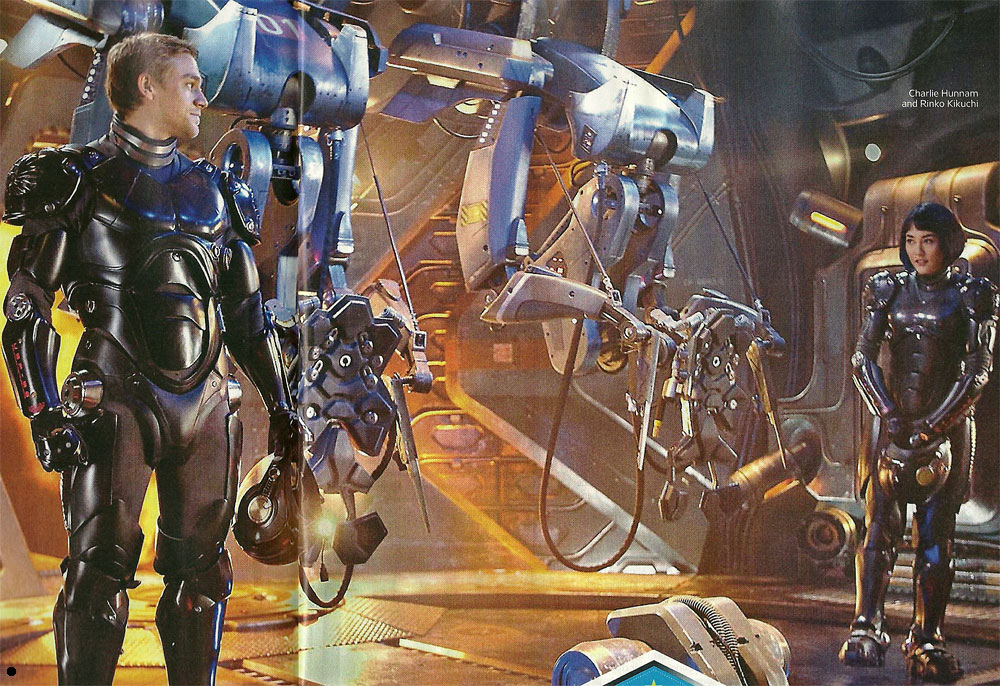
In a short explanation at the beginning, pilot Raleigh Beckett (Charlie Hunnam) says, "Whenever I felt lonely I looked at the stars. I was looking in the wrong direction." It turns out that we're not alone; there's a rift in the Marianas Trench in the Pacific Ocean that serves as an inter-dimensional portal for creatures that attack coastal cities, starting in 2013. The devastation wreaked by the increasing monster attacks compels the Pacific Rim nations—U.S., Russia, China, Australia, New Zealand, Japan, Indonesia—to form their own anti-giant lizard NATO against the "Kaiju," as they're dubbed, by using skyscraper-tall "Jaegers," huge piloted robot warriors to take on the huge lumbering monsters.

For awhile, the system works, the pilots becoming heroes, but the Kaiju get bigger and more resistant to Jaeger attacks and more sophisticated in their assaults, and Jaeger up-keep gets expensive. World leaders start leaning towards defensive measures—thick walls to keep the invaders out—which, given the increasing abilities of the Kaiju, will eventually be a losing proposition.
Parallels to current issues abound, and the film is a bit more subtle tackling other questions than one might expect in a robo-critter slug-a-thon: what are the Kaiju? Where do they come from? How does one fight an increasingly sophisticated enemy with the weapons you have?
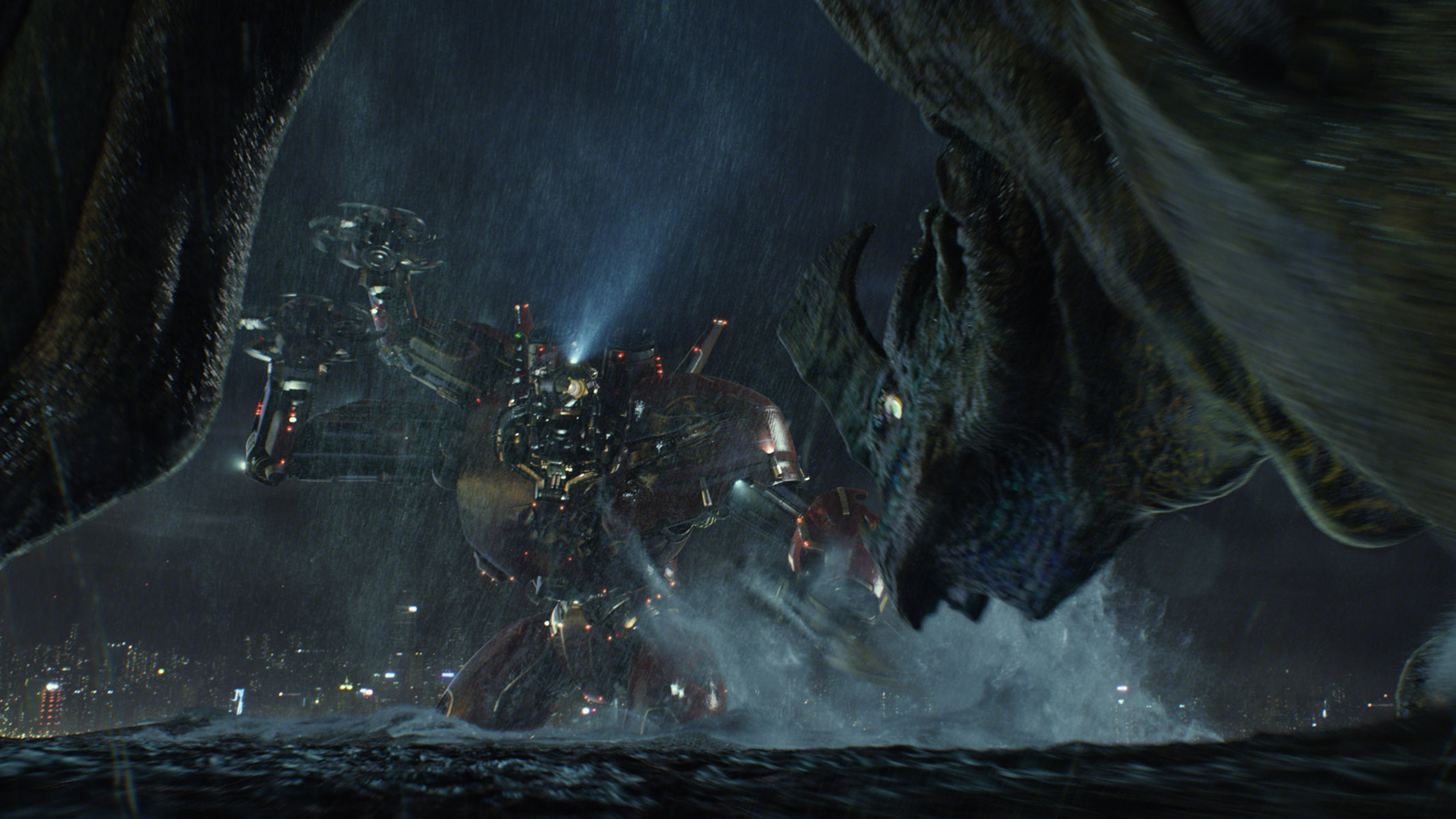
Those are answered in the peripheries of the smack-downs that are the Jaeger-Kaiju battles, which have a giddy "Alley Oop!" quality to them. There's an inherent goofy quality to seeing these lumbering mecha's—each with their own distinctive movement and swagger—planting hay-makers on assorted carapaces, using WWF moves on the monsters when it comes to close combat. 
There's also something innately funny that these robots are so huge, as if they were walking Chrysler Buildings seeking revenge for past attacks. It takes awhile for the Kaiju to figure out that they should go for the head (where the pilots are), but the Jaeger are so absurdly top-heavy one wonders why they don't just go for the knees in the first place. Or double-team them by one sneaking up behind one (they have enormous blind-spots, being humanoid-inspired), and kneeling down, so that a front-attacking Kaiju can just push them over backwards—the fighting is that level of sophistication. But overlook that, and the basic concept of two people working in tandem for the movements—explained away by a hokum concept called "The Drift" that allows minds to merge—so that the minuscule puppet-masters can operate the stories tall rod-puppets.
That's in the foreground, but the basic concepts are deep and detailed, with the various Rim stations and individual fighter designs being incredibly complex. There's also an optimistic "we're all in this together" spirit, despite all the expected competition and squabbling between the teams for most effective skills.

It's weird, inherently silly, but rather thrilling in conceptualization and realization. And even though the Kaiju are not distinctive enough to be able to quickly ascertain who's who and what's what on first viewing, del Toro manages to keep all things clear—a bit like pulling off his own Jaeger juggling act.  
It's Kaiju-clobberin' time
Now, one would think that after a Summer of mounting indiscriminate screen carnage that has become increasingly boring to watch and numbing to the senses, that any more apocalypse would continue the trend of providing less bang for your buck. But del Toro has managed to create a movie that has some impact, includes some awe-inspiring moments, and considerable humor to balance the package out, and one has to applaud the "togetherness" factor of individuals and nations forming a Corps of the Clobbering to take on the global threat (did I mention this movie is a complete fantasy?), in a way that doesn't feel militaristic, but is inclusive in spirit. 

Hell, yeah, it's goofy, but it is also entertaining and points to how a particular vision can rise above pedestrian material to make something so enjoyable.

Wednesday, September 14, 2016

Children of Men

Written at the time of the film's release.

"Thou turnest man to destruction; and sayest, Return, ye children of men."
Psalm 90 (89): 3

What is that sound high in the air
Murmur of maternal lamentation
Who are those hooded hordes swarming
Over endless plains, stumbling in cracked earth
Ringed by the flat horizon only
What is the city over the mountains
Cracks and reforms and bursts in the violet air
Falling towers
Jerusalem Athens Alexandria
Vienna London
Unreal
                                         T.S. Eliot "The Waste Land"*

You can do a lot of things with science-fiction...or speculative fiction, if you'd rather. You can take a common problem, take it out of your world or your dimension and force people to look at it with a new eye, empty of pre-concieved visions or prejudices.

And you can do this in the movies, too. Couch a radical concept in a chase movie...say, The Road Warrior, and you immediately wake millions of people up to the concept of non-renewable resources. Al Gore knew what he was doing making An Inconvenient Truth.

So does Alfonso Cuarón.

Cuarón started his career with the charming A Little Princess and a not-too successful modernization of Great Expectations. He broke out a few years ago with a very entertaining film out of Mexico called Y tu Mama Tambien about a pair of immature teen boys (read: your target audience), hooked them up on a road-trip with a worldly-wise older woman and, amazingly, created an art-house hit that went mainstream in this country. The fact that it was entertaining, engaging and highly sexual was the several spoonfuls of sugar that would occasionally make Cuarón's political detours go down when he would stop the film (cold) to make them. His next film was the third film in the "Harry Potter" series, Harry Potter and the Prisoner of Azkaban, which managed to shake the non-magical dust off the series, streamlined the story and seamlessly integrated the elaborate effects more fluidly into the mix. It felt more like a film than the stodgy musical adaptations the previous films seemed like. The reward for showing less respect to the sacred Potter text was the opinion of high-priestess J.K. Rowling that it was the best of the films. 
Fans of P.D.James'**1992 novel "The Children of Men," should have the same respect for Cuarón's distillation for he's made it both more complicated and slimmed it into a hellish chase film that keeps one on the edge of their seat and keeps one guessing every step of the way, while at the same time turning James' version of man's last gasp into something more relevant in a post-9-11/post-Iraq invasion world. James' basic concept and characters are for the most part there, but Cuarón and his army of scriptwriters fashion a future on the eve of destruction: Babies are no longer being born and mankind is facing its last generation...ever. A global flu pandemic may have been the cause, but whatever happened there is no new generation for a world on the brink. When the Earth has no future, what happens? Global destruction, and as billboards around London proclaim "The World Has Collapsed! Only Britain Soldiers On." Literally. The cities are police states. Illegal immigrants are caged and thrown into gulags run by Homeland Security, and the world mourns as the last child born..."Baby Diego," now 18, is gunned down for not giving someone an autograph.
It would be more horrific if it wasn't so familiar. It would be funny if you hadn't already seen it happen.

On November 16th 2027, Theo Fallon (Clive Owen) sees the "Baby Diego" story on the 24-hour news station at the coffee shop, and as he exits, it explodes. He's left with a constant ringing in his ears ("It's your cell's last swan song," his ex-wife, now an revolutionary, tells him. "Enjoy it while it lasts."), and for his pains is given a mission to obtain "letters of transit" for a cargo wanted by the revolutionaries and probably anyone else wanting an edge: a very pregnant woman named Kee, who in this world is looked on...as a miracle. Fallon has been put-upon to to see to the safety of madonna and child. Echoes and echoes of stories we've heard before run through this movie as we follow Fallon and his miracle try to reach a group called "The Human Project" via a ship called "Tomorrow."
It sounds precious. But in Cuarón's telling its horrific. And any lapse into sentimentality is seen as relief. Much has been made of the (apparently) continuous takes of "action sequences"...one takes place inside a car traveling in reverse...and they are jaw-droppingly marvelous things (and all the more effective because there's no editing to be seen, and events happen in seamless "real" time). There's also a sequence that has to be the slowest chase scene ever filmed, but is just as nerve-wracking because of it.
Still...it's not so overwhelming that questions don't come up. Much is made of Fallon's being irresistible to animals...but that would mean the animals are still being born eighteen years after the last human child was born. Maybe it's that flu thing not crossing species, but that the question comes up means you have the time to think about it. I also wondered why no hell-bent revolutionaries would think of shooting out car-tires. Friend FarmerScott wondered if British cars in the future had dome-lights...or for that matter, key alarms. Little chinks in an otherwise armored-up film adaptation that has extraordinary cinematography, production design (as much work went into this vision of the future as in Blade Runner but seems much more real) and stunt coordination. And terrific acting by Michael Caine, Julianne Moore (less neurotic that usual), Chiwetel Ejiofor (who's in every third film I see these days) and Clive Owen as the man who has big shoes to fill.
It's an amazing, hard-hitting, relentless, passionate, smart film. But I can't say I enjoyed myself.


* Both "The Waste Land" and "Children of Men" share the last line "Shantih Shantih Shantih"

** She of "
Commander Dalgleish" fame...