I was cleaning up some dead links on the blog and doing some random editing and corrections, when I noticed there were a couple of things that never made their way onto this blog, even though I mentioned them in some posts). That irritated me, probably more than the casual accidental blog-tourist who might have discovered nothing there. So, in that spirit, some corrections...and a new (semi-)feature, where I'm in a different frame of mind than the Wisdom of the Tribe. The Tribe isn't going to change it's opinion (too many of you--it'd be like herding cats), but, I'm not changing my mind, either. So, I make a case for it, and leave it to settle on its own. I'll post these on Saturday's (which is usually "Take Out the Trash" day here) under the collective title "Against the Wind."
Making Mountains Out of Mole-Hills I've heard this film being called "critic-proof", and I'm not even sure what that means, but it implies that whatever the reviews say, people are still going to line up to see it, as if it's a critic's job todiscourage people from going to see something they want to see, like it's part of the job description to trash something on your "Must-See List." And that if something truly acidic and toxic is written about it (and a Big Tall Wish is made) nobody'll see it (And they call this movie unrealistic!) Even Ford, Lucas and Spielberg were all talking (before the film's premiere at Cannes) that it was going to get savaged, and, since these guys are pros who know their stuff, it has been in some circles, mostly by mouth-breathing fan sites where "sux" dominates the descriptors.
So, despite the lowering of the bar of expectations by the film-makers, does it suck?
Before we go further, let us go back and recap what happened in the previous chapters...
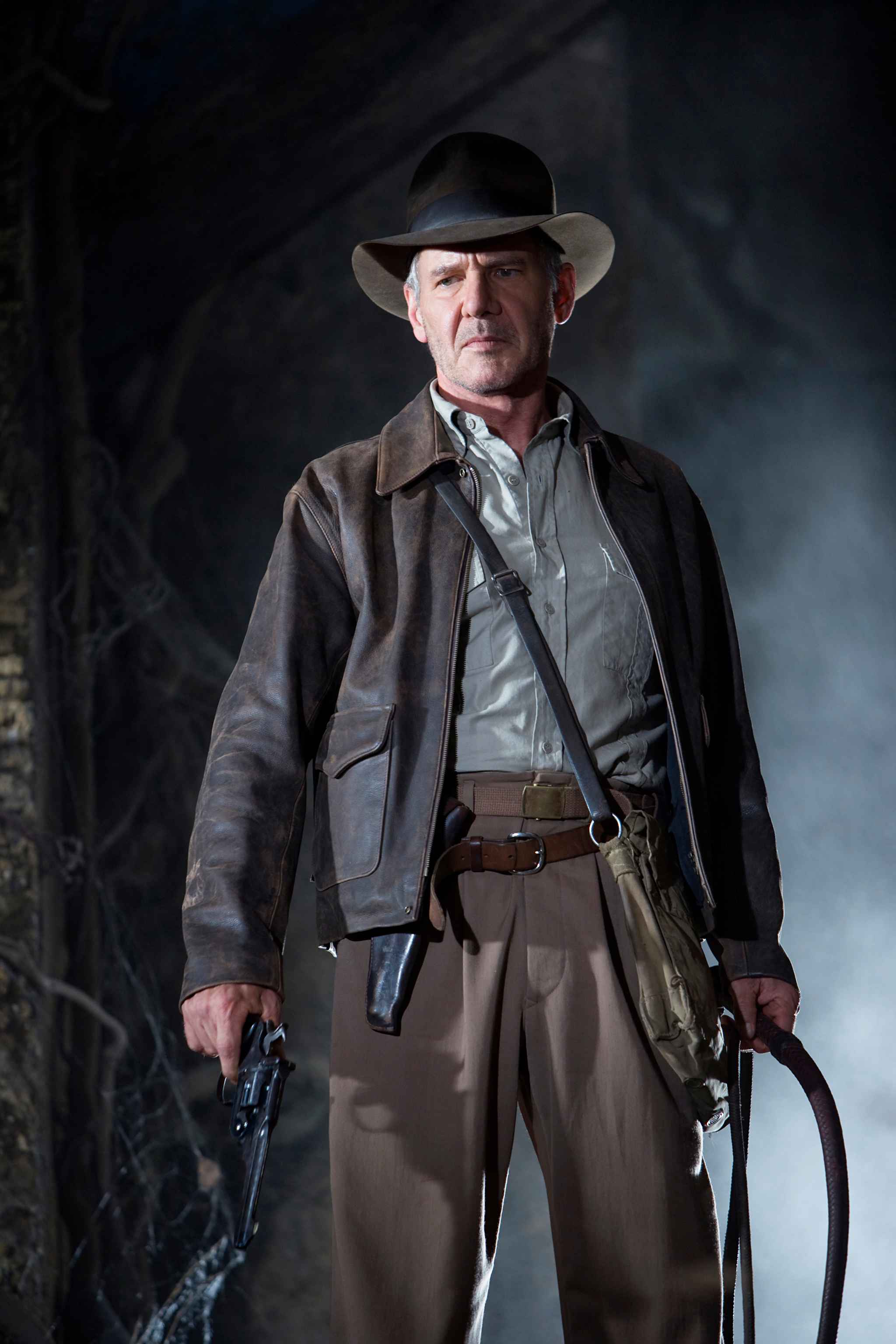
This series (like I shouldn't have to tell you) is based on pulp serials in the B-movie tradition--episodic, cheesy, toying with History and making it up as it goes along. This one, being set in the late 50's, has to have more of a sci-fi bent than the religious-themed stories of the past set in the 30's and the 40's. It is, after all, the first adventure we've seen of Indiana Jones in a post-nuclear world. Think on that for a moment. Crystal Skull fits the period, at least cinematically, however much it messes with folks' expectations of what the film "should be" about (and let's face it, the biggest obstacle Lucas' films have are people's expectations for the "next" installment, and whether it compares to the film they already have in their head—in that case, you can't compete with what they have in mind*). Indiana Jones' timeline has finally caught up with the memories of George Lucas and Steven Spielberg.
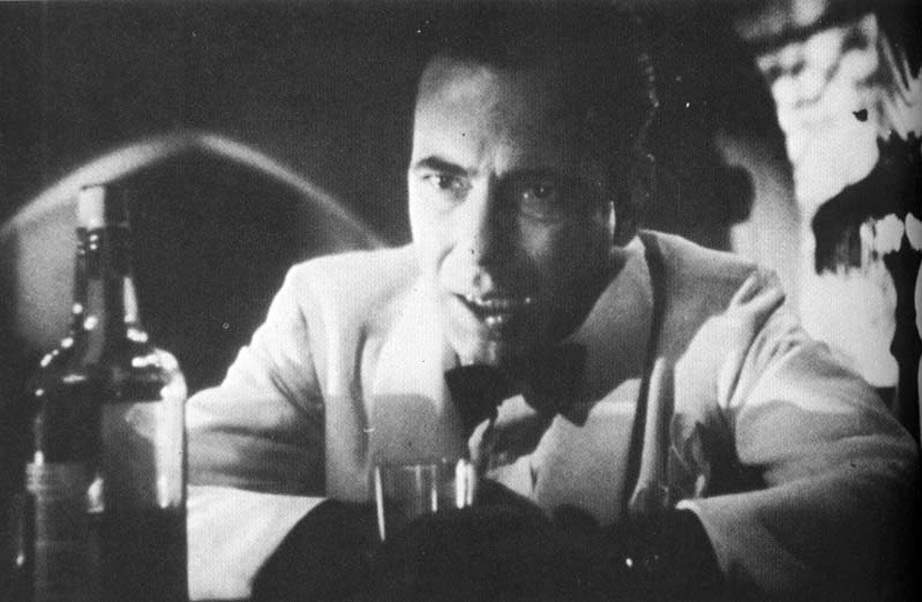
The filmmakers can't escape the fact that it's been 19 years since the last installment (and they've set it nearly twenty since the events of Last Crusade), and Harrison Ford's appearance is the nearly-constant reminder of it--he's broader, shlumpfier, more doughy in the face. But something magical happens a couple times in the film (once at a malt shop, once at a Mayan burial ground). Whether it's some CGI-gauze trick, or Ford's sense-memory playing the character kicking in, but once the dialogue turns to ancient civilizations and archaeology, the lines seem to disappear from Ford's face, and he slots back into the old/ young Indiana Jones the same way the camera "slotted" into the Bogart-drinking-his-sorrowsCasablanca-shot in Raiders after Jones has seen Marion supposedly killed in a truck explosion. It's eerie, but like the occasional forays into the transcendent in the series, it's a good kind of eerie.
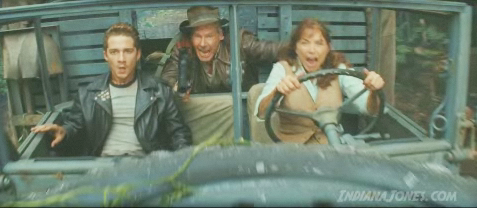
We've mentioned Marion, and, as the posters tell you, Marion Williams nee Ravenwood (Karen Allen) is back, and she's terrific--a breath of fresh air after Kate Capshaw's and Allison Doody's ingenues (the one too high-pitched, and the other tamped-down into irrelevance). The years have treated her far better than Ford, and she still has that incandescent smile and has been given a lot of "Dr. Jones-take-down" dialogue that suddenly snaps Ford's performance into a higher level of energy. Allen has remained well-versed in what Spielberg informed her during the first film was the "Sam Peckinpah School of Acting," something that Cate Blanchett is equally fine at--she's looser and more fun than she's been in years, and just the sight of her Commie commandant standing in a careening jeep during a bumper-cars jeep chase through the Amazon jungle is one of those things you think you'll never see.
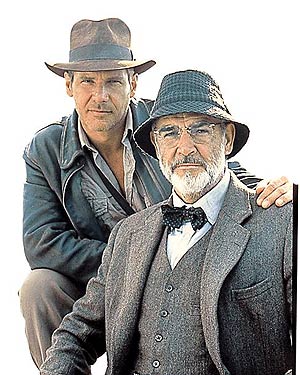
So, Shia LaBoeuf. Is he "Short-Round"-irritating, or made too much a thing of? Neither, though he has a prominent role throughout. For some reason, whether it's the magnitude of the project, or Spielberg directing, LaBoeuf's not as energetic or inventive as he's been--maybe we should call his character "Short-Leash"--but,he's a good foil for Ford and their interaction, especially in one pause in a motorcycle chase deliberately recalls the Ford-Sean Connery relationship in Last Crusade.** One is never sure if he'll be pulling out a comb or a switch-blade when he reaches into his motorcycle jacket (his aping of Marlon Brando's gear inThe Wild One is a clever 50's variation of Indy's gear), and there is a great visual joke when he confronts an Amazonian resident with the same hair-cut.
As for director Spielberg, he reportedly re-studied his earlier "Indy" films to recall the way "kid-Spielberg" shot films and there are plenty of his early "headlights-into-the-camera" adrenaline shots (and even one of his Sugarland Express pans), but the takes are a bit longer-held, he's not quite so anxious to cut away, and his cinematographer Janusz Kaminski brings a new visual beauty that supplants the grit-in-the-lens of the earlier films. The elder Spielberg is also incessantly filling the film with visual ironies--grace-notes--that the younger Spielberg would save for a separate shot. There's an awful lot of stuff going on under the surface of the fire-fights, the explosions--some big ones--that betray the more mature film-maker, and man, Spielberg has become. And unlike the last two, which were short on background, and long on chase sequences, this film is over-stuffed with references, languages and the accustomed meta-recall of the past films.***
Not to say there isn't a lot of action. There is. That Amazon-chase between the particulars (the film is structured like a race--like Raiders and Last Crusade--with the good-guys and bad-guys all after the same thing and never too-far away from each other) is an invigorating combination of possibilities like a puzzle with every combination of inhabitant in vehicle and opponent in combat possible. It's dizzily constructed. And just when you start to think, "Wait a minute, where's..." your questions are answered.
* Somewhere along the way I've talked about "Mom's Apple Pie Syndrome"--where our memory of a cherished movie runs counter to the actual quality of the work, ie. "Nothing tastes as good as mom's apple pie," but only because that was your first run-in with the concept, and your impression of what "good" apple pie should be like may include a runny interior and scorched crust (I was blessed with a mother--God love her--who was a lousy cook, so I tend to be immune). So, too, the cherished movies of your youth may actually be crap, though we may delude ourselves otherwise, with our 'gee-whiz" innocent first impressions. The phenomenon became real for a few incredulously chagrined "Man from U.N.C.L.E." fans who, seeing the series for the first time in years on DVD last year, endearingly wondered why MGM chose to run the shows through a "crap filter" making the sets look like back-lot sound-stages with cheap "foreign" localization, lousy effects, obvious writing and some horrible performances. Ah, deluded youth. Nothing is so sweet as a young man's fancy for a film of their childhood. And nothing is so rancid as the bitterness that follows a fan-boy's crush.
But it's not the film's fault. Ever. Beauty is in the mind of the beholder.
** And if you haven't figured our the "Indiana" Jones-"Mutt" Williams relationship yet, what can I say? You're either a) five years old, b) this is your first movie or c) "denial ain't just a river in Egypt, honey." Look at their names, kids, and remember where Dr. Henry Jones, jr. came up with the name "Indiana." These films are all about clues. *** Sometime, when Summer is over and there are no more surprises, I'm going to do a big-old analysis of this movie and why it is the natural sequel to Raiders. (Hint: It involves the clockwork-intricacies of ancient civilizations as well as the conflicts when a Man of Science is confronted with the "hard rain" of spiritual mythology) It's roots go pretty deep--which is refreshing after the previous two--and bear a full airing of the secrets buried within it. To do so now would give away far too much and contain too many spoilers of large and small varieties.
**** Do I have ANY complaints? Yes, the frankly extraneous character of "Mac" McHale played by Ray Winstone. McHale is designed as an untrustworthy character, but he is so untrustworthy that one wonders why he's not just shot by either party at any time during the proceedings. He's so greedy he's a bit reminiscent of Daffy Duck in a hall of treasures: "Mine, Mine, Mine!" The character is such an unnecessary plot contrivance that he might have earned the name "Aringarosa" if the name hadn't already been taken.
Last year's fourth entry in the "Indiana Jones" saga was met with derision while it raided a diamond mine at the box-office (making it to the top of many lists of 2009's more successful films—including a conservative publication that used its Commie villains to claim that it heralded a surge by the public to right-minded films, despite the fact that the rest of the films mentioned on the list flopped...and flopped badly; Indy 4 alone raised all boats). There were complaints that it wasn't as good as the first three (a clear case of "Mom's Apple Pie" syndrome*among the fandom in fedoras—I felt it wasn't as good as the first one, but that's it): there was too much "Mutt" (Shia LaBeouf) and CGI, the familial complications too obvious, some characterizations a bit spurious,** and that it "nuked the 'fridge"—which briefly supplanted "jumped the shark" for hitting a false note in the national media (they always chortle when the fan-base eats its own) before they went back to not reporting the news.
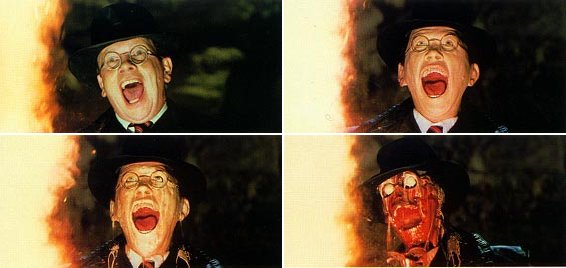
That last one stuck in my craw; it showed that the fan-base didn't "get" what the movies are—a post-modern, hi-tech take on the past and the low-ditch movies' past, in particular. It didn't have to adhere to "reality"—it never did. Look at Raiders of the Lost Ark, admittedly the best of the bunch—a 30's film filled with flying flap-jacks, Nazi's (Nazi's everywhere, even melting ones), Hitler myths, and tales of apocalyptic power. Nobody questioned "who" would put the rolling rock back after it crushes an intruder. Nobody asked why a tomb unopened after centuries would still have live snakes in it. One or two might have asked how Indy rode the back of a sub all the way to Nazi Island (It didn't submerge? At all? Then, why'd they take a SUB?!). Nobody questioned the ark. It didn't have anything to do with reality, but rather with a mythic age of B-movies and wishful thinking that never existed, a cross-roads ("'X' marks the spot") between gritty, slithering reality and far-fetched fantasy, and the other films in the first trilogy followed that same map of fictional territory.
But not as well. Where the other two films, The Temple of Doom and The Last Crusade, failed to engage me were their wholesale abandonment of the what made the first film a Boy's Adventureland, and became a series of drawn-out chases, and half-hearted attempts at Mythos. The Temple of Doom—a favorite among some film-critics, as it challenged Indy's hero-concepts and went to darker psychological places than mere musty caves—bugged me not so much for its inaccuracies (the long fall from a plane on a life-raft, the ripping out of a sacrificial victim's flaming beating heart to the SV's—and the audience's—disbelief), but it's insistence to present a Disneyland-like "mine-shaft ride" that looked for all the world that it was populated by puppetoons. Then, there's the small detail of it being a prequel in which Jones "learns" that there's more to his mythic quests than robbing graves for fun and profit—which is intrinsic to the character, and is part of the make-up of the somewhat less-than-honorable "Indiana" Jones we first meet in the chronologically later Raiders. That lesson must not have "stuck."
But, what they do have in common—what they all do—is slap the stubbornly reality-based Jones into a sense of wonder: Raiders...confronts "Indy" with a full-on-Wrathful presentation of something that he dismissed with a casual "if you believe that sort of thing." ...The Last Crusade makes him take a literal "leap of faith" to save both his life and his father's, and also smashes his long-held preconceptions about his Dad. "...Temple of Doom" has that previously mentioned quick-dissolving lesson of the Sankara stones and re-defines what "Fortune and Glory" can be to the doctor. "Indiana" Jones is a teacher, but in his movies, he must learn things. His character must start with a cherished "truism" and he must learn that although he may have all the answers, there are more questions that he hasn't even considered. At one point in ...The Kingdom of the Crystal Skull, "Mutt" asks "Indiana:" "You're a teacher?" And Spielberg weights the reply down, as it's an important one: "Part-time." The rest of the time, he's a student himself, still learning.
In Indiana Jones and the Kingdom of the Crystal Skull, Dean Charles Stanforth (Jim Broadbent), says to Dr. Henry Jones Jr. (Harrison Ford): "We seem to have reached the age where life stops giving us things and starts taking them away." They have both aged, lost colleagues and parents, and their jobs are on the line. And "Indy" has just ridden the crest of a nuclear shock-wave in the Nevada desert, where he has seen two amazing things, off and on the Earth: the corpse of an ancient astronaut, and the limit of Man's power in the form of the mushroom cloud of a hydrogen bomb. This is the extent of our knowledge on Earth and it is a fearsome one, one that could mean our destruction at the hands of our abilities and our arrogance to use it. Behold the power of knowledge and fear.
This is the first of two images (that Spielberg deliberately composed) of "Indiana" Jones in rapt observation of an unfathomable thing that buttress Indiana Jones and the Kingdom of the Crystal Skull. In both, he is dwarfed by the event, small and helpless—all he can do is watch. In the first, he is witness to the extent of Man's knowledge. In the second, as he watches the launch of an alien race's***craft to inter-dimensionally travel "the spaces between spaces," something far beyond his ken and catechism. The one represents all that we know, and the other opens up another Chamber of Secrets. "Indiana" Jones can travel the four corners of the Earth, and there is still so much more territory to explore, and, indeed, more than he can know for certain.
The personal myth that Jones must resolve is that of age and the taking away (the bomb) and the giving (the new experience). For the loner Jones, that includes new worlds to conquer...and that is celebrated here...but he also, like The Outlaw Josey Wales, finds himself, in this one, acquiring a family he didn't know he had and never wanted, flying in the face of Stanforth's gloomy assessment of their lives as being "one foot in the grave" (like "Indy" hasn't been there before). In this terrible age of wonders, there is always more to learn...more "treasure," translated by the Incas to "knowledge" and prized more than gold. Life, no matter how old we get, never stops giving. Not if we're observant, anyway. For me, ...The Kingdom of the Crystal Skull represented the best, most true, antecedent to the original Raiders of the Lost Ark, fully embracing the era it is set (the 50's) and the B-movie concepts being put out at the time, and it is the strongest presentation of the concept of the "learning teacher" since Raiders... ...The Kingdom of the Crystal Skull represented, to me, the true sequel, while the others were just regurgitating concepts. This one, likeRaiders, raised the stakes. MY only disappointment with it was, that if it's set in a 50's B-movie world, where's the giant scorpion that the hydrogen bomb creates—there were all sorts of "nukular monsters" in the films of the time, their own metaphors of the costly nature of Knowledge. But Lucas and Spielberg's intentions were to turn that metaphor inside out. Knowledge isn't destructive. It inspires creation. And new worlds to explore.
-----------------------------------------
There is talk (and only talk) of a fifth Indiana Jones movie, and while it has moved some to despair, for me it has given me fits of giggling anticipation. Imagine Indiana Jones in the B-movie drive-in 60's, with the good doctor investigating SDS students planning a lysergic acid dump in a city reservoir, while a Beatle-browed Mutt has joined a Hell's Angels sect that practices Trascendental Meditation, and only an exploration of "The Silver Chord" can save Indy from the Ultimate Bad Trip. Meantime, there are rocket-packs, video-phones, IBM computer-rooms, and ESP experts, all figments of a 1960's that briefly sparked the imaginations of the time, but never seemed to catch on. We were too busy going to the Moon, at the time. I think it would be groovy, man. Call it "Indiana Jones and the Electric Kool-Aid Acid Test."
* "Mom's Apple Pie" syndrome is the one where fan-boys says that the movies they liked as kids were better than anything that had come before or since (like "Mom's Apple Pie"), a clear indication that they have a narrow focus and experience. The corrollary is that expressed when a film-maker changes a movie for whatever reason and the fan can't come to grips with it—"They raped my childhood!"—a despicable sexually ignorant comment that indicates the person hasn't known anyone who has been (or might have been) raped or attacked. ** Admittedly so, with the characters of "Mac" (Ray Winstone) and Oxley (John Hurt)—the latter a last-minute re-write when a "retired" Sean Connery decided not to reprise his role as Indy's father. He probably decided there weren't any golf courses near filming, or his dismal experience filming The League of Extraordinary Gentlemen in Prague left such a mark it didn't compensate for his affection for Spielberg, Lucas and Ford. *** Here's another instance of last-minute tinkering. Lucas wanted aliens, and Spielberg with three E.T. movies under his belt didn't want to go there. So, the ancient astronauts became "inter-dimensional" beings, rather than space-aliens. It actually works better that way. Aliens = space. We know all about space. But, other dimensions? That's a concept that expands the mind and the territory we inhabit. "There are more things in Heaven and Earth..." And even, in between.
Steven Spielberg, Junior Year One of the exciting things about seeing movies over an extended period of time is seeing the growth of a genuine artist. Despite reservations about his early output, it was obvious from the outset that Steven Allen Spielberg was a dynamic story-teller and a wizard in communicating with a camera. His training manuals were the classics of the film-makers of spectacle—the David Lean's and Alfred Hitchcock's and Cecil B. DeMille's, the guys who made expansive roadshows that appealed to a mass audience. They made movies of exotic places and large personalities that could fill a Cinemascope expanse with adventure and color and grandeur. They could also manipulate an audience with their technique to fill them with awe and wonder, or propel them out of their seats in an explosion of popcorn. Movies were a thrill-ride, but with better scenery. From the beginning, Spielberg had that impresario spirit to look at an audience as a territory to be conquered: give them bread and circuses and chases. Tell them a story and give them a thrill. Very quickly, he became his own brand: "A Spielberg Film" was something to see.
Now, with the achievement of his personal goal of winning dual Oscars for Director and Picture (for Schindler's List), Spielberg could pursue projects following his interests with one eye on making money for his new production conglomerate Dreamworks SKG, and telling stories important to him...for whatever reason.
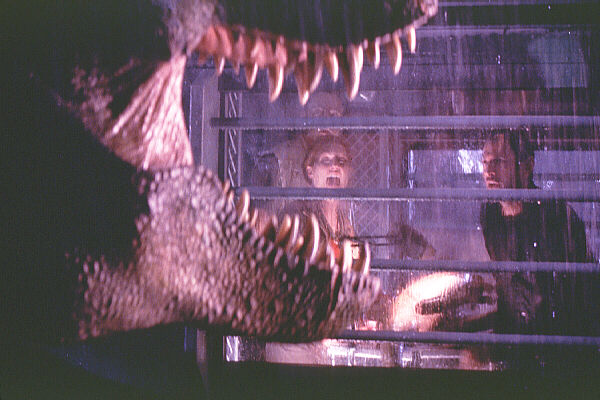
The Lost World: Jurassic Park (1997) After years of resisting efforts by studios to follow up one his blockbusters, Spielberg finally made a sequel to one of his movies. The Lost World would be the first. Partially, this was in gratitude to Universal Studios for allowing him to make Schindler's List. But there was another more selfish reason Spielberg wanted to do the follow-up—he wanted to be the first one to have a CGI T-Rex rampaging through an American city. The Lost World is a weird hybrid of sources, starting with the original book's opening. Then, it follows Crichton's follow-up book, then Spielberg went on his own tangent bringing the dinosaurs to the U.S. He's aided by a great cast: Jeff Goldblumreturns, and is joined by Julianne Moore, Pete Postlethwaite (his first of two movies for Spielberg), Arliss Howardand a pre-"West Wing" Richard Schiff. Only Vince Vaughn fails to register as a viable character. And...there's an annoying kid. Ultimately for all the technical advances, its a bit too much and unfocused, except for a Rube Goldberg set-piece—taken directly from Crichton's book--involving three people in an articulated double RV, a precipitous cliff and two predatory T-Rex's stomping around outside. It's a giddy nail-biter. And if Spielberg had stuck to that tone, instead of playing around with the satiric possibilities of Rex's in America, it would have been a far better movie.
Amistad (1997) The story of the uprising aboard the slave-shipLa Amistad hadnever been told before, but given Spielberg's clout post-Schindler's List, what was once considered box-office poison now had green-light potential. (And one should remember that the subject of slavery was very rarely addressed in films—and, incredibly, when it was presented, it was dealt with tolerance for the idea of "owned" human beings, however familial the colors it was cast in) As with The Color Purple, Spielberg's earnestness gets in the way of the story, which, if one merely gets the facts right, would make for compelling drama. Again, the cast assembled is amazing*Anthony Hopkins, Morgan Feeman, and as the "white knight" of the story, new star Mathew McConaughey—who despite tamping down his snarky Southern man exuberance still feels anachronistic for the period. And as the focus of the story, male-model Djimon Houssou acquits himself well--an impressive start for greater things to come. Now, if only they'd left John Quincey Adams' exemplary summation unscored by John Williams itwouldn't feel so much like a lecture, which, unfortunately extends to the entire film. After Amistad, Spielberg would take a year off before taking on his next subject..
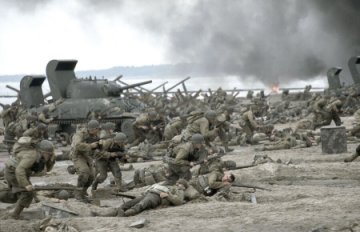
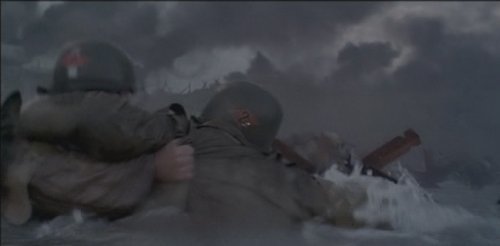
Saving Private Ryan (1999) Spielberg's first film for his newly-created entertainment studio, Dreamworks SKG. Spielberg begins with a bravura set-piece--the landing at Normandyon D-Daypresented quite unlike any way its been portrayed. Spielberg takes the subjective viewpoint to convey what it feels like to be a sitting duck in a go-for-broke battle, as well as the arbitrariness of death in war. Folks quibble about the rest of the movie, but you can't deny the power of that sequence, visually and sonically.** A uniformly fine cast with Tom Hanks, Ed Burns, Vin Diesel, Barry Pepper, Giovanni Ribisi, Matt Damon, as well as cameos by Ted Danson, Dennis Farina and up-and-comers Nathan Fillion and Paul Giamatti.*** Hanks' portrayal of a "Joe" who just wants to go home and does whatever he has to towards that end is well-reasoned—you have to believe that Hanks could deliver the devastating last line that slams home the coda of the film. It's one of the few war films to deal with the trauma of survivor's guilt and the brick wall that lies between life in war and life in peace. Saving Private Ryan raised awareness of the soldier's lot in the "good" war, and dispelled the notion that any war could be "good" for those on the line. For that alone, it should be regarded as one of the greatest of war films. After Ryan, Spielberg would take another year-break from directing.
A.I.: Artificial Intelligence (2001) The Kubrick-Spielberg love-child that nobody loved. Kubrick called it his "Pinocchio" movie, and quite rightly decided after years of development to hand it to Spielberg, which, after Kubrick's death, he was only too eager to complete. But in the transition from Kubrick outline to Spielberg screenplay there's a lot of gear-grinding going from cold fantasy to sentimentality. And unfortunately it suffers a fate that too many sci-fi movies suffer—it asks us to absorb too many concepts too fast, and the casual movie-goer has a hard time accepting global warming, robot love, and an ice-aged Earth inhabited by your PC's descendants. Throw in a Blue Fairy and a dying robot's last wish and the audience is in stitches. But...it dares to ask that question rarely asked (except by Hitchcock in Vertigo) "What is love, really?" And the answer is..."Love is what audiences didn't feel about this movie." Still, there's some definite mind-stretching going on here. And it gave Jude Law a star-making turn, at last. Plus, the kid, Haley Joel Osment, is simply amazing. Spielberg would take another year off, and come back in 2003 with two new films.
Minority Report (2003) Spielberg teams up with Tom Cruise on one of Philip K. Dick's high-concept sci-fi novels and manages to make a far more plausible future, but a less moody one, than that imagined in Ridley Scott's Dick adaptation, Blade Runner. Spielberg went the Kubrick route and hired future conceptualists (rather than art directors) to imagine the Washington D.C. of the future, full of mag-lev cars, targeted advertising via retinal scan, policemen with jet-packs and pre-cognitives who direct the police to the scene of the crime before it occurs. Spielberg casts a noir pall over the whole scenario which succeeds in nullifying some of his star's more intense moments. Colin Farrell impresses in an edgy performance that bests Cruise in their one scene together. The story is not much. But the trappings of it make it worth seeing. Spielberg evens pulls off a sequence that Hitchcock wanted to do: a fugitive makes his get-away by rushing into an auto assembly line and has the car built around him to escape. One other thing we should mention—it put an idea into the head of computer engineers that produced the first series of computer touch-screens, showing what can happen when you build a better mouse.
Catch Me if You Can (2003) Spielberg, with a considerably lighter touch, tells the story of Frank Abignale Jr., who, shattered and adrift from his parents' divorce, gravitates to the edge of society and becomes an expert forger and jackof allprofessions. Leonardo DeCapriois a hoot as a kid who just wants to belong somewhere, and Tom Hanks squashes any ego to play the flat-foot FBI guywho dogs his tail. Divorce is a subject close to Spielberg, and he must have been drawn to the story of a kid dealing with it...by doing anything he wants, and DeCaprio's Frank could be Empire of the Sun's "Jim," another loose cannon on deck, all semi-grown-up. There's some particularly good work by Christopher Walken, Martin Sheen, Jennifer Garner along the way, and a snazzy, jazzy score that lets John Williams go back in time to when he was a jazz session-man named Johnny Williams. Look for Amy Adams in an early role, along with Elizabeth Banks and Amy Acker. Spielberg was always able to spot talent and use it early.
The Terminal (2004) What Spielberg accomplished with Catch Me If You Can was needed on The Terminal, as, for some reason, its a return to heavy-handed direction. Maybe its because the film is so set-bound (A nearly-scale jet terminal and concourse was constructed to exacting detail on a sound-stageand the majority of filming took place there), or maybe the director thought there was a bigger message (a comment on the situation of illegal immigrants, perhaps? If so, it's buried under too much Spielberg-business) but the story of a Slavic visitor whose homeland goes to war and leaves him without a country and with invalid papers--thus making him incapable of leaving the terminalwithout being arrested and deported--overstays its visa. There is some great work with the minimum-wage employees of the port who form a greek chorus and cheering section for Hanks' character (and Zoe Saldana is featured—in an act of serendipity, she gives the Vulcan salute). But the film goes astray with Catherine Zeta-Jonesas a cute/clutzy stew. You just don't buy her as being so pathetic. Ultimately when all is revealed one gets the impression of a balloon encased in concrete. All the potential charm is squeezed out of it by Spielberg's leaden direction. Spielberg would again take a year break and then quickly produce another two films in a year.
The War of the Worlds (2006) Spielberg and Cruise again. This time Spielberg was paying homage to the original Paramount film, as well as Welles' (Orson's) radio version, and the original Wells (H.G.) novel, while also drilling down on something that had been fascinating Spielberg since September 11th--the idea of American refugees. War of the Worlds delivers that image in spades. There were all sorts of gripes aboutthe tripod walkers (its from the book!) and the way the story just sort of ends (IT'S FROM THE BOOK! ALRIGHT??!), but at least no one complained about not making the invaders "Martians" anymore. I found Spielberg's devotion to the predecessors admirable, and only once does he succumb to "Tom Cruise-Super Hero" mode, (Cruise is blessedly at his most restrained). Dakota Fanning is extraordinary, and to see the stars of the Paramount version at the end of the trail warmed my heart. The only section of the film that disappoints is the extended scenes inTim Robbins' basement. Robbins' performance is over-the-top, and the sequence kills any momentum for the film. But all in all, its a great attempt to modernize the classic while staying true to its red roots.
But, there’s more: One can see War of the Worlds as the final part of a trilogy of films, just as Oliver Stone had a VietNamtroika—all taking on different perspectives of that conflict. Close Encounters is The Searchers with E.T.’s instead of Commanche’s—little Barry is abducted and it’s his mother's quest to get him back. InE.T. one of the aliens is the one left stranded and he must find his own way home, just as Elliott must turn aside his selfishness and aid his alien-friend in doing so. In War of the Worlds, Tom Cruise is the “Ethan Edwards” character—a deadbeat dad, self-centered, another in a long-line of men with “Peter Pan” syndrome in Spielberg films. In his “search” he must get his family home and reunited with their mother. And his hanging-back from going inside that home is a direct reflection of the ending of The Searchers (In fact, I was half-way expecting Cruise to grip his arm at the end, but he didn’t). It's not enough to say "we are not alone." We never really were.
Munich(2006) The same year as War of the Worlds, Spielberg came out with this. It's the fictionalized story of a specific Mossad unit'shunting down of the perpetrators of the Munich Massacre at the '72 Olympics. It had been filmed once before as "Sword of Gideon" for the Showtime cable channel, but Spielberg and his scripters ("Angels in America" author Tony Kushner and veteran scribe Eric Roth) pull out all the stops and consider the cost of revenge on the team-members and the future outcome of that mission. Brutal and completely cynical, Munich is a very mature telling of a spy story, with all the possibilities for compromise, double-dealings and betrayals—as well as the identification with the "other side" that a story of this type can lend itself to. Plus, there are all the set-pieces of assassinations that Spielberg winds up like lethal Swiss watches. It's a bit like "Mission: Impossible" with guilt, and there are images from this movie that you will never, ever get out of your head. Eric Bana leads the cast with a couple of the assassins played by future Bond Daniel Craig and Ciarán Hinds. Plus, look for Mathieu Amalric and Marie-Josée Croze of The Diving Bell and the Butterfly. After two films in the shadow of the dust-cloud of 9/11, Spielberg decided to lighten up for his next film. But that shadow still remained.
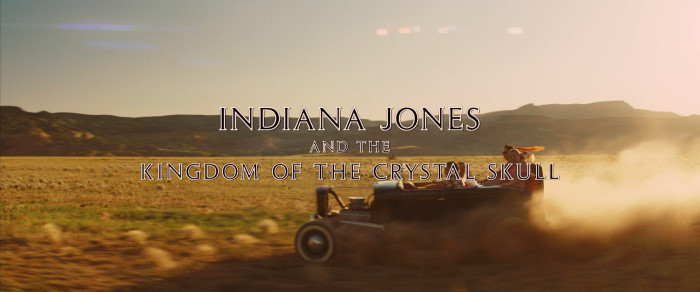
Indiana Jones and the Kingdom of the Crystal Skull(2008) Comfort food. That's what you could call the fourth "Indiana Jones" film, after the harrowing one-two punch of his previous films. It was a chance to team with old pals, and do something lighter and more fanciful. But getting a story was the tough part. Spielberg, Lucas and star Harrison Ford tossed ideas around for years, leading to a decade of anticipation and false-expectations. When the movie was actually released, the fan-boys turned on it for stretching credulity too far ("Nuking the fridge" became a variation of "jumping the shark"), as if the first three films were somehow rooted in reality. Please.
Crystal Skull represents the true sequel to the original Raiders in terms of quality and verve. Where the other films were "variations on a theme" to the first, Crystal Skull embraces the filmic-culture of the time it is set. Instead, of the raucous serials of the 40's, this one is set in the 50's with such B-movie drive-in staples as Red-scare villains, hot-rodders, biker-boys, nuclear consequences and Invaders from Another World—I was only slightly disappointed that a nuclear explosion didn't create a giant creature-critter off in the distance. The film is buttressed by two "Indy-in-thrall" shots—one of a nuclear explosion and the other of an inter-dimensional ship tearing up the landscape in lift-off, that represent a choice between the destructive and the transportive, and serves as a cautionary presentation of choice for the McGuffin of the story—knowledge and its uses. There's more to "Crystal Skull" than its detractors have the patience to see. An article in the works will explore that, and speculate about what would be fun in the future...IF a rumored fifth "Indiana Jones" film comes to fruition. Part of me hopes it doesn't, because Spielberg could be better used on other projects.
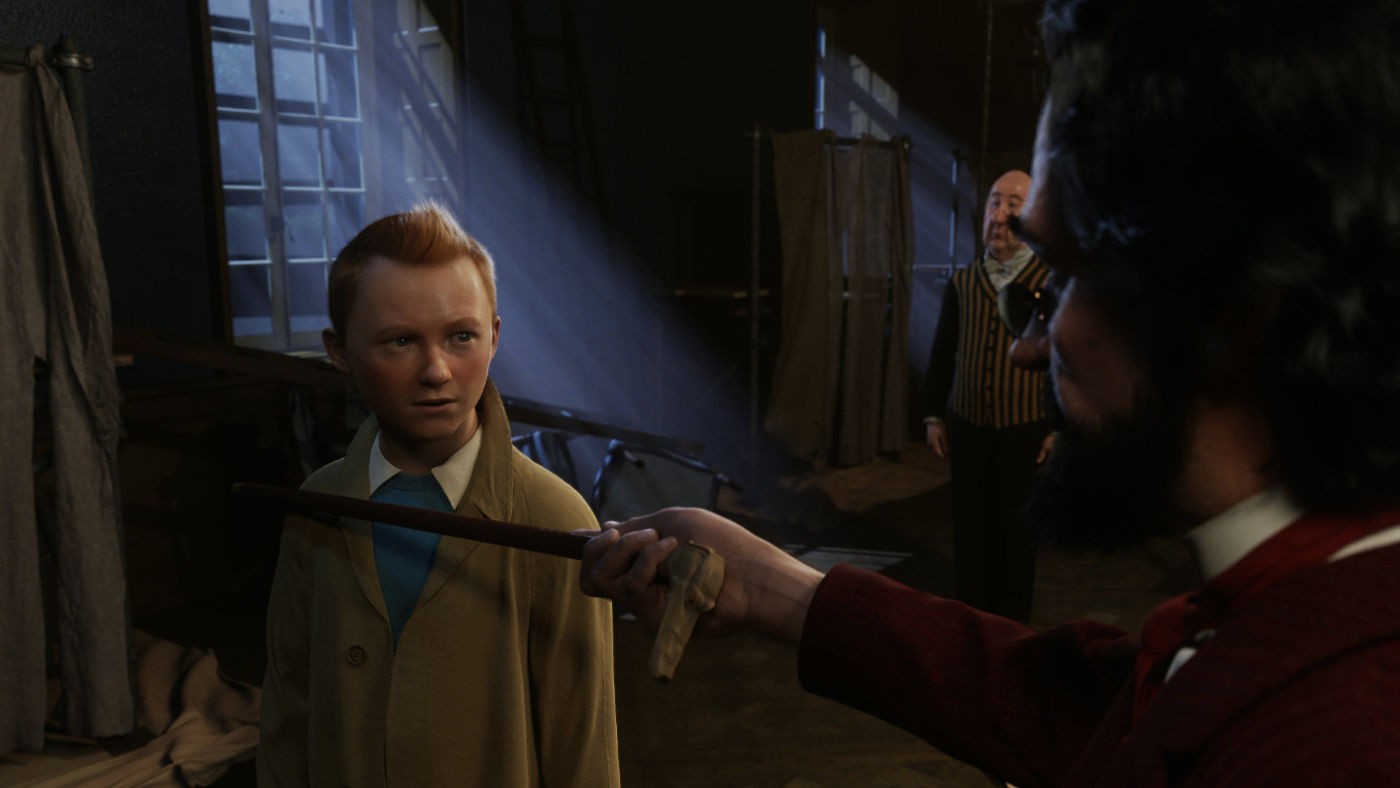
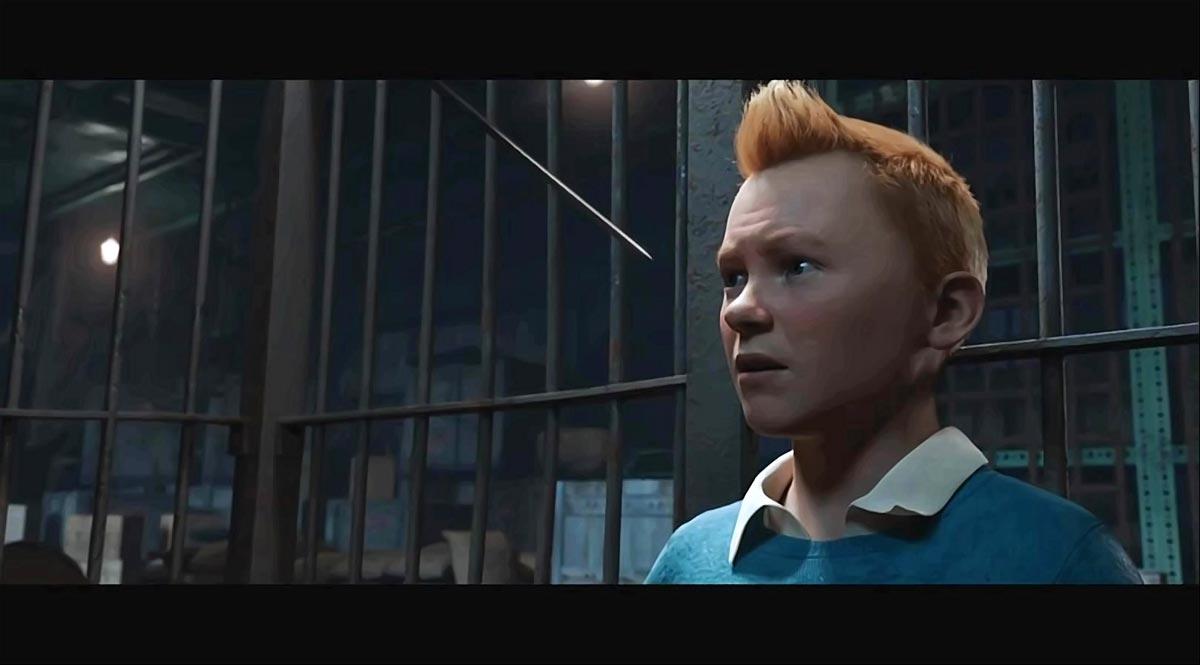
The Adventures of Tintin: The Secret of the Unicorn (2011)Spielberg teamed up with Peter Jackson to make this motion-capture animation version of the internationally popular Tintin books by Hergé. Fun idea, especially for the ever-growing international audiences that seem to be a bit more predictable than jaded American ones. But Tintin gave those who had been following Spielberg a special treat—an answer to a question no one had dared consider—what would Spielberg do with a film if he had no limitations whatsoever?The results are almost hallucinatory. The film starts out with a fairly standard pattern of Spielberg wizardry, pin-wheeling shots and edits. But before long, it turns into one long tracking shot, moving in and out of flashback, wheeling through chases that move from perspective to perspective without so much as a cut, stunts that couldn't be filmed, let alone approved for insurance purposes, and enough dog endangerment to produce life-threatening seizures in an entire kennel of ASPCA inspectors. It's 1941 without the "restraint" and with a bit more class. The learning curve of Spielberg with this film came quickly, conquering the "uncanny valley" and allowing the characters to squint to overcome it. And given its nautical theme, there's enough swaying from flash-back to flash-forward to evoke a certain wooziness. Still, it makes you wonder what other tricks Spielberg might have up his sleeve, given no restraint. The thought is almost scary.
Spielberg is approaching the best of both worlds--he's working with some of the finest dramatists and authors available, while keeping his visual eye peeled for the striking image. If he has one weakness entering into his Senior Year, it is that constant desire to make Play-Mountains out of Mole-Hills.**** He can do anything he wants, with as much money as people can throw at him. But, Spielberg tends to work best with constraint...whether with time or budget, and that has a tendency to make him come up with better story-telling solutions than if he could do everything he wanted--a lesson learned from Jaws and Raiders... At least, he seems to know that--with his extended pre-production periods and his break-neck pace making movies these days As for subject matter, his "light" films now carry darker nuances, while his more heavy subjects are benefiting from his more streamlined directorial style. Spielberg seems to have left his naivete behind, while keeping his sense of wonder...and outrage. Of all his contemporaries (Coppola, Lucas, Scorsese, DePalma), he has managed to broaden and deepen his technique and subject matter in a cinematic environment that goes for the quick buck, and least common denominator. Of all of them, Spielberg seems to be the one getting better and wiser, in an age of the dumbed down movie despite all the money and clout he has earned throughout his career. It will be fascinating to see what he does with it in the future.
* One particular cast-member is a funny one: Darren Burrows who played "Ed," Cicely's aspiring film-maker and an obsessive student of Spielberg in "Northern Exposure."
** I have a vivid memory of watching Ryan for the first time. Ten minutes in, I realized I was in pain, so I pulled my head out of the movie, and realized I was ducking down in my seat. To avoid the bullets. I straightened up to watch the rest of the movie, but I did it with respect.
*** I've heard this rumor that its Kevin Costner as the German soldier shot through his rifle sight. Sure looks like him.
**** He did this literally—though in reverse—in the fourth Indiana Jones movie.
 Making Mountains Out of Mole-Hills


 "Indiana Jones and the Terrible Age of Wonders"


 This is the first of two images (that Spielberg deliberately composed) of "Indiana" Jones in rapt observation of an unfathomable thing that buttress Indiana Jones and the Kingdom of the Crystal Skull. In both, he is dwarfed by the event, small and helpless—all he can do is watch. In the first, he is witness to the extent of Man's knowledge. In the second, as he watches the launch of an alien race's*** craft to inter-dimensionally travel "the spaces between spaces," something far beyond his ken and catechism. The one represents all that we know, and the other opens up another Chamber of Secrets. "Indiana" Jones can travel the four corners of the Earth, and there is still so much more territory to explore, and, indeed, more than he can know for certain.