"You Might Have Heard Him Say it, But He Didn't Say it, and That's a Fact!" or Oh, Tell me "Who are YOU?" They say you don't want to see government at work just as much as you don't want to see sausage being made. The implication is that both involve grinders and a certain amount of evisceration. And the dropping of blood, metaphorically, and in some cases, literally. In the Loop,the smart, funny movie version of the British comedy "In the Thick of It" manages to bludgeon home that point, but also draw parallels with the most drop-dead dysfunctional of office settings. In the Loop employs the same "caught on the fly" filming and editing techniques of "The Office" and they're played out by a cracker-jack group of actors who give the impression that they're ad-libbing the whole thing (led by a startlingly brilliant performance by Scotts actor Peter Capaldi*). Only it's "The Office" with a vindictive murderous glee and what, if it had gone through the Ratings Board,**would be described as "pervasive language."
It is also an episode of "Yes, Minister" on meth-amphetamines set in an abatoir, where the civil servants—the guys who never get voted out of office—run the show, and the show is the pantomime of a representative government working on the people's behalf. The lobbying people. The people in power. Those people. You know. There's enough invective in this movie to launch a thousand Uni-bombers, and most of it is hilarious—the kind of hilarity you feel guilty about laughing at. Especially if you didn't vote (not that it would do you much good, ultimately).
In this expansion of the series, the British Secretary of State for International Development Simon Foster (Tom Hollander) burbles through an innocuous press interview that an anticipated war conducted jointly by the U.S. and Britain is "unforseeable" and the Prime Minister's Director of Communications Malcolm Tucker (Capaldi) begins running interference ("I'm sweating spinal fluid here!") for Foster, the PM, and American functionaries creating damage control by causing as much destruction as possible (not too unlikely a scenario). That he does it by some of the most creative uses of the Anglo-Saxon tongue makes it hilarious, cruising through the labyrinths of power filled with ass-covering lackeys like a shark through a school of puffer-guppies—battering through so many non-functionaries "on defense" by being as offensive as possible.
This is not your father's Mr. Smith Goes to Washington, or even "The West Wing"—both those political dramas assume that civil servants are servants, rather than being self-serving, doing their jobs for the public good, not seeing it as a public nuisance. Those films assume the core of public service as "Love Thy Neighbor," rather than the reality of all-knowing governments—but only in the biblical sense.
* Capaldi may not be familiar to American audiences, but you've seen him before—deny it all you want, but you have—maybe in Local Hero (at the time of the writing Capaldi has appeared in a "Doctor Who" episode but he hadn't yet become "the twelth and existing Doctor" in that long-running series). In fact, he won an Oscar for writing and directing the very odd and very funny Franz Kafka's It's a Wonderful Life. Also in the cast are James Gandolfini—as good as you'd expect him to be—Mimi Kennedy, the always entertaining David Rasche, and...anybody remember Anna Chlumsky..."My Girl?"
** It didn't, and so it arrives at theaters with the "NR" rating, the "nolo contendre" of the MPAA system.
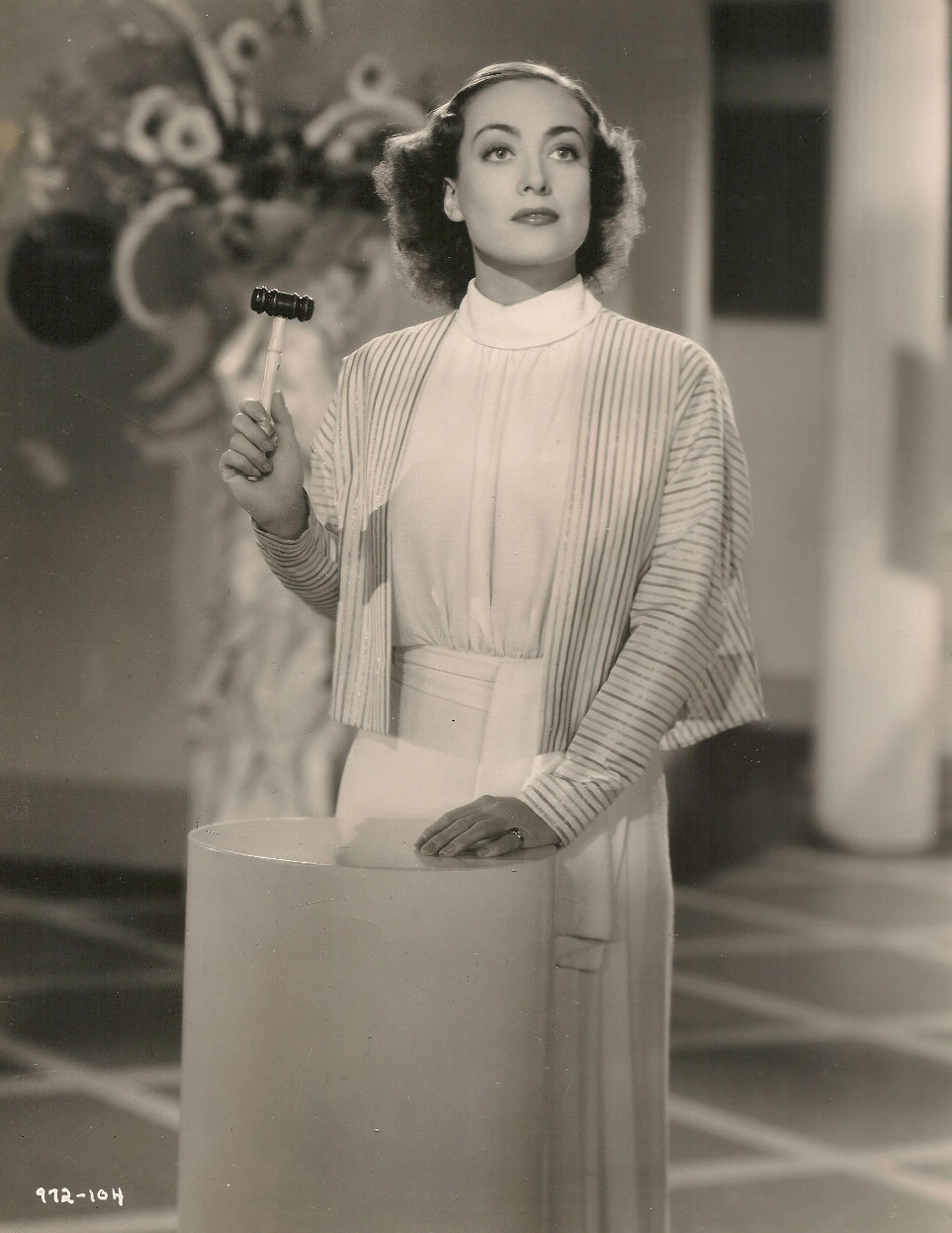
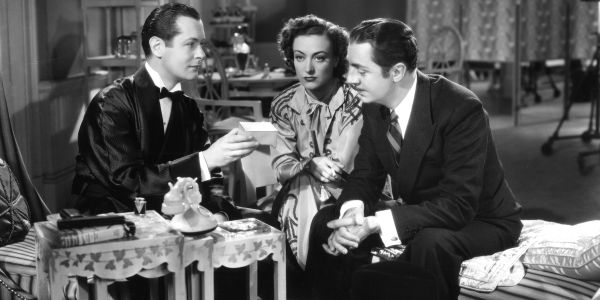
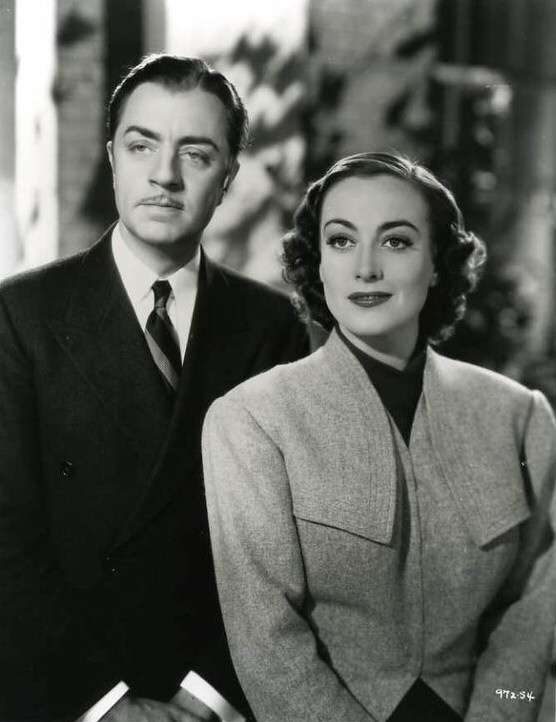
It's hard to pin-point, but around the time the cast all gets together at the estate of Lady Embley (Ralph) after a charity event, the tone suddenly lightens and everybody, especially Montgomery, get several notches better. Now, at some point, the original assigned director Richard Boleslawski died of a heart attack, to be replaced by Hollywood's only working female director at the time, Dorothy Arzner, and while one is hesitant to say this is entirely due to a change in directors, it is unarguable that the film starts to take off, whereas before it has a strained and stuffy feeling to it. Maybe, it's the presence of Powell—though it's doubtful because Crawford starts to light up, too—maybe because the entire cast is pinging off each other, there's more cross-talk between them and more energy zapping between each and every player. Maybe it's the script because the last half is where the change-up's, turn-around's and surprises in character and situations are clustered, a perfect case of the tail wagging the dog (without a chase, explosion or clinch to be seen). But it makes one want to check out Dorothy Arzner, the lone woman in the field (besides Leni Riefenstahl) to be making films at the time. Not to be sexist or anything, but it does make a difference.
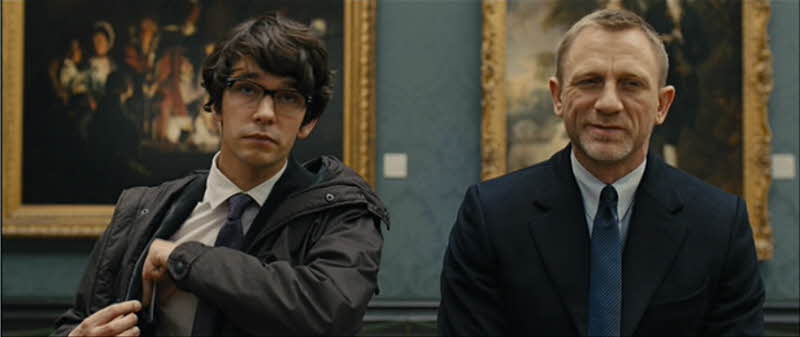
The Story:Skyfall marked the 50th Anniversary, the golden anniversary, of the James Bond franchise, having started with its first release—Dr. No—in 1962. But, all that is golden does not glitter. In fact, if you've had anything gold-plated, you might notice that it has a tendency to flake as it ages. Well, the James Bond series has gone through its flaky period in the past (we'll leave it to you to decide when that might be), but since starting from scratch (and Daniel Craig) with 2005's Casino Royale (the franchise's first attempt to film Ian Fleming's first Bond novel), things have been decidedly different (or as Connery's Bond said in Diamonds Are Forever, "definitely distinctive"). Casino Royale took it from the wall-studs, starting with Bond before his licence to kill, and ending what is rather an "agent's holiday" of a mission with crippling injuries, physically and psychically. The next film Quantum of Solace was the series' first sequel, but was more of a confusing detour. The third with Craig, Skyfall, did a lot of lid-turning and up-ending and game-changing, but still managed to bring the series back to what looks like normalcy, while being something of a love-letter to the city of London. But, it is also an acknowledgement of time. At the start of the film, Bond is on an annoying mission that has cost some fellow travelers their lives, and sent him off a bridge on the orders of his superior (Judi Dench). He takes the opportunity to "stay dead," but it's only when the failure of his mission comes back to blow up in MI-6's face that he resurfaces, looking the worse for wear. He's sent out on a suicide mission, where he'll either succeed or die in the process, and, in the meantime, he has to be reminded that he's getting a bit old for this nonsense...by practically everybody in the film. Including the new "Q." The "Quartermaster" had been missing from the Bond series since Craig's tenure (and so had Moneypenny, for that). Desmond Llewelyn's "Q" had the longest run of any of the Bond players going from Connery to Brosnan, aging from fussy bureaucrat to grumpy grampa. John Cleese stood in for Llewelyn when he passed, but by this time the gadgets were impractical and mostly available in Skymall catalogues, and the scenes were merely an excuse for a concentrated string of one-liners. That wouldn't do for Craig's more straight-laced Bond. But, how they do it is just another one of the neat surprises that is come up with (they do that when they're really trying) and part of that is the casting of Ben Whishaw, young—too young—arrogant, and with a perpetual smug smile on his face, as if he's about to show Bond where the pasture he should be put out to is. By this time, Craig's Bond is getting a bit weary of it, and wants to get on with the job, and Craig's subtle nastiness is a fine contrast to Whishaw's whipper-snapperishness. The Set-Up: Shot, considered dead, and "missing a step," James Bond (Daniel Craig) has returned to MI6, recently the target of a terrorist attack, to find those responsible. He has been sent on assignment to China to find the assassin he had earlier pursued to reacquire a list of embedded British agents that are being leaked around the world. But, before departing, he needs to be "geared up." For that, he goes to a clandestine meeting at the National Gallery. Action! INT. NATIONAL GALLERY - DAY
James Bond sits in the National Gallery, looking at a painting. It is "The Fighting Temeraire" by J.M.W. Turner.
As he sits, a young man in a mac walks up and sits down beside him.
Bond becomes slightly uncomfortable.
YOUNG MAN: Always makes me a little melancholy.
YOUNG MAN:Grand old warship being ignominiously hauled away to scrap.
YOUNG MAN: (sighs)
YOUNG MAN:The inevitability of time, don't you think?
YOUNG MAN: What do you see?
BOND: A bloody big ship.
BOND: Excuse me... Bond gets up to leave.
YOUNG MAN: 007...
Bond stops, sits back down, annoyed.
Q: I'm your new quartermaster.
BOND: ...You must be joking.
Q: Why, because I'm not wearing a lab-coat? BOND: Because you still have spots. Q: My complexion is hardly relevant. BOND: Your competence is. Q: Age is no guarantee of efficiency. BOND: And youth is no guarantee of innovation.
Q: I'll hazard I can do more damage on my lap-top sitting in my pyjamas before my first cup of Earl Gray than you can do in a year in the field.
BOND: Oh! So why do you need me?
Q: Every so often a trigger has to be pulled.
BOND: Or not pulled. It's hard to know which in your pyjamas.




.png)