Showing posts with label Rock n' Roll. Show all posts

Thursday, July 22, 2021

It Might Get Loud

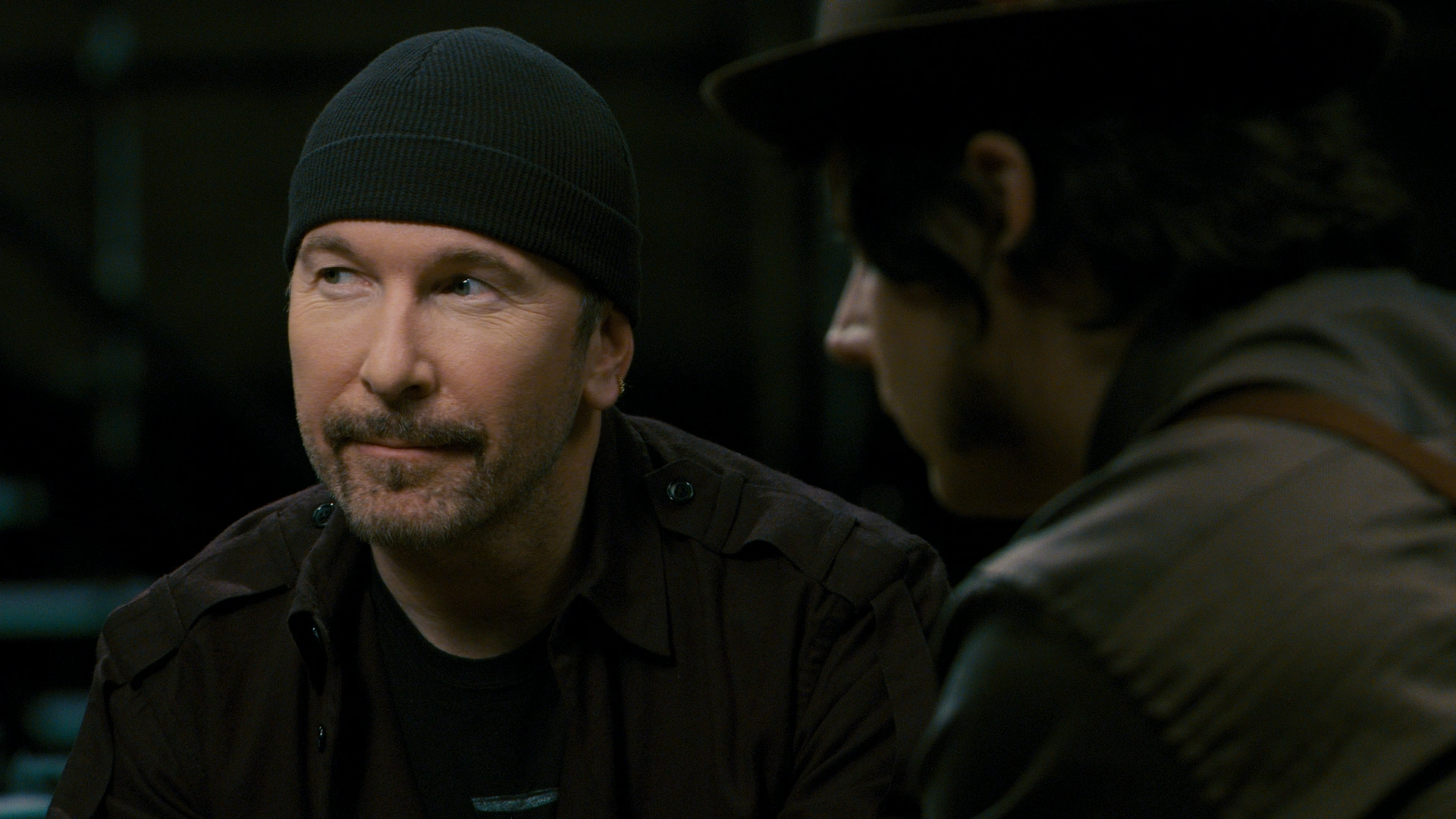
It Might Get Loud (Davis Guggenheim, 2009) Between making An Inconvenient Truth and Waiting for 'Superman', (and the occasional tv work like the pilots for "The Defenders," filmmaker Davis Guggenheim did one for fun: It Might Get Loud, a summit, if you will, of three electric guitar aficionados, Jimmy Page, The Edge, and Jack WhiteThe axe-men were brought together to talk, but as Page wryly notes "there will be guitars there, so who knows?

What's interesting about the documentary and hearing them three men talk is their completely different approaches to using the electric guitar: for Page, it's technique; for The Edge, it's technology; for White, it's breaking it down to the bare essentials. All three do things nobody else does with the electric guitar, approaching the instrument with a completely different mind-set, as writers approach a piece of paper.

It reduces them to human beings, all capable of greatness, but not fathoming where each gets it ("I can't tell you what a 'process' is" says Page at one point): to see the unbridled love in the eyes of The Edge and White as they watch Page play the opening to "Whole Lotta Love," how Edge intensely scrutinizes White's fingering during a jam session, all three's tales of creative crises—Page's dissatisfaction with studio sessions, Edge's dealing with writing the "War" album, White, how to create a blues aesthetic in a world of "packaged" music and bands.
And it is fun to watch them eye each other and tell tales and compare notes, artisans and students all.  My favorite moments are with White, whose work I know the least and who always veers precipitously close to the edge of pretension:
the first opens the film as he builds a guitar out of scrap wood and a pick-up; the second, is in the extras, and has Page and Edge ask about a particular riff that White wrote for "Seven Nation Army" and White tells the tale of how he socked it away "if I was going to write a James Bond theme song or something." But Edge wants to know how he did it, and when White tells them, the others' eyes go wide with the simplicity of it, and both have to try it. Then, they all riff, finding possibilities. "That'll be five dollars," White cracks.

I'm not a musician, but I appreciate musicianship
*, and I have no particular interest in electric guitars, but I like good stories told by good people.  And It Might Get Loud sure is fun.

* My favorite comment on that subject came from a rap-artist I was recording—on the subject of Jimi Hendrix—and someone said something about a certain recorded performance being lack-luster, and the guy paused, considered what to say, and said "Ya know...as many grains of sand there are on the beach...THAT's how many times Carlos Santana has played "Black Magic Woman." Wisdom, there. It's not just about innovation...it's about discipline, too.

Tuesday, September 20, 2016

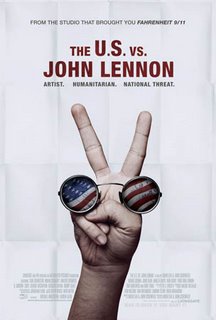
The U.S. vs. John Lennon

Written at the time the film hit theaters.

Yes, We All Shine On

First off, it's a
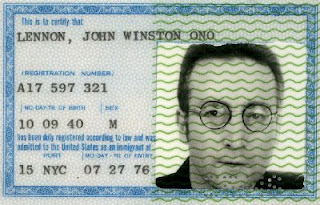
VH-1 documentary, and you know what those look and feel like. Heavy on the art direction, light on the content, The U.S. vs. John Lennon single-mindedly paints the impression that John Winston Lennon was considered a threat to the Nixon Administration, and thus, singled out for investigation and action by federal agencies to toss him out of the country. All true to a certain extent. But what the documentary, in its rush to lionize both Lennon as a martyr and rock n' roll as a powerful political force ("Corporate rock n' roll," mind you), fails to point out is that was a far-too-commonplace tactic for that government, whether under the aegis of J. Edgar Hoover, or by the group that was organized by the White House after Hoover decided he didn't want any part of Nixon's dirty work or "The Plumbers" (they of "Watergate" fame). First off, the filmmakers have the disingenuousness to say that John Lennon was unique in that he used his celebrity to advance a political cause.

No! Really? Bet that never happened before! Gosh! I wonder what all those HUAC meetings were for in the 50's?

Nor was Lennon unique being targeted by the Nixon administration. During the Watergate Hearings, it was revealed that Nixon had an actual "Enemies List"--involving such folks as Daniel Schorr and Paul Newman. The only surprising thing about its existence was that the clowns actually wrote the names down and kept copies of it (for the memoirs, no doubt).

Another point of emphasis is Lennon's participation in a benefit rally that saw its benefactor released from jail three days later. The documentary would have us believe it was "The BIG NAME of LENNON" that got the wheels of justice rolling, when it might actually be that
John Sinclair was released by a sympathetic judge who came to the same conclusion the rallyers did: that the man shouldn't have been sentenced to ten years in prison for selling two joints to undercover cops; that the charges were trumped up, and having been so trumped were thus dismissed.

Now Lennon is the Beatle that I have the most admiration for (then George, then Richard Starkey, then Pete Best, then Jimmy Nicol, Murray the K, then Sir Paul, the git), and its always fun to see old footage of him, sporting and sparking. What Lennon did do that was unique was to take Yoko Ono's challenging, simple ideas and exploit them as marketing slogans, whether with songs, on billboards, or the various stunts the two pranksters would use to lure in the press. Lennon didn't give a shit if he was thought a fool as long as the message got out—when you were a Beatle you developed a hard carapace. The film is at its best showing the two manipulating the "five steps behind" fifth estate, and clearly enjoying themselves, being very much in love, and showing how the government actions against them (surveillance and threatened deportation) weighed heavily on them.

But its not the whole story. Nothing is made of Lennon's drug abuse (what, they couldn't get rights to use footage from
Let It Be?) or about what has become known as "John Lennon's Lost Weekend." The filmmakers use "Instant Karma" as the End Credits song implying (I guess) that everybody doing dirty deeds got their "comeuppance." Ironically, one of the lyrics from that song is "And We All Shine On...(like the moon and the stars and the sun)." Taking another interpretation of the word "shining," one can say that applies to the film-makers as well, since they "shine on" any embarrassing facts that might contradict their simplistic view of a complicated artist.