Sunday, November 6, 2016

Don't Make a Scene: The Social Network

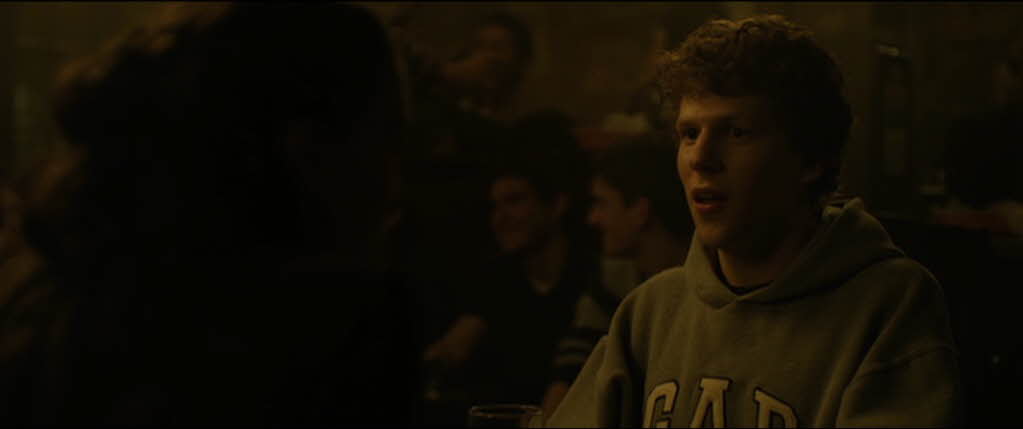
When I was looking through what scenes to post on this Sunday before election day, there were a few possibilities, but the most appropriate one is this one. 

When I posted this (on an earlier blog) the first comment that came through was "Well...that was...exhausting." 

Yes, it is. Much like this election season has been. 

But, ultimately, this election has boiled down to one point, that has had the ultimate influence on how I'm voting. More than any election previously, it comes down to the tenor of the campaign (which has been at a shrieking high C —and not very #), which has changed the rhetoric (or what passes for it) in our political discussion now, not for the better, and maybe for all time. A country should aspire to higher ideals and not baser intentions.

And my reply—and my vote—comes down to the simple reason at the end of the scene.

The Set-Up: It is a bravura opening that signals to the audience what it can expect from the movie for the next two hours plus.  Like the Universe-expanding opening shot of Star Wars, or the opening speech from Patton, it sets the stage for the story to come. But, unlike, say, Patton, it is a duet, rather than a solo, and it happens at such a quick pace, it's a little tough to get one's bearings. But this opening back and forth cross-examination will inform the  the procedures, testimony, and depositions that make up the bulk of The Social Network.

It is typical of the work of screenwriter Aaron Sorkin, who used to do this verbal parrying as a matter of course when he was the guiding pen of "The West Wing"—the only difference being that these participants aren't doing so down winding corridors of power. But, the arguments, counter-arguments, cross-talk, arcana and call-backs are basically the same. You have to keep up with the pace, even if sitting still.

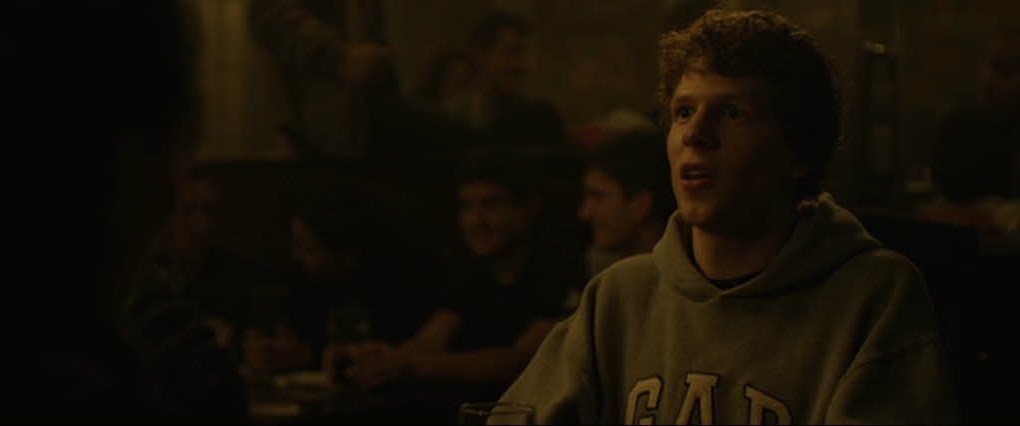
The performances are amazing. The hyper-kinetic style of Jesse Eisenberg that has previously been used to portray insecurity (in such films as Wonderland and Zombieland), now suggest an arrogant tactician, the only betrayal of insecurity being his furtive glances to see that the verbal jousting isn't causing a scene in the bar. And Rooney Mara's persistent attempts to cut through the clutter of her date's thought processes play across her face in a manner that the player on the other side of the table cannot seem to display.

It boils down to one line: "I have no intentions of being friends with you."  And Mark Zuckerberg will spend the rest of the movie building and defending his machinations to construct something that will lower the bar of what constitutes friendship, in an area of computerized relationships that has as its center, something that he seems to be incapable of being—the social network. 

The Story:  A boy (Jesse Eisenberg), a girl (Rooney Mara) and a bar—that's all we know at this point.

Action! (Or should I say "Opening Arguments?")


FROM THE BLACK WE HEAR--
MARK (V.O.) Did you know there are more people with genius IQ’s living in China than there are people of any kind living in the United States?
ERICA (V.O.) That can’t possibly be true.
MARK (V.O.) It is.
ERICA (V.O.) What would account for that?
MARK (V.O.) Well, first, an awful lot of people live in China. But here’s my question:
FADE IN:
INT. CAMPUS BAR - NIGHT
MARK ZUCKERBERG is a sweet looking 19 year old whose lack of any physically intimidating attributes masks a very complicated and dangerous anger. He has trouble making eye contact and sometimes it’s hard to tell if he’s talking to you or to himself.
ERICA, also 19, is Mark’s date. She has a girl-next-door face that makes her easy to fall for. At this point in the conversation she already knows that she’d rather not be there and her politeness is about to be tested.
The scene is stark and simple.
MARK How do you distinguish yourself in a population of people who all got 1600...
MARK ...on their SAT’s?
ERICA  I didn’t know they take SAT’s in China.
MARK  They don’t. I wasn’t talking about China anymore, I was talking about me.
ERICA  You got 1600?
MARK  Yes.
MARK  I could sing in an a Capella group, but I can’t sing.
ERICA  Does that mean...
ERICA ...you actually got...
ERICA ...nothing wrong?
MARK I can row crew or invent a 25 dollar PC.
ERICA  Or you can get into a final club.
MARK  Or I can get into a final club.
ERICA You know, from a woman’s perspective, sometimes not singing in an a Capella group is a good thing?
MARK  This is serious.
ERICA On the other hand I do like guys who row crew.
MARK(beat)...Well I can’t do that.
ERICA  I was kid--
MARK  Yes, it means I got nothing wrong on the test.
ERICA  Have you ever tried?
MARK  I’m trying right now.
ERICA  To row crew?
MARK  To get into a final club.
MARK  To row crew? No. Are you, like--whatever--delusional?
ERICA  Maybe, but sometimes you say two things at once and I’m not sure which one I’m supposed to be aiming at.
MARK  But you’ve seen guys who row crew, right?
ERICA  No.
MARK  Okay, well they’re bigger than me. They’re world class athletes. And a second ago you said you like guys who row crew so I assumed you had met one.
ERICA  I guess I just meant I liked the idea of it. The way a girl likes cowboys.
MARK (beat) Okay.
ERICA  Should we get something to eat?
MARK  Would you like to talk about something else?
ERICA  No! It’s just since the beginning of the conversation about finals club I think I may have missed a birthday.
ERICA (can’t get over it)
ERICA  There are really more people...
ERICA  ...in China with genius IQ’s than the entire population of--
MARK  The Phoenix is the most diverse. The Fly Club, Roosevelt punched the Porc.
ERICA  Which one?
MARK  The Porcellian, the Porc, it’s the best of the best.
ERICA  Which Roosevelt?
MARK  Theodore.
ERICA  Is it true that they send a bus around to pick up girls who want to party with the next Fed...
ERICA  ...Chairman?
MARK  So, You can see why it’s so important to get in.
ERICA  Okay...
ERICA  ...well, which is the easiest to get into?
MARK is visibly hit by that...
MARK  Why would you ask me that?
ERICA  I was... 
ERICA  ...just asking.
MARK  None of them, that’s the point. My friend Eduardo made $300,000 betting oil futures one summer and Eduardo won’t come close to getting in. The ability to make money doesn’t...
MARK  ...impress anybody around here.
ERICA  Must be nice. He made $300,000 in a summer?
MARK  He likes meteorology.
ERICA  You said it was oil futures.
MARK  You can read the weather you can predict the price of heating oil. I think you asked me that because you think the final club that’s easiest to get into is the one where I’ll have the best chance.
ERICA  I asked--
ERICA  ...What?
MARK  You asked me...
MARK  ...which one was the easiest to get into because you think that that’s the one where I’ll...
MARK  ...have the best chance.
ERICA  The one that’s the easiest to get into would be the one where anybody has the best chance.
MARK  You didn’t ask me which one was the best one, you asked me which one was the easiest...
MARK  ...one.
ERICA  I was honestly just asking. Okay? I was just asking to ask.
ERICA  Mark, I’m not speaking in...
ERICA  ...code.
MARK  Erica--
ERICA  You’re obsessed with finals clubs.
ERICA  You have finals clubs OCD and you need to see someone about it who’ll prescribe you some...
ERICA  ...sort of medication. You don’t care if the side effects
ERICA  ...may include blindness.
MARK  Final clubs. Not "finals clubs" and there’s a difference between being obsessed and being...
MARK  ...motivated.
ERICA  Yes there is.
MARK  Well you do--that was cryptic--so you do speak in...
MARK  ...code.
ERICA  I didn’t mean to be cryptic.
MARK  I’m saying I need to do something substantial in order to get the attention of the clubs.
ERICA  Why?
MARK  Because they’re exclusive.
MARK  And fun and they lead to a better life.
ERICA  Teddy Roosevelt didn’t get elected president because he was a member of the Phoenix Club.
MARK  He was a...
MARK  ...member of the Porcellian and yes he did.
ERICA  Well why don’t you just concentrate on being the best you you can be?
MARK  Did you really just say that?
ERICA(beat) I was kidding. Although just because something’s trite it doesn’t make it any less--
MARK  I want to try to be...
MARK  ...straight forward with you and tell you that I think you might want to be a little more supportive.
MARK  If I get in I’ll be taking you...to the events...
MARK ...and the gatherings...and you’ll be meeting a lot of people you wouldn’t normally get to meet.
ERICA (smiles) You would do that for me?
MARK  We’re dating.
ERICA  Okay, well I want to try and be straight forward with you and let you know that we’re not anymore.
MARK  What do you mean?
ERICA  We’re not dating anymore, I’m sorry.
MARK  Is this a joke?
ERICA  No, it’s not.
MARK  You’re breaking up with me?
ERICA  You’re going to introduce me to people I wouldn’t normally have the chance to meet? What the fff--
ERICA  What is that supposed to mean?
MARK  Wait, settle down.
ERICA  What is it supposed to mean?
MARK  Erica...
MARK  ...the reason we’re able to sit here and drink right now is cause you used to sleep with the door guy.
ERICA  The door guy, his name is Bobby. I have not slept with the door guy, the door guy is a friend of mine. He’s a perfectly good class...
ERICA  ...of people...
ERICA  ...and what part of Long Island are you from--Wimbledon?
MARK  Wait--
ERICA  I’m going back to my dorm.
MARK  Wait, wait, is this real?
ERICA  Yes.
MARK  Okay...
MARK  ...then wait. I apologize, okay?
ERICA  I have to go study.
MARK  Erica--
ERICA  Yeah.
MARK  I’m sorry, I mean it.
ERICA  I appreciate that but--
MARK  Come on.
ERICA  --I have to study.
MARK  You don’t have to study. You don’t have to study. Let’s just talk.
ERICA  I can’t.
MARK  Why?
ERICA  Because it’s exhausting. Dating you is like dating a stairmaster.
MARK  All I meant is that you’re not likely to...
MARK  --currently--
MARK  I wasn’t making a comment on your parents--I was just saying you go to B.U., I was stating a fact, that’s all, and if it seemed rude, then...
MARK  ...of course I apologize.
ERICA  I have to go study.
MARK  You don’t have to study.
ERICA  Why do you keep saying I don’t have to study?!
MARK  Because you go to B.U.!
ERICA stares at him...
MARK (CONT’D)(pause) Do you want to get some food?
ERICA  I’m sorry you’re not sufficiently impressed with my education.
MARK  And I’m sorry I don’t have a rowboat so we’re even.
ERICA  I think we should just be friends.
MARK  I don’t want friends.
ERICA  I was being polite, I have no intention of being friends with you.
MARK  I’m under some pressure right now with my OS class and if we could just order...
MARK  ...some food I think we should--
ERICA takes MARK’s hand and looks at him tenderly...
ERICA(close) You are probably going to be a very successful computer person. But you’re going to go through life thinking that girls...
ERICA  ...don’t like you because you’re a nerd.
ERICA  And I want you to know, from the bottom of my heart, that that won’t be true.
ERICA  It’ll be because you’re an asshole.
And with that stinger, ERICA walks off we slowly push in on MARK. A fuse has just been lit.


The Social Network

Words by Aaron Sorkin

Pictures by Jeff Cronenworth and David Fincher

The Social Network is available on DVD from Sony Pictures Home Entertainment.

Saturday, November 5, 2016

The Accountant

Attention-Deficit
or
Settling All Accounts

Gavin O'Connor's a busy director these days. His last film, the little-seen Natalie Portman Western, Jane Got a Gun was released a mere nine months ago.*

But, he is probably best known for the Disney-financed film of the 1980 "Miracle on the Ice," Miracle, as well as the 2011 Tom Hardy MMA film Warrior (television watchers may know him for directing the pilot of the popular TV series "The Americans").

His credentials for working fast and efficiently and with no flab associated with his movies is well-known.


The Accountant (like Jane Got a Gun) was on the 2011 "Blacklist" of well-regarded un-made scripts for that year. An original screenplay, it followed the action market with a twisted tale of revenge and detection.
Its hook? "The Accountant" is a mercenary on two fronts—he cooks the books of cartels while also pursuing "bad-guys" who have done "bad things," and he's autistic. He runs a little tax business out of Small-Town, Illinois, where he helps folks pull through on their taxes and he does some consulting work on the side. He's well-known for being "nothing short of supernatural" with accounting and he's often in demand for moving funds, finding depreciations, and making money disappear and magically reappear. He gets his work-referrals from a closed-loop system that advises and watches over him and when he mentions doing something contrary responds with "heavy sigh." 

Right now, he's supplementing his income tracing irregularities for a high-tech prosthetics firm called Living Robotics that is looking to go public, but a junior accountant (Anna Kendrick) has found some irregularities in the ledgers and the Accountant (going by the name of Chris Wolff), played by Ben Affleck, meets with the corporate heads (Jean Smart, Andy Umberger and John Lithgow)—one lovely exchange has Wolf being told he'll get ten years worth of records to examine: "How long have you been CFO?" "Fifteen years" "Then, I'll need your records for the past fifteen years..." While he starts preparing for the audit, things are happening in Washington D.C.
Marybeth Medina (Cynthia Addai-Robinson, she's TV's version of Suicide Squad's Amanda Waller on "Arrow") is called into the office of the head of financial crimes division (J.K. Simmons) at the Treasury Department. "Do you like puzzles, Agent Medina?" he asks her and proceeds to give her a doozy. The Treasury head, Ray King, has all sorts of surveillance photos of various cartels meeting in plain sight, but the one thing they have in common is one man, never in clear view, but identifiable by stature and dress which is similar between all snaps. King has a file on Medina showing that she lied about a past criminal record on her Fed application—a felony offense. Her puzzle is to identify the man in the photos and she has two weeks to do it. At the end of the two weeks, she either has the answer and keeps her job, or is charged with that felony.
In the meantime, Wolff splits his time between at LRI and his business, and his modest suburban home and a bay in a public storage facility where he keeps an air-stream trailer—his home-away-from home. There, he conditions himself with loud music and irritating lights, while he does some rudimentary calisthenics. That trailer is a combined fortress of solitude, arsenal and bank, where he keeps his collateral in the form of collectibles (paintings and vintage comic-books, mostly), gold bars and easily-available cash. His front is the house, very wired and camera'd, and we learn a little bit about his background through flashbacks.
He's diagnosed as autistic with sensitivity to light and noise, but totally driven. A tour of a school for the condition is attractive to his parents, who have another son, Braxton, but his father, an Army lifer, puts the kibosh on the idea, intending, instead, to instill discipline into the child's world, rather than closeting him away in a school. The child will have to learn his way, make his choices about his path, and he must do it in the real-world, not protected—if anything, he will have to learn to fight and be self-sufficient.
Back at LRI, he starts work. The junior accountant who found the discrepancies, Dana Cummings, has stayed up all night gathering the doc-boxes and PNL statements and Wolff dismisses her help and expertise without so much as a "thank you." He then pulls out his dry-erase markers—there are a lot of them—and begins work in a conference room on the white-board at one end of the room. 
Pretty soon, the calculations are filling up the white-board and the markers are being tossed into the waste-basket as they go dry. Wolff works through the night and the white-board, eventually using the windows of the conference room to continue the calculations. He doesn't stop, but by the beginning of the next business day, every window has been filled and by the time Cummings walks in, Wolff, displaying more emotion than he has throughout the entire movie is able to go over the calculations, showing that eventually $61 million went missing from Living Robotics—he hasn't figured out how and by whom, but he will not get a chance to, as the CEO's sister walks in, asks for his progress, and dismisses him, telling him his work is done.
It isn't, though...not to Wolff's satisfaction. It sets him off his routine, which manifests itself in little miscalculations and annoying little errors. What he doesn't know—besides the investigation going on about him across the country—is that there is a player on the other side, an assassin (Jon Bernthal), an outlier, who's been making his way through the LRI economic infrastructure. It was this assassin who convinced the LRI CFO to commit suicide in order to prevent the hit-man from killing him...and then killing his family. Money may not trickle down, but blood does. And when the assassin targets Wolff and the lowly Dana Cummings, he goes into a more aggressive stance...to settle accounts. 
The Accountant is a good little actioner, a bit unique, smart in not-obvious places, and obvious in some usual places. A lot of good actors, doing good, in not often inspired work. It keeps you engaged by jumping back and forth in time in order to give you some back-story and some education, and the action is done efficiently, and gun-nuts will appreciate the hardware. It's well-done, and has half a brain in its head. The last twenty minutes seem a bit rote, but still manages to toss in a twist or two.

Recommended.

* It was filmed in 2013 and been held up from release for various issues, including legal. O'Connor replaced director Lynne Ramsey after financial issues with the producer, caused her to walk out on the project. 

Friday, November 4, 2016

All the King's Men (1948)

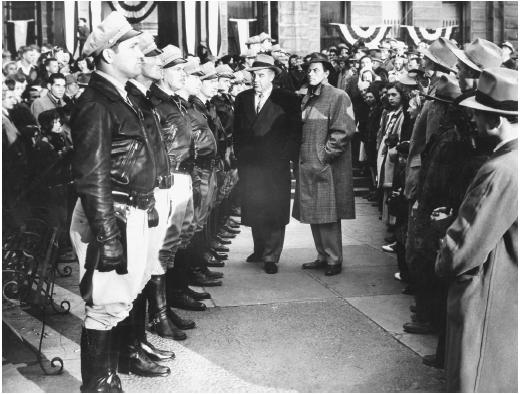
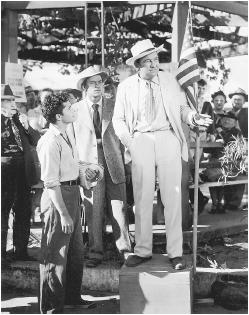
All the King's Men (Robert Rossen, 1948) The Oscar-winner for Best Picture of 1949 and it's hard to argue. Rossen's adaptation of Robert Penn Warren's Pulitzer Prize-winning novel about the corrupting powers of politics, it boasts two powerful (and Oscar-winning) performances: Broderick Crawford as innocent-turned-player Willie Stark (an amalgam of several politicians—as the corruption of power is a fairly universal theme in both the arts and reality—but mostly resembling Huey Long) and Mercedes McCambridge as his cynical-to-the-marrow political assistant.  

McCambridge is so good and so inventive that she might just as well have been given the statue for the next five years. Would that the other performances have been as electric as these two, but one could say that they shine even more brightly next to the lesser lights. 
It's particularly interesting to see Crawford so restrained at the beginning of the film, but once he sees how the game is played he turns on the after-burners and soars over everybody else in the frame with him. Mention should be made of the occasional glimpses of a documentary style in the rally scenes amid the more traditionally blocked studio framing. 
And an interesting stylistic note: the film may seem a bit abrupt in places--but that's because Rossen, determined to get the film below two hours, gave his editor instructions to take most of the scenes and cut precisely thirty seconds from the front of them and thirty seconds from the back (making sure not to clip off any dialogue). What was left was the hard nugget of the scene's core and All the King's Men feels more brutal in its pace and attitude because of this uncompromising strategy. It is a must-see film that shows the dichotomy of the American political system—of appealing to the little guy while also seeking power enough to be able to stand on their necks.
The film was re-made in 2006, with a mind to including the parts that couldn't be utilized in Warren's novel in the more repressed times when the original was made, but ended up looking bloated and shrill. The more soapish aspects of the novel were eliminated from the adaptation of the first film and it has the unanticipated benefit of focusing the film on its larger theme of political corruption and less on human corruption, and, as a result, gives the film a harder, more dangerous edge. Rossen's work is so much more assured and vibrant.
Thursday, November 3, 2016

Casino Jack

"The Be$t Government Money Can Buy"
or
"Jack Abramoff (and for my money you can leave out the Abram)"

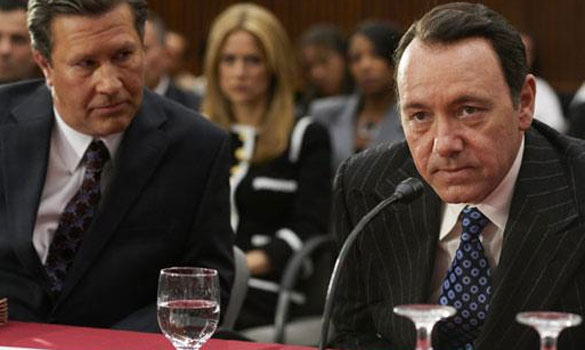
Despite what "The Last Word" at the bottom of the page says, I don't find bad reviews fun to write or to read.  It pains me to admit failure...even if it's someone else's. This one pains me a lot, because it seems like such a slam-dunk—a comedy on the rise and downfall of Washington's most powerful lobbyist, Jack Abramoff, played here by Kevin Spacey in a tour de force of excessive grand-standing. That the film-maker who made it died just before it opened (and that he previously made some things I admire) makes a bad notice that much more greivous to write. That I'm sympathetic with the political views espoused makes it more so.

But to these eager liberal eyes Casino Jack is a hack-job, rather than, say, a sure bet.  Frankly, if you want the story told better, turn to the documentary Casino Jack and The United States of Money, which is a more thorough, even-handed and truthful account (because it's all real footage of these beasts proudly exhorting their dirty deeds) of the shameless fleecing of America and the flagrant influence-peddling of an all-too-willing Congress.*
Film-maker George Hickenlooper—who died in 2010 before the film premiered—and his screenwriter Norman Snider want to make a Dr. Strangelove-type condemnation of the black-as-pitch corruption that Abramoff and his cronies espoused in the name of idealism, but it comes across as a loud, crass, unfunny version of events with the film-maker pushing our faces into scenes and hectoring "this is funny, right?  Funny?  It's funny!" with all the smug self-satisfaction of a preacher cooking marshmallows over a witch-burning...or a politician taking a bribe. Everything is played brooooooooooad, making Stanley Kramer's It's a Mad, Mad, Mad, Mad World seem subdued and tasteful in comparison.
There may be some joy in the pilloring, but the style of film-making and the general volume of the acting makes everything seem obvious and crass (with a capitol "K" street) that the feeling of contempt comes early and stays long past the party is over. Barry Pepper is all caricature as Abramoff's right hand-biter, and Spacey does enough bad impressions of his good impressions that the habit becomes tiresome and annoying. I'll bet he and Jon Lovitz yelled "Act-ing!!" after each one of their takes—there can't have been many from the looks of it—and then giggled like it was actually amusing. It's easy to make fun of wretched excess, and especially hypocritical wretched excess, but the film-makers went overboard with the caricaturish, smirking portrayals of everything and it sinks the picture. They could have played it absolutely straight, and the high-handed antics of these high-ideal crooks would have provided plenty of  spit-takes and sputtering indignation.
But, they had to have "fun" with it, beating any subtlety into the tarmac or marble-flooring. The result is not fun, and only marginally frown-cracking at times.  Good satire has to have an element of cold-blooded revenge to it, with an element of horror in the subject matter, rather than in how it is presented.  Casino Jack goes for the easy-sucker bet, and still comes up craps.  


* Interestingly, the film-maker's earliest credit was the great "making of" documentary Hearts of Darkness, about the ordeal of filming Apocalypse Now...in a reverse of the "truth is stranger than fiction" aspect of the Abramoff story, the true story of Francis Ford Coppola's VietNam epic has more of the tone and feel of Joseph Conrad's "Heart of Darkness" than any of the adaptations (Coppola's and Nicolas Roeg's) made from the source—a lesson this film-maker might have heeded.  Hickenlooper also made such interesting films as the original short of Sling Blade, The Man from Elysian Fields, Mayor of the Sunset Strip, Factory Girl, and was the only one in Hollywood with balls enough to make a film of Orson Welles' last screenplay, the political satire The Big Brass Ring.  Sad to go out on this which such past work as his legacy.

Tuesday, November 1, 2016

The Dead Zone (1983)

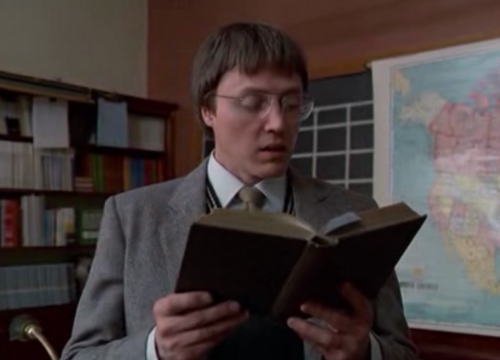
The Dead Zone (David Cronenberg, 1983)  Stephen King's "The Dead Zone" was written as a defense of assassination as a preventive measure for disaster (No, really...what if you could go back in time and kill Hitler as a child?*). What if you had the power of foreknowledge and did nothing to prevent something catastrophic?

It may be, indeed, a sin to kill, but
the Catholic Curch also warns of sins of omission—NOT doing something that might prevent the suffering of others (and for a historical example that hits you right in the Vatican, hello there, Pope Pius XII!!).

The extraordinary circumstances of a psychic being able to see the future and acting to prevent it is the stuff of philosophy, morality and science-fiction.
** But King, who took horror tropes and turned them on their pointed ears wasn't writing science-fiction. His brand of personal horror turned this cautionary tale into one of tragedy.

Up to that time, David Cronenberg was known for viscerally-filmed Grade-Z horror films with an emphasis on the squishy, but his film of The Dead Zone (one of the early King adaptations after De Palma's Carrie, Kubrick's version of The Shining, and the Tobe Hooper-directed TV version of 'Salem's Lot) was one of the strongest of the bunch. Cronenberg (and screenwriter Jeffrey Boam) took the larky good-nature out of the initial character of Johnny Smith (played in the film by Christopher Walken, but King thought it better suited for Bill Murray) and boiled the story down to essentials. Smith (as anonymous a name as you'd want) goes on a date with Sarah Bracknell (Brooke Adams) and things are going alright—he's fallen in love, in fact—when Fate raises its Huge Hand in the form of a near-fatal traffic accident that puts Johnny into a coma for five years (Cronenberg, perversely, has the collision occur with a milk tanker—as in "no use crying over..."***). Waking up, he finds that life is completely different—Mom's become unhinged, Sarah's up-and-married, he's semi-crippled, even after severe rehabilitation, and he can't find a job as a teacher of English Lit anywhere.
Oh, yes. Then there's "the power." By merely touching another human being, Johnny can see into that person's future, seeing their possible destiny and maybe death. He wants to live a "normal" life, a life of obscurity and happiness, but this "gift" is more of a curse, throwing him into the limelight, giving him responsibilities that he can't want or need. But, a man of conscience, Johnny can't keep his visions to himself—he has to warn people. He can't merely witness, as an innocent by-channeller, he has to act to prevent the tragedies he sees and insert himself between those he touches and their Fates.
A social man, his gift makes him increasingly isolated, trying to hide his abilities, and avoiding people and touching them to keep from seeing those visions. But, as much as he tries to quash his ability to see the future, he is always confronted by it and must come out of his obscurity to prevent them from occurring.

Sounds like classic tragedy to me. With biblical, even apocalyptic echoes.
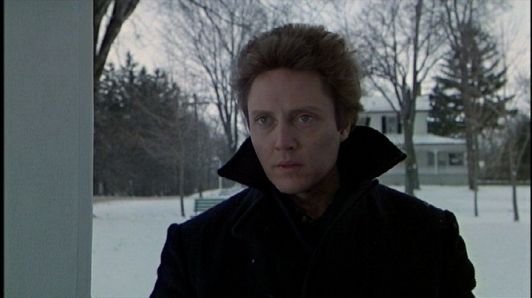
Cronenberg keeps the tone of the film oppressively heavy (Michael Kamen's score is particularly down-beat) and the Canadian locations have a dull, overcast, obliquely lit feel to them, like every moment is a late afternoon threatening to snow. Smith is a particularly sepulchral figure, Walken's tall frame shrouded by a long black overcoat, hobbling stiff-leggedly with a cane, like a harbinger of doom, his eyes haunted, but Walken's hooded eyes grow wide, when he touches someone or an object they possess, as if grabbing a live electrical wire as he goes into his vision.  Before long, he is perpetually wearing black gloves.
But, on one of his rare excursions out he manages to take the hand of one Gregg Stillson (Martin Sheen), a Senator with eyes towards the presidency, and what he sees is Stillson launching a nuclear attack, ensuring Mutually Assured Destruction, and he becomes obsessed with stopping it. 
Screenwriter Jeffrey Boam does some compression and simplification of the novel that emphasizes coincidence for the sake of a romantically resonant ending, but all in all, it is one of the best of the King screen adaptations (you've got to be careful with King—if you boil down his stories too much and take out too many of his incidents, you can sometimes see that the skeleton of his writing is calcium-deficient). The cast is amazing—Walken, Adams, Lom, but also Tom Skerritt, Anthony Zerbe (playing a strong character for once), Colleen Dewhurst, and the wonderful Jackie Burroughs—and they keep things playing out naturally, with only Sheen veering into a kind of caricature. 
It's one of Cronenberg's tamer, more straightforward early films (relatively, although there's some gut-churning violence), but it's one of his great ones.
Cronenberg gives Smith's visions a perverse power.


Pre-election post-script: early on in the "Trump-How-Low-Can-You-Go-Limbo-to-Electoral-Humiliation," an image showed up on the wires that truly startled me as it was almost a perfect match of the scene where, to prevent himself from being shot by Johnny, Martin Sheen's Stillson shields himself with an infant, the photos of which destroy his campaign and he eventually commits suicide, his ego-driven, rambling, vague-generalities-with-no-substance ambitions having collapsed.

I've been having a private little chuckle about that ever since. Life DOES imitate art.


* It's been years since I've read the book or seen the movie, and I'd forgotten that very question is asked by Smith in both: in the novel to a WWI veteran, and in the movie to his neurologist Dr. Weizack (Herbert Lom). After some serious discussion, Weizack concludes "Yeah, I'd kill the sunovabitch."

** King's next book "11-22-63" is about a man who travels back in time to prevent the Kennedy assassination.  I'm going to write one called "The Well" about an author who goes back to it one too many times.  (Note: There was a "The Twilight Zone" episode called "Back There"—great score by Jerry Goldsmith, btw—about a man who goes back in time and—unsuccessfully—tries to prevent Lincoln's assassination. It starred Russell Johnson, who, whenever he came into the studio I worked at, I'd make sure that his reading copy had nice big bold type on it as his vision was declining. He appreciated it, and I had a standard exit line for his thanks: "Well, after all, you went back in time to save Lincoln...")

*** In the novel, the accident Johnny is in is caused by drag-racers.