Showing posts with label Y. Show all posts

Tuesday, September 5, 2023

The Young Victoria

Written at the time of the film's release...

 "Her Serene Highness"
 
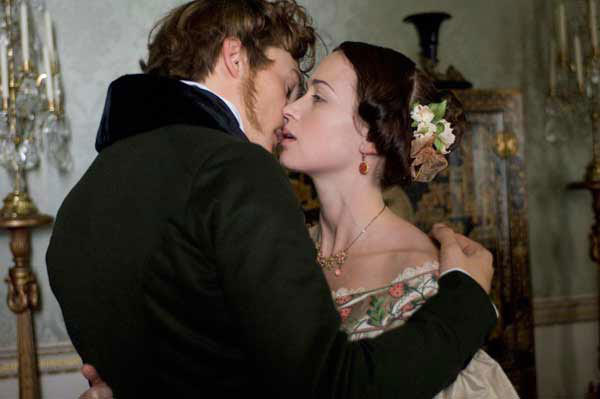
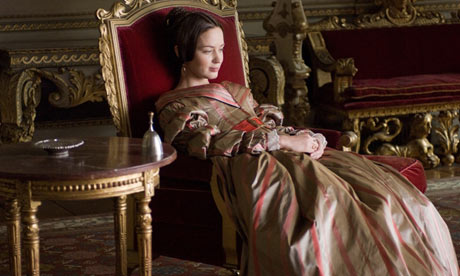
William Jefferson Clinton famously called The White House the crown jewel of the U.S. prison system. Young Queen Victoria (Emily Blunt) says early on in The Young Victoria, "Even a palace can be a prison." As the only heir to England's throne in the Royal House of Hanover, the young princess is managed and controlled, ostensibly for her safety, but also for the power that an unprepared and naive queen can offer her advisers. The last image we see before the title of the film is a gate swinging towards us and slamming shut with a bang.

Go to black. Title up.

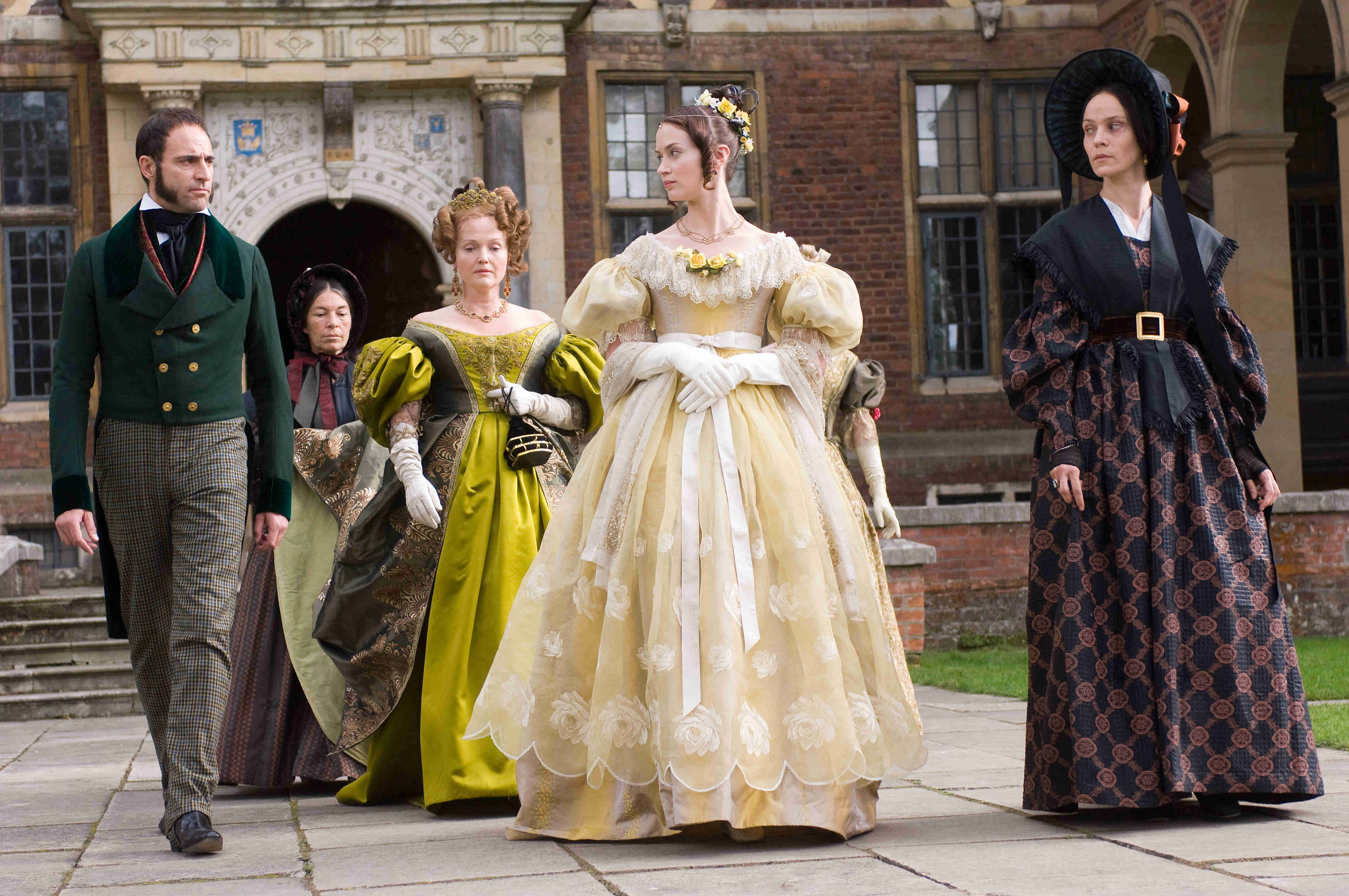
There are a lot of shuddering doors in The Young Victoria, as the upstart princess, well aware of the red carpet ahead, defies her manipulaters and her mother (Miranda Richardson), who is cowed by their presence, especially that of Lord John Conroy (Mark Strong—his second villain role this year after Sherlock Holmes—risking typecasting, he'll be playing Sir Godfrey in the upcoming Robin Hood) who viciously seeks to be made regent in case of the death of King William (Jim Broadbent). Ambition is on everyone's mind, except the one who will be getting the power. And ambition is what the young queen must learn, if only to be used as a weapon.
Director Jean-Marc Vallée (and his script-author Julian Fellowes, who wrote Gosford Park and a little something called "Downton Abbey") spend a lot of time concentrating on Victoria's noggin. It is focussed on, framed and discussed. "Look at that demure little head," says Lord Melbourne (Paul Bettany) at her coronation. "And all of us wondering what's inside it." He, like the rest of the court, really couldn't care less. If her mind can be changed, then it doesn't matter. But there is enough rebellion, and enough fighting the gold shackles binding her, that can be used to sway her.
It should be noted at this point that one of the producers of The Young Victoria is none other than Sarah Ferguson, the Duchess of York, who endured her own time of constraints while married to Prince Andrew. "Fergie" was known to be quite feisty, herself, and one looks at the movie and wonders how much of its editorial stance originated with her, as it is pretty sly in its view of the monarchy as being both a blessing and a curse. Whatever animosities Ferguson has incurred with the current Royal family, there seems to be an understanding of just what is asked of a monarch, and with The Queen, it shares a similar visual touch—the Royal de-focussing of the eyes that appear to see nothing, but are merely providing a non-commital mask for the public to see, the eyes looking, instead, inward.*
Given that,
enter Prince Albert (Rupert Friend) of the Belgians. Groomed as a suitor by his father King Leopold (Thomas Kretschmann), the young Prince also resents being kept in a can, and upon meeting Victoria goes off-script, showing himself to be of equal mind. During a supervised chess game, they compare notes on their similar circumstances. "I know what it means to live inside your own head," he offers. "You must learn the rules of the game, so you can play it better than they can," and as if we don't get the point, he takes her Queen and sweeps it off the board, captured.
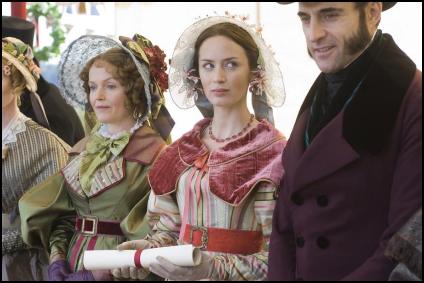
Vallée keeps things properly ornate and unfussy in his direction, save for some odd little rack-focuses interrupting the continual focus on Emily Blunt's head of restrained expression. At one point, though, he does indulge. At the Queen's entrance to a Royal Ball, upon seeing Albert, he keeps Blunt locked in position and then yanks her away from her party, as if pulled, floating to her paramour. A neat little trick that, and very dependent on Blunt keeping her muted expression while having her transport taken completely away. It's indicative of Vallée knowing that his best weapon in the movie is Blunt's subtle whisps of expression; one is drawn to her face to see how she'll react, even if, until the last frame, it is reluctant to reveal.

* At the end, there is a title stating that Victoria was the longest reigning British monarch (that would be be 63 years and 216 days). And as if to tweak the ex-mother-in-law a bit, with a wink, a new title emerges below it—"To date." 

Elizabeth II surpassed her great-great-grandmother's reign on September 09, 2015.  She went on to serve 70 years and 250 days. Only the reign of Louis XIV of France was longer.

Saturday, March 25, 2023

Your Highness

Saturday is traditionally "Take Out the Trash" Day. And I remember this one distinctly because it's one of those comedies that didn't make me laugh much, but, instead, only filled with me a great resentment for whatever hack studio executive green-lit this mess. I'm usually charitable to movies because they are the work and coordination of many people and only some can achieve some sort of magic greatness. But, I can't even be charitable about this one. This crap-fest was a waste of everyone's time...but evidently not their talent.

Written at the time of the film's regrettable release.
 
"Du-uh..."
 or   
"Natalie Portman's Post-Oscar Slump, Part 1"

I've needed a laugh lately. I've been second-and third-guessing myself, not sure which way to go on all sorts of matters. And after seeing two movies, good and bad, in which anyone can be tread upon by the Government (The Conspirator and this Saturday's "Take Out the Trash" entry*), I needed something light, something frothy, something not Hanna or The Lincoln Lawyer.
 
I needed a comedy, dammit! After playing pin-ball in my head for a week and a half, I wanted a new thought to tilt me out of my doldrums. It would be appropriate, too, as every scene we've looked at Sundays of this April Fools Month has been a comedy (this week will be no exception), so a comedy might be just the thing to kick my torpor in the ass, or at least make it slip on a banana peel. 
 
Wish I'd found one, because this isn't it.
Your Highness, in fact, makes me wish I was living in a different era—not the one depicted in the film, of course, but also not in a time when such a movie, with big stars (every Briton who isn't in the "Harry Potter" series, like Charles Dance and Damian Lewis), sumptuous locales and elaborate costuming can be so sloppily put-together that one gets the impression that at every stage the film-makers said "Eh...good enough" and moved on. 
I noticed myself laughing exactly twice, and longing for something—anything—to be half-way clever or even half-way executed.
* I like my comedy to have a brain in its head, and something to say besides what could shock your grandmother. Despite the cast, this one has so little going for it, you start to worry that at least the cast were well compensated. Because it couldn't have been for love.
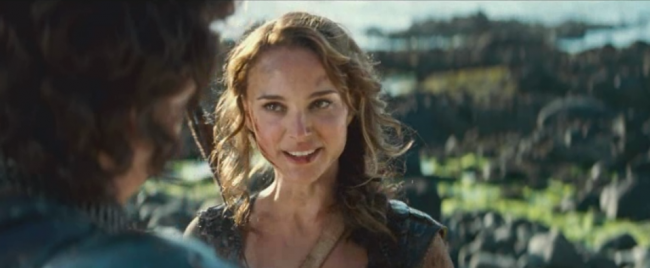
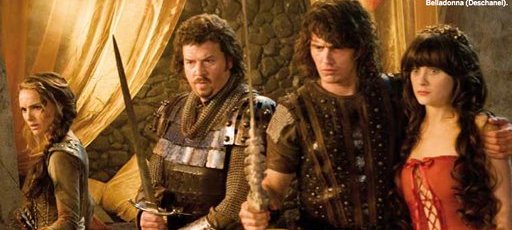
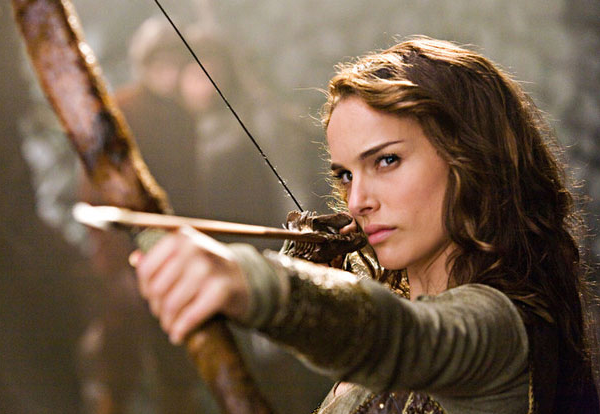
I'm a fan of James Franco, Natalie Portman and Zooey Deschanel, but why they should play second-fiddle to Danny McBride (who's usually lousy...Land of the Lost...and who barely registered as the reluctant groom in Up in the Air) is beyond me. Sure, Franco probably owes director David Gordon Green for his role in Pineapple Express (which I haven't seen, but have heard good things about), but he seems a bit lost in this, although gamely appearing cluelessly cheery throughout.
Borrowing heavily from every fantasy-adventure movie from the last 20 years (and liberally from Star Wars—their take on Yoda is particularly nasty, and they have
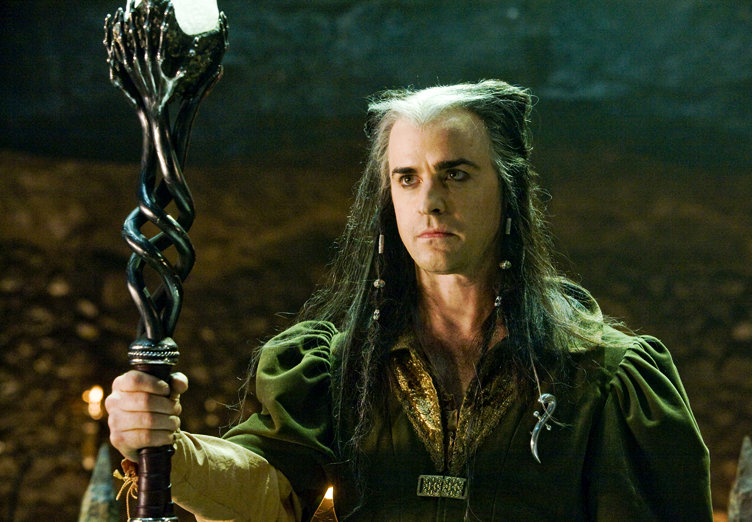
a clockwork bird-familiar after the original Clash of the Titans), Highness tells the story of the sons of King Tallious (Dance) and his two sons—the heir to the throne, Fabious (Franco), and the ne'er-do-well younger Thadeous (McBride) who would appear to be "Your Lowness." Fabious' bride Belladonna (Deschanel) is kidnapped by the evil sorcerer Leezar (Justin Theroux, who co-wrote Tropic Thunder, another high-concept low-result comedy) for his own nefarious plans. Fabious recruits Thadeous to go on the search for Lezar, despite the fact that the younger Prince can't fight, doesn't travel well, and is in all things incompetent. Plus, he's the "troop griper/whiner." Good planning. Dick jokes ensue.
Between the puerile humor
there are some action sequences, but Green has a hard time deciding whether he's playing them for laughs or for jolts. Not that it matters, as they succeed in neither, not even in the way that competent directors can achieve both or even one. And, although things are accomplished, nobody really learns anything so character arcs are as flat as a crushed pixie (the only clever idea I saw in the whole thing).

But, one thing Your Highness did accomplish: I had no second thoughts about it.


Maybe Hanna would have had more laughs.***
"I just won an an Oscar. You want me to what?"

* A complete execution...of me...was what I wanted after seeing this movie!  One thing that is mentioned in all the write-ups I've seen is that the crew went into production with  only a story and everything was ad-libbed on-set.  Really, they shouldn't be boasting about that. Oh...and the film I hinted at for the Saturday "Take Out the Trash" candidate that week was the latest version of Atlas Shrugged (Part 1).

 ** Okay, okay. I dump on Danny McBride—or Danny R. McBride, as he's calling himself these days—a lot. Because I don't see the talent. I don't find him funny, and mostly find him a little desperate. But...he was okay in Up in the Air. And he was superb in Alien: Covenant. When the man is firing on all thrusters—as he had to do in the "Alien" movie—he can be really good. (Here's what I wrote about him then—"I have to confess: while one shouldn't walk into movies with prior expectations, I was really looking forward to a scene where Danny McBride gets offed by one of the xenomorphs—I rarely have seen McBride in anything where I found him with an ounce of talent or charm, he's one of those few actors I actively don't like. But, here, he's terrific, taking an under-written part and bringing a lot of good choices and subtle nuances to the role. I'm now a fan.")

*** It didn't.


Friday, July 5, 2019

Yesterday

The Most Complicated Joke I've Ever Heard
or
Suddenly/There's No Beatles Iconography
OR
Drinking From the Poisoned Chalice (To Lead a Better Life/I Need My Love To Be Here)

I'll be hitting 64 (as in "Will You Still Need Me/Will You Still Feed Me...") in another week or so, and, having been born in 1955, I am very familiar with The Beatles ("for you youngsters out there"—as Ed Sullivan used to patronize—their Beatlemania hey-day was between 1962 and 1970, my adolescent-teen years). For me, the experiences of my parents during The Great Depression (1929-??) and World War II (1940-1945—we used to have shorter, more efficient wars back then, and a citizenry who weren't complacent with the practice) seemed "of the past" and ancient history. So, I imagine talking about "The Beatles" will seem, to a contemporary audience, like my folks talking about Rudy Vallee. 

Well, tough. The Beatles were a "Big Deal." Revolutionary to those of us who were used to hearing Elvis and The Four Seasons on the radio. That The Beatles built their music on American rockabilly and their version—"skiffle"—didn't make them any less revolutionary. What seems revolutionary is often, upon examination, merely evolutionary—built on what came before. But, the group then took it and changed music, changed what "pop" was, expanding it, twisting it, experimenting with it and going from "Yeah, yeah, yeah" to "Goo-goo-ga-joob."
The new film by director Danny Boyle and screenwriter Richard Curtis (there's an oil-and-water combination for ya), Yesterday proposes a big "What If?" story: what if The Beatles never existed? It's easy to imagine—it's easy if you try—what if John Lennon, Paul McCartney, George Harrison, and Richard Starkey never hooked up. I once had a conversation with a radio host of a Beatles program where we concluded that that particular combination of kids with their personalities, interests, drives and talents created what amounted to a "perfect storm" of musical creativity. But, perfect storms are rare. The conditions and factors have to be just right. What if original drummer Pete Best stayed with the group? Would they have been as good, as popular, would they have achieved the original nexus they had and the hysterical acclaim they generated if any of the elements were missing? Probably not. The world would be a different place slightly, as The Beatles influenced music, ideas, fashion and culture. Boyle and Curtis could not have made a film of all the possible ramifications. So, they have a sliver of the possibilities for their rom-com/musical.
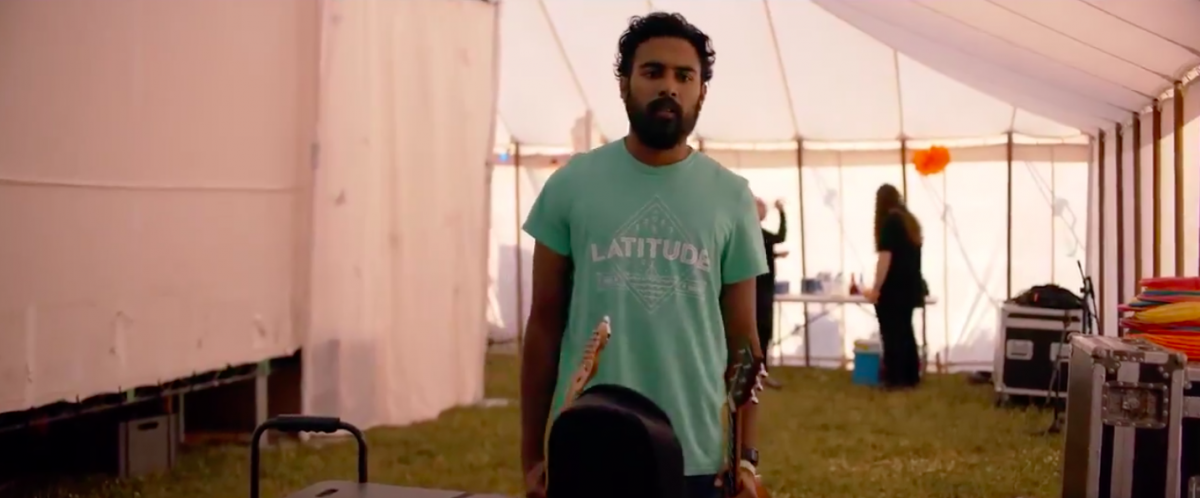
Jack Malek (Himesh Patel) is a busker. It's his hobby as it really doesn't supplement his income as a warehouse-stocker at PriceStar. It's a bit of a dream-chase—he was considered musically talented at the age of 9, the performance which brought him together with his long-time platonic companion/roadie/manager Elly (Lilly James). But Jack is at the end of his guitar-string. A chance to play at the Latitude Festival in Suffolk results in his playing in a thinly-occupied tent. "Great day," encourages Elly. "Yeah!" Jack agrees, sarcastically "I really can't take much more of this."
But, driving him home—she teaches "maths" and has a car and he rides a bike—Elly tries to be encouraging: "Miracles can happen! Like Benedict Cumberbatch becoming a sex symbol!" True dat. But, Jack can't be consoled. "This was my last gig." He bicycles away, accepting his fate.

But, fate can change. As he's biking home in the rain, the entire world experiences a 12 second blackout. And in those 12 seconds, Jack is hit by an SUV, upending his life, giving him a concussion, knocking out two of his front teeth, smashing his guitar and bicycle, and creating a huge opportunity. When he wakes up in hospital, diligent Elly is there to tell him the bad news—bad accident, lost the teeth, lost the beard. She fusses over him, then must leave for her job. "Will you still feed me when I'm 64?" Jack sings after her. She dead-stops in the door-way. "Why 64?" "Well, it's the song, you know..." She doesn't. it's the tip of the iceberg.

At a party upon Jack's release, his friends throw a party and gift him with a new guitar, encouraging him to play again, but he demurs: "If God had been remotely interested in my stuff, somebody would have written me a fan letter besides my mum." But, he will play. "A great gift deserves a great song," and he begins the chords to McCartney's "Yesterday." Finishing it, eyebrows are raised, emotions are moved, and jaws are dropped (and this..."well, it's not Coldplay It's not "Fix You"). "What the hell was that?" It was "Yesterday." "When did you write that?" "I didn't write it. Paul McCartney wrote it! The Beatles!" "Who?" Jack is incredulous...and a bit miffed, thinking that his friends are having fun at his expense. 
But, no, instead of it being "the most complicated joke I've ever heard," a Google search reveals only the bug, not the band. The Rolling Stones are there (wait, their first hit "I Wanna Be Your Man" was written by Lennon and McCartney...but...okay), but no third-letter-"a" "Beatles." They've been Thanos-snapped out of existence. So have a few other things, but I won't spoil it.
"Don't you realize you're the first three people on Earth to hear 'Let It Be?'" "That's nice, sun..."
He tries other songs. People don't know them. He barely knows them-what are the lyrics to "Elanor Rigby?" "I Wanna Hold Your Hand." "I Saw Her Standing There." "Let It Be." All draw a blank. Performing in coffee houses doesn't turn it into The Cavern Club and his close acquaintances are supportive, but think he's getting a bit of a head when he takes offense at them not realizing the greatness of the songs. Seems a bit stuck on himself, really. But only Malek knows the songs are iconic...or would be if they'd been written. And if people assume he's the author...well, what can he do about it?
An engineer at a low-rent recording studio offers to record him (it's gotta be low-rent because it's built on the side of a rail-road track--interference and low-end rumble, much?). But, the tracks attract attention—Malek gives them away at the PriceStar and it gets him an interview on the PriceStar channel, where he's called "The Singing Wholesaler"...even after he's debuted "In My Life" on the program! What is wrong with these people?
But, one person notices the interview—Ed Sheeran (my response was "who?" and after I read about him and listened to a couple of his songs, I repeated "who??"*) and he pops over to Malek's place (actually Malek's parents' place) and asks him to open for him at a concert in Moscow. Opening for Ed Sheeran? Da-ah! What does he open with? "Back in the USSR," of course. Du-uh! And he makes a sensation, and Sheeran is mystified. When did he find the time to write the song? It was only a three hour flight (brilliant touch to call it the old name of USSR, though...but still).
The viral videos out of Russia (they DO get around, don't they?) of Malek's performance attracts the attention of Sheeran's agent, Debra Hammer (a scary and hilarious Kate McKinnon at full satirical strength—be afraid) and she signs Malek on, prompting—Hammer doesn't prompt, exactly—a trip to Los Angeles for a career make-over and "mind-bending meeting of all meetings" to make him The new sensation. 
But, Malek is worried. The marketing emphasis is on his song-writing ability—the debut album is titled "A Man Alone"—and he knows the songs he's acclaimed for are not his own. He fears being exposed world-wide as a fraud and the guilt and shame are starting to make him crack. Plus, Elly has taken up with that recording engineer a long, long time ago (I can tell you from personal experience that THAT doesn't happen...). It begins to feel that the life he's always wanted isn't the life he actually wants. Life's what happens to you when you're busy making other plans (who wrote that? Actually, more to the point, who DID write that?)
"Can we change 'Hey, Jude' to 'Hey, Dude?' Makes more sense, doesn't it?"
Those conflicts, those issues, are what Yesterday is all about, rather than making some grand sci-fi epic about "The Day the Music Disappeared." It is still a "What if..." story, but a more relatable "What if," about choices, career and happiness...and fulfillment.

How does it get resolved? If you have to ask, you haven't seen many movies written by Richard Curtis. Along the way, the absurdities of a public life are skewered and pilloried, as well as those of Corporate Overseers both large and small. The film also takes one very surprising chance that I did not see coming, and may make some consider some sort of heresy (he'd laugh), but I found it a lovely moment in a parallel Universe where choices are important, especially if you're making them yourself.
No Beatles lyrics for that. You can't write 'em all.

The gloriously ecstatic advice-song "She Loves You." 
Now, if Jack had actually listened to this song, he wouldn't have needed the movie.
"Oo-oo-oo-oo-oo!"

* Okay. Give it up to Sheeran for this:

Thursday, October 25, 2018

Olde Review: Young Frankenstein

This was part of a series of reviews of the ASUW Film series back in the '70's. Except for some punctuation, I haven't changed anything from the way it was presented, giving the kid I was back in the '70's a break. Any stray thoughts and updates I've included with the inevitable asterisked post-scripts.


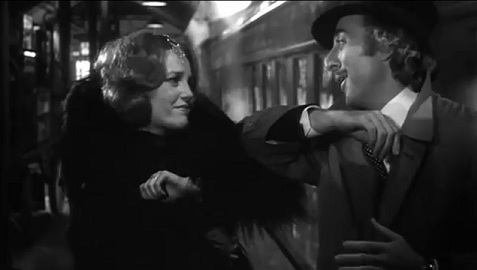
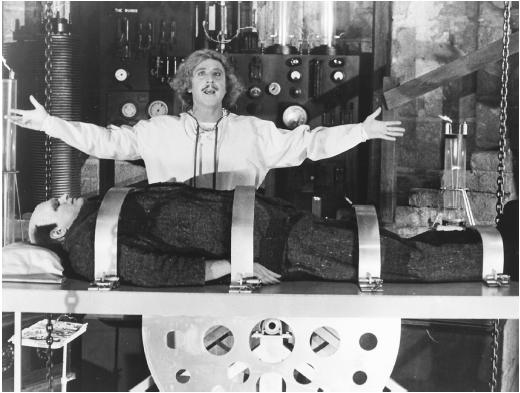
Young Frankenstein (Mel Brooks, 1985) In my review of last quarter's bill of comedies,* I stated that Mel Brooks is just about the only remaining graceful comedy filmmaker**--his films have a flow along with the jokes. After a couple of false starts,*** Brooks achieved his cinematic sense with Young Frankenstein, and achieved it, as most film-makers do today, by following the example of a predecessor in film-making--in this case. the director of the original Frankenstein films, James Whale. His coming of age didn't occur only because of the help of Gene Wilder's script (Wilder's own Sherlock Holmes' Smarter Brother was an abysmal failure), but through the realization by Brooks that the best movie spoofs are those that poke fun at and embrace their cinematic progenitors. And so, in tandem with the humor, good and bad, we are treated to the charms of two-dimensional castles, rain-washed cobblestones, studio-built forests and the glories of black and white photography. And you have to have a special love to go to the trouble to obtain the lab equipment from the original Frankenstein. 
Brooks' love of the original gentles this film. His love makes him understand the charms of the original Frankensteins. Young Frankenstein turns serious when Gene Wilder screams out during the experiment because Brooks understands that he is challenging God's right to be the sole source of life. 
It turns serious when Wilder confronts his creation, and is able to conquer his fear to become the loving father-creator to his very lonely, dependent creation, a moment coupled with the young scientist's first ecstatic re-affirmation of his family name. Brook's understanding goes so far as to present its own version of the weird sexuality that was in the old "Frankenstein" films. Brooks also has the melancholy understanding of the monster's plight--the plight of all those different enough to be rejected by society. However, there is one thing different about Young Frankenstein, as opposed to the originals--this one has a happy ending for all concerned--for Brooks' Young Frankenstein is a sentimental, gentle film--a rare thing these days--a quality that only adds to my enjoyment and appreciation of the films of Mel Brooks.
Broadcast on KCMU-FM on January 6th, 1977

As far as that goes, and it didn't go far. Brooks made a wonderful, financially-risky movie called Silent Movie, (and it was silent, except for one word, spoken by mime Marcel Marceau), then came High Anxiety, a somewhat haggard Hitchcock parody, then The History of the World, Part 1, Spaceballs, Life Stinks, and on. And sadly on. Brooks is now a Broadway entrepreneur with his wildly successful Broadway production of "The Producers," and his fine staging of a musical version of "Young Frankenstein." And his company, Brooksfilms, is still in business--except for his own films, Brooks rarely played it safe.


*Those being The Running, Jumping, Standing Still Film, Love and Death and Monty Python and the Holy Grail--I just found those reviews, we'll get to them eventually.

** I hope I changed my mind on this. Blake Edwards was still active at the time, as was Woody Allen.


*** Presumably, The Producers, (clumsy, but funny as Hell) The Twelve Chairs, (better, but not terribly funny), and Blazing Saddles, (which was rude, crude, hilarious, and one of the worst looking movies I've ever seen).


Wednesday, July 4, 2018

Yankee Doodle Dandy

Yankee Doodle Dandy (Michael Curtiz, 1942) It's the Fourth of July. Traditionally, I've stop-gapped the date by just tossing out James' Cagney's signature dance routine of "Yankee Doodle Dandy" (and not to stop the tradition, it's below).

But, I've never reviewed it, musicals not being my particular cup of tea.


But, Yankee Doodle Dandy is a little different. The biggest reason: Cagney. That man's presence is enough to make me want to watch any movie. But, he had made his name in films playing tough guys and gangsters—smart-alecks, who were strangely likable although capable of extreme, often shocking violence. Maybe it was because he was so believable, and so damn confident. And he had a tough grace with coiled intensity, an economy of movement and a theatrical flair. That quality might have been inherent as Cagney considered himself more of a song and dance man—"a hoofer," as he described it, even if his singing wasn't the best, the man sold songs so convincingly and with such brio, you didn't much care.


11 years in vaudeville (his first on-stage role was actually in drag), then starting his career in movies,  the opportunities came more from acting than dancing. And he became—in the opinions of no less peers than Orson Welles and George C. Scott*—the best of the old studio actors, in that he was more than merely truthful and authentic, he was also theatrically interesting. But, his favorite performance was his Oscar-winning turn as George M. Cohan for the Warner Brothers bio-musical Yankee Doodle Dandy. It was a project born of a certain political necessity for the star, who considered it only after it had been tossed around as potential film material for years, owing to the difficulty in obtaining the cooperation of its subject, who was still alive at the time. With Cagney's enthusiasm assured—and studio-head Jack L. Warner had had issues with the star previously—Warner struck a deal with the stage entrepreneur to push the project forward.**
The film is told in flashback mode: George M. Cohan (James Cagney) has left retirement behind for the chance of playing President Roosevelt in a staging of a satirical musical "I'd Rather Be Right" and, after a night's performance, is called to the White House to meet with the sitting President. Fearing the worst (His wife Mary—played by Joan Leslie—reassures him "Don't worry, dear they don't telegraph you to come and be shot at dawn."), Cohan is escorted to the Oval Office, where he is greeted warmly by the President—the first time in American films that a current President had been depicted—and is asked to tell him his story. Cohan is only too happy to comply—in the film, Cohan's rival Eddie Foy (played by his son Eddie Foy, Jr.), looking at how many times Cohan's name is mentioned on a show poster, cracks that the "M" must stand for "Modest."
Cagney's Cohan tells of being born on the fourth of July, 1878 (it was actually July 3rd, but....1) it's a musical not a documentary and 2) it's the legend, so...) to a variety performer, Jerry Cohan (Walter Huston) and his wife Nellie (Rosemary DeCamp). With the edition of a sister Josie (Cagney's sister, Jeanne), the family becomes its own travelling troupe as per Cohan's narration:
I guess the first thing I ever had my fist on was the American flag. I hitched my wagon to thirty-eight stars. And thirteen stripes. You know, I was six or seven years old before I realized they weren't celebrating my birthday on the Fourth of July. Then my folks got a real break when my little sister, Josie, made her entrance. She grew to love show business just as she loved everybody and everything. We toured the kerosene circuit in a tank show called 'Daniel Boone on the Trail.' Everybody doubled in brass. Dad walloped the bass drum. For some reason they teamed me with a donkey. I was a good Democrat, even in those days. Mother and Josie threw out handbills. Their smiles would have sold tickets to wooden Indians. They kept putting new stars in the flag and the Cohans kept rushing out to meet them. We had jokes to match every cornfield. We sang at every milk station.
"I was a good Democrat, even in those days"—but Cohan (in real life) was actually a staunch conservative Republican. Well, it's not a documentary. The narration continues: 
We trouped through depression and inflation. Part of the country's growing pains. We froze in winter and roasted in summer. But it was a good life. It's a lucky family that dances together every day. Eighteen ninety-one found our fortunes flat as a pancake. Then came a bolt from the blue. Jobs for the whole family in a play called "Peck's Bad Boy." We opened in Brooklyn. The town was noted for its spirited audiences. Even before it had a ball team.
"Peck's Bad Boy" becomes a hit for the family, and young George becomes the stand-out star, giving the kid a swelled head, and causing some friction in the family and amid the theater circuit. He's a constant self-promoter, always pushing himself, his songs, his plays—it gets to the point where the theater community blackballs him for his incessant braggadocio and grandstanding, which runs the risk of scuttling his family's careers and that of his new wife, Mary (Joan Leslie), herself a singer. The film follows Cohan's path from failure to success juxtaposing scenes of dealing and composing with musical sequences, showing off Cagney's skills—which are truly amazing at times—performing the various "greatest hits" of his career in back-rooms and on stage.
Many of the musical sequences copy the stagings of the original presentations , which is where the movie most adheres to some kind of truth. When songs were written and in what plays they appeared is all askew. And, the film suffers from the type of "he was inspired to write this" moments that make their way into most musical biographies. Also, Cohan had married twice—neither of his wives were named "Mary"***—and his mother died before his father. Cohan was only months before passing away and the production was a bit rushed in post, so that he could see a private presentation of it. It is said that, once the lights came up, he remarked: "It was a good movie. Who was it about?" But, that's such a good line, I even doubt the truthfulness of that (after all, he was the technical consultant on it).
But, more charitably he said "I'd hate to follow that act." One can see why given the energetic brio that the star brought to the performance and the movie in general. Cagney also manages to make Cohan extremely likable, no matter what shenanigans he pulls off, no matter how much a blowhard he is portrayed as. After all, if the man could make gangsters sympathetic...why not an accomplished hoofer? And, with the country gearing up for war (the film was in production when Pearl Harbor was attacked), the film's overt patriotism and pro-war stance—Warner was the one studio in Hollywood that wasn't afraid to be pro-intervention and publicly anti-Nazi—was perfectly timed to benefit from a country attacked and ready for a fight. Its patriotism served another purpose as well.
Cagney's battles with studio management—Jack Warner called him "The Great 'Againster,'" a term he reveled in—and his battles for Unions in positions both in front of and behind the camera in Hollywood (and, in his vaudeville days, he'd not been a fan of Cohan's after the man had sided with the producers' side in the 1919 Actor's Strike) put Cagney in a predicament with the House Un-American Activities Committee. The head of the Los Angeles chapter of the Communist Party had included Cagney when "naming naming" in secret grand jury testimony, and Cagney had been subpoenaed. The New York Times published a headline naming Cagney a Communist. Although exonerated of the charges, Cagney's business manager, his brother William, determined that, if they wanted to dispel any suspicions in the public's mind, "we’re going to have to make the goddamndest patriotic picture that’s ever been made." So, they campaigned Jack Warner to make the movie, with Cohan's approval (Cohan preferred Fred Astaire, but Astaire turned it down as the two men's dancing styles were, to his mind, too far apart). Cagney got the lead and the headlines stopped.
Liberals, progressives—whatever label you want to hang on it—have always had a history of being an irritant to this country. The status quo don't like being told that they're actually old fogies rather than protectors of the flame. So, the country's history is rich with the investigations into anti-American activities whether they're red or even slightly pinko. It is the tradition of the left to be chased by dinosaurs in the time they have before they become extinct. It's the big joke if a liberal survives the chase for long enough, they'll turn into the old fogey rallying against the next evolution of liberal. And it's been that way since a bunch of radicals created the concept of this country, saying to their bewigged masters-in-absentia an ocean away that government had more to do with what you could bring to the table, rather than who your father was. I'm sure they were called much worse than "lib-tards" for that idea. But, we celebrate them today, quite forgetting the squabbling of history. History is always the best judge.


*


** Cohan, while working with screen-writer Robert Buckner, asked "Would anyone go to see it? I don't want to be connected to a box-office flop." Buckner replied "Tell you what, we'll give away dishes and make sure." When the film was completed, it is reported after seeing the film by himself at a requested preview, he wired the writer "Thanks, kid. Hope you don't run out of dishes.

*** This was evidently because Cohan's ex-wife was putting pressure for money if she was depicted. Truth is more expensive than fiction.