Showing posts with label Roy Del Ruth. Show all posts

Tuesday, April 11, 2017

The Maltese Falcon (1931)

The Maltese Falcon (Roy Del Ruth, 1931) One of the "other" "Maltese Falcon" adaptations (the other is the Falcon-less Satan Met a Lady starring Bette Davis, which we'll look at tomorrow), before John Huston got it right and turned the Hammett story into a classic of the detective genre in 1941.

This one follows the story-line well enough—Brigid O'Shaunessy, the death of detective partner Miles Archer, rumors of a legendary jewel-encrusted black bird statue, and the motley trio of swindlers, Cairo and Guttman and Wilmer, a shade more flamboyant in this version.  The story runs its course.

Where it differs—and all the "Falcon" versions differ—is in the character of Sam Spade, of Spade and Archer Detective Agency, soon to be "Sam Spade, Detective."  The Bogart persona is familiar: tough guy, cynical, has the image of disrepute, but a resolute moral compass—like the Falcon itself, you have to scrape away layers of hardened lacquer before you get to the stuff that's valuable.  That's Bogart, imprinting Spade and the image of detectives—but movie detectives—with the same template ever since.  
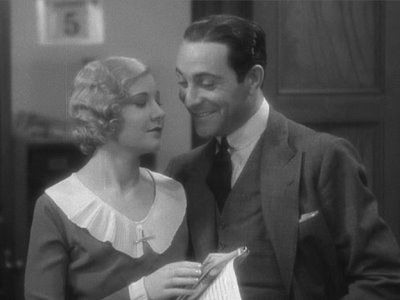
But, the first version of The Maltese Falcon was this pre-Code version starring Ricardo Cortez, and the top-billed Bebe Daniels as client "Ruth Wonderly." Don't let Cortez's latin name fool you; he was born Jacob Krantz, raised in the Bronx, but his name was changed to attract audiences during the "Rudolph Vaentino" phase of leading men.  His Sam Spade is openly a lothario, a charmer and ladies' man, quick with a leering smile and altogether too happy in his work. You have no sense of Spade actually thinking, but going through false motions among other finaglers. He's unreadable to the audience except he's the guy "in charge," and enjoying himself.
There's much more sexuality to this one, featuring a scene with Bebe Daniels talking on the phone in the bath, and when a thousand dollar bill goes missing in the exchange scene, Daniels is forced to strip-search before Spade concludes that Caspar Guttman might have withheld it.  This Sam Spade, one has the impression of making her do it just for the "fun" of it.
And the trio of con-men/murderers after the black bird?  When Spade's secretary, Effie, introduces a new walk-in as "gorgeous," Spade assumes it's a woman, but it's "Dr." Joel Cairo (Otto Matieson) in the first allusion to the veiled homosexuality of Cairo, Guttman and Wilmer.  The latter is openly referred to as Guttman's "boyfriend" and is played by Dwight Frye, the manic character actor from so many of the Universal horror films, including Frankenstein and Dracula. 
The film includes a coda of Spade visiting O'Shaunessy, making it known that Spade has gone "legit," working for the D.A.'s office which, although it may be intended to show Spade more in a "good guy" role, it paints a rather poor picture of the San Francisco district attorney (especially considering the police's earlier suspicions about Spade).

The steamy elements forced Warners to shelve this Maltese Falcon once the Hays Office opened its doors. The studio then made another version, Satan Met a Lady, played with a lighter tone, but which met the newly-imposed standards of the Motion Picture "Code." That's tomorrow.
Ricardo Cortez as the first Sam Spade

Thursday, April 7, 2016

Lady-Killer (1933)

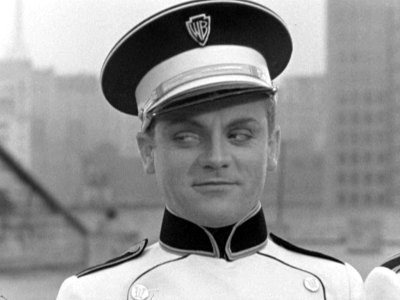
Lady-Killer (Roy Del Ruth, 1933) Light-hearted gangster picture in the same manner as the Humphrey Bogart All Through the Night. Cagney plays Dan Quigley, an entrepreneur of sorts, who when we first see him is "in the picture business"—he's an usher in a Big Apple movie theater, in trouble for disappearing and running crap games on the side. He gets fired for telling a patron what she can do with her toy poodle, and out on the street, notices a dame (Mae Clarke) losing her billfold. Nice guy Dan follows her to her apartment, returns it and finds a nickle-ante poker game in the back. He helps himself, gets cleaned out and on his way out the hall, runs into another rube...returning another billfold. The poker game's a racket, a going concern, with the billfold a way to lure in good-intentioned suckers. But rather than getting sore, Dan laughs it off, and uses his cracking wise to parlay himself in on the deal.

Before long, he and the girl, Myra, and the four poker grifters are running a crooked speak-easy, the 7-11 Club, while also doing some knock-overs of ritzy swells from the casino on the side. Dan stages traffic accidents outside the manses of the targeted customers, gets himself taken inside by the worried owners to case the joint, then once his cronies arrive with an ambulance, he gets taken out on a stretcher and the "attendants" do the same for the loot. But, during one of the capers a maid gets her skull caved in and eventually (as they say in the movie) "croaks." The Club gets raided on the word of a stoolie and soon the whole bunch is on the lam.

Quigley and Myra high-tail it to L.A., only to have Dan picked up on suspicion by the LAPD, and when he calls Myra to cough up his bail, she's skipped, along with gang-leader Spade Maddock (Douglass Dumbrille). With nothing to hold him on, the cops release Quigley and eventually he finds work as an extra in the movie business, at which point, life starts to get good, especially with frequent co-star Lois Underwood (Margaret Lindsay), until his old partners start making trouble for him.
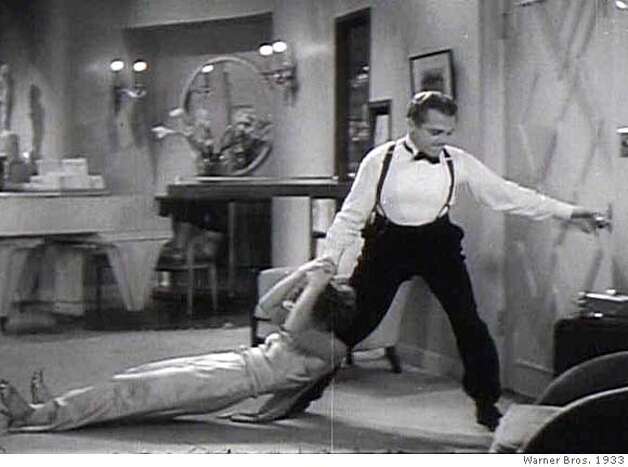
Very fanciful, but Cagney is lighter on his feet here than he is playing his "heavies," in fact, this movie is full of wise-acre slang and a lot of good laugh-lines, most of them coming from Cagney's Quigley, who laughs at every joke. He's a good-time charlie, not meaning any harm, but not wanting to do too much good, either. And Cagney's paired with his co-star from The Public Enemy, Mae Clarke, who gets more than a grapefruit pushed in her face here. At one point, Cagney alarmingly grabs her by her hair and drags her out of his room and throws her, bodily, into the hallway (alarming enough that I'm not posting the gif of it here) The makers have a lot of fun at Hollywood's expense, sending up the movie business and the extravagant lifestyle. It's almost a romp for Cagney, only a couple years removed from The Public Enemy, and goes some way—but not too much—in rehabilitating his public image. Still a tough guy, but not pure evil, either.