Showing posts with label Ken Watanabe. Show all posts

Tuesday, June 4, 2019

Godzilla, King of the Monsters (2019)

Doing the Limbo Dance with Godzilla (Faith and Ghidorah)
or
Dr. Serizawa's Magic Bullet

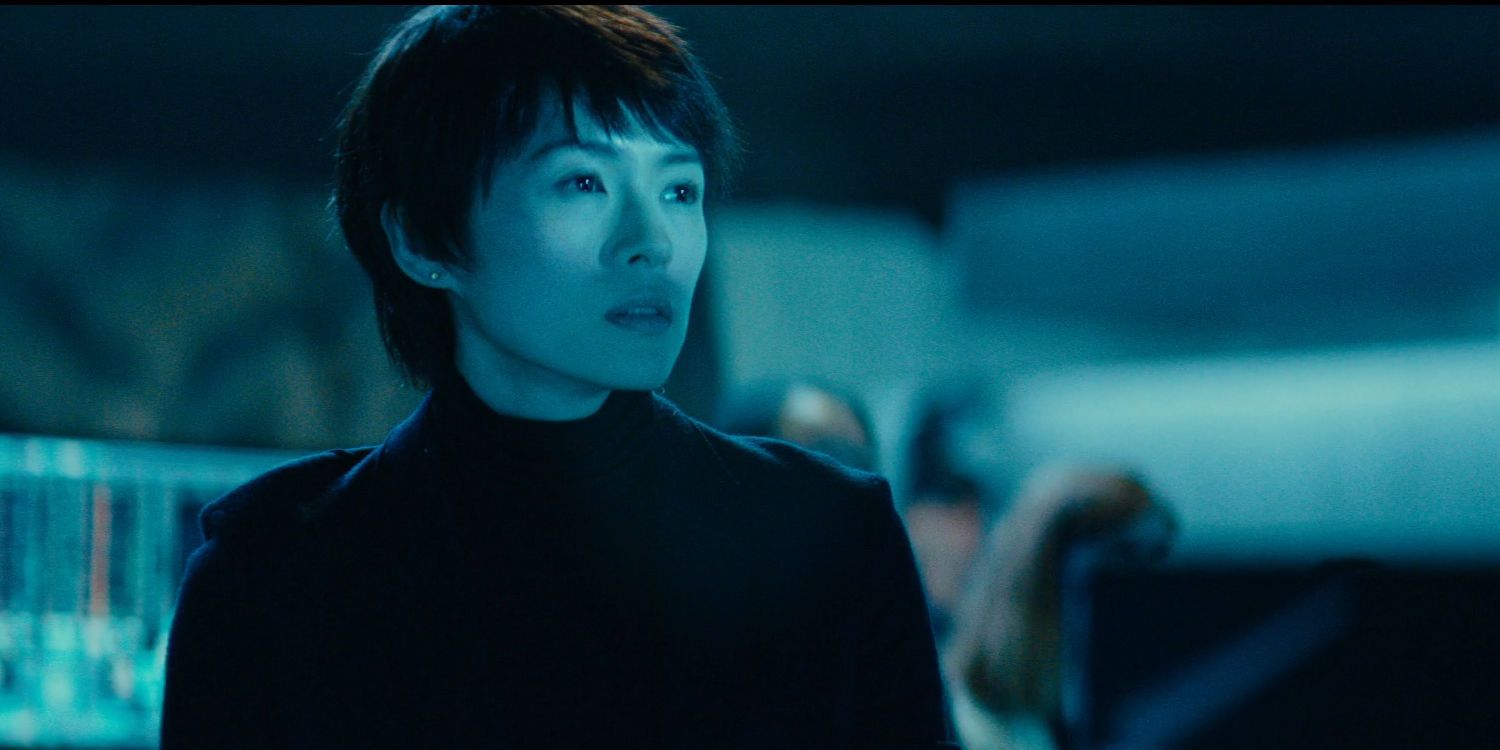
I was anticipating the new Godzilla movie, Godzilla: King of Monsters, when I saw the trailer start to hit theaters. I enjoyed Gareth Edwards' 2014 take on the series, and was suitably impressed with what Legendary Entertainment was doing with their second "Monsterverse" film, Kong: Skull Island. But, to see the trailer for G:KOM, with appearances by other Toho Studio monsters, like Rodan, Ghidorah, and Mothra (especially Mothra) gave me a sense of giddy joy, as in "My God, they're really going to try and do these cheesy monsters with a sense of "real" CGI verisimilitude, instead of the puppeteered, rubber-suited versions we're used to?" And then, to bring a respectable cast of characters actors like David StrathairnKen Watanabe, and Sally Hawkins (all returning from the 2014 film), as well as Bradley Whitford, Kyle Chandler, Charles Dance, Vera Farmiga (!) and Ziyi Zhang (!!!), I was somewhat delirious, as in "Oh My God-zilla, are they actually going to make a decent movie out of this juvenile material? That would be so awesome!"

The answer is "No, they didn't." One wonders if they ever could, but the hope was there, and although the film is semi-successful in some aspects, the conclusion from what I saw was a disappointing result from an over-the-top concept.

But, to get any enjoyment from the experience, a little perspective is required. To illustrate, here is a scene featuring a "pitched" battle between those same four antagonists from the 1964 feature Ghidorah, the Three-Headed Monster*
There, now you should be prepared to see Godzilla: King of Monsters and come out somewhat impressed. Extreme, I know. But, you have to set the bar pretty low to raise expectations.

It's been four years since the appearance of Godzilla—"the day the world discovered that monsters are real"—the film starts with a flashback to the events in San Francisco where two new characters, Mark and Dr. Emma Russell (Chandler and Farmiga), two Monarch** specialists are caught in the fray...with their family for some reason...resulting in the death of one of their kids, their son, Andrew (definitely a downside to "Take Your Child to Work Day" when working for Monarch). This fractures the family (you think?). Mark, embittered and wanting to kill the Titans, and GZ in particular, goes off to study wolves, while Dr. Emma continues her husband's work of creating a communication system, designed to keep whales from beaching themselves. Only she's using it to see if she can communicate with the MUTO's. It's a good way to set up all sorts of "Geez, I hope this works..." scenes.
Their daughter Madison (played by Millie Bobby Brown from "Stranger Things") is keeping up contact with Dad and worrying about Mom's frequent moodiness and is one of those irritating "Wesley Crusher" kids, who can take some wires, a USB cable, and a Brillo-pad and hack into a pay-telephone so it can communicate with the Mars rover Endeavor to save Matt Damon (although she has trouble making breakfast...fake-out!). It's no wonder Dr. Emma takes her to the Monarch project where they're trying to awaken Mothra (Hey, remember "Take Your Child to Work Day?" Worked out real well last time, didn't it?). But, not to worry. Even though Mothra freaks out and kills some techs, Dr. Emma is able to take her "Orca" device, push a button, and translate Louis Armstrong's "What a Wonderful World" into Mothra-song to calm it down. This inspires Madison to confuse the multi-million dollar facility with a petting zoo to reach out and touch the creature bare-handed without a care about communicable disease or some sort of tactile osmosis that would put a Mothra-larvae into her body that will burst out at a later time (possible sequel?).
Dr. Emma worries about how she's going to explain this to CPS
They don't have to think about that, anyway, as, once they have Mothra under control, former MI6 agent and prominent eco-terrorist Alan Jonah (Dance) bursts in with some merc's, seize the Orca device, and take Dr. Emma and Madison hostage for his nefarious plans to do something evil and inspire a rescue operation. Mission accomplished on that last one; Monarch, in the form of Dr. Ishiro Serizawa (Watanabe) and Dr. Vivienne Graham (Hawkins) finds Mark dancing with wolves and tells him what's happened. They set out to track Jonah and his whale-sized ambitions to try and get little Maddy back.
Monarch gets lectured by Dr. Emma (while her ex glowers about "hearing this before"
That, as it is, is the plot. The rest involves globe-trotting to many Monarch outposts, tracking the movements of GZ, and the intentional setting free of the three-headed monster Ghidorah, who has been trapped in Antarctic ice for eons. Once he's—or they, I've have pronoun troubles with three-headed things—thawed, it goes about the world freeing other Titans in its official title as apex predator, which is what Jonah has intended all along. His justification being that the Titans have been here longer, and that we relatively newbie humans are screwing up the planet, so the Titans will fix it all up by getting rid of us. This, then, makes Jonah the ultimate anti-immigration activist (hurts when it's you, doesn't it?). 
Foreshadowing that Godzilla and Mark might some day see eye to eye.
There's more match-up fights than an episode of the WWF—Mothra versus Rodan, Godzilla versus Rodan, Godzilla versus Ghidorah (SPOILER ALERT-he gets his scaly tail handed to him, regroups then comes back and wins, with a little help from his monster friends, and ultimately wins the gold belt-buckle that says "King of the Monsters") and the puny little humans help as best they can, but, basically, they're farm-league, only good at running away and, failing that, becoming kaiju toe-jam .
Ghidorah bug-zaps Mothra
That's what we all go to see—monsters fighting, even if it's in murky darkness, so they don't have to have the CGI be perfect (or it was the low-projection level of the 3-D version, which is the format I saw it in), and despite the creators' earnest intentions, it's the same format that the other films have usually had. Some pretext in the human world sets everything up—in this case, it's the problems with the Russell's, whom we've never heard of before and have the most basic issues on which to hang a monsters-fighting scenario on. At least, it's not manipulation by space-aliens, or venusians, or some other clap-trap that would cause your eyes to roll sop far back in your head that you'd miss the fights at the end.
Rodan goes in for the kill
You have to suspend belief so high that it's achieved orbit, while at the same time lowering expectations so low that your back will be killing you the next day. Either that, or you have to be such a True Believer Fan, that you just don't care, because you get a thrill every time you hear Godzilla amp up like an old diesel generator before he unleashes a force-beam of some completely unfathomable energy that will somehow shred whatever big-thingy he's up against. When you're that deep in the fantasy, there are no rules of engagement, you're just glad for the engagement—like your desperate Aunt Sophie.
Ghidorah provides free WI-FI to everybody.
The human actors do a fine job of spouting techno-babble and mumbo-jumbo as if it makes sense—Whitford seems to be having a good relaxed time (he's had to negotiate Aaron Sorkin dialogue) and Strathairn looks like he's really having to double-down on the glower to prevent himself from cracking up over what he's saying (there are quite a few Oscar and Emmy nominees in this cast, by the way...although this probably won't inspire "For Your Consideration" ads come the next awards season). And they're very good at the Spielberg-trope of looking up with a faraway look as if their lives depended on it.
"For Your Consideration"
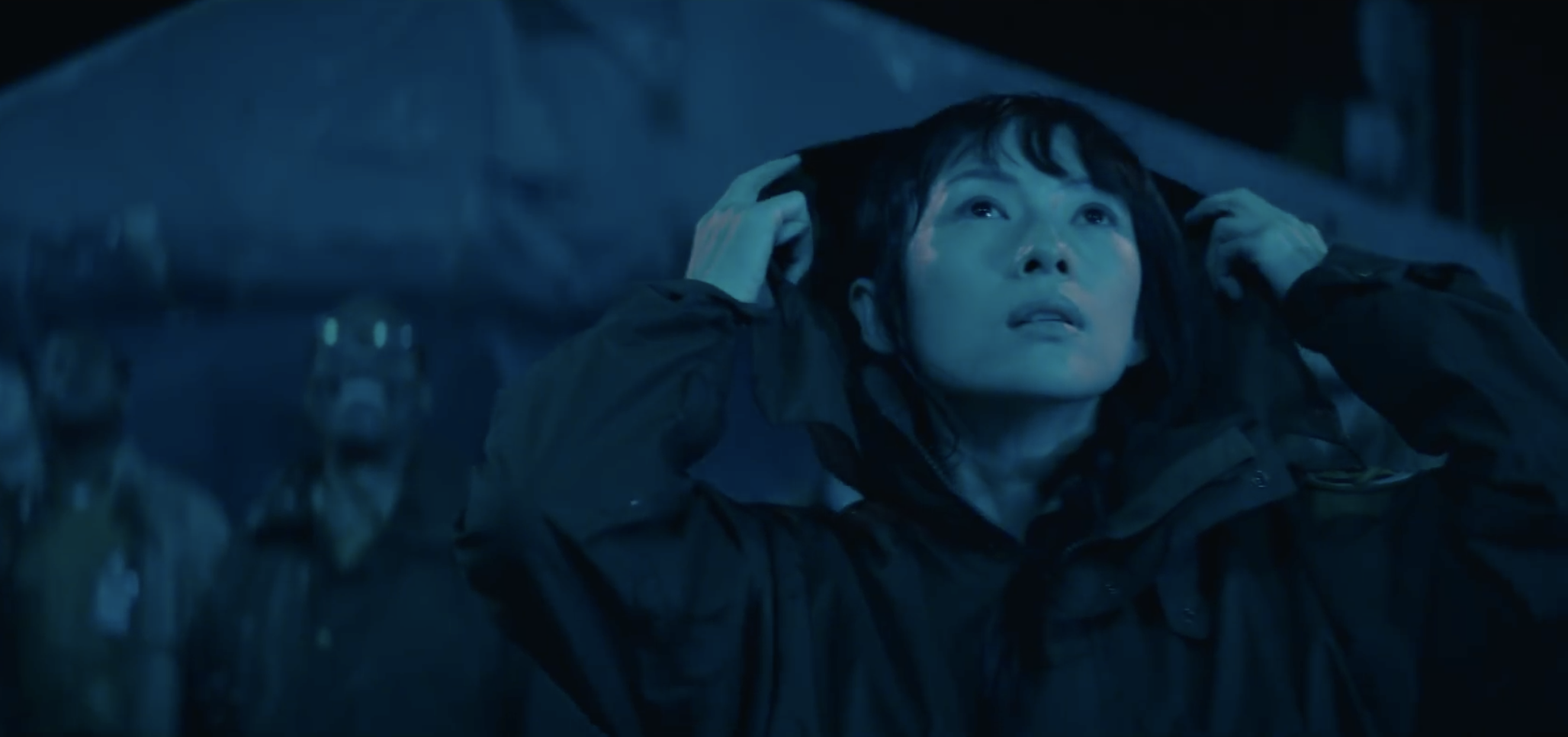
There are, despite some of the hammer-hitting lack of subtlety in the film, some nice touches: the constant calling-upon of hieroglyphic evidence of kaiju presence during man's early development (however unlikely that may seem); the sense of glowing myth as the creatures never seem to be present in anything other than strange weather phenomenon, as if they were tied to the very natural forces that soak, electrify, and shake the planet—like some manifestation of Kurosawa's emotional weather conditions; there's even a moment that might be confusing for most audience members—Ziyi Zhang plays two characters in the film, twin sisters, who hearken back to similar twins, the twin fairies, the diminutive shobijin, who summon forth Mothra with their song. It's a tiny little detail, but it set my "mothra-sense" to tingling when I saw the actress appear in a continuity-defying two places at once.

"Please notice that the 'Fasten Your Seat-Belt' sign is on..."
But Godzilla, King of the Monsters is not that great a movie. A pretty darned good giant monster movie and a bit of an improvement over its source material (remember: no venusians...). If it has any luck, it'll become a Saturday afternoon staple on television—which is where I saw most of these things in my youth (and I was cynical about them then). It pays homage to its source by not being too reverential about it or trying to make it more "significant" than it is (despite my comic intentions to politicize it). It was, and still is, a cheese-fest. It's just that the price of cheese has gone up—significantly—over the years.
"Let's get ready to rummmmmblllllle..."
Oh. And one passing thought: despite the dangers displayed by galumphing behemoths of various genera and type, spitting sparks of a source not found in Nature's spectrum, one gets the impression that they are not considered the biggest concern or threat to the filmmakers. Given the evidence of the film and what they choose to show and how they show it, the real danger is...bad mothers.

Hope that doesn't spoil anything.
"King me, baby!"
Prepare for the inevitable cage-match (2020, they're saying)

* Or as it's known in the States, Ghidrah, the Three Headed Monster (with only two syllables).

** Monarch is the secretive Japanese-American organization that studies M.U.T.O.'s (Massive Unidentified Terrestrial Organisms—or the more PC, "Titans") that have emerged from the Earth's hollow interior due to man's atomic experiments and other destructive activities—like building Monarch's massive underground outposts. Monarch seems to have an unlimited budget and unlimited resources, and 61 outposts around the globe to hunt 17 of these things. It's no wonder there is a Senate investigation of the thing in this movie. Next thing you know, Trump will want one of these organizations if he can't get his Space-Rangers.
Oh. One more thing-they always have to fight by power-lines. Always.

Friday, May 17, 2019

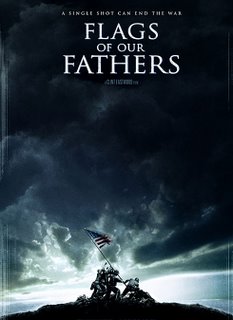
The Battles of Iwo Jima (directed by Clint Eastwood)

Written at the time of each film's release...

Photo Opportunism

Every year, like clockwork,
Clint Eastwood makes a new film, and they become instant Oscar-bait. His last one was Million Dollar Baby (Hilary Swank won Best Actress-her second award, and Morgan Freeman won Best Supporting Actor) The year before that, Mystic River (winning Oscars for both Sean Penn and Tim Robbins). Eastwood shoots movies fast in a calm environment and leaves actors alone to do their job. And while most directors are making movies that jump and whirl just to prove they're doing their jobs, Eastwood sets up the shot, does a take or two and moves on. He's efficient, fast, and doesn't do any fancy cutting or post-production. 
In this way, he's very much like his mentor, Don Siegel. Siegel, too, wasn't afraid to throw a little controversy into the mix. Eastwood, a moderate Republican, has made movies recently that have condemned vigilante violence and lack of process (Mystic River), and turned a sympathetic eye to euthanasia (Million Dollar Baby). His recent work is not for the complacent, and Flags of Our Fathers is just as impatient with easy myths and lazy thinking. 
Saving Private Ryan can look at "The Greatest Generation" and sentimentalize them while acknowledging their sacrifice. Eastwood's film has the audacity to question blind patriotism and that sentimentality for the purposes of hucksterism. I'm sure when some neo-con blowhard actually sees this movie there's going to be as much controversy as there was around Million Dollar Baby among panicky right-to-lifers. As it is, I've already heard some CBS radio reporter in Iraq talking about the stationed soldiers "fighting for each other, rather than the cause," a line right out of the movie. How quickly this stuff travels...
Performances are top-notch from a bunch of actors never given their due--here, they shine. Guys like Robert Patrick and Neal McDonough, good actors (whom you know from other things) with odd faces that will never be leading men are revelations here. Gordon Clapp from "NYPD Blue" has one scene of such comic ferocity that you'll never see him the same way again. Ryan Phillipe, thought of as the less-talented of a Hollywood marriage (and ironically they split up right after this film came out), belies that here. Barry Pepper, from Ryan plays an "old vet" of 25, with the slightest veneer of gravitas and bravado. And Adam Beach, of Smoke Signals and the Tony Hillerman adaptations on PBS, has never displayed the potential of his performance here. He has one devastating scene that will get him nominated him for an Oscar and probably win it for him. The day I saw it, there wasn't a dry eye or a nose unsniffled after it. The story of Ira Hayes has been told before on screen and in song, but never so effectively as here.
Eastwood's next movie will be coming out quickly, as he shot it simultaneously with Flags.... It's also about Iwo Jima...from the Japanese perspective-Letters from Iwo Jima.

Eastwood is so good, he's scary.

 -------------------------------------------------------------------------------------------------------------------------

"See you on the other side!"

Somewhere in the planning stages of
Flags of our FathersClint Eastwood had a thought—What was on the minds of the Japanese soldiers who also fought at Iwo Jima? What of the commander who took such a different approach that the badly out-numbered troops could hold off the Americans as long as they did? So with the same crew, and a completely different cast he made another movie on the heels of the previous one that showed the situations and motivations of the defenders of Iwo Jima, based on writings contained in the book "Picture Letters from the Commander in Chief," written and illustrated by the Iwo Jima forces' commander Tadamichi Kurabayashi.

The results,
Letters from Iwo Jima won the National Board of Review's "Best Picture." It's nominated for a Best Picture Oscar, and it incongrouosly won the Golden Globe for "Best Foreign Language Film" ("I guess I have to learn a foreign language now," said Eastwood laconically).
The film is 98% in Japanese with subtitles. Played by a terrific cast (assembled with Eastwood's knack for picking interesting faces) led by Ken Watanabe who after stealing The Last Samurai from Tom Cruise and going to waste in Batman Begins shows how thoroughly he can carry a film. He suggests no one less than Gregory Peck in his portrayal of the American-schooled Japanese tactician who knows the impossible task of defending the last stop to Japan and does so to the best of his ability.
Like that defense strategy Letters is an excavation. In a present day prologue the letters are unearthed by Japanese archaeologists. Flash back to war-time Iwo Jima and the soldiers are digging trenches for the initial beach attack strategy, then digging the elaborate system of tunnels that would prove to be the core of their final strategy. Letters follows several soldiers of various ranks in the days between Kurabayashi's arrival and the fall of the last man. The film wheels between the scenes of the island (filmed in a bleached monochrome broken only by the reds of the Japanese flag, the orange flame of explosions or blood), and of the men's past lives filmed in vivid technicolor. Technically, the film is a wonder. The effects by Digital Domain are photo-realistic, even amidst battles that are shot hand-held and face-close. The explosions singe.
Given the structure, the film is very much in lock-step with such traditonal war-films as, say, The Sands of Iwo Jima, where the personal lives of the individuals in the troop manifest themselves on the battle-field. But the war film it most resembles is the B-movie WWII drama Hell is for Heroes directed by Eastwood's mentor, Don Siegel. Like Letters, Hell... is a view from the trenches, where the conceits of heroism and honor--a constant hook in the dialog of the Eastwood film, everyone talks of honor...or mocks it ("Kashiwara died from honorable dysentery," says a grunt about the whereabouts of a comrade) have no place in the grime and destruction of war. The picking-apart of the hero myth has been the most frequent Eastwood subject. But not even Eastwood has gone as far as Siegel's film to suggest that the maladjusted make the best heroes.
It's interesting that Eastwood has made these two films now: Flags of Our Fathers with its focus on propaganda and the selling of a long war in the face of a populace's flagging enthusiasm, and Letters with its hollow talk of honor and pride in the worst of circumstances. At one point Kurabayashi bitterly reacts to a wire from his superiors, "The Imperial Headquarters is not only deceiving the people, but us as well." The similarities cut across time as well as the disputed borders of the combatants.
And there is a constant reminder of what unites the combatants rather than divides, managing to make the standard war-film trope of "we're more alike than different" that goes all the way back to All Quiet on the Western Front fresh and surprising (that lesson is never hammered home more than in films about the Civil War). The American-trained commanders drink Johnny Walker while grousing about the food, the conditions and their superiors. At times in the dim light the features of the participants blur--it could be any army. Eastwood and his screenwriters--the ubiquitous Paul Haggis and first-time scripter Iris Yamashita work overtime on the ironies, but one stands out. Watch the ivory-handled revolver that Karabayashi wears on his hip. "He must have taken it from an American," says one of the admiring soldiers. He did. But like so many of the twists in Letters from Iwo Jima, it's not in the way you'd think.

Letters from Iwo Jima is an extraordinary film, however, it feels 20 minutes too long (though I've struggled where one can cut it).
Of the two Eastwood Iwo Jima films, I prefer Flags of Our Fathers for being less traditional in its story-telling, and for taking up two subjects--propaganda and the selling of war and patriotism, and survivor's guilt, the practical and mysterious faces of war, that are rarely touched on despite the reels and reels of film that have been dedicated to the subject of battle.


Thursday, April 26, 2018

Isle of Dogs (2018)

No Future on Trash Island
or
"Sheesh, Igor, I Think He Chewed Your Ear Off"

The Japanese city of Megasaki is in crisis. It is determined that the city is suffering from the effects of "canine saturation" and a resulting public health crisis from a dog-flu epidemic called "Snout Fever." To ward off the risk, Megasaki's mayor, Kobayashi (voiced by Konichi Nomura—it's animated, they're all "voiced")—hiding the centuries-long grudge his family has held against dogs—institutes a plan to banish all bowsers from the city to a small archipelago called "Trash Island." To show the populace his own good will and that he, himself, will suffer from the decision, the first dog to be sent into exile is "Spots" (Liev Schreiber—yes, the dogs talk, in English), the service animal of Kobayashi's orphaned nephew Atari (Koyu Rankin, who speaks in Japanese). "Spots" is left alone and abandoned on Trash Island, but he will not be alone for long.
Soon, every dog from Megasaki is on Trash Island and it's a dog-eat-dog existence. Well, actually, no...dogs haven't resorted to cannibalism, but there is a rumor that one group did...well, let's not get into this. 99% of the population does not resort to cannibalism, as Megasaki provides a steady steam of trash for the various packs to fight over. It is not a good life on Trash Island, but at least it is somewhat sustainable.
"Is this worth fighting over?" "Yes, it is"
Isle of Dogs concentrates on one particular loose-knit pack: King (voiced by Bob Balaban); Duke (voiced by Jeff Goldblum); Boss (voiced by Bill Murray), and Rex (voiced by Edward Norton); into their midst comes an outlier named Chief (voiced by Bryan Cranston), who is far more independent than the others, probably because of their backgrounds and history, and despite his more decisive demeanor, there is a certain reluctance to take his advice on anything...despite the other four's inability to plot a course of action.  Even in a dog-pack, there can be inherent prejudice.
King, Duke, Boss, and Rex....and...Chief.
Their differences can best be explained in these lines of dialogue making the demarcation known.

Rex: I used to sleep on a lamb's wool beanbag next to an electric space heater. That's my territory, I'm an "indoor" dog.
King: I starred in twenty-two consecutive Doggy Chow commercials. Look at me now, I couldn't land an audition.
Boss: I was the lead mascot for an undefeated high school baseball team. I lost all my spirit, I'm depressing.
Duke: I only ask for what I've always had, a balanced diet, regular grooming, and a general physical once a year.
Chief: You're talking like a bunch of housebroken... pets.
Rex: You don't understand. Uh, how could you, I mean you're a...
Chief: Go ahead say it. I'm a stray, yeah.
Yeah. He's a stray. Go ahead. Make something of it.
Things change for the pack with the arrival of a mini-airplane  that has a slight accident and crashes onto a Trash Island beach. The pilot is none other than Kobayashi's nephew, Atari, who has come in search of his lost dog, Spots. The pack (who do not speak Japanese—they speak English standing in for canine) bands together to find Atari's lost guard=dog and begin an odyssey of sorts on Trash Island to find the boy's ditched dog. The trek allows Atari to bond with Chief—they are, after all, both unattached strays—a relationship that benefits both parties.  
Isle of Dogs is the product of director-co-writer Wes Anderson, who basically did a full story-board breakdown for stop-motion animators to emulate—as he did in Fantastic Mr. Fox—has stated that the film is influenced by the films of Kurosawa and the Rankin/Bass television specials of the 1960's. Sure, it's very possible. But, an awful lot of Anderson's work can be seen to be based on the stop-motion animation work he saw as a kid. But, it's also unmistakably Anderson's style, with images that have a strict one-point perspective, a rather strict symmetry and camera movements leaning on the lateral (with the occasional direct zoom that makes sure not to move the center-point). Watching one of Anderson's stop-motion movies is like watching Stanley Kubrick make a "Lego" movie.
In between Fox and this film, Anderson made the live action The Grand Budapest Hotel, which pushed the 'feel' of the live-action film into a more animated sensibility, even employing a similar stop-motion sequence to illustrate the Hotel's vertiginous tram. He continues the strict one-point perspective that he has been increasingly been using throughout his career. You can also see a major up-tick in the design of the film, far above that displayed in Fox, creating vast spaces that extend to the horizon. You also see him employing a mixed-media approach, combining the live-action with animation (particularly in television transmissions that are featured).

It's a great leap in form for Anderson, who creates a fun little adventure story with an increased sophistication that's quite fun to see.

The "Fearful Symmetry" of Wes Anderson's Isle of Dogs

Tuesday, May 20, 2014

Godzilla (2014)

Meet the New Lizard.  Same as the Old Lizard.
or
Feeling Pacific Rimmed

Oh, I had such high hopes. After ignoring it for so long (probably because my eyes were rolling back in my head at its mention), a glimpse of a preview of the new Godzilla movie looked terrific, was moody and atmospheric, and gave you just a glimpse of the new "Gojira" (the name of the creature in the Japanese original), giving it an air of a Ray Harryhausen beastie—fake, sure, but with a look you could respect. There was a "buzz" about it, that this one (the 30th) might actually be a good one...for a change. Time Magazine threw it in as the lead for its large article on upcoming "Cli-fi" movies.*  Certainly it had a cast that was respectable: Ken Watanabe, Sally Hawkins, Bryan Cranston, Juliet Binoche, Aaron Taylor-Johnson, and Elizabeth Olsen, and I genuinely admired director Gareth Edwards' documentary In the Shadow of the Moon.

But, let's face the music, kids: it's a "Godzilla" movie. It's not even a "Gojira" movie. It's a "Godzilla" movie with a stern American militaristic seriousness. That's all well and good if you want to take that parade stance, but all the verisimilitude in the world can't make you resist giggling when the creatures begin crashing into each other like sumo wrestlers, as they did in the old films. At least Pacific Rim went right for the funny-bone by having its "Gigantor" robots delivering hay-makers to the threatening kaiju.

But it does try and make a point—just as the original Japanese film used a monster movie to talk about the dangers inherent in setting off nuclear weapons—about making this old ancient Earth cranky and unstable, in this case with the proliferation of nuclear weapons and with a Fukushima-like nuclear disaster in Japan that leads to the unleashing of even more cranky creatures (labeled M.U.T.O.'s "Massive Unidentified Terrestrial Organisms" and the only humor to be found in the film is the straight-faced way in which military commander David Strathairn—another terrific actor—delivers this information as if he were throwing out anagrams of a coalition of the willing), who have no regard for the ant-like bi-peds in its path.
"My name isn't above the title—it IS the title—and I don't
show up until the last third of the movie.
Do I have a great agent or what?"

Speaking of which, one of the nice things about this Godzilla is how it maintains a certain visual connection to the Japanese series; certainly, anyone who's seen those movies remembers the visual scheme where Godzilla is in the background stomping around, while in the foreground blue-screened Japanese citizens are fleeing towards the camera (even if you haven't seen one of the films, it's been parodied so often, you may be familiar with it).
Edwards' direction is very bystander-centric, you usually see the monsters from the perspective of the citizenry being threatened (and in a neat touch for 3-D, through windshields and office windows that puts just enough barrier between creature and "creatured" to lend perspective and communicate vulnerability). It gives the film a slight sense of nostalgia, even while it's trying to create its own crater in the series.  And one has to say that it has moments of beauty to it—it never doesn't look terrific—but scenes like an eerie night-time HALO jump (set to Ligeti's "Requiem") and a brief eye-to-eye moment between the big "G" and the movie's hero (played by Aaron Taylor-Johnson) before the creature is enveloped by the dust of San Francisco's destruction stay with you, and even haunt.
The cast (other than Taylor-Johnson and Olsen) are largely extended cameos (and one is advised to not get too attached to any of the characters, if that's possible), but one comes away from this evolution of the beast feeling like one's only seen a better-made version of the old hokey movies of the past, like a better wrapped tie for Father's Day. What makes this film special is what made the ideas behind the original special, told with a portentousness far exceeding its worth. Maybe in their efforts to make everything believable, they decided to make it less fun.
Why, the giant lizard doesn't even do his "happy dance" that he'd do after defeating Robot-Kong or whatever.  Certainly, I didn't while exiting.

* The subsequent review by Time's Richard Corliss was very disparaging.  Reading the earlier article, I got the distinct feeling the writer never saw Godzilla versus the Smog-Monster.