Showing posts with label Harry Potter. Show all posts

Thursday, November 22, 2018

Fantastic Beasts: The Crimes of Grindelwald

Bébé LeStrange (Losing All Credence)
or
Fantastic Beasts and Where NOT to Find Them.

It is a year after the capture of Gellert Grindelwald (Johnny Depp) in New York during the events of Fantastic Beasts, and Where To Find Them, and he has spent that year locked away in the prison run by the Magical Congress of the United States of America. Unable to break him, or even learn what the dark wizard might be planning, they decide to transport him to England's Ministry of Magic, so as to...well, one isn't sure what they can do with him, exactly. But, transport him they must in order to get the plot going. While Grindelwald is sent by flying Kestrel driven chariot, one of his followers in hiding effectively distracts the guards keeping him under lock-and-wand, and the seemingly placid prisoner, manages to take control of the vehicle and send his keepers plummeting to their deaths. Well, it would be their deaths if they weren't wizards...one of them manages to halt his fall before he hits the briney and then *splash* he goes into the drink, while Grindelwald flies off to what we eventually learn to be Paris, as he has business there and people to find and corrupt.

A wizard's work is never done. 
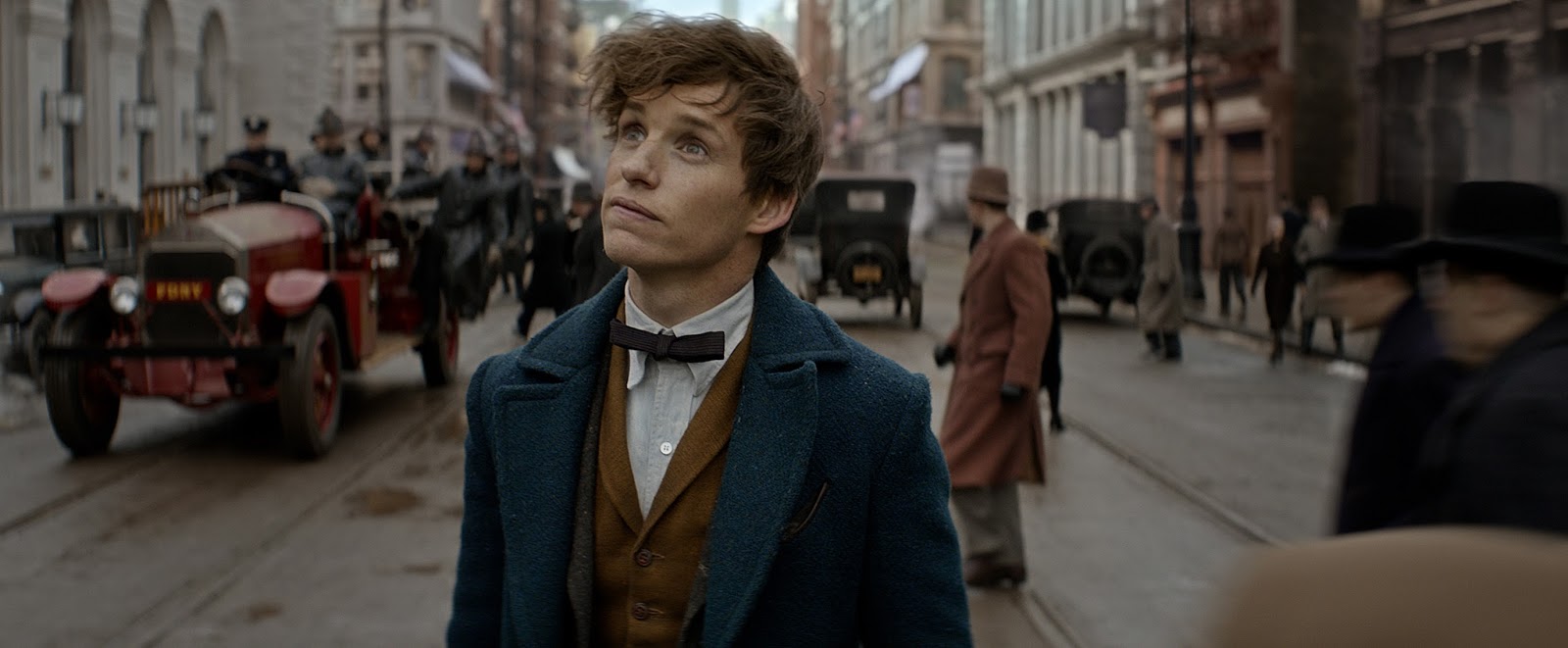
Three months later, Newt Scamander (Eddie Redmayne) is back in London, being called on the carpet (flying, presumably) for his part in the events in New York. The Ministry has revoked his travel privileges (as if they can't be worked around) and offer them as the price to work with the Ministry to find young Credence Barebone (Ezra Miller), an Obscurial he encountered in New York, but has now been located in London. Despite the Ministry's offer and the entreaties of both his brother Theseus (Callum Turner) and his fiance Leta LeStrange (Zoë Kravitz), an old chum of Newt's from their days at Hogwarts—although it is implied that she thinks she might be engaged to the wrong brother). Newt is a magi-zoologist and "doesn't do sides" in what looks to be a nasty struggle. Famous last words.
On his way home, he runs into his old teacher Albus Dumbledore (you remember him, but either as Richard Harris or Michael Gambon, when he was an even older teacher, not, as here, by Jude Law—who is quite good). Dumbledore also asks him to find Credence, but Newt remains a neutral party. He goes home to tend to his Fantastic Charges—such as the underwater critter, a "kelpie", who has a habit of nipping Newt's fawning helper, Bunty (Victoria Yeates), before retiring for the evening. No such luck.
He finds his friends from the last adventure, Jacob Kowalski (Dan Fogler, who's starting to remind me of a fuller Alan Arkin) and Queenie Goldstein (Alison Sudol), have traveled to London on their way to visit her sister Tina (Katherine Waterston) who is doing some investigating for the Ministry in the city of Paris. Coincidence? Hardly. Newt notices that Jacob is behaving strangely—he's completely agog with Queenie and he surmises that she's used a hex on him, of which Newt strongly disapproves. Her reason? She wants to marry Jacob, but there's some dumb rule about magical miscegenation that prevents it—and Jacob is too protective of Queenie to let the Ministry punish her for her actions.
Queenie runs off to find Tina on her own—there's some business about Tina not wanting to see Newt because she read somewhere that Newt and Leta were engaged—"fake news"—and despite her being an investigator she still decides to fall for it and have nothing to do with Newt. Well, now there's a reason for Newt to choose sides, so after getting his marching orders from Dumbledore, he and Jacob go off to Paris to find Queenie and Tina and Credence (which sounds like a heckuvan "oldies" concert).
Then, there's the Ministry's business: they're also looking for Credence, as well, as they think he may be the brother of Leta LeStrange, which is ridiculous because Zoë Kravitz looks gorgeous and Ezra Miller looks...like Ezra Miller. Maybe he could be the brother of Adam Driver, but he's not in this franchise. Grindelwald is looking for Credence, too, as he thinks he's the only person on Earth—the wizarding Earth—who could kill Albus Dumbledore (other than Severus Snape, who isn't alive yet). Oh, did I mention there's a half-brother named Yusuf Kama (William Nadylam), who is also looking for him because he thinks he's his step-brother? Credence is the most popular guy in town, but the one who finds him first is Queenie, when she visits a mystical street-circus where a hunched up Credence is acting as the protector of Nagini (Claudia Kim), who will at one point become the snakey familiar of Voldemort...
See? At this point, the movie kinda breaks down and gets lost in some Potter's field of arcana that only a small handful of people might give two wand-shakes about. There are so many people who think Credence is SOME-thing, that most of them must be wrong...in which case, who cares? Credence is the MacGuffin in this one, like the Sorcerer's/Philosopher's Stone, Chamber of Secrets, Goblet of Fire, or the horcruxes of the Deathly Hallows. It's something everybody wants, but we can't guess at each one's significance until the end.

And this series is set to be five films long.

It makes your brain hurt, sets it rolling with Rowling. But, the film went astray much further than that, at least to my mind. That point came when screenwriter J. K. Rowling decided to abandon the concept of her original "Fantastic Creatures" and make it's font smaller in the title than "The Crimes of Grindelwald." For the truth of the matter is, there aren't that many "Fantastic Creatures" here, after about ten minutes of them, and they are only used as a way out of getting out of a tricky situation, whether as distraction or destructive force. I found this very disappointing. You shouldn't go into any movie with preconceived notions, but after the first, I was hoping the movie would continue its ecology theme of preserving the bewitched bio-diversity of endangered—and vexing—creatures, despite the slimness of the source material.
Instead, the stakes are expanded, creating a world-wide threat by the actions of Grindelwald, which, if we're to believe this movie, are more far-reaching even than Voldemort's: his plan is to unite the many mages throughout the wizarding world and break the 100 year peace established with the Muggles, the unenchanted. 
Newt's greatest fear: "a job in an office"
In a meeting of French wizards in the LeStrange family tomb, Grindelwald makes a case for the magical forces taking over the world out of the hands of the non-magical, starting with telling them that he wants them to live openly and to love openly (which appeals to Queenie). It's how to accomplish that utopia that bubbles the cauldron. That involves taking charge of the Muggles, poor inferior souls, dominating them rather than maintaining any co-existence, then as a capper, Grindelwald plays on their fears by displaying images from the coming second World War that ends with the apocalyptic vision of an atomic explosion. 
But, then, Grindelwald is just telling them what they want to hear—control of their world, making it theirs. You don't have to to walk to the far to the right politically to see a political parallel with today's world—Rowling injected the Potter books with flirtations of authoritarianism. But, here the parallels are far too noticeable and in a series more in line with the blockbuster sensibility of the high-earning Potter films. The studio is Warner Brothers, which used to be known as a sanctuary for letting film-makers be film-makers, but now known for sticking their grubby little hands in their franchise films.
It's a disappointment. There's only a couple of new beasts, only one of which is effectively used and that as a deus ex machina to get the heroes (and the writer) out of a jam. Unfortunately, that would appear to be the template for the rest of the films—re-do the Potter films with their well-connected central villain and just give lip-service to the Fantastic Beasts concept. The idea seems to be it's better to do something that feels more like the popular Potter films than to strike out with something different that might expand the universe and bring a unique experience.
I just participated in a podcast put out by the Large Association of Movie Blogs (LAMB) on the film and the general consensus was that the film was a big drop in quality from the first film, whether you thought the initial movie was good or not. It was amusing that the one thing everybody said was exceptional was the costumes. That sounds like the old trope that you shouldn't walk out of a musical whistling the sets. You shouldn't. But, for a fantasy that should inspire a sense of wonder, it's particularly un-magical.
"Oh! There's one!"

Wednesday, December 21, 2016

Fantastic Beasts and Where to Find Them

Global Swarming
or
The Trials of the Mag-ecologist

I saw all the "Harry Potter" films, but didn't read the books; I only made it half-way through the first one, and it was at that point, I "knew" what style of writing I was in for and I didn't want to invest the time in reading the entire series. Plus, I'd had my fill of young mage's learning their trade, having read Neil Gaiman's "Books of Magic."

But, "Potterer" J.K. Rowling has an entertaining, spunky voice to her writing, and she needn't depend on writing "Potter" in perpetuity to make her living. But, as long as the "magic" happens at the bank, why shouldn't she keep up with the "Potterverse?"


Fantastic Beasts and Where to Find Them started out as a Rowling-penned encyclopedia of things odd and ambulatory, scaled and winged in the wizard's world. Rowling has fashioned that "reference" book with some arcana to make a viable screenplay for the film. If there is one criticism of the whole enterprise, it's that they're trying to squeeze a few films out of the threadbare source and have invented yet another Voldemort-style villain arc to create a through-line for the story. It seems like we've been here before and the basic concept is enough to make a couple less films with a strong story-line with a unique cautionary tale about bio-diversity and preservation without having to resort to the villain plot (especially when it seems so unnecessary to the basic thrust of what she's come up with for the "A" story). When you couple that idea with the character-reveal similar to the one in Harry Potter and the Sorcerer's Stone, one fears that we're going to be making too many trips to the magical well. That's the bad news.
The good news is that Fantastic Beasts and Where to Find Them is a delightful entertainment, even with its bare-bones structure and shorn of the teen-angst of the Hogwarts alums, and the new film's hero, Newt Scamander (Eddie Redmayne) doesn't have the orphan-drama baggage of Master Potter and his class. There's less soap bubbles mixed in with the fairy dust, keeping the larger issue of magic/non-magic relationships and the specific mission of Mr. Scamander, which is the securing and maintenance of endangered beasts of a special nature.
Call him a mag-ecologist (although Rowling labels him a Magizoologist).
It is 1926, as Scamander travels to New York with a valise that that growls and shudders at the most inopportune times—like at the immigration desk. Newt has traveled from England (he was kicked out of Hogwart's and why is not specified in the film) to track down some escaped critters that might cause problems in the Muggle-world by exposing the existence of the magical one.
Things are already dire; as we learn in an opening montage of animated newspaper headlines (Rowling learned that trick from Alfonso Cuaron, who used the same technique in the third HP film), a magical miscreant named Gellert Grindlewald (???)* has escaped from some porous prison somewhere (magical rules are always slippery and the ones that might apply to Dr. Strange don't in Rowling's world) to do something we know not what—it can't be good, or specified apparently, and that's one of the shortcomings of the film.
The escape of Grindlewald is causing a conniption in magic circles (headquartered in New York at the Magical Congress of the United States of America, or MACUSA) because they want to stay secreted away from the Muggle (referred to as No-Maj's in the States) world—a way of life that seems extraordinarily impractical and convoluted, just to keep Muggle/No-Maj's from asking them to do magic favors ("I've got this thing...right here"). Well, MACUSA is all up-in-arms about Grindlewald, but they also know of the beasts that seem to have got loose and aren't doing much about it, other than to send a disgraced Auror, now investigator, Tina Goldstein (Katherine Waterston) to do some perfunctory looking.
The Magical Congress of the United States of America HQ
Newt and Tina encounter each other as the zoologist tries to trap an escaped "Niffler" (attracted to and given to the pilfering of shiny things) who has inconveniently run into a bank. Getting mixed up in the hi-jinx is Jacob Kowalski (Dan Fogler, the welcome "explain-to" character), a No-Maj who is at the bank to try and secure a loan for a bakery he wants to open. It becomes inconvenient to mind-wipe Kowalski and in best silent-movie convenience, he manages to swap valises with Scamander, letting loose a couple more creatures that the mage has hidden there.
A "Niffler" caught red-pawed in the act
One should explain that Newt's valise is the neatest space-bending device since the Tardis and provides all sorts of good comedic effects and a truly wondrous touring experience once we "get into it."
Anyway, "hilarity ensues." But, there are dark tidings beyond the levity. There are the Barebone family (led by Samantha Morton), who are the locus for the New Salem Philanthropic Society, a No-Maj organization that is convinced witches are real and should be expunged from society. She is treated as any crackpot but the MACUSA worry what might come of them if they are exposed as real. They, therefore, have a Chief of Security named Percival Graves (Colin Farrell in a nifty performance), whose radical ideas of security involve putting errant wizards to death.
He'd get along great with the New Salemers—and, in fact, he does, using the insecure young son Credence Barebone (Ezra Miller, the once and future movie-Barry Allen) as both spy and potential ally for seeking out information about both the Society and word on the street about wizards. That seems a little odd, doesn't it?
Director David Yates directed the last few Harry Potter movies in a way that did them service, but, to me, didn't do much else. But here, his direction pops, as if everything he learned from the earlier films freed him to do less with special effects—not that he ignores them, in fact there's more magic and imagination in this film than most of the "Potter's" and delightfully so—and concentrate more on telling a story artfully. The cast, especially Redmayne, do great work in the service of the story and everything comes together in a very entertaining package, quibbles aside.
It's a fine expansion of Rowling's wizard's world, and one hopes that the momentum can be sustained in the succeeding films (4 more of them?) to create something truly magical.

* Grindlewald appeared briefly in Harry Potter and the Deathly Hollows, Part 1 and his reveal at the end of Fantastic Beasts...is a little...disappointing.

Friday, September 4, 2015

Now I've Seen Everything Dept.: Harry Potter

Harry Potter & the Declining Rate of Returns

It's been a long, bumpy train-ride from Harry Potter and the Sorcerer's Stone to HP7.2. A lot of dropped sub-plots and dead-dropped characters And because of the voluminous nature of J.K. Rowling's writings, the movies had to give everything a quick once-over in order to fit into each 2.5 hour time-frame. You could be assured that if a character dropped out of sight from the film series, should they return, they were probably going to snuff it (Alas, poor Dobby, see ya "Mad Eye"—oh...I guess we won't). One by one, Harry's supporters and protectors were dispatched by the demon-spawn of He Who Must Not Be Named, and one wondered at what point Harry was going to man-mage up and do what a man-mage's gotta do.

After all, it only took Hamlet one play to make up his mindAnd Luke Skywalker loved his sister. Everybody's got a breaking point. When was Harry going to stop running and act? Who else had to die for him to say "This stops now, Snake-Eyes?" The series started out strong, but began to suffer from a sameness and lethargy, despite the slew of creatures and SFX fireworks, and the movies revealed the baby-steps it was taking to advance the story, free of the books' engaging detail and ephemera.

With the series complete, and emerging the highest earning film franchise of all time, its time to go back and look at the films in the series, year by year.

Averto Vicis.

Lumos Maxima...


Harry Potter and the Sorcerer's Stone (aka Harry Potter and the Philosopher's Stone) (Chris Columbus, 2001) Year one at Hogwarts.11 year old orphan Harry Potter (Daniel Radcliffe) lives in a cupboard underneath the stairs at his Aunt (Fiona Shaw) and Uncle's (Richard Griffiths). Life sucks. Then a letter in the post turns life upside down and the extended Dursley family goes into hiding—it is a personal invitation to Harry to attend the very exclusive (VERY exclusive) Hogwarts School of Witchcraft and Wizardry.  Harry, it seems, is a born wizard, quite famed in that world as an heir apparent, "The Boy Who Lived" in an encounter with the Dark Lord Vol...(shhhh)...an encounter that killed his parents. No wonder the Dursleys want to avoid the wizard world.

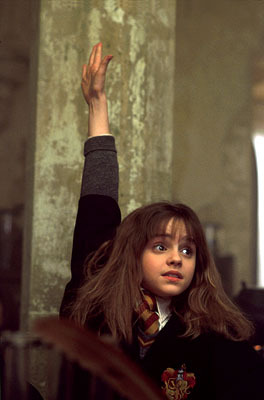
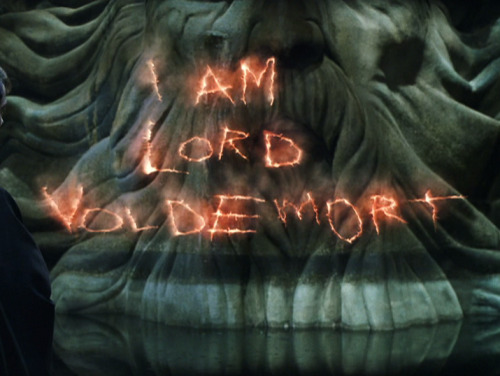
But, once the truant officer shows up (Hagrid the gamesman, played in all the films by Robbie Coltrane) and Harry gets his school supplies, he takes the train to Hogwarts where he meets his nearly constant companions for the rest of the series, Ron Weasley (Rupert Grint) and Hermione Granger (Emma Watson), as well as Professor Albus Dumbledore (Richard Harris), Professor Minerva McGonagall (Dame Maggie Smith), the suspect and suspicious Severus Snape (Alan Rickman, in the best performance of the series) who takes an instant dislike to Harry (for some reason...), and Ian Hart in the first of guest-starring profs who will appear and disappear. Lord Voldemort tries to make an in-road to the living at Hogwarts (why?), but is defeated by Harry. Lesson learned: There's a big world out there if it is not suppressed.

Columbus' film is loud, big and brash, with wall-to-wall music by John Williams (Williams never learned that there can be too MUCH music), but fills the screen with everyday magical effects—floating candles in the Dining Hall, passing phantoms, "alive" portraits, moving staircases—that other directors forgot or just didn't bother with.  The kids are great, but Radcliffe has the weirdest smile—like he's just learning to, which given Harry's past could be true. An amazing cast—something that would be true of all the films. A very good start.

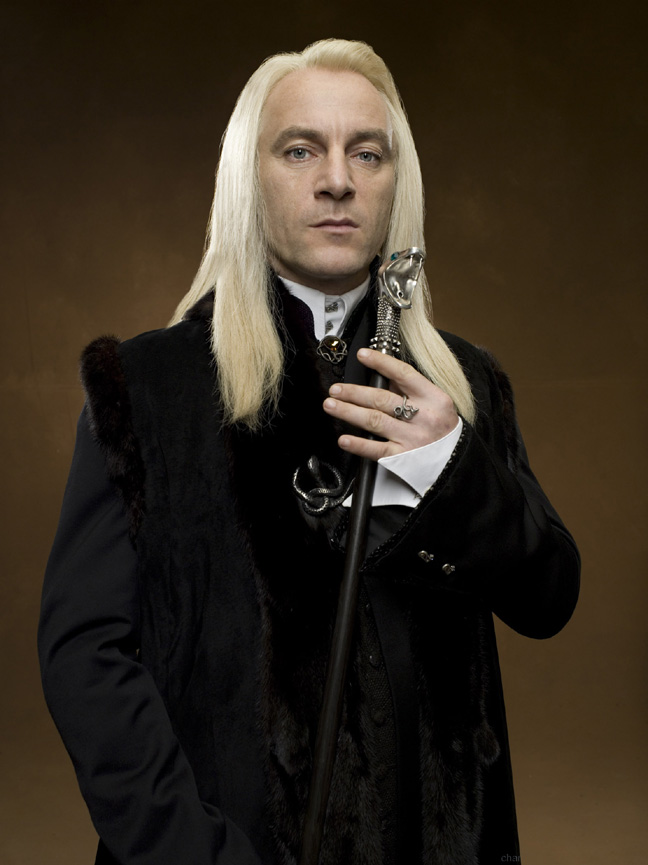
Harry Potter and the Chamber of Secrets (Chris Columbus, 2002) Year Two at Hogwarts. New Teacher: Gilderoy Lockhart (Kenneth Branagh)  Harry meets Dobby the House-Elf (voiced by Toby Jones), Lucius Malfoy (Jason Isaacs) and Ron's sister Ginny (Bonnie Wright), who is suspected of opening the dread Chamber of Secrets, releasing an evil that has killed students in the past. Several students including Hermione are "petrified" and it's up to Harry to save them. Turns out Ginny was possessed by the diary of one Tom Marvolo Riddle, which forced her to open the Chamber and release a basilisk—the evil causing all the damage. Harry confronts the spirit of Riddle, realizing that it is Voldemort's second recent attempt at killing Harry (why?), and nearly loses his life in the process. Lesson Two: Harry has a choice in the direction he can go in life.

If the books have a weakness, it is that Harry is born to be a wizard, and everything seems to come easy for him..until somebody actively tries to stop him. With this film, that "ease" already becomes a bit too familiar, and the action is ratcheted up a notch. The attacks on Harry start to affect his friends and he begins to take a more active role in protecting them, even at the risk of himself, although he's always had a penchant for breaking rules. Columbus would move on, taking a producer's credit, and handing the director's wand to an unlikely candidate.


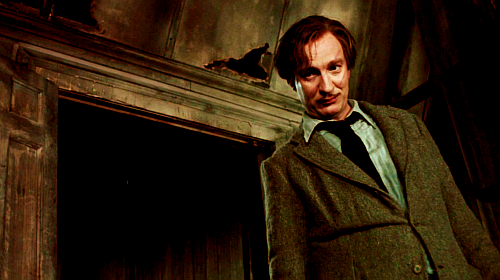
Harry Potter and the Prisoner of Azkaban (Alfonso Cuarón, 2004) Year Three at Hogwarts and the kids are already starting to look grown up. New teachers: Remus Lupin (David Thewlis) and Sybil Trelawney (Emma Thompson)...and Michael Gambon replaces the deceased Richard Harris as Dumbledore  Sirius Black (Gary Oldman), rumored to have betrayed Harry's parents to Voldemort, has escaped Azkaban Prison, and so the Ministry of Magic guards Hogwarts with the soul-eating Dementors—who have a crippling effect on Harry. Initially vowing to kill Black, Harry finds out that it wasn't Black—who turns out to be his godfather—but Peter Pettigrew (Timothy Spall) who gave the information to the Dark Lord. Lesson learned: Think before you act, and don't make hasty judgments based on rumor (and the best person to save you might be yourself).

It's immediately clear there's another director in charge. Cuarón, whose work includes Y Tu Mamá También and A Little Princess, makes short work of the Dursleys in the prologue, the film is a bit darker in tone and a manic quality exemplified by a literal "Magical Mystery Tour" is introduced. Cuaron speeds things up and fills them out, even more than Columbus did, with FX shots in nearly every frame.


Harry Potter and the Goblet of Fire (Mike Newell, 2005) Year Four at Hogwarts. The kids are getting scruffy looking.  New teacher: "Mad Eye" Moody (Brendan Gleeson), and lots of new characters, as Hogwarts is visited by two other wizarding schools for the Tri-wizard Tournament, a sort of magical Olympics. For "some" reason (and that usually involves Voldemort), Harry's name is added as a fourth participant in the games, relationships get frazzled during the Christmas Ball, and Voldemort (a very snaky Ralph Fiennes) returns from the dead. One character dies. And oh! Robert Pattinson's in this one. Lesson learned: Sacrifices must be made.

The films are getting considerably darker, tonally and image gradient and color-wise, taking on a denatured quality—in fact, from here on out, I wouldn't see any of these movies at a drive-in theater, as the two levels of murk would make things pretty much unwatchable. The appearance of Voldemort (and the casting of Ralph Fiennes in the role) is a definite highlight, but there is one significant death that affects Harry and makes for an extended grieving scene that doesn't work—for the mere fact that the character is only briefly introduced in the film. This will become an increasing problem for the series as more people die in ways that underplayed dramatically. It's a little mystifying.


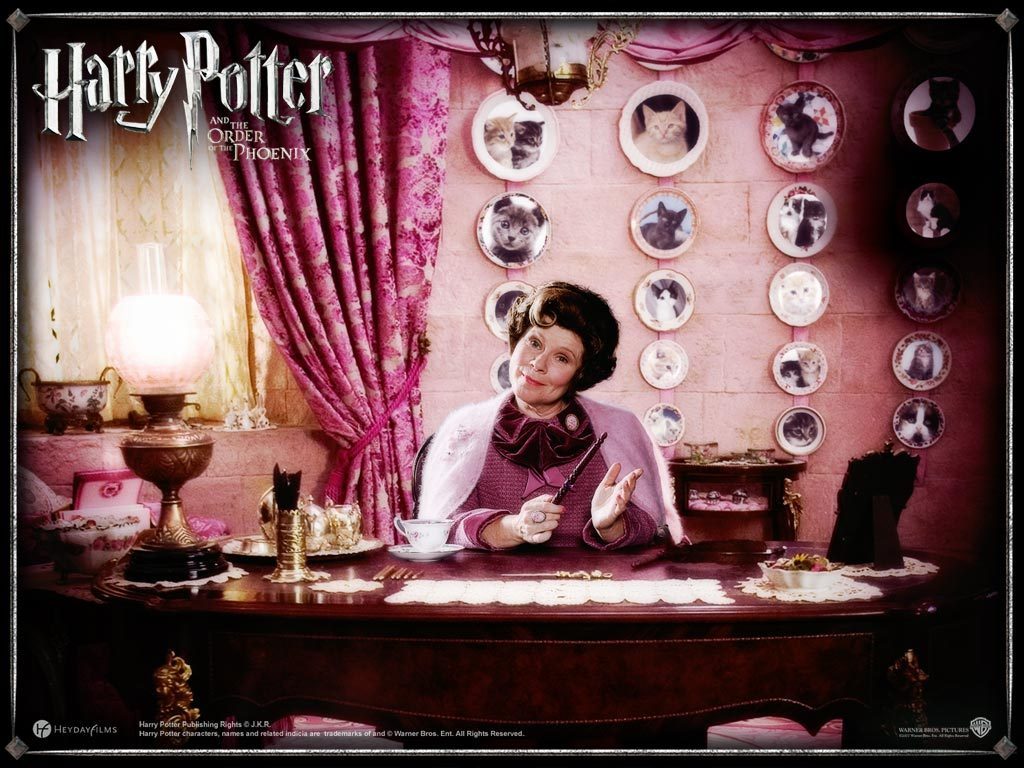
Harry Potter and the Order of the Phoenix (David Yates, 2007) Year Five at Hogwarts, and things get political. New teacher: Dolores Umbridge (Imelda Staunton). Nobody believes that Voldemort is back—especially the Press which begins a smear campaign against the young mage, and the Ministry of Magic appoints Umbredge to keep a watch on Dumbledore and Harry to make sure their "lies" don't get out of hand. In an effort to keep the "children" under control, the prim Ms. Umbredge refuses to teach practical magic and forbids its use. Things are turning decidedly fascist at Hogwarts, and so Harry and friends form a "study group"—"Dumbledore's Army"—to share spells and practice their skills. Lesson learned: a little revolt is good every now and again. 

Harry gets his first kiss (for the 'shippers), is haunted by nightmares connected to Voldemort, and given a spell to protect himself from Voldemort's influence, the learning of which leads to the knowledge that his father used to bully Snape. Big battle happens when Dumbledore's Army is captured by Voldemort's forces (including Bellatrix LeStrange, played in full crazy mode by Helena Bonham Carter—she's offset on the good side by Luna Lovegood, played spacily by Evanna Lynch), only to be rescued by Sirius, Remus and other members of The Order of the Phoenix.  Another of Harry's allies is killed, but...again...it barely registersIt's the first film in the series of David Yates, who would finish them off (so to speak), and although he gets good work out of the actors, visually, the film's a little dull...with the climactic death oddly not resonant.


Harry Potter and the Half-Blood Prince (David Yates, 2009) Year Six at Hogwarts. New teacher: Horace Slughorn (Jim Broadbent, and seeing how ubiquitous the actor is these days, it was only a matter of time). The sticky relationships get sorted out, and we learn about horcruxes—dastardly little things that contain a bit of Voldemort's soul for safe-keeping.  Destroy them all, and Voldemort becomes mortal and can be killed. We've seen a couple already, and Harry vows to take his last year of Hogwarts off to track down the remaining ones to dispense with Voldemort, once and for all. However...

Voldemort is also approaching his end-game, attempting to find a way into Hogwarts and dispense with the one thing standing between himself and Harry.  Lesson learned: Death is inevitable, no matter how powerful, no matter how close, no matter how needed.


Harry Potter and the Deathly Hallows Part 1 (David Yates, 2010) Year Seven at Hogwarts, interrupted when The Three drop out and go on the run to protect Harry and find those pesky little horcruxes. The decision to split Deathly Hallows into two films seems unnecessary, given how little really happens in this film: the Three take a look at the situation—Voldemort controls the Ministry of Magic and is even making his influence known in the Muggle World (something that just isn't done), their most powerful allies are dead, and even the Safe Harbour of Hogwarts is vulnerable. They are given three bequests (which will come in handy) and run from Voldemort and his forces, which even includes Professor Severus Snape, now in charge at Hogwarts. The Three are in charge of things that mess up their heads (not unlike the Ring in the Lord of the Rings trilogy) and those ramifications are explored in Part 1—a final test of loyalty before The Big Battle. Will they hold it together as a team, or be splintered apart (Well, what do you think?) Meanwhile, Voldemort finds the wand he needs to accomplish his final goal—killing Harry Potter.


Harry Potter and the Deathly Hallows Part 2 (David Yates, 2011) Given how Part 1 is one big set-up and the most lethargic and disappointing of the films, the series had nowhere to go but up for a Final Blowout.  And it delivers. Everybody still alive makes a cameo (except for Fudge played by Robert Hardy, and Julie Christie and Kenneth Branagh), and even some of the ones who died get some screen-time. Everything is explained, no magic stones left unlevitated, and no wands kept in their holsters. After a brief moment to catch breaths—the film doesn't even start with the Warner Brothers logo, but just begins where the last one left off, —the Three go undercover in a nice, dizzying episode, and end up back where it all began—Hogwarts—to make a last stand. Lesson learned: Love and family make the difference in a life, power is a worthless goal, and Sacrifice is the measure of a man. I could only smile at the final sentiment of one of the returning dead in agreement "You wonderful boy. You brave, brave man." And thus endeth the Labours and Education of Harry James Potter. Life goes on.


So...now what? Well, it was a good first attempt. As one of my fellow bloggers mentioned, there's enough material in the books that was left unused that the Potter Saga could easily be turned into an "Upstairs/Downstairs" British mini-series to flesh things out and solve the pacing/emotions problems of the films (but can you imagine the cost of such a thing?). 

But, this will do. There will be a couple films that one can skip over—there's actually a nice bridge between 3 and 7.2—but for now this will do. Give the snitches and broomsticks a rest.

Nox.
The Crest of Hogwarts.  The inscription: "Never tickle a sleeping dragon."