Showing posts with label Gangsters. Show all posts

Wednesday, April 24, 2024

Stand-Up Guys

There are so many movies with actors "of a certain age" being disrespectful that it's almost its own sub-genre.  Here's one from 2013, and this was written at the time of the film's release...

"We're Still Here!"
or 
"...End of Story" 

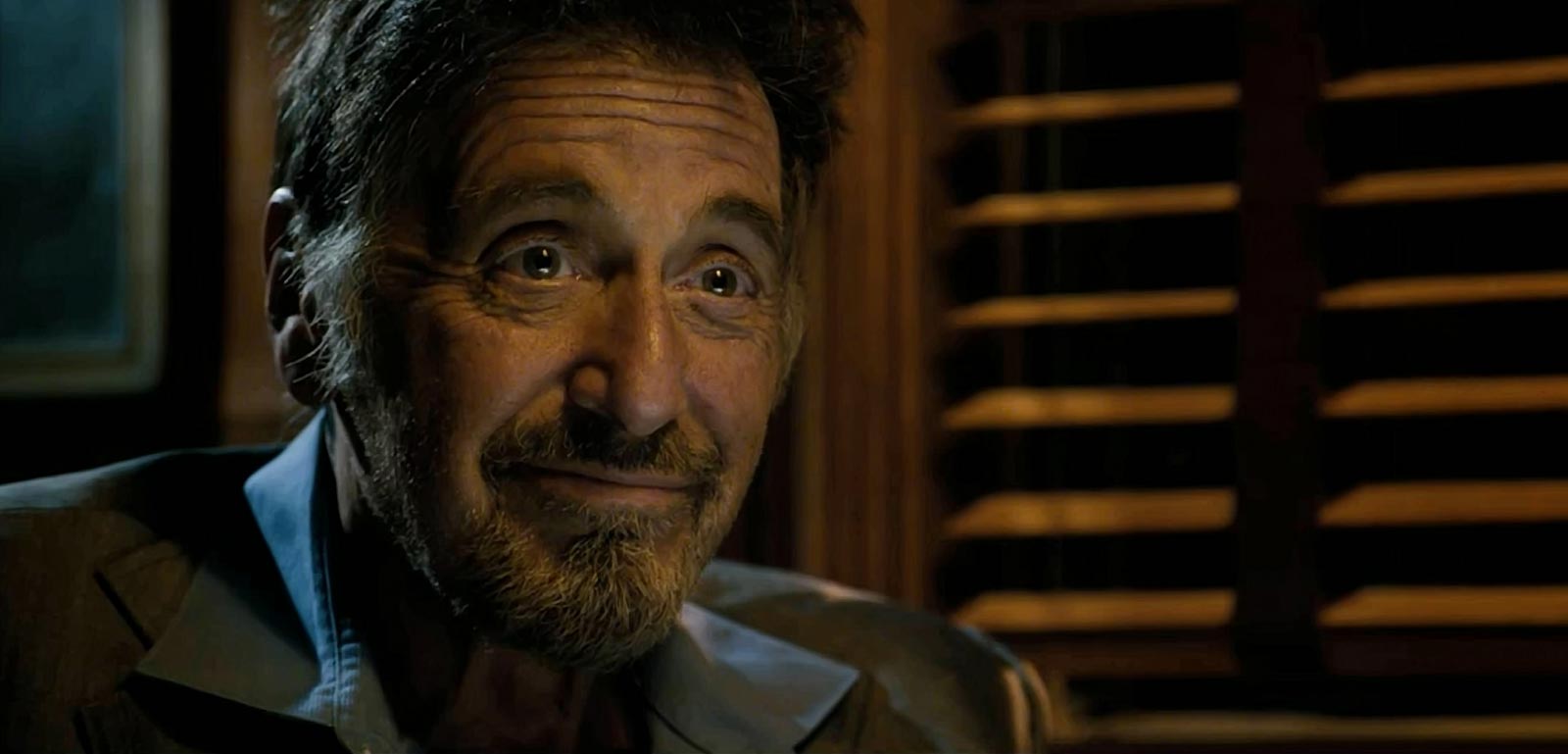
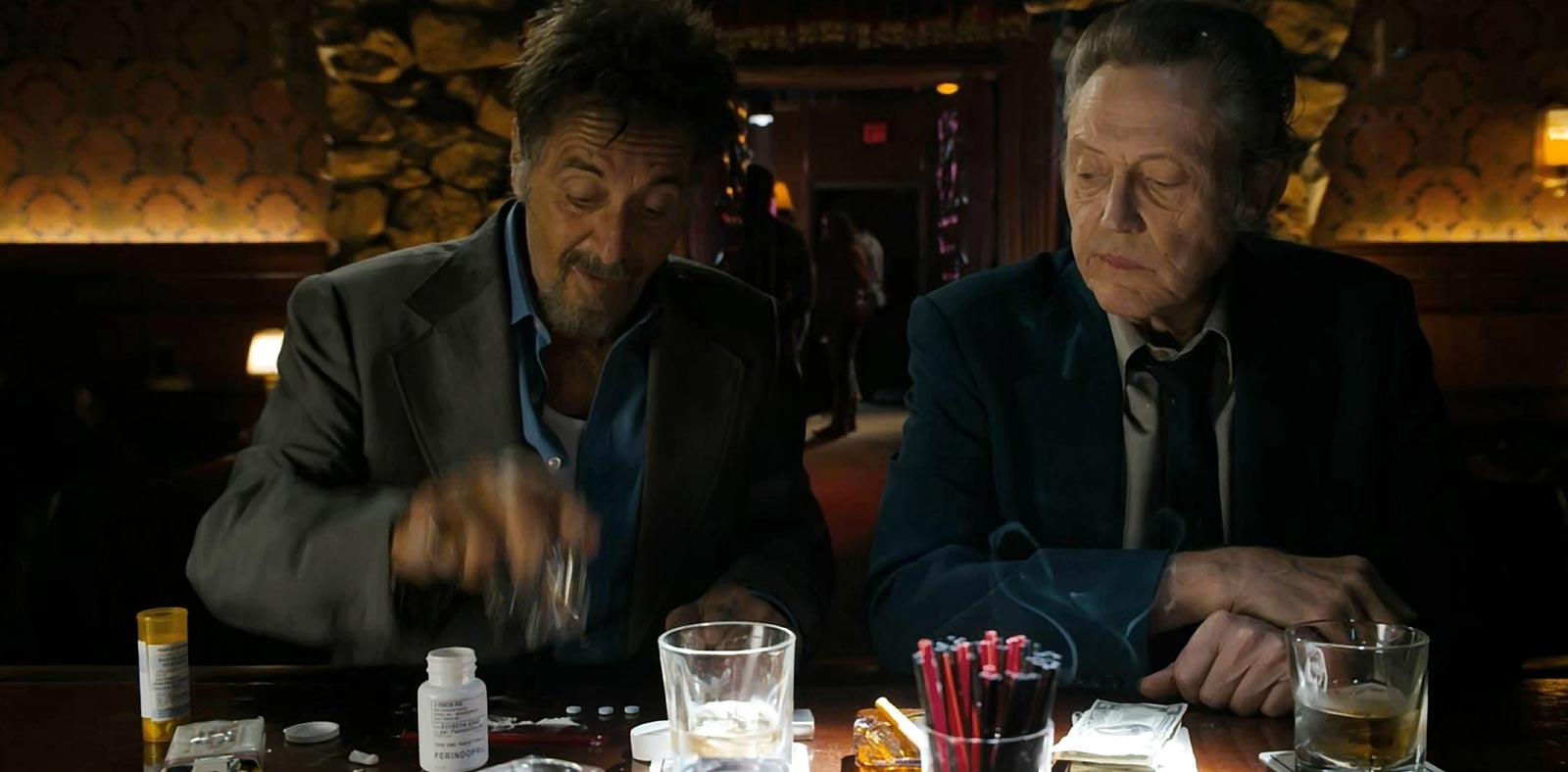
Oh, man, it's painful, the first few minutes of Stand Up Guys, the new gangster-with-gags film directed by Fisher Stevens. Valentine (Al Pacino) is being released from prison after 28 years, for his part in a robbery that turned deadly. On the outside, waiting for him, is Doc (Christopher Walken), who was also part of that robbery but managed to stay out of the gray-bar hotel for reasons unknown and is now "retired," spending his free time being a diner habitué and painting landscapes.

Doc takes Val home to his apartment, which the ex-con compares unfavorably to the accouterments he has recently vacated. At this point in the movie, Val announces that he wants "to party," at which point I resisted an urge to get up and get popcorn. It wasn't going to be pretty, whichever way it was played, comedy, bathos, or weirdness. The obligatory visit to a whorehouse is somewhat lightened by Lucy Punch (a Brit actress playing a longish Island accent) as the daughter of the madam these guys used to know in their and her prime.
Things don't go well (nyuk, nyuk) so Doc and Val rob a drug store (very easily)—Val gets little blue pills and proceeds to take too many of them, and Doc has some expensive prescriptions he needs to supplement—complications arise, so to speak, which requires a trip to the hospital, where Julianna Margulies provides an "E.R." flashback and informs the two about her father, their former getaway driver, who's stuck in a nursing home.
Alan Arkin
plays that character, and it's at that point that the movie picks up with a couple quick chase sequences and a needed pivot point for the Pacino-Walken dynamic. The movie gets better with Arkin's presence, even though one can't say it improves. But Arkin's added energy manages to lift the movie over the speed-bumps that the script-cliché's drop in the path. Where Pacino is manic and Walken is passive, Arkin manages to bridge the gap (and their vocal pauses) with a complacent nervousness that bounces off both actors entertainingly.

It's unfortunate watching, really. To see these gold-standard actors (all Academy Award winners, not that that really matters) reduced to mining what they can out of a vein of tin is disheartening, no matter what smiles they can produce out of it. Something could have been done, recent examples of the story-form being
In Bruges and Going in Style.
* But just the casting of these young-now-aging turks can't make this one any more than it is, a faded half-hearted comedy about aging gangsters that might have been enough to re-team Jack Lemmon and Walter Matthau back in the day.
This is a minor, minor, minor film with major talent in it that eventually makes the most of the material, but can't elevate it into something worthwhile or even makes a statement.
And, frankly, I'm getting too old for movies like this.

* Martin Brest's 1979 comedy-drama about over-the-hill retired thieves trying to supplement their meager Social Security—Pacino surely knew about it, as it starred his mentor, Lee Strasberg.

Saturday, September 2, 2023

Gangster Squad

Saturday is traditionally "Take Out the Trash" Day.
 
Written at the time of the film's release...
 
Manifest Density
or
The War for the Soul of Los Angeles (such as it is)
 
Ruben Fleischer's third film (after the very good Zombieland and the excremental 30 Minutes or Less) is Gangster Squad, a Hollywoodized version of the efforts by the LAPD to take down the efforts of Mickey Cohen, the lieutenant of Bugsy Siegel's Jewish mafia, who took over Siegel's interests when the mob kingpin was murdered in 1947.

If one is looking for a history lesson, one should look elsewhere. This is a glamorized, fictionalized version of the events set in some art-deco post-war version of Los Angeles that doesn't seem to have existed anywhere except the Warner Brothers gangster films and Brian de Palma's The Untouchables, to which this film owes a great debt. The gangsters all wear dark clothes with long coats (the better to identify them) and are all greasy and ugly, while the police are all good-looking guys in nice suits who bend the rules a bit (with the possible exception of Chief Parker, played with a gruff somnambulance by Nick Nolte, who headed up the similar "Hat Squad" in Lee Tamahori's Mulholland Falls).*

It all feels very false, from how the gangsters rarely hit anything despite the thousands of rounds shot from tommy-guns, and the Gangster Squad "hit" ratio usually fares better. The Squad (hand-picked by the leader's wife, played by Mireille Anos, for being rough-necks and not promotion-headed top-of-their-classers) consists of boss John O'Mara (who did exist, but did not run the unit) as played by Josh Brolin, Jerry Wooters (played by Ryan Gosling), Max Kennard (Robert Patrick)—a sharpshooter, Conway Keeler (Giovanni Ribisi) a surveillance/electronics expert, as well as two PC members for the 21st century audience—Anthony Mackie (so good in The Adjustment Bureau) and Michael Peña. Their target is Mickey Cohen (Sean Penn in a make-up that makes him look like he walked out of Warren Beatty's Dick Tracy), who's reputation is movie-inflated to make him seem like he's an empire-building Al Capone, rather than the cheap hood with star connections he ultimately was.
Fleischer is more interested in flash than being true to the source. His fights are surprisingly well-staged, one shot per flying fist, but not Bourne-edited so one can easily follow it—an early fight in an elevator borrows heavily from a similar scene in a James Bond movie but actually goes places the 007 film merely used for suspense. Once in awhile, he'll go for a Matrix-y slo-sloo-slooo-mo effect (rather than a fleeting Peckinpah image) just to make a point of something, like cartridges flying out of a machine gun, or a Christmas ornament exploding due to gunfire, but it's just slowing things down as opposed to telling a story. Brolin's fine, nuanced even, but Gosling's McQueen-ish hipster act is wearing a little thin, and the chemistry exhibited between he and Emma Stone from Crazy, Stupid Love is completely missing here. Mackie, Peña, and Patrick are far more engaging probably because they don't fit the established mold.
It's entertaining, to a certain extent, but one gets the feeling, after patterns have been set that bring to mind other films, that one is being sold a bill of goods, and we are.
The real-life Cohen was convicted of tax evasion (not murder) in 1950, serving four years. Upon his release, he established several businesses (the ones portrayed in the film) and was again convicted of tax evasion in 1961 and released (again) in 1972. Cohen died in his sleep in 1976.
The real Mickey Cohen, photographed in 1950
The real "Gangster Squad"

* Amusingly, his driver is Officer Darryl Gates (played by Josh Pence) who would be Chief from 1978 to 1992.

Wednesday, July 5, 2023

American Gangster

Written at the time of the film's release...

"That's What's Wrong with America. You can't Find the Heart of Anything to Stick the Knife In"

American Gangster tells the story of Frank Lucas, who, for a time in the 60's and 70's, ran the most successful narcotics operation in Harlem. The film is based on a "New York" magazine article from an interview with the real-life Lucas, so it must be based on fact, right?*

Ridley Scott's played fast and loose with facts before (1492, Black Hawk Down), so one should take the credit "Based on a True Story" with a kilo of salt (or a pound of cocaine). 
 
But, that aside, how is the movie?
It tells the parallel stories of Lucas' rise in power on the Harlem streets by "cutting out the middle-man" smuggling in raw opium from Thailand, and manufacturing a concoction called "Blue Magic" that had twice the potency, but at half the cost, with the story of the cop who eventually busted him, a down on his luck detective named
Richie Roberts who's too honest to be trusted by the New York Police. 
While Lucas starts to make his version of the American Dream, Roberts continually has his legs knocked out from under him--his wife leaves him, takes his kid, he struggles with classes to better himself (public speaking, law), his partner turns junkie, and implicates him in a murder. The movie drips with irony at every turn, constantly showing the easy path of Crime and the tough road of Law Enforcement, that recalls that epitome of the thesis—"
The French Connection."
**
In a montage of Thanksgiving, Lucas is shown with his entire family at a stereotypical Thanksgiving spread (and in one of the more heavy-handed of Scott's directorial choices frames it like
Norman Rockwell's "Freedom from Want" painting, while Roberts, makes a cold sandwich of canned turkey-spread and potato chips over the kitchen sink. But then the director re-ups it by showing junkies shooting up between their toes in grimy bathrooms, and a mother passed out in bed, while her child is screaming in the room. Whatever glamour Lucas may enjoy, Scott is particular about showing the cost in human misery. No one gets off "Scott"-free.
Washington takes aim at a rival...
...and it's Idris Elba!
Sometimes the tables are turned. Lucas occasionally has troubles in the operation, and however much he may espouse core-values of honesty and integrity, the very nature of his business starts to rot his dreams for his family. And the more Roberts investigates, the closer he comes to his target, the more his team of "Untouchables" gel, and his investigation and life begin to come into focus.
Ridley Scott misses as much as he hits. For every good film (The Duellists, Alien, Black Hawk Down, Thelma and Louise), there is a terrible one (Legend, 1492, Someone To Watch Over Me, G.I. Jane, Hannibal, A Good Year), and some that have just enough quality in them (Blade Runner, Gladiator, Matchstick Men) that his directorial brio can compensate for weaknesses and messy scripts. But here, he has a cracker-jack script by Steve Zaillian, no worries about creating "a world" out of whole cloth, and a stunning cast that includes Clarence Williams III (uncredited), Joe Morton, Armand Assante, Josh Brolin, Cuba Gooding, Jr., the magnificent Ruby Dee, Ted Levine, Roger Bart, Carla Gugino, Chiwetel Ejiofor, and top-lined by Russell Crowe, but especially Denzel Washington. When these two heavy-weights get together, their scenes crackle with invention. Everybody does incredibly lived-in work.
And nobody less than the director. This is Ridley Scott's best film in ages. At times the details get a bit murky, but Scott does so to keep a multi-faceted story moving at a brisk pace. And he pulls off some amazing little camera tricks that stun, and some of the most unpretentious action-sequences put to film. Those action sequences are rough stuff--the film begins with the immolation and point-blank gun-down of a mob rival--and the junkie sequences are harrowing, so one should be warned. But missing it would be missing a great film.
* Merely a casual glance at the internet will disprove a lot of myth from fact. Lucas did not work for crime boss "Bumpy" Johnson for 15 years, but five (he's been in prison before), he was not with him when he died, did not marry "Miss Puerto Rico," or own "Small's" nightclub. And that's just the start for Lucas. The real Roberts is a bit miffed that to attract Crowe, they beefed up his part by making him more of a loser. Lucas admits that the film is "about 20% true."
 
** The names "Eddie Egan" and "Sonny Grosso" are invoked early on, and Crowe's Roberts employs a foot-chase under the "El" that figured so prominently in the movie.

Wednesday, April 26, 2023

Un Prophète

"You Only Live Twice"

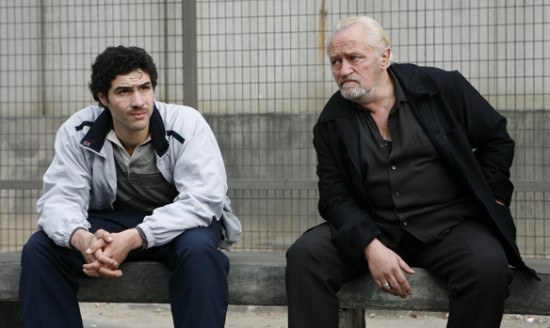
19 year old Malik El Djebena (Tahar Rahim) is arrested and put in prison for beating up a cop. Under-educated and street-dumb, he's easy prey in the French prison system. And Arab-Corsican, he's an outsider in a cell-block population made up of Corsican partisans and Muslim detainees—well, that's what they say, anyway. Malik can only be a "lone wolf" for so long, and soon the Corsicans bring them under their protection—for a price.
 
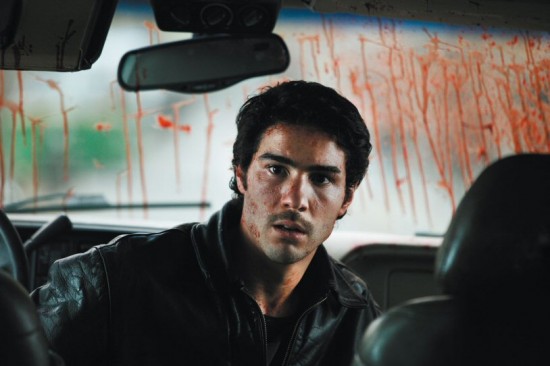
He has to "make his bones" first; he must kill a "just-passing-through" star witness in a racketeering trial against the Corsicans. Once accomplished, done in as grisly a fashion possible ("He's going to bleed a lot, so watch your shoes" is the advice), two things happen: he becomes "the porter" for the leader of the Corsicans, César Luciani (Niels Arestrup) and given certain privileges for his status—the guard system is friendly to the Corsicans; and his victim keeps showing up in his cell in spirit form, initially haunting him. Both connections are very useful in his education.
There's been a lot of mushy verbiage rasped about this film being a French
"Godfather," and there are some surface similarities. But A Prophet owes more to Kurosawa and Shakespeare (aren't the two related?) than to Coppola and Puzo. Sure, it's about a young man's education rising in the ranks of a blood organization, but there the similarities end.
Malik is not born into his "Family," coming from privilege—far from it. He's an outsider, and will stay an outsider (despite very loyal attachments) throughout the entire movie.
He's a zephyr, moving between the Corsican and Muslim worlds, a part but apart, just as he becomes a citizen of both the prison and outside worlds once his good behavior buys him some time as a half-way. The connections he makes in prison are the important ones, and he soon finds himself, through a combination of luck, guile and networking the head of a cocaine smuggling ring—while still in prison.
Stylistically, the film is night and day from
The Godfather, despite that they both open in darkness. But where Coppola's style is formal and staged, director Jacques Audiard is up-close and hand-held, moving constantly and delving into the surreal with slow motion, and dream sequences (and the occasional pin-hole camera shot). Audiard is also adept at shooting violence, building tension, and then letting loose with gritty sequences that not only get the heart racing, but also make you worry about the protagonist—it's never easy to kill someone, despite what the movies say. There's one bizarre shot of Malik on the floor of a car in the middle of a fire-fight—a fire-fight inside the car, mind you—where he watches in slowest of motions as bullets hit the console around him, never touching him. But be that as it may, one should be mindful of the throat-slashings, the puncture wounds, kitchen utensils under the eyeballs, and the near-occasion of vehicular assault on deer. Not for the squeamish...or the vegan.
A Prophet is a nicely done modern take on the gangster story. But don't be surprised if you end up thinking it's the dark side of the Horatio Alger story. It won the "Grand Prix" at the 2009 Cannes Film Festival.

Saturday, March 12, 2022

Al Capone

Saturday is traditionally "Take Out the Trash" Day.

Al Capone (Richard Wilson, 1959) No fortune was ever made without a little larceny. That's the way I first heard it. But, the quote (attributed to Balzac) is "The secret of great fortunes without apparent cause is a forgotten crime, because it was properly done."
 
Okay, a little touch of pretension to lead off a review of this cheap B-movie made around the time the movie market was starting to be overrun by gangster pictures, which had previously had their hey-day in the pre-Code early 1930's. The Code stated that criminals were not to be glorified, and certainly not mentioned by name—Howard Hawks had made Scarface in 1932, but the titular character played by Paul Muni was named Tony Camonte—not Al Capone (despite the "nickname" association). When Breen and the Hays Code cracked down on the mob in movies there had been one exception, the 1945 low-budget film Dillinger. 
But, as the Production Code was being attacked from all fronts, the smaller studios and production companies took chances on the criminal element as a box-office draw. The first script for Al Capone was rejected by the PCA, as "glorification" of Capone, without a "counter-balancing good" and "an overemphasis on violence and slaughter." A toned-down draft was subsequently submitted and accepted, and although J. Edgar Hoover would grumble about it (and the other gangster-themed films throughout the late 1950's-early 1960's), the mobs were taking over the screens.
It must have been tough not to "glorify" Capone, as he steeped himself in glorification; if there was an American oligarch of crime, it was Al Capone. The movie plays fast and loose with the facts—yeah, Capone started in New York, but the picture starts with him (played at high volume by
Rod Steiger) working as a bodyguard for Johnny Torrio (Nehemiah Persoff), who runs an "emporium" specializing in "booze, gambling, and broads"—the movie glosses over the fact that Capone was merely 20 years old, already married with a kid (they're never mentioned). Capone thinks Torrio too soft and lacks ambition, but a meeting with higher-up "Big Jim" Colosimo (Joe De Santis) brings him a mentor more in line with how he'd want to handle things. And Colosimo knows Caruso. That's more like it.
With Prohibition, Capone devizes ways to keep the booze flowing and the money coming in, but his bosses aren't as keen to taking chances and challenging the turf of their rivals. Capone eliminates the roadblocks and intimdates his foes, all the time keeping control of politicians and paying off the police...except for Sgt. Schaeffer (
James Gregory), who eventually becomes Captain and makes Capone his personal mission. Capone lives large and fairly untouched. But it isn't until the St. Valentine's Day massacre that Capone starts to feel any pressure, plus his relationship with the wife of one of his victims doesn't go smoothly, as well.
Some of it's true. Some of it is borrowed from Shakespeare—director Richard Wilson had worked on Welles' version of Macbeth—and it's all staged on back-lots and made-for-television angles on the cheap...as most of the product of these independent gangland films were. Still, one gets a sense of time and place, even if it sometimes feels like it's in a bubble. And Steiger is a roaring gorilla throughout, not afraid to rattle the balcony seats or bust a blood vessel. There are times when you want to laugh, but then Steiger will do something with just an eye-flick that lets you in that his gangster in not just all sound and fury, but a show-man and strategist as well. He's a combination of adult and child, with a habit of murderous tantrums. It would be an understatement to call it a bravura performance, and it comes perilously close to prosciutto. 
It's not a great film, but it is "properly done." Balzac would have been proud.


Saturday, June 26, 2021

The Rise and Fall of Legs Diamond

Saturday is traditionally "Take Out the Trash" day...

The Rise and Fall of Legs Diamond (Budd Boetticher, 1960) It sucks that the first film I see of director Budd Boetticher's it's a film he didn't particularly like the results of. He got to do what he intended with the limited budget of a B movie, but casting left a bit to be desired. 

Boetticher was hoping to cast a young Robert Evans for the role of Diamond, but Evans, after toiling in the acting field for awhile with only a few roles to his credit, decided to parlay his fortune from selling ladies' apparel into the movie-producing field and this low-budget gangster movie wasn't something to coax him back.

It might have had something to do with the character. Evans had played Irving Thalberg and the titular Fiend Who Walked the West, but Jack "Legs" Diamond was a small-time bootlegger, thief, and protection racketeer, who was perfectly willing to con and throw over anybody in his desire to rise through the ranks of gangster-hoods. 
Boetticher has Diamond (Ray Danton) and his brother Eddie (Warren Oates!) arrive in The Big Apple with intents to do some petty thievery, but witnessing a botched jewel-heist with the perp gets popped, Diamond scans the building, notices a rooftop entrance and starts to divine a plan. He picks up a dance-hall girl (Karen Steele), who rebuffs him because she's going to be in a dance-competition that night. He waits outside her flat for her partner and fractures his foot, then takes his place. The two win the competition—by Diamond setting the dress of the better couple's female half on fire—and go out for a celebratory movie.
Diamond ditches the girl in the theater for a stretch, making his way to the gents' and going out the window to second-story the jewelry store, dropping in from the roof. He nearly gets away with it, but he's ultimately convicted of the crime and goes to prison, where he spends his time planning his next step—by robbing the type of people who wouldn't call the police, that being gangsters. He sets his sights on Arnold Rothstein (Robert Lowery), who refuses to see such a small-fry as Diamond.
But, Diamond gets his attention by finding out Rothstein's personal account and charging $4,000 worth of goods to it. Diamond is hauled before Rothstein, who'd just as soon shoot him as make him his bodyguard, but Diamond gets a stay of execution when a hood-buddy of the big man takes a liking to Diamond, admiring his chutzpah, and signing him on as his hired gun. Doesn't go too well, though. The mobster and Diamond get gunned down, with Diamond somehow surviving and beginning to think that he can't be killed and becomes emboldened to climb higher.
Rothstein does hire Diamond for bodyguard duty—as he seems to be so successful at it (!) and Diamond uses the opportunity to also become his bag-man, as well, with a particularly rough way of collecting protection money for his boss. He sleeps with whichever moll can get him information, with the ultimate aim of charging the gang-bosses for his protection, something that doesn't go over to well among the thugs.
Boetticher's movie is bare-bones as far as budget, but he manages to keep the 20's setting fairly believable—Warner Brothers was the studio bankrolling it and they had a surplus of get-ups, gats, and jalopies, but the film has the thin veneer of Desilu's "The Untouchables" TV program all over it. something it has in kin with the Arnold Rothstein movie King of the Roaring 20's, made around the same period...about the same period. But, Diamond is such a louse in every way to everybody that Danton's smug demeanor only makes you like the creep less. The best movie villains have a style and swagger that, at least, can be entertaining (think Cagney), but Danton has none of it. Oh, he can wear the clothes...but so can a mannequin. The movie's just a little too set-bound, and set-lit to be very interesting, although Boetticher does try his damnedest.  It's the star that makes it such a stiff.

Saturday, June 12, 2021

Gangster Story

Saturday is traditionally "Take Out the Trash" Day....

Gangster Story (Walter Matthau, 1959) An odd one, this.  And not a very good one, but still an oddity. A capital "B" B-movie, directed by Walter Matthau, and the only movie he ever directed (someday I want to see the one Cagney directed, too), done very early in his career. At the time, Matthau was a stage actor, but since 1950 he'd been doing small parts in TV series, and didn't make his first film until 1955's The Kentuckian (starring Burt Lancaster and, as we're on a theme here, directed by him, as well) and would start becoming a fixture in films with Elia Kazan's A Face in the Crowd.   

It's not known whether it was done on a dare, or out of desperation. The script wasn't much, but Matthau took the job, starring in and directing, because he had gambling debts. His co-star was his wife, Carol Grace, and instead of New York, it was filmed in sunny Los Angeles, mostly during the day, unusual for a supposed film-noir, and where the most shadows are seen in, of all places, a library.

Matthau is fine, his performance, at least, is professional, but loose and schlumpy, and plays well, even in scenes that are patently absurd...like the one where his con character Jack Martin stages a bank-vault robbery by posing as a movie director rehearsing a scene—distracting the guards to "stay in character" and convincing the bank president to open the vault. (Really? It's that easy? Everyone is that dumb and star-struck, not even asking for a filming permit and with no cameras, no crew, nothing?), while most of the other performers range from merely amateurish to a painfully charitable "at least they remembered their lines." 
Wouldn't have mattered if they didn't. The entire movie is post-dubbed, the dialogue replaced in the studio after the fact—whether because they had no sound recordist during filming (it was a five-man crew...and edited by future porn director Radley Metzger) or background sounds are so pervasive. It does create a rather unnerving sequence, late in the movie (when nobody was paying attention?) where dialogue is punctuated a few times by the sound of the timing "beep" that alerts the actor when to talk—no one bothered to take them out...it wasn't in the critical first or last reels, and maybe it was just overlooked. 

Professionalism aside, what this movie most resembles is the 1973 film Matthau made with director Don Siegel, Charley Varrick, about "the last of the independents" (criminal division). Both Martin and Varrick are bank-robbers, who get caught up in a situation they're not accustomed to: not only avoiding the police, but also the organized crime lord attached to the last institution Matthau's perp robbed. Both involve a good amount of time on the lam and hiding out, although Martin capitulates and, to settle differences, joins the organized bad guys to save his neck. The quirky, nastily-funny Siegel film is full of invention and colorful characters; everything about Gangster Story is pure black-and-white, and is really worth watching only for the curiosity factor. Matthau moved on, and when this vampire of a movie rose from the dead in conversation he'd crack wise in interviews saying the film "premiered at Loew's in Newark and never crossed the Hudson." He never was tempted to direct again.