Showing posts with label Bradley Whitford. Show all posts

Tuesday, June 4, 2019

Godzilla, King of the Monsters (2019)

Doing the Limbo Dance with Godzilla (Faith and Ghidorah)
or
Dr. Serizawa's Magic Bullet

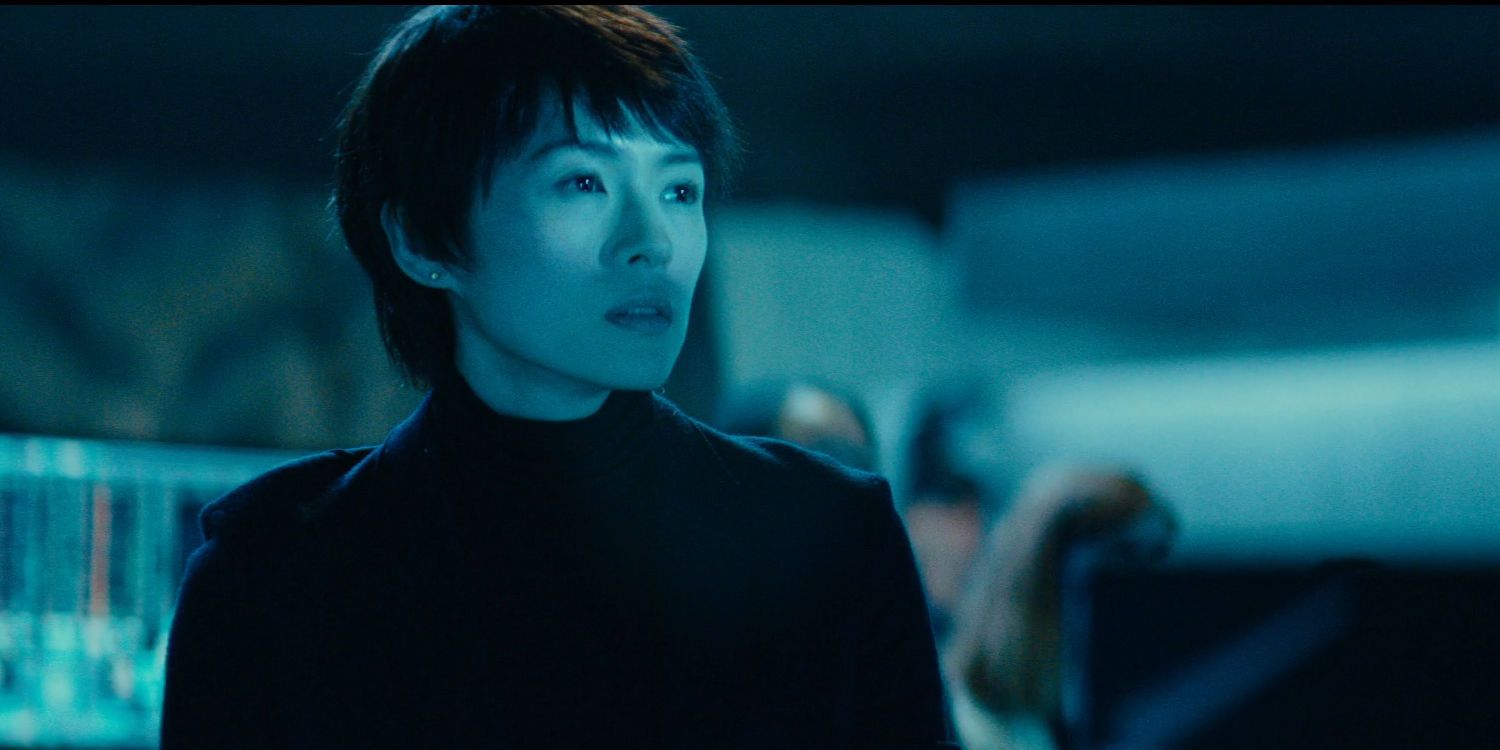
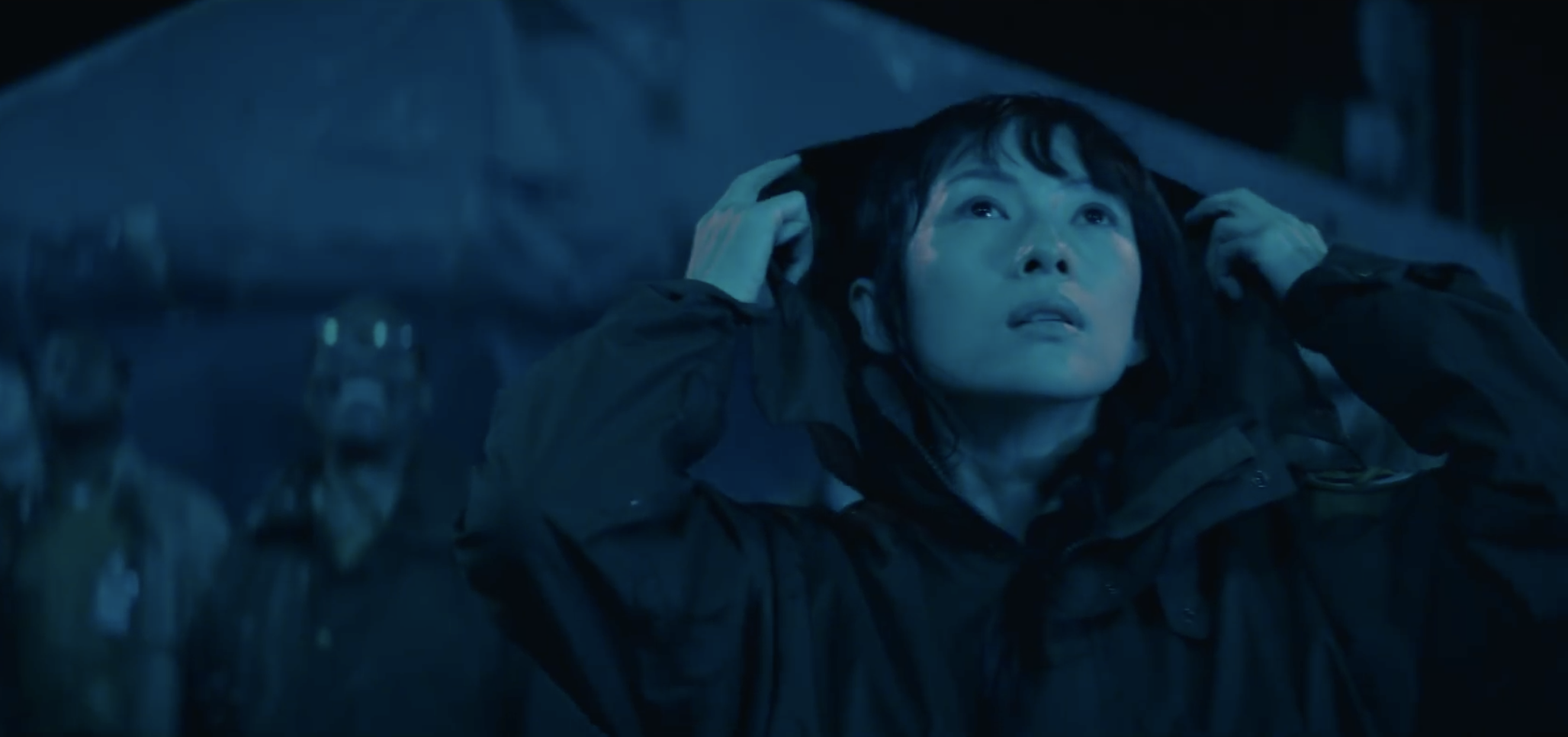
I was anticipating the new Godzilla movie, Godzilla: King of Monsters, when I saw the trailer start to hit theaters. I enjoyed Gareth Edwards' 2014 take on the series, and was suitably impressed with what Legendary Entertainment was doing with their second "Monsterverse" film, Kong: Skull Island. But, to see the trailer for G:KOM, with appearances by other Toho Studio monsters, like Rodan, Ghidorah, and Mothra (especially Mothra) gave me a sense of giddy joy, as in "My God, they're really going to try and do these cheesy monsters with a sense of "real" CGI verisimilitude, instead of the puppeteered, rubber-suited versions we're used to?" And then, to bring a respectable cast of characters actors like David StrathairnKen Watanabe, and Sally Hawkins (all returning from the 2014 film), as well as Bradley Whitford, Kyle Chandler, Charles Dance, Vera Farmiga (!) and Ziyi Zhang (!!!), I was somewhat delirious, as in "Oh My God-zilla, are they actually going to make a decent movie out of this juvenile material? That would be so awesome!"

The answer is "No, they didn't." One wonders if they ever could, but the hope was there, and although the film is semi-successful in some aspects, the conclusion from what I saw was a disappointing result from an over-the-top concept.

But, to get any enjoyment from the experience, a little perspective is required. To illustrate, here is a scene featuring a "pitched" battle between those same four antagonists from the 1964 feature Ghidorah, the Three-Headed Monster*
There, now you should be prepared to see Godzilla: King of Monsters and come out somewhat impressed. Extreme, I know. But, you have to set the bar pretty low to raise expectations.

It's been four years since the appearance of Godzilla—"the day the world discovered that monsters are real"—the film starts with a flashback to the events in San Francisco where two new characters, Mark and Dr. Emma Russell (Chandler and Farmiga), two Monarch** specialists are caught in the fray...with their family for some reason...resulting in the death of one of their kids, their son, Andrew (definitely a downside to "Take Your Child to Work Day" when working for Monarch). This fractures the family (you think?). Mark, embittered and wanting to kill the Titans, and GZ in particular, goes off to study wolves, while Dr. Emma continues her husband's work of creating a communication system, designed to keep whales from beaching themselves. Only she's using it to see if she can communicate with the MUTO's. It's a good way to set up all sorts of "Geez, I hope this works..." scenes.
Their daughter Madison (played by Millie Bobby Brown from "Stranger Things") is keeping up contact with Dad and worrying about Mom's frequent moodiness and is one of those irritating "Wesley Crusher" kids, who can take some wires, a USB cable, and a Brillo-pad and hack into a pay-telephone so it can communicate with the Mars rover Endeavor to save Matt Damon (although she has trouble making breakfast...fake-out!). It's no wonder Dr. Emma takes her to the Monarch project where they're trying to awaken Mothra (Hey, remember "Take Your Child to Work Day?" Worked out real well last time, didn't it?). But, not to worry. Even though Mothra freaks out and kills some techs, Dr. Emma is able to take her "Orca" device, push a button, and translate Louis Armstrong's "What a Wonderful World" into Mothra-song to calm it down. This inspires Madison to confuse the multi-million dollar facility with a petting zoo to reach out and touch the creature bare-handed without a care about communicable disease or some sort of tactile osmosis that would put a Mothra-larvae into her body that will burst out at a later time (possible sequel?).
Dr. Emma worries about how she's going to explain this to CPS
They don't have to think about that, anyway, as, once they have Mothra under control, former MI6 agent and prominent eco-terrorist Alan Jonah (Dance) bursts in with some merc's, seize the Orca device, and take Dr. Emma and Madison hostage for his nefarious plans to do something evil and inspire a rescue operation. Mission accomplished on that last one; Monarch, in the form of Dr. Ishiro Serizawa (Watanabe) and Dr. Vivienne Graham (Hawkins) finds Mark dancing with wolves and tells him what's happened. They set out to track Jonah and his whale-sized ambitions to try and get little Maddy back.
Monarch gets lectured by Dr. Emma (while her ex glowers about "hearing this before"
That, as it is, is the plot. The rest involves globe-trotting to many Monarch outposts, tracking the movements of GZ, and the intentional setting free of the three-headed monster Ghidorah, who has been trapped in Antarctic ice for eons. Once he's—or they, I've have pronoun troubles with three-headed things—thawed, it goes about the world freeing other Titans in its official title as apex predator, which is what Jonah has intended all along. His justification being that the Titans have been here longer, and that we relatively newbie humans are screwing up the planet, so the Titans will fix it all up by getting rid of us. This, then, makes Jonah the ultimate anti-immigration activist (hurts when it's you, doesn't it?). 
Foreshadowing that Godzilla and Mark might some day see eye to eye.
There's more match-up fights than an episode of the WWF—Mothra versus Rodan, Godzilla versus Rodan, Godzilla versus Ghidorah (SPOILER ALERT-he gets his scaly tail handed to him, regroups then comes back and wins, with a little help from his monster friends, and ultimately wins the gold belt-buckle that says "King of the Monsters") and the puny little humans help as best they can, but, basically, they're farm-league, only good at running away and, failing that, becoming kaiju toe-jam .
Ghidorah bug-zaps Mothra
That's what we all go to see—monsters fighting, even if it's in murky darkness, so they don't have to have the CGI be perfect (or it was the low-projection level of the 3-D version, which is the format I saw it in), and despite the creators' earnest intentions, it's the same format that the other films have usually had. Some pretext in the human world sets everything up—in this case, it's the problems with the Russell's, whom we've never heard of before and have the most basic issues on which to hang a monsters-fighting scenario on. At least, it's not manipulation by space-aliens, or venusians, or some other clap-trap that would cause your eyes to roll sop far back in your head that you'd miss the fights at the end.
Rodan goes in for the kill
You have to suspend belief so high that it's achieved orbit, while at the same time lowering expectations so low that your back will be killing you the next day. Either that, or you have to be such a True Believer Fan, that you just don't care, because you get a thrill every time you hear Godzilla amp up like an old diesel generator before he unleashes a force-beam of some completely unfathomable energy that will somehow shred whatever big-thingy he's up against. When you're that deep in the fantasy, there are no rules of engagement, you're just glad for the engagement—like your desperate Aunt Sophie.
Ghidorah provides free WI-FI to everybody.
The human actors do a fine job of spouting techno-babble and mumbo-jumbo as if it makes sense—Whitford seems to be having a good relaxed time (he's had to negotiate Aaron Sorkin dialogue) and Strathairn looks like he's really having to double-down on the glower to prevent himself from cracking up over what he's saying (there are quite a few Oscar and Emmy nominees in this cast, by the way...although this probably won't inspire "For Your Consideration" ads come the next awards season). And they're very good at the Spielberg-trope of looking up with a faraway look as if their lives depended on it.
"For Your Consideration"
There are, despite some of the hammer-hitting lack of subtlety in the film, some nice touches: the constant calling-upon of hieroglyphic evidence of kaiju presence during man's early development (however unlikely that may seem); the sense of glowing myth as the creatures never seem to be present in anything other than strange weather phenomenon, as if they were tied to the very natural forces that soak, electrify, and shake the planet—like some manifestation of Kurosawa's emotional weather conditions; there's even a moment that might be confusing for most audience members—Ziyi Zhang plays two characters in the film, twin sisters, who hearken back to similar twins, the twin fairies, the diminutive shobijin, who summon forth Mothra with their song. It's a tiny little detail, but it set my "mothra-sense" to tingling when I saw the actress appear in a continuity-defying two places at once.

"Please notice that the 'Fasten Your Seat-Belt' sign is on..."
But Godzilla, King of the Monsters is not that great a movie. A pretty darned good giant monster movie and a bit of an improvement over its source material (remember: no venusians...). If it has any luck, it'll become a Saturday afternoon staple on television—which is where I saw most of these things in my youth (and I was cynical about them then). It pays homage to its source by not being too reverential about it or trying to make it more "significant" than it is (despite my comic intentions to politicize it). It was, and still is, a cheese-fest. It's just that the price of cheese has gone up—significantly—over the years.
"Let's get ready to rummmmmblllllle..."
Oh. And one passing thought: despite the dangers displayed by galumphing behemoths of various genera and type, spitting sparks of a source not found in Nature's spectrum, one gets the impression that they are not considered the biggest concern or threat to the filmmakers. Given the evidence of the film and what they choose to show and how they show it, the real danger is...bad mothers.

Hope that doesn't spoil anything.
"King me, baby!"
Prepare for the inevitable cage-match (2020, they're saying)

* Or as it's known in the States, Ghidrah, the Three Headed Monster (with only two syllables).

** Monarch is the secretive Japanese-American organization that studies M.U.T.O.'s (Massive Unidentified Terrestrial Organisms—or the more PC, "Titans") that have emerged from the Earth's hollow interior due to man's atomic experiments and other destructive activities—like building Monarch's massive underground outposts. Monarch seems to have an unlimited budget and unlimited resources, and 61 outposts around the globe to hunt 17 of these things. It's no wonder there is a Senate investigation of the thing in this movie. Next thing you know, Trump will want one of these organizations if he can't get his Space-Rangers.
Oh. One more thing-they always have to fight by power-lines. Always.

Tuesday, January 16, 2018

The Post

Based on a Truth Story
or
Black and White and Red All Over

Backstory: Robert McNamara was an analyst. He became Secretary of Defense during the Kennedy administration, but he was, in the depths of his soul, an analyst. If he encountered a problem, he asked for a "study" so that he could look at it in black and white terms, and...maybe...somewhere in the details, he could see a solution, or at least a path to the solution. McNamara started his "Vietnam Study Task Force" in June of 1967, not telling President Lyndon Johnson or Secretary of State Dean Rusk about it. But, the task force wasn't instigated with the purpose of finding a solution, but, rather, to have it in writing what went wrong. The tacit implication of the findings that looked at U.S. policy from the Truman administration to the Johnson years was that the Vietnam War was not being won and might not be won—even while a public face of "steady as she goes" was proffered and more and more American soldiers were being drafted to go to that war and maybe die.

By the time the study was finished, a new administration was in office, that of Richard Nixon. When the McNamara study hit the desk of his Defense Secretary, Melvin Laird, it was largely ignored as a relic of a past administration. It probably wasn't even read.

But, it was of interest. Two copies were sent to the Rand Corporation, and it was from there that one of the contributors to the study, Daniel Ellsberg, who had worked for the U.S. State Department in Vietnam for two years, smuggled out a copy of the study, copied it and distributed it to The New York Times, specifically reporter Neil Sheehan. The study became known as "The Pentagon Papers" and, just as suddenly, "A Big Deal."
Today's story: Steven Spielberg took advantage of the long post-production period for his already-shot Ready Play One and a hole in his schedule after a casting fall-through in his planned film of The Kidnapping of Edgardo Mortaro (screenplay by Tony Kushner) to rush through production of The Post, written by Liz Hannah, (her first feature screenplay and chosen to be on 2016's "Black List") and optioned by producer Amy Pascal in late 2016. Meryl Streep and Tom Hanks signed on and Hannah's script was given a once-over by Josh Singer (The Fifth Estate, Spotlight)—for explanations of what the "Papers" entailed and some background on Ellsberg. For their part, The Times, is now grumbling about the billing ("it's a good movie, but bad history," says the Times' then-legal counsel James Goodale), missing the point that the movie might have something more on its mind than just the story of "The Pentagon Papers."
The first few minutes go through the back-story, starting with Ellsberg (Matthew Rhys) going out on a patrol in South Vietnam and witnessing a fire-fight against Viet Cong snipers who are already in place waiting to fire on a U.S. patrol and nimbly changing positions to get a better position in the dense jungle foliage, and ends with Ellsberg glancing over his shoulder as Defense Secretary McNamara (Bruce Greenwood) puts a positive attitude on for the press, after he just saw the Secretary on the plane angrily say that "things are not getting better...that means we're not making any progress." Later, at Rand, Ellsberg takes as many files as he can fit in his briefcase, takes them to a printer's and makes copies that then have the pages numbers cut off, along with the security seal that says "Top Secret - Sensitive."
It's a busy morning for Washington Post publisher Kay Graham (Streep): first she goes over the pending public offering of the Post with her Board Chairman Fritz Beebe (Tracy Letts), then, there's a scolding call from the White House's Bob Halderman griping about a Post reporter sneaking in to First Daughter Tricia Nixon's wedding, and then it's a quick breakfast meeting with Post Editor Ben Bradlee (Hanks), who spends his time waiting for Graham by reading the competing paper, The New York Times. The Tricia Nixon kerfluffle is gone over as well as the IPO, but Bradlee's more concerned about something that ISN'T going on—the Times' Sheehan hasn't published anything for three months. He's onto something, and he wants to know what.
An editorial meeting at the Post has Bradlee (after some polemic about White House wedding protocol**) pay an intern to find out what might be going on...by just walking into The Times' offices and seeing what he can see. Meanwhile, Graham pays a visit to the home of Robert McNamara and, after pleasantries, he warns her that the Times is going to print something bad about him tomorrow and could she...(you know). She expresses sympathy, but tells him she's not going to suppress news even though "he and Margaret" helped out so much when her husband (her predecessor as publisher) (you know) died, which she'll always be grateful for...
It's a nuanced conversation...about loyalties and favors, past kindnesses...but with an understanding about duties, as well, and the roles one is required to play with only the implications that it's understood, but not really saying it. These are not rat-a-tat conversations of the Sorkin variety, like everyone already knows what they're going to say because they were practicing last night; these are interactions that are messy and interrupting and urgent, and Streep is the master of saying things even when she doesn't complete a sentence and moves on. Watching her and Hanks (at that breakfast scene) push each other and Hanks act like he's got the final say and Streep turn her head like it's all over and hum a bit as if she's stifling a rebuke, but the energy of it can't help to rattle in her throat...oh, it's a master-class on acting. And that scene's only breakfast.
I read Peggy Noonan's book about speech-writing for the Reagan Administration and she had a particularly thorny relationship with ABC News' White House Correspondent Sam Donaldson, but she liked Donaldson and the two, who might have seen each other as combatants, were actually quite fond of each other—"Professionals don't bear grudges" was her explanation. In The Post, there is a camaraderie, both social and professional that makes things complicated: Bradlee was pals with the Kennedy's; Graham, with the Johnson's and McNamara, all would be tarnished with the same brush if "The Papers" are published and there is some soul-searching done about it. But, the result of all this is, she marches into Bradlee's office and tells him that McNamara is worried about something in tomorrow's Times.
One of Bradlee's reporters, Ben Bagdikian (Bob Odenkirk) thinks he may know what's going on, so he calls a colleague at the Times, asking about old times and, hey, remember that guy Ellsberg?—but the man's gone missing. Then, during a protest rally, a box of papers is dropped on a nearest reporter's desk. Things are starting to pop on the story and by the time the Post has got the papers, Nixon's White House** has come down with the unprecedented move of a cease and desist order...on a free press...and threats of espionage charges. While Bradlee tries to get the low-down on the pages dropped at their door-step, Bagdikian travels to Boston and finds Ellsberg and all of the papers.
"...just...government secrets"
So...what are you going to do with them? First, find the story. Then, find out if it's worth it (it is). Then, talk to the lawyers and see what the risks are, and there are lots of risks, what with the Nixon Team frothing at the mouth—mind you, frothing—about documents not pertaining to their watch (but Nixon doesn't know that***) and the timing couldn't be worse for the paper, financially. given the recent IPO. As the trailer says, "What are you going to do, Mrs. Graham?"
And here's what makes The Post so special, and why "The Times" wouldn't be so interesting a film: Kay Graham doesn't know. But she knows the stakes: her family has owned the Post since...forever; her father gave the reins to her husband, while she tended to raising the kids and socializing; after the "accident" (it was a suicide, actually), she worked with her institutional family knowledge of publishing and got up to speed to become not just the de-facto publisher, but the "honest-to-God" publisher, and her IPO is to get funds to expand the reporter pool. That's high stakes. Throw in the threat of government interference and even jail-time, and we're looking at something that won't enhance the company, but probably kill it.
On top of that, Graham is uncomfortable with her position—she feels ill-prepared and ill-equipped to deal with the issues. If she didn't have her own doubts, seemingly every man in every room she walks into will be only too happy to tell her that. The Post just might be the first deliberate film (outside of the action genre, at least) to be spoken in the not-too-foreign language of "man-splaining", culminating in what might be Spielberg's tour de force sequence of the film—a multi-lined telephone call in which Streep's Graham is alone in a room (deliberately) while she is getting pressure from all sides to publish or not to publish...given all the stakes...given all the pressures. It's where Streep's performance, at times tremulous, at times aggressively (deflectingly) social, is such an essential co-conspirator in the text. Yes, it's about "The Pentagon Papers," and Freedom of the Press, and defending it from encroaching governmental influence (all topical, as it will always be in a messy democracy), but it is also about finding the weight of the feminine voice and acknowledging that weight against the basso profundo's (real or imagined) sparring with it in the room. It's about Katharine Graham becoming...not "Kay," but KATHARINE Graham. THE Katharine Graham. Owner and publisher of The Washington Post. Unquestionably.
And that's a different story. Hannah (and Spielberg) do a "rope-a-dope", selling the sizzle of "The Pentagon Papers" (and telling that story well), but their focus is on the story of a woman not only establishing her place, but going "all in", relishing it and finding her own comfort in it. Timely? Yeah...even more than the "Press" angle. 
So, yes: important movie. But, as impressive as it is, marks have to be taken off for Spielberg sometimes using his directorial clout to bludgeon a point too far home. Towards the end, Graham makes a remark using her husband's phrase that reporting is the first draft of History and then making the point that it's a perpetual process and walks away, leaving Hanks to say "Yes, it is." It's "nice" that a man deigns to weigh in with his opinion, but they didn't need it. Unnecessary, really. Maybe it's a rebuke that a guy always has to have the last word, but it's ...irritating, especially with what has come before (And I love Streep's last line of the film—"Glad we don't have to THAT again"—it was ad-libbed). And one could make a joke about this being a prequel to All the President's Men—but, in that film, Katharine Graham isn't even portrayed.
So, very good, with some qualifications. But, there are lovely little Spielberg touches (besides the mechanics of that earlier mentioned phone-call). There is a great visual primer on the process of creating hot metal typesetting for printing that will make one immediately nostalgic for "the old days." And it is capped by a shot that will impress those of us who were never newspaper reporters of the old stripe, but will probably seem so commonplace to those that were that it might not be given its prominence. There's a shot of Bob Odenkirk at his typewriter as the massive presses of the newspaper start to roll and the entire room is filled with the muffled sound and the slight agitation of the power of the presses...and by extension, the Press itself.
Katharine Graham and Ben Bradlee leaving court after the decision in their favor.
* That reporter, Judith Martin, would become the charming syndicated advice columnist "Miss Manners."

** Know what's eerie? Hearing the actual tapes of Nixon's phone conversations embedded in the narrative. 

*** Nixon might not have known what was in those documents, but he was afraid of them. During the 1968 campaign, as he was running for President as a private citizen, he had surreptitiously used emissaries to contact the South Vietnamese government to delay peace talks until after the election...where they might get more favorable terms from him. Nixon sabotaged the Peace Talks to get elected (a move that when sitting Pres. Johnson heard about it, called it "treasonous"—but he said that about a lot of things), but that was too late in the game to be covered by the Pentagon Papers study. However, trying to find legally useful evidence of his actions might have been the reason for the Watergate break-in.

Friday, March 24, 2017

Get Out (2017)

Horror is Best in Black and White
or
"White Girls Do It To You Every Time"

I'm not a big fan of horror movies (I don't see everything), but the genre is extremely useful. Look at a new horror movie and the chances are good that you'll see the debut of an upcoming director fast-tracked to "Big" movies because of their sophomore efforts keeping the budget tight and the shots fast and purposeful. Horror is a great training ground for the movie art of manipulation and getting a rise out of the audience and the list of directors who got noticed slogging through the horror genre are long and frequently surprising. And when horror films are very very good (at being bad), they'll explore sub-texts of society and the psyche, sometimes overtly, or sometimes merely tickling a deeply recessed part of our alligator-brains to make the heart jump and our flight-or-flight instincts surface. Horror reduces us to the basics, removing all the drama and the time-wasting melodrama. Horror comes down to the primary drive of survival.

But survival from what makes it interesting.
After a prologue in which a young man is abducted in a somewhat pedestrian suburban neighborhood,* we focus on Chris Washington (Daniel Kaluuya in a great, understated performance) who is having a certain amount of trepidation over the weekend trip he's taking with his girlfriend Rose Armitage (Allison Williams). It is the usual anxiety any boyfriend might have going to meet his lover's parents, but there's also the added color that he's black—the way the film seats it, the problem is always that Chris is black, not that Rose is white, but the film is rooted in Chris' perspective and Rose has never brought up the issue with her parents, despite her protestations that there will be no "problems" ("He's going to tell you that he would have voted for Obama a third time" and, of course, he does). His buddy with the TSA, Rod (LilRey Howery) thinks it is a bad idea, very bad. Any time a black man goes to the house to visit his white girlfriend's parents is a BAD idea, bruh.
But that's not the only issue. Chris has insecurities and this is just the one on the closest burner. He suspects Rose might be cheating on him, despite her protestations—she protests a lot, you'll find during this movie—but the suspicion persists, groundless as it might be, to the point where it clouds anything else and everything is refracted through that jealous filter.
Chris shouldn't have worried about the parents—they are affluent liberals who are guilty as sin: Papa Dean (Bradley Whitford) is a semi-retired neurosurgeon (and yes, he WOULD have voted for a third term for Obama); Mama Missy (Catherine Keener) is a psychologist/therapist specializing in anti-smoking therapies. They couldn't be more welcoming...with the tightest smiles without benefit of Botox injections. When brother Jeremy (Caleb Landry Jones) joins the party, he's a bit of a creep, but everybody thinks he's a creep, so it's okay. 
Then, there are the servants, who are "part of the family"—they've been around since Dean's parents needed care-taking and the Armitages couldn't bear to part with them, even though they "hate how it looks." Walter (Marcus Henderson) is a groundskeeper, who keeps an eye on Chris, and Georgina, the maid, (Betty Gabriel, who plays creepy as hell and has one of the best repetitive line readings in a movie—"Oh no, no, no, no-no-no-no-no-no-no-no-no-no-no-no-No!"—since Kevin Spacey told Alan Arkin to go to lunch in Glengarry Glen Ross) is a hovering presence. Chris finds them vaguely threatening. "It's not so much WHAT they say, but how they say it..." he tells Rose.
The same could be said for all the guests at a weekend family function—it's not what they say so much, as how unctuously they say it—a little too cheery, a little too welcoming, no conflict, just a little too "TOO". Then, a night-time walk around the grounds makes Chris extraordinarily uncomfortable, and a resulting chat with Missy over tea gets extraordinarily weird. Maybe, she hypnotizes him, sending him to a weird nether-world she calls "the sunken place." Maybe it happened. Maybe it was a dream. Whatever it was, he doesn't want to smoke any more.
Get Out is the work of Jordan Peele, one of the brilliant sketch comedy team Keye and Peele, late of their self-titled Comedy Central show, and there is comedy here, of a particularly cerebral kind—terror and laughter, tragedy and comedy being Arbus twins of each other, each evoking honest instinctive reactions. As a new director, he knows he can get a small-budgeted project green-lit in the horror field, just as he knows that horror doesn't have to have a big budget to sneak in Big Ideas, that it can be as simple a matter as casting an African-American actor as the most competent-guy-in-the-room (as George Romero did in Night of the Living Dead—a move that was made because Duane Jones was the best actor in the cast). Here, Peele makes the "minority experience" real for anyone not living "in the sociological skin," presenting the foundation of dread that the suspicion of the targeted experience on a daily basis with the ignition of blue lights in the rear-view.
"Give me the keys, Rose"
Get Out is smart, funny, and horrific in a wild, bizarre way. Peele has plans for other horror films that one hopes are as wild in concept, but steeped in the psychological reality that this one is. They could do a lot of good by doing bad as all Get Out.

* Interestingly, it is the second use of "Run, Rabbit, Run" (after its use in the bombing sequence of Miss Peregrine's School for Unusual Children) in the last few months. References keep folding back on themselves in movies, just as there are frequently competitions between similarly themed movies that open nearly simultaneously.

Tuesday, February 16, 2016

Saving Mr. Banks

"Just Because It's Fiction Doesn't Make it a Lie"*
or
"Cavorting, Twinkling, and Prancing to a Happy Ending Like a Kamikaze"

Mary Poppins was a bitch. That's been my joke for a long time, especially given the reputation that Disney's film of Mary Poppins (this year voted to the National Film Registry) has of being just as sugar-gooey as cotton candy in an Orange County heat wave. It isn't. And I've gotten several startled looks from adults who then see the film and, yes, they do see that aspect of it, despite the step-in-timing chimney-sweeps, the dancing penguins, and the moments of larkiness. It's not all a jolly 'oliday with Mary. In the end, it's a little bittersweet, and she ascends into a Peter Ellenshaw matte painting of London that isn't dabbled in sunlight, but is a melancholy smearing of smoke and darkening skies.

That's probably due more to Travers' own stipulations to the Disney crew than to anything. Disney could be dark—dinosaurs died and there was "Night on Bald Mountain" in Fantasia, Pinocchio had its moments' jack-assery and Monstro swallowing, Bambi's mother died, and 101 Dalmations almost got skinned—and provided moments of terror and threat in its films, as long as everything turned out all right as the final song paraded people up the aisles. But, Mary Poppins would have been a slightly different movie if it hadn't been for Travers' nannying the scripters and Disney with her chalk-lines drawn in the sand. For that, we should be grateful.

Maybe less so for Saving Mr. Banks, the Disneyfication of the Disneyfication of "Mary Poppins." It's "based on a true story," which means (as Blake Edwards coined the phrase) it's "true except for a lie or two," and in the western parlance of John Ford, "when the truth becomes legend, print the legend." They couldn't have made this movie without Disney and "the Disney version," so, obviously the filmmakers are going to take a charitable stand on the studio's side of things (for example, Richard Sherman, who's played by Jason Schwartzman in the film, says that, rather than, as in the film, taking a personal approach when Travers came to work with the film-makers, Disney took off for Palm Springs and didn't come back until she left).
But, the more you find out about P.L. Travers (her nom de plume), the more you realize that they're taking the edges off her, as well. Travers was a fantasist, and her largest work was the construction of her life, ever-changing, malleable, inconsistent and to her specifications as the mood and the myth suited her. "Mary Poppins" suited her just fine, and her demands for what was and was not acceptable are well documented in the many scripts versions filled with the word "No" in the margins, and the audio tape of the back-and-forth's between her and the scripters and song-writing team (which she insisted on, and which is played as coda over the end-credits). Emma Thompson, who listened to them all in her preparation for the role, called her "vile."
**

"Two artists at the height of their powers-like two gorillas fighting:"*** 
A study in contrasts between Disney (Hanks) and Travers (Thompson)
Fascinating, complicated, but vile in the instance. And understandable in her concerns for what she considered "family," and that is where the film is at its most charitable and lovely. Where Saving Mr. Banks shines is in the film's presentation of Travers' carefully hidden back-story, of her growing up in Australia to a charming, but erratic alcoholic father (played by Colin Farrell...think about that, Colin Farrell in a Disney movie), a frail mother (Ruth Wilson), and a precariousness to the family that, until her father is demoted from his bank manager-ship, she had not previously known existed.
The movie goes back and forth between the disappointing assaults on her stipulations at Disney and her memories, some of which inspired the work she fights so egregiously to defend. Meanwhile, Disney (Tom Hanks, who pushes "folksy" mighty hard to play a role almost too familiar to play), with theme parks to build and other movies in the pipeline, is left vexed and perplexed that the "Disney magic" isn't working at all well on "Pamela."
How could it? I remember one writer describing the movie adaptation business for one of his works as "holding the coat for the man who's assaulting your child." Disdainful of animation and films in general and Disney's work in particular, the movie's Travers reluctantly comes to Hollywood, where she is inundated by welcoming gifts in the form of "all things Mickey" in her hotel room to the point where she feels under siege. Any pleasantries are seen with suspicion for agendas, hidden. And for the Disney dwarves, the task is mining anthracite because they're playing to a vision of Travers from her books, but not from her history and will always come up short until they know the origin story...which she'll never tell.  
The process, by which the movie-makers back-and-forth to keep the starched corners of the character, and the tone from being perpetually giddy, would be long and tedious to sit through in a movie, and so compromises have to be made. Let's just say things didn't happen the way they happen in the movie—there was no meeting of the minds and no sharing of histories; Disney was a businessman and entrepreneur who knew a good thing when his daughters saw it and Travers wanted to keep her house. Battles were chosen; compromises were made...in Mary Poppins and Saving Mr. Banks. That same give and take, that same grace under fire, to produce the best work regardless of the truth, permeates both films in their way. The truth is just one more hurdle to a good story.

"And you can stay there until you've learned the art of subtlety..."
So, one can gripe—although Thompson is the very definition of "practically perfect in every way" here and should cause no consternation—but if one does, they're being a little bit intransigent and dealing with their own "issues," reflecting, again, the issues of the film. It's a film that ultimately charms. Anyone immune to it can, as everyone on both sides of the conundrum seemed to agree, "go fly a kite."
Julie Andrews, Uncle Walt, and Dr. Travers on best behavior

* P.L. Travers

** In one of those perfect symmetry moments, Thompson, in her satiric acceptance speech winning the Golden Globe for her adaptation of Jane Austen's "Sense and Sensibility" imagined Austen's own disregard for her just-awarded work: "P.S. Managed to avoid the hoiden, Emily Thompkinson, who has purloined my creation and added things of her own. Nefarious creature."

*** Thompson, in an interview, describing why she was drawn to the script and the story.