Showing posts sorted by relevance for query Steven Spielberg. Sort by date Show all posts

Tuesday, November 29, 2022

The Fabelmans

Persistence of Vision
or
"Who Spends $40 Million on Therapy?"
 
“A child is born into a world of phenomena all equal in their power to enslave. It sniffs - it sucks - it strokes its eyes over the whole uncomfortable range. Suddenly one strikes. Why? Moments snap together like magnets, forging a chain of shackles.”
“Look...to go through life and call it yours - your life - you first have to get your own pain. Pain that's unique to you."
Peter Shaffer "Equus"
 
There is a sequence in Steven Spielberg's The Fabelmans that I found absolutely hilarious, but mine was the only laughter in the theater.
 
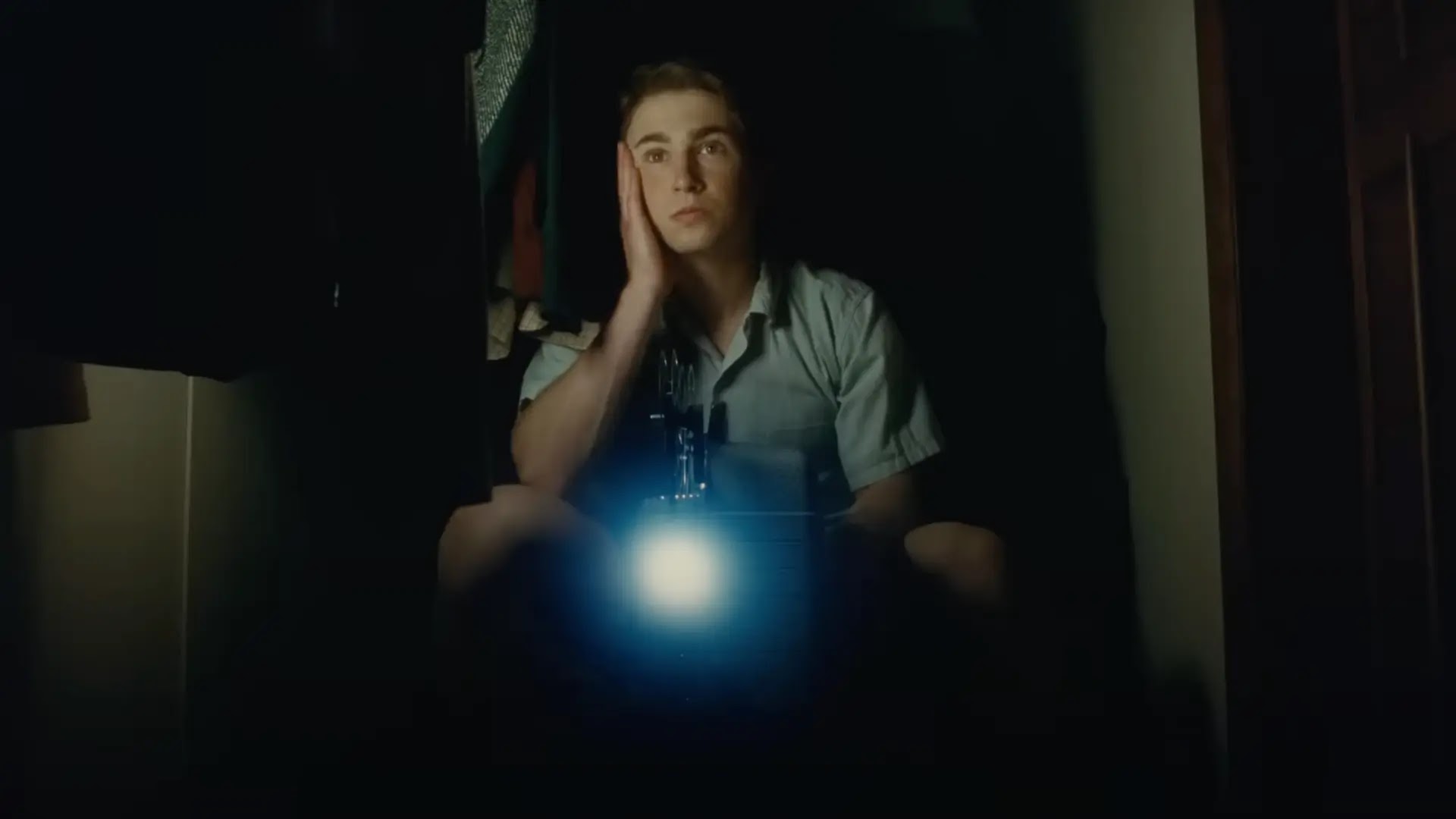
The set-up is that young Sammy Fabelman (at this point played by Mateo Zoryan) is being taken by his parents, Burt (Paul Dano) and Mitzi (Michelle Williams) to his first movie, The Greatest Show on Earth. Sammy is worried. It will be DARK and he's scared of the dark. Father explains the technical aspects of film running as still images that take advantage of the limitations of the eye's retention—the persistence of vision—to  simulate a moving image, while Mom takes the romantic view: "Movies are dreams that you never forget." Already the family lines are drawn out between the adults: one is technical, one is artistic.
What happens to the child in between is something else entirely. He sits, rapt, edging closer and closer to the screen to the edge of his seat when something happens that is quite outside his ken: two "bad guys" are robbing a train when one of them notices the circus train is barreling down the tracks at them. Wanting to stop the train, one of the "bad guys" knocks out the other one and drives the car onto the tracks towards the train rushing towards them to warn them about the other one farther down the tracks and prevent the upcoming collision. But, the train has too much momentum; while the guy driving waves his arms in desperation, the train plows into the car flipping it like a toy (which it is) and crashes into the next train causing a massive wreck...achieved by models, inter-cut with live-action scenes of chaos and process shots of fleeing animals.
But, a child wouldn't know that. Driving home, Mitzi asks Sammy "What was your favorite part?" he can't answer...he doesn't answer, still gob-smacked by that approaching train and the disaster that he witnessed before his eyes. At Hannukah, Sammy gets trains as a present—Dad explains the scale and the connections and what makes it go. But, Sammy wants to watch them table-top height to re-create that scene from the movie and sets up elaborate things for it to crash into, inevitably breaking the engine and incurring Dad's disapproval. Break things? You're supposed to FIX things!
But, Mom gets it. Sammy's trying to recreate the scene to make it less scary—he wants to understand it, control it, master it. She gets some film for Dad's movie camera so Sammy can film the train again and again, so he won't be constantly breaking trains. And he shows Mom the movie he made of the train from various angles, various ways to make a model train scary. 
 
But, before the part where Sammy shows his little movie to his thrilled audience, there's a sequence where adult director Steven Spielberg makes an honest-to-god recreation of that "Greatest Show on Earth" crash using miniature trains, toy cars and unsuspecting Hannukah decorations using the same angles DeMille did. And it's amazing. Also funny as Hell. To think Spielberg—at 75 years old—was determined to get that sequence he was trying to make at 6 years old look as good as possible. It's hilarious. It's fun. It's poignant. It's a little brilliant in its meta-sense.
The Fabelmans
is Spielberg's telling (with a canny co-script by Tony Kushner*) of the story of his childhood, the birth of his love of making movies and the death of his parents' marriage. It's a story that spans two moves—from New Jersey to Arizona and Arizona to Los Angeles—and ten years and god knows how many hours with an eye to a viewfinder, hours squinting at film through a magnifying glass and cutting and splicing it together with glue as well as graduating from 8mm home movies to 16mm presentations. Oh. He also attended school, got bullied for being Jewish, and getting his first crush...on a shiksa.
 
Self-indulgent? Sure. But, then you're ignoring Hemingway's maxim "write what you know." Every film-maker (or author) taps into the well of their past** If you dismiss Spielberg doing it, you dismiss Richard Linklater or Francois Truffaut. You can't sneer at The Fabelmans and extoll Cinema Paradiso. Hell, Fellini made a career out of it. Howard Hawks used metaphorical occupations to tell stories about making movies. So, self-indulgent? Sure, join the club!
But, it's a fascinating exercise and an entertaining one, too, because it is Spielberg looking at himself through the rear-view-finder, looking through the aperture and seeing himself, fixing the story where it needs to be finessed or goosed (as he always does) and looking for the tell-tale detail that resonates. Only this time, it's personal, and it's fascinating to look at Spielberg's life as he observed it (or sees it now) and into his mind, as well.
For instance, there is a clear case of imposter syndrome where Sammy Fabelman is the family chronicler, filming everything as observer, story-teller, but ultimately outsider. The revelation comes out in a sequence that could be a horror movie. At a "family conference" it is announced by Mitzi and Burt that they are splitting up—he's going to remain in L.A. for his job and Mitzi is going back to Arizona for her sanity. It is a scene of tears and tearing apart.
Spielberg cuts to a shot of Sammy watching from the stairwell while the whole traumatic scene unfolds. Cut to a closer shot of Sammy with a look of horror in his eyes—is it suddenly dawning on him that his family is splintering apart? Is he reacting to his sisters' emotional trauma? No. He is reacting to the next shot Spielberg presents: Sammy sees himself (in a fantasy sequence, inserting himself into the scene) figuring out how to frame the scene with his camera.
That is a frightening scene. It shows that even in the most intimate, personal, affecting scene, he is outside, objectively looking for the angles, almost dispassionately when passions are running high. What has this "hobby," this obsession done to him that he can even see himself doing that, even if it is instinctually? It's a gift and a curse. As Sammy's Uncle Boris (a florid
Judd Hirsch) informs him "Art. Family. It will tear you apart!"
The movie is full of small truths, revelations large and small, that inform the color of a life. I could go on and on about details, themes, structures, performance details that inform this movie (and have influenced Spielberg's entire body of work) but that would just be robbing you of a personal experience of discovery, the individual way of connecting dots and frames. In a way, all movie-makers are communicating personally, whether they are telling their own story or somebody else's.
There is another sequence in the L.A. apartment Sammy is sharing with his father. It's very simple; disarmingly simple. Sammy comes home. Burt, soon after. Sammy is tired, frustrated, isn't getting anywhere in L.A. looking for work. The mail's on the table and there's a letter from Mitzi in Arizona, with pictures, snapshots. Does Burt want to see them? Sure.
 
There's then the standard Hitchcock sequence of three shots. Burt looks at the pictures. Sammy looks at Burt looking. Back to Burt, as Sammy seems him. But, the two shots of the father are not the same, obviously so, even though from the same vantage point, more or less. The first shot includes Burt looking at the pictures. Cut to Sammy looking. The next shot of Burt does not include the pictures—the camera has moved up and the ceiling of the apartment is weighing down on him. That is the shot of Sammy seeing his father's reaction to the snapshot of his absent wife—the sadness, the contemplation, the emptiness. It is SO simple, but it is importantly different, delivering a visual gut-punch you can feel and that is communicated, even if you don't recognize the shift. That is communication in its rawest, visual way, the way that make movies unique in how they tell stories. And Spielberg finds the best way, subtle and overt, to convey that to the audience (whether they recognize it as such or not).

This is why I love Spielberg movies. This is why I love movies.

The movie may not be the story of Spielberg's past, so much as it's the story of his DNA.


* Kushner's dedication to "get it right" even exceeded Spielberg's as recounted in this Collider article:  https://collider.com/the-fabelmans-ending-tony-kushner-interview/
 
** Some film-makers go back to recapture their youth. Supposedly, Orson Welles made The Magnificent Ambersons because it reminded him so much of his early childhood. Fellini made Amarcord. Francois Truffaut made The 400 Blows. George Lucas made American Graffiti. Francis Coppola drew on his family life on quite a few of his films. One always gets the impression from Wes Anderson's films that he's tapping into his early years. Robert Benton made Places in the Heart. Mel Brooks produced My Favorite Year. Noah Baumbach made The Squid and the Whale. The trend seems to be gathering momentum. Alfonso Cuaron made Roma. Lee Isaac Chung made Minari. Last year, Kenneth Branagh made Belfast. Paul Thomas Anderson made Licorice Pizza


Monday, January 27, 2014

Now I've Seen Everything Dept.; Steven Spielberg (1 of 4)

Steven Spielberg, Freshman Year

One of the exciting things about seeing movies over an extended period of time is seeing the growth of a genuine artist. Despite reservations about his early output, it was obvious from the outset that Steven Allen Spielberg was a dynamic story-teller and a wizard in communicating with a camera. His training manuals were the classics of the film-makers of spectacle—the David Lean's and Alfred Hitchcock's and Cecil B. DeMille's, the guys who made expansive roadshows that appealed to a mass audience. They made movies of exotic places and large personalities that could fill a Cinemascope frame with dimensions of adventure and color and grandeur. They could also manipulate an audience with their technique to fill them with awe and wonder, or propel them out of their seats in an explosion of popcorn. Movies were a thrill-ride, but with better scenery. From the beginning, Spielberg had that impresario spirit to look at an audience as a territory to be conquered: give them bread and circuses and chases. Tell them a story and give them a thrill. Very quickly, he became his own brand: "A Spielberg Film" was something to see.


Duel (1971) Precocious with movie cameras and making his own home-movie features at an early age while growing up in an Arizona suburb, Steven Spielberg also had enough chutzpah once he was of age, to sneak onto the Universal lot and abscond his own office, Then with hard work and mentoring, he got to direct his first television feature--a segment of the "Night Gallery" pilot starring the formidable Joan Crawford. It was the stuff of industry legend. But folks really stood up and took notice with this "ABC Movie of the Week" adaptation of Richard Matheson's bare-bones short story: a man in a car against...something... in an 18-wheeler, out in the desert. In a TV environment where budgets ruled all, Spielberg managed to give his minimalist film a movie feel, with elegant traveling shots, charging effects techniques, and, in moments calling for panic, almost-hallucinatory extreme close-ups. But there's more to it than technique. Spielberg also gives the demon-truck the supernatural quality it deserves, creating a seemingly unstoppable foe. He provides a rousing climax, then ends with a melancholy, existential coda, elevating the car-versus-truck story. He also had the benefit of an all-stops-out performance by the underutilized Dennis Weaver.


The Sugarland Express (1974) With all that was to come after, folks forget that Spielberg's first theatrical feature film was this Goldie Hawn...er, "vehicle," featuring a long, slow car chase, an unsympathetic lead (even if her intentions are good) and a down-beat ending. Critics took notice, but nobody bought tickets, an occurrence that wouldn't happen again for awhile. Goldie plays a mom who springs her husband (William Atherton) out of prison, takes a guard hostage (Michael Sacks) and leads a convoy of patrol cars (led by Ben Johnson) on a quixotic trip to rescue her child from a foster home. Spielberg wouldn't attempt this level of crowd-no-pleaser 'til later in his career. The script is by Hal Barwood and Matthew Robbins, both of whom would be taken under Spielberg's wing and figure in several more projects with Spielberg's name attached. The director also populated his cast with a fair percentage of locals with no previous acting experience for color, a technique he'd also employ in his next "little" film.


Jaws (1975) You'll find an early analysis here. There's not much to add, other than, with time and close inspection, the seams show a bit more in this roller-coaster crowd-teaser about an "eating machine" picking off citizens of a Massachusetts beach community during high-tourist season. The movie's bi-polar: On land, it's a Hitchcockian tease, but on open water, it's a bit like Duel--frenetically hyper-busy with bits of business and one crisis after another. But what could the kid do? He had a shark movie, but for 95% of filming he had no shark. Water and weather conditions changed from moment to moment, but John Williams' insistent score keeps you focused on the action. And he's helped immeasurably by an odd, brilliantly picked cast. Spielberg's lead was a character actor usually given sinister second-banana roles, and for the other denizens of the good ship Orca, chose two character actors who, in style and personality, were oil and water: the classically trained Welsh boozer/playwright Robert Shaw, and the pinched, hectoring Actor's Studio product Richard Dreyfuss. With a cast like this, the shark's almost superfluous for generating drama. Spielberg changed the book considerably and provided a "wowser" of a finish (in the book, the shark just...dies) that, over the original author's objections,* pays off mightily. Over-time and over-budget, it became the first wide-opening Hollywood blockbuster, setting the stage for how films were presented, marketed and hyped for the next 30 years.


Close Encounters of the Third Kind (1977) Flush with the success of Jaws and his name now a household word, Spielberg parlayed his clout to make a dream project that star Richard Dreyfuss announced on "The Mike Douglas Show" "will turn Columbia Pictures into a parking lot" if it wasn't a success. Based on a bit of one of his childhood 8mm movies, partially on a commissioned script by Paul Schrader (Taxi Driver), the evolving storyline started out as a film about a pesky alien attack, and turned into one about obsession, dissolution and ecstatic epiphany. "Everyman" contractor Roy Neary is touched by a light from beyond and the scorch-marks it leaves on his face dig deep into his brain leading to a compulsive scavenger hunt-like search for the answers. He's joined by other adrift souls (including a mother searching for her alien-abducted toddler) and, Job-like, is rewarded for his trials...and his faith.** Released the same year as Star Wars and uncompleted to Spielberg's satisfaction at the time, it can now be seen as he intended (and without the unnecessary scenes inside the Mother-ship that bankrolled Spielberg's tinkering). The completed film shows Spielberg's willingness to broach dark material before making his way to the light at the end of the tunnel. It also shows his growing directorial skills with kids (as was briefly displayed in Jaws) not only in the performance of the pre-verbal Cary Guffey, but also in the heart-breaking performances of the actors who portrayed the Neary children.

Spielberg showing that Francois Truffaut can direct anything.

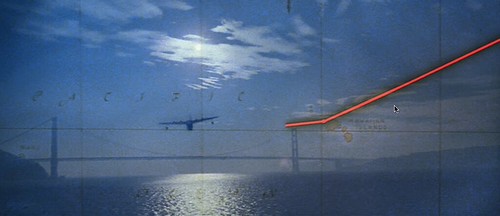
1941 (1979) After the Jaws/CE3K one-two-punch, Spielberg set his view-finder on a screwball/slapstick comedy--ala It's a Mad, Mad, Mad, Mad World--the basis of which was a John Milius/Robert Zemeckis/Bob Gale script about California attack hysteria in the days following Pearl Harbor. What was a relatively clever, modest script ballooned into an elaborate loud-mouthed farce with a star-studded cast headed by a coke-addled John Belushi and the likes of John Candy, Dan Ackroyd (of course), Slim Pickens, Warren Oates, and even Christopher Lee and Toshiro Mifune (both playing it straight). 1941 is barnacle-encrusted with in- and out-house jokes, starting with the same skinny-dipping gal from the beginning of Jaws being hoisted into the air on the periscope of a surfacing Japanese submarine. It's all "Jerry Lewis"-subtle and the wanton destruction on several fronts is considerable and wearying and ultimately signifying...not much. But it could have been even more extreme: John Wayne was too miffed at what he considered the anti-Americanism in the script to play General Stilwell (Robert Stack stepped in), and the lookouts on the Ferris Wheel were originally to be "Honeymooners" Jackie Gleason and Art Carney (but became Murray Hamilton and...Eddie Deezen). 1941 bombed at the box-office and all the blame went to Spielberg for running over-budget and overboard. Hollywood dismissed him as an irresponsible flame-out. But, you couldn't count Spielberg out; he had friends in high places.


Raiders of the Lost Ark (1981) On a post-Star Wars vacation in Hawaii, George Lucas and Spielberg made plans for a series of films based on the old movie adventure serials, but amped up with modern story-telling techniques and special effects centered around a globe-trotting archaeologist named Indiana Jones (Tom Selleck was the front-runner to play him, but as he was tied up playing "Magnum, P.I." on TV, Harrison Ford slipped on the ever-present fedora).*** Based on a story by Lucas and Phillip Kaufman, Spielberg protégé Larry Kasdan fashioned a taut, wise script winking at the genre and poking fun at the clichés while playing up the mysticism. With the overview of Lucas, Spielberg, for once, kept tight rein on the production and came in on time and under budget, allowing him to retrieve his industry cred—helped, no doubt, by the healthy receipts generated by a cracker-jack film. Spielberg's career was revitalized, and more importantly, his work with Lucas inspired him to form his own business model for film-making. He would stop being a studio work-for-hire, however, and, within a year, would start directing and developing film projects under his own production masthead, named for one of his student films...Amblin Entertainment.


* "Jaws" author Peter Benchley hated the movie's ending, finding it unbelievable and embarrassingly "cowboy." Showing the film to a group of marine biologists, he was mortified to watch them cheer hysterically when the shark blows up.

** James Lipton, when he interviewed Spielberg on "Inside the Actor's Studio" asked Spielberg the professions of his divorced parents. His father was an inventor specializing in computers. His mother was a music teacher. Lipton then asked him if it had occurred to him that that was why a computerized synthesizer (that learned the alien language) was used to communicate with the aliens. "It just occurred to me now.." was Spielberg's flustered reply.

*** How it came up was Spielberg confessed to Lucas that he wanted to direct a James Bond movie, to which Lucas replied, "I've got something better than Bond." Naturally, when it came time to cast the father of Indiana Jones, the first person they asked was the original movie Bond, Sean Connery. Hence, his presence in Indiana Jones and the Last Crusade.

Tuesday, January 28, 2014

Now I've Seen Everything Dept.: Steven Spielberg (2 of 4)

Steven Spielberg, Sophomore Year

One of the exciting things about seeing movies over an extended period of time is seeing the growth of a genuine artist. Despite reservations about his early output, it was obvious from the outset that Steven Allen Spielberg was a dynamic story-teller and a wizard in communicating with a camera. His training manuals were the classics of the film-makers of spectacle—the David Leans and Alfred Hitchcock's and Cecil B. DeMille's, the guys who made expansive roadshows that appealed to a mass audience. They made movies of exotic places and large personalities that could fill a Cinemascope expanse with adventure and color and grandeur. They could also manipulate an audience with their technique to fill them with awe and wonder, or propel them out of their seats in an explosion of popcorn. Movies were a thrill-ride, but with better scenery. From the beginning, Spielberg had that impresario spirit to look at an audience as a territory to be conquered: give them bread and circuses and chases. Tell them a story and give them a thrill. Very quickly, he became his own brand: "A Spielberg Film" was something to see.

At this stage of his career, after the high promise of Jaws and the lessons learned from the excesses and poor box-office performance of 1941, the lean and mean adventures of Indiana Jones for Lucasfilm emboldened Spielberg to form his own production company, Amblin Entertainment.


E.T., The Extra-Terrestrial (1982) Having directed the most crowd-pleasing film for the Summer of 1981, Spielberg began developing stories he had ideas for, but not the time or inclination to devote all of his energies to. One was his "haunted-house-in-the suburbs" romp, which became Poltergeist. Spielberg produced, but gave the directing reins to Texas Chainsaw Massacre auteur Tobe Hooper. A variation on the theme—Gremlins, written by Chris Columbus—was dispatched to Roger Corman alum Joe Dante. An anthology film based on Rod Serling's Twilight Zone was on the horizon. But, for himself, Spielberg developed a more personal, kid-friendly version of Close Encounters of the Third KindE.T., The Extra-Terrestrial.  A shift on CE3K's "little boy lost" theme, ET focused on a lost parasitic alien who gloms onto the middle child of a dysfunctional family, and teaches the kid about self-sacrifice and unselfishness...by, presumably, letting go of the link that was leeching the life out of the boy and sacrificing himself. This makes ET the most obvious Christ allegory since Klaatu made the Earth stand still. And, yes, ET is also a sci-fi variation of Lassie. With so many traces of classics running through it, how could it miss having its glowing finger on the pulse of just about everybody in America? ET quickly became Spielberg's second record-smashing blockbuster, trumping George Lucas' Star Wars (which had, in turn, swamped Spielberg's Jaws) for the #1 ticket-generating film of all time. One could become cynical about the mega-success of the film, but it does generate strong emotions, tug at the heart-strings and earns its sustained farewell scene with a pay-off where ET parrots significant dialogue back to his adopted family. ET remained the "most popular film of all time" until it was sunk by
James Cameron's Titanic 20 years later (a record Cameron overtook with his own Avatar).


Twilight Zone: The Movie (1983) One can't mention TZ-The Movie, without acknowledging the lethal elephant in the room, that being the helicopter crash on-set
that killed actor Vic Morrow and the two Vietnamese children he was carrying in his arms. The accident on director John Landis' watch cast a pall over the entire enterprise. There were other segments—Spielberg's, and one each by George Miller and Joe Dante. Spielberg's seemed a natural—an adaptation of George Clayton Johnson's "Kick the Can," a sentimental tale of a group of old folks who lose themselves in a childhood game and return to their youth, literally. Richard Matheson's expansion spends more time with the kids (the least interesting part, really), but as Spielberg was becoming known as a "kids' director" (a title he would grow tired of later), one would think it was playing to his strengths. But, the "Kick the Can" segment is mawkish and curdlingly sentimental. It wears out its welcome (and its sense of wonder) very quickly, leaving a definite change in quality going from the inferior Landis-Spielberg segments into the riskier and better-fulfilled Dante-Miller segments.


Indiana Jones and the Temple of Doom (1984) Things start out promising for the second Indiana Jones film, a prequel to Raiders of the Lost Ark--with a rollicking parody of Busby Berkeley musicals with the appropriate sentiment of "Anything Goes" to a free-wheeling romp as "Indy" tries to recover a diamond and the antidote to a poison he's been fed while an all-singing/all-dancing running battle erupts in a crowded nightclub (called the "Club Obi-Wan"). Unfortunately, that "Anything Goes" promise extends to just about every aspect of this lumbering, elephantine production. Far darker and violent than Raiders (because of it, the MPAA created the more restrictive PG-13 rating), it's a mean-spirited, gratuitous exercise with kids beating up on each other, our anthropologist hero being beaten with wood-beams and torches, the villain reaching into the chest of a sacrificial victim and tearing out his heart (before the guy is lowered into a lava-pit and burned alive! Alive? He just had his heart torn out!), and a ludicrous race through a mine-shaft that feels like a spastic E-ticket at Disneyland (if the stop-motion puppetry weren't so apparent). Add to this, Indiana (while under the spell of villain Mola Ram) turns into a really evil guy, and any sympathetic audience member has his loyalties severely tested. Also testing are the antics of Kate Capshaw as the high-strung, high-pitched heroine and the by-now-inevitable-in-Spielberg's-bag of-tricks "cute-kid" named "Short Round" who you sincerely wish Jones might drop off at the next orphanage.  An unpleasant experience all the way around. "Anything Goes," indeed. So sorry I went.


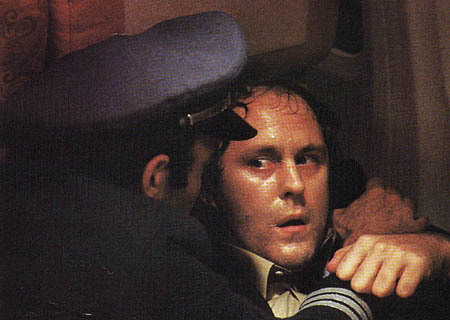
Amazing Stories (1985-1987): "Ghost Train"/"The Mission" Amblin's first foray into television was an anthology series (great!), featuring high-end budgets (terrific!) and direction by veterans (Eastwood, Zemeckis, Dante) and talented newcomers (Mick Garris, Phil Joanou, Brad Bird) (awesome!) on some of the thinnest threads of stories that could be stretched out to half-an-hour (...meh!). The "Amazing Stories" always looked good, but 90% of them were dramatically inert, offering few surprises and overstaying their welcome by at least ten minutes. The premiere episode directed by Spielberg, "Ghost Train," based on a Spielberg story (a lot of them were half-baked Spielberg kernels of an idea, although one was turned into the feature length ...batteries not included) was one such example. But damn, if "The Mission" didn't hold your attention and keep you white-knuckled until its far-fetched, disappointing ending. One of the few hour-long "Amazing" stories, "The Mission" is a clever nail-biter about a bomber crew trying to return home with their landing gear inoperable and the lower belly-gunner trapped in his perspex bubble. There's no way the commander (Kevin Costner right before he went big with The Untouchables) can land without crushing and killing their gunner who has become their "lucky charm." The characters are well-drawn, Spielberg keeps the tension white-hot, and its only the ending that's a cheat. Up until the last minute, "The Mission" is one of Spielberg's best achievements in directing.


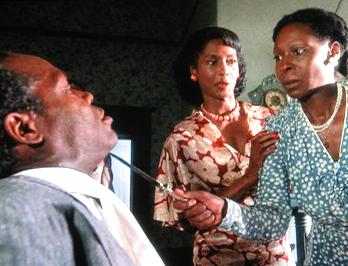
The Color Purple (1985) When choosing a director who could be counted on to adapt the story of an abused black woman finding her identity and worth after a life-time of having it suppressed, Steven Spielberg is not the first choice to come to mind. No space-aliens! No sharks! No cute kids! (In fact, the kids here are the meanest little scamps outside a Peckinpah film!) And part of the problem with The Color Purple is Spielberg's earnest attempt to turn its rustic story of simple gifts and the struggle for simple dignity into Gone with the Wind. The approach leads to some raw, unflinching emotions and scenes of grandeur (particularly the way Spielberg weaves the scenes of Celie reading her sister's long-suppressed letters from Africa, with her imaginings of what that far-away country must be, interweaving and warping the continuity of those scenes), but it has the tendency to top-load things with unecessary theatricality. You end up watching the spectacle without feeling the emotions that are trying to be conveyed. One can't help but suspect it was Spielberg reaching for an Oscar, which had eluded him with Jaws and CE3K. Still, the director gets miraculous performances out of Whoopi Goldberg, Danny Glover, Oprah Winfrey, and Margaret Avery. Eventually, Spielberg would find a way to get out of the way of the story.


Empire of the Sun
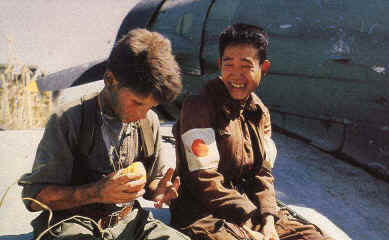
 (1987) ...But not just yet. Spielberg recruited playwright Tom Stoppard to script this adaptation of J. G. Ballard's fictionalized remembrance of life in a Japanese prison camp during World War II, and the concepts are a bit more solidified than usual. Spielberg still goes for "The Big Moment" every reel or so, but when it comes to the emotional climax of the film (young Jim Graham reunited with his parents after the war), he mercifully underplays it and exploits it for irony. It's one of his best films in his early period, and he gets great performances out of a pre-teen Christian Bale and John Malkovich, from very early in his career. It may, at first glance, seem an odd choice for Spielberg to make, but one can see themes of dysfunction and the finding of hidden strengths that have cropped up consistently in his films, and many of the images he produces in this particular film haunt. He was starting to craft a better way of story-telling than consistently "going for the fences" with every sequence, creating a more mature, understated way to make films. That doesn't mean he wasn't still capable of something bombastic, however...


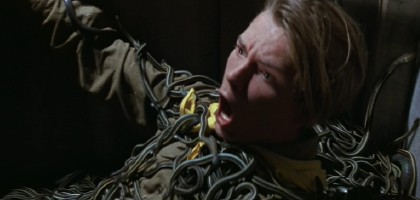
Indiana Jones and The Last Crusade (1989) The third Indiana Jones adventure further expanded the Jones universe. He was still fighting the Nazis later in the war, but Spielberg began his film with the adventures of a young Indiana Jones (played by River Phoenix) in a sequence that establishes—probably too much—the trademarks of the elder Indy, right down to bull-whip, hat, and Harrison Ford's scar above the chin. And to further the process along, we're introduced to his father, Professor Henry Jones, Snr., biblical scholar and seeker of the Holy Grail, played by the man who portrayed Indiana Jones' inspiration, Sean Connery. Connery doesn't quite get a handle on the elder Jones, the portrayal being inconsistent from scene to scene, but he does pull off the essentials--the pivotal scene where, to distract "Junior" from grasping at the Grail that is jeopardizing his life (and has monopolized his own) he calls him "Indiana" for the first time, and implores him to "let it go." There are nifty little set-pieces throughout, with a particularly terrific sequence where, using Grail-lore, Henry Jones the younger must best several death-traps, culminating in a literal "leap of faith" to achieve his goals. Ultimately, the film is not nearly as satisfying as the first, but it's a great deal better than the second, so that's progress. ***


Always (1989)
On Spielberg's list of favorite films is one that sticks out like a sore thumb. There, among the films of Kubrick and Lean and Truffaut, is A Guy Named Joe, a sentimental WWII movie (directed by Victor Fleming of Gone with the Wind and The Wizard of Oz) about a fighter pilot who is killed in the line of duty and, having a rough time adjusting to the after-life, returns to look in on and meddle with the in-progress lives of those he's left behind. Eventually, he accepts his fate and leaves things to proceed without him. Maybe it has something to do with letting go of ego, or it might be about Spielberg's parents divorcing and his acceptance of it. But in making his own version, his screenwriters took it out of the war and into the realm of aerial fire-fighters, where there is constant risk, but not constant death. For the Spencer Tracy role, Spielberg turned to his "alter ego," Richard Dreyfuss, along with Holly Hunter and John Goodman...and Audrey Hepburn in her last role, playing Heaven's Concierge. Where Tracy's take could seem selfishly pig-headed, Dreyfuss comes across as selfishly pig-headed AND creepily manipulative, leading those he loves to the brink of suicide. When last I looked at this film, I saw it as romantic fluff—and it is—but it is also Spielberg's anti-Vertigo: On Dorinda's (Hunter) birthday, Dreyfuss' character buys her "GIRL-clothes" (as she effusively warbles). In the male-dominated flight-world, Dreyfuss' Pete is the only one who doesn't see Dorinda as "just one of the boys" and, like James Stewart's "Scottie" Ferguson, he wants to turn the woman he loves into his heart’s desire, and so manipulates her into becoming what he wants to see. This gives the film added resonance after his death and manipulation of Dorinda (making it just as much her film as his), and yes, nearly driving her to suicide, but also showing her how to save her own life. When he turns his back on his former life (and former love), he allows her to be the person she is going to be—and lets her take the path of her life—without him. "That's my girl," is his final ironic line. Poignant, sad, and brave...and a better film than first thought upon a reconsideration.

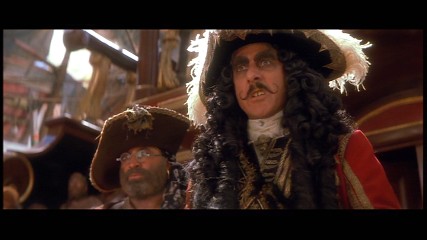
Hook (1991) A "package" deal—all the major players shared the same agency—Hook is a lumpish creature of disparate parts—and a film in desperate need of a light touch. It's not provided, however, and what should be a story with a sense of elation feels a bit juiced-up...like its been pumped with performance-enhancers, not unlike 1941. Set-bound, despite a thick veneer of special effects, it manages to feel claustrophobic, instead, as the elaborate nature of, well, everything becomes wearying. Robin Williams wasn't too happy working on it. Julia Roberts wasn't. Dustin Hoffman appears to be enjoying himself, but he also appears to be playing to himself. And Spielberg, working on a complicated set-bound production found himself annoyed with the shenanigans of the kid-actors playing "Lost Boys." The "kid's director" had met his match. Or maybe he'd grown up just a little--a little ironic for this sequel to "Peter Pan."

Or maybe the more seasoned, more mature Spielberg was trying too hard to recapture something he'd already left behind.  Hook is the last, sputtering gasp of a sugar-coated diet.  


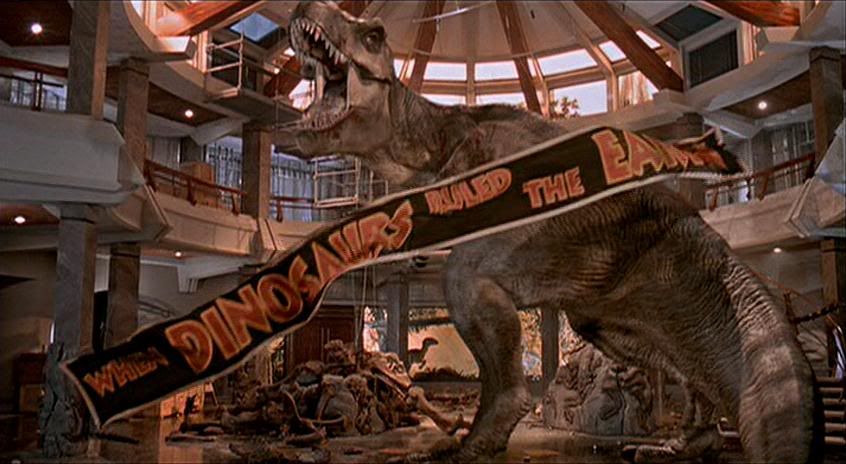
Jurassic Park (1993) Here's the deal: Spielberg, after years of owning the rights to, and nurturing the script for Schindler's List finally bit the bullet and decided to direct it himself (he'd been trying to get Scorsese to make it). Universal, his studio of choice, wasn't convinced of the box office potential of a black-and-white movie about the holocaust (Go figure!), so they coerced Spielberg to first make Jurassic Park, which had far greater box office potential, in order to off-set the anticipated Schindler loss. One can quibble about how craven a movie Jurassic Park is -- like Hook isn't -- but one has to admire the pedigree and brio that Spielberg brought to the project. The casting is superb: Sam Neill, Richard Attenborough, Samuel L. Jackson, Laura Dern, Jeff Goldblum, Bob Peck all bring spark to the interchangeable cyphers of Michael Crichton's novel. And it's Spielberg in full "eating machine" mode. It's his most devilishly-intended thrill ride since Jaws. One particular scene stands out: Neil and the kids—there are kids, but they're good this time—have to scale an out-of-commission high-voltage electric fence, while elsewhere in the Park, Laura Dern is trying to restore power to the Island. Spielberg hangs on the sequence putting the lagging-behind boy-child in mortal danger of frying...and he stages it in an almost gleeful way (maybe it was those irritating "Lost Boys" from Hook...). The other thing about Jurassic Park is that it was aided immeasurably by Lucasfilm's post-production efforts to seamlessly integrate CGI dinosaurs into the frame. The results are spectacular, and changed the way movies have been made ever since. For some reason, Spielberg seems to be the master of integrating CGI and live-action than most directors...save for James Cameron.


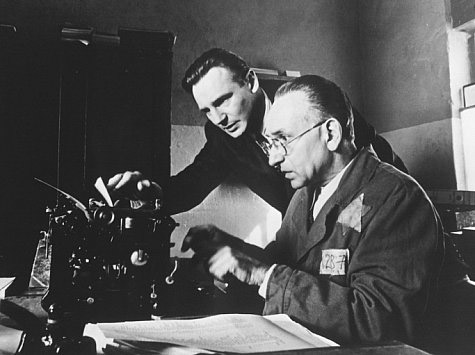
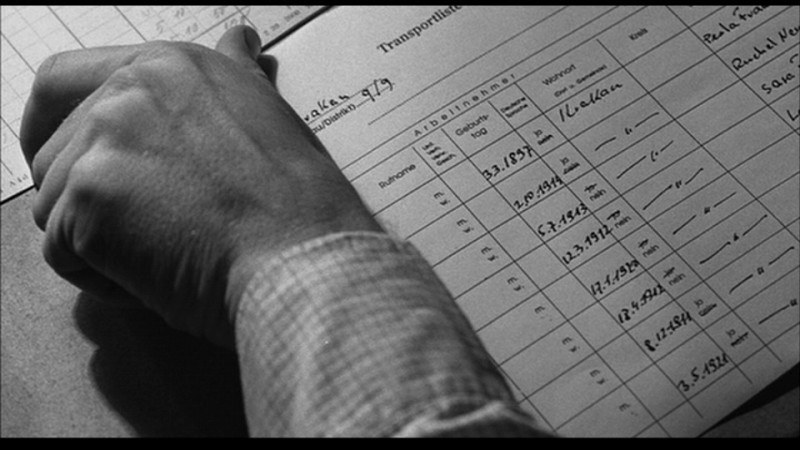
Schindler's List (1993) While Lucas and Co. slaved away making pixilated dinosaurs, Spielberg was in Poland making Schindler's List. After years of toiling with the screenplay and casting, Spielberg was making his dream project...and he was miserable. The subject matter and the brutal way that he was presenting it...and the "ugly step-sister" reaction of Universal to it...deeply depressed him. Reportedly, he would call Robin Williams every night to make him laugh to get through it. Whatever it took, Schindler's List is a revelation. There are no camera tricks. No flashy set-ups. ** There is no romanticism. Schindler's List is bare-bones movie-making, and only once, where Schindler breaks down over the lives that might have been bought had he been a tad less materialistic, does it become sentimental. It's the most un-Spielbergian Spielberg movie that he had directed to that time. Eliciting uniformly terrific performances out of his cast, but particularly Ralph Fiennes and Ben Kingsley, he brings out the best performance that Liam Neeson has ever displayed, probably because Schindler was a notorious performer. After years of reaching in subject matter to win Oscars, this one won him Best Director and Best Picture. Spielberg had arrived.

Spielberg's pattern would now be to produce any number of ventures, juggling them and a new family life (with Kate Capshaw and an extended family) take a couple years off, diversify with interest in documentaries and video-games, and then speed through two films a year. To do all that, he needed to expand his capabilities from merely heading a production company, like Amblin. He would have to become a studio. The one-two punch of the profitability of Jurassic Park and the prestige of Schindler's List would allow him to accomplish that.

The Sophomore Years (1971-19)


* But, not as good as the fourth would be. When I first did this retrospective, the news of the Return of the Great Adventure prompted a sad reprise of "The Last Crusade's" best line: "George, Steven, Harry...let it go." But, Indiana Jones and the Kingdom of the Crystal Skull was a return to the series' roots, reflecting the times—and the movies of the times—in which it was set. Skull's setting was a nice conglomerate of 50's B-movie material with commie paranoia, saucer-men, and far-fetched nuclear fall-out all playing hands, while moving on to a mature understanding of the world and one's life in it. (I wrote about that more in a further review (which will appear here soon) called "Indiana Jones and the Terrible Age of Wonders.")

** ...save for a couple of rare instances of particularly eye-drawing moments of color.