Saturdays are "Take out the Trash" Day
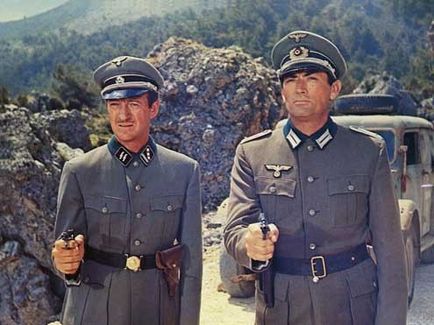
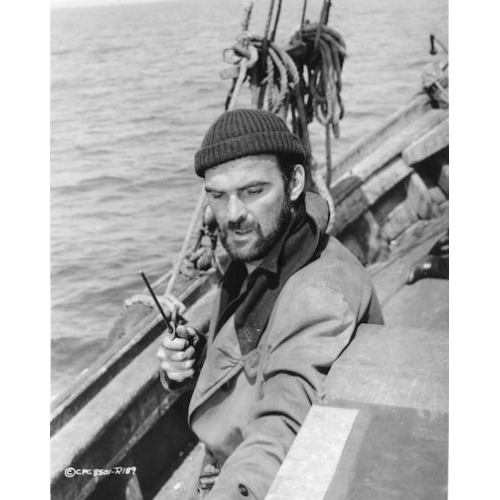
Hell Drivers (Cy Endfield, 1957) British feature directed by blacklisted American director Endfield—and the first to carry his actual name and not a pseudonym*—about the rough and tumble day-to-day of short-haul truckers, battling deadlines and each other to try and meet quota and be top-driver hauling ballast (gravel) on sub-standard equipment at speeds that are break-neck, even under the best of conditions. Each driver has to make at least twelve loads a day; if they don't, they're fired. Competition is so fierce that the other drivers aren't above sabotaging each other's rigs. Work-place harassment is just part of the job and a way of life.
Into this demolition derby come Joe Yately (Stanley Baker)—call him "Tom"—who's just served a year stretch in prison and is trying to make a new honest life for himself. A position is open at Hawlett's Trucking after a driver has gone through a bad accident and although the manager, Cartley (William Hartnell) is reluctant, his secretary Lucy (Peggy Cummins of Gun Crazy) intercedes on his behalf. Tom is taken on a training run and does okay, despite near-collisions with a couple of other drivers.
The other drivers are a motley crew: there's Scottie (Gordon Jackson), Ed (Wilfrid Lawson), Dusty (Sidney James), Tinker (Alfie Bass), and Johnny (Sean Connery), all rough types who aren't above intimidating Tom—it's all in fun, after all. More receptive is Gino (Herbert Lom), an Italian (Herbert Lom?) who's in love with Lucy and wants to give the new driver a chance.
Less friendly is Red (Patrick McGoohan), the driver foreman, who always sits at the head of the table—as a rib, the drivers let Tom sit at the head and Red knocks him off his chair when he enters the room. Red is the most reckless of the drivers, does eighteen runs a day winning him a gold cigarette case, and lets it be known that no—no one—will take that case away from him, even if he has to cripple the driver to do it.
The first thing you notice, given hindsight, is the cast, early in their careers, and before they achieved their biggest success in the 1960's. Sure, there's Connery and McGoohan (who'll ride the 1960's spy-craze), but there's also Jackson from "Upstairs, Downstairs," Lom and Alfie Bass, Sidney James from the "Carry On" films, and Hartnell would become the first "Doctor Who."
But, that's not all. Playing the waitress at the driver's mess is Jill Ireland. And when Tom goes home to try to make amends, David MacCallum plays his younger brother. That's an amazing group of young actors, briefly doing washing duties in the "kitchen-sink" era of British film-making. As a result, the most subtle of the actors is star Baker, while the rest of the cast do their best to garner attention to themselves.
Lom's accent might be a little thick, but the actor who does the most egregious over-acting is a surprising one—McGoohan. He'd be known for merely quietly smoldering with a less-is-more kind of acting during his starring days, but here he's at full villainous boil, manking about like he was Richard III, hunch-shouldered and bull-headed. You hope for him to get his comeuppance early, as its a little painful to watch. When throws away a cigarette, you expect it to explode off-screen.
That aside, Endfield keeps the action going almost constantly, making it a visceral movie. Sometimes too much so. The driving scenes are viciously under-cranked, giving it an almost comic effect, rather than causing white knuckles. By the way, the cinematographer is the storied Geoffrey Unsworth, who would move on to far greater things.
Still, it's interesting to see if only for the young turks who would burn up the screen in the next decade.
* Well, it's listed as C. Raker Endfield, a slight obfuscation from how he was listed on his American films.
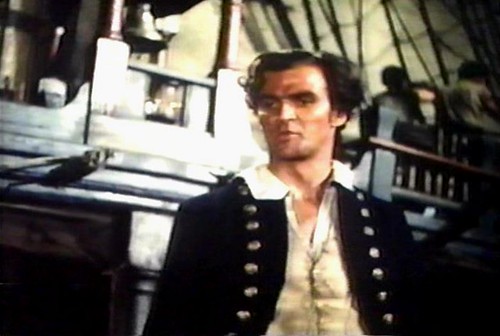
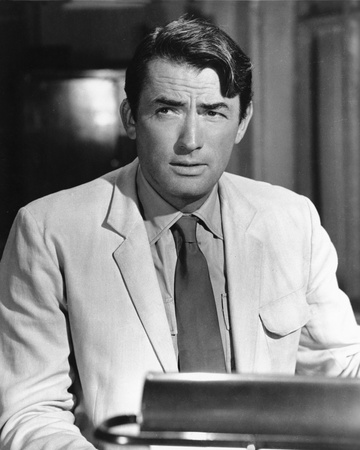
 Captain Horatio Hornblower (R.N.)* (Raoul Walsh, 1951) Supposedly C.S. Forester himself adapted his first three Hornblower novels to make the screen-story for this swashbuckling distillation of the Royal Navy's fictional hero. It is 1805, and his majesty has sent the HMS Lydia on a secret mission. England is at war with Spain and France, and Hornblower must enlist the aid of a mad South American dictator in the war efforts a world away. But, upon arriving, Hornblower's distaste for the assignment and the "El Supremo" (Alec Mango) has him violating the Admiralty's standard orders, and when he captures the massive El Natividad (commanded by a very young Christopher Lee), he is forced to turn over the ship to the mad-man. Heading for home, he finds out that Spain is now England's ally (oops!) and he must re-take the massive ship on open seas, risking his crew and an unwanted passenger, Her Ladyship Barbara Wellesley (Virginia Mayo), sister to tthe Duke of Wellington and betrothed to Admiral Leighton (Denis O'Dea).


_02.jpg)
_01.jpg)