Showing posts with label Roger Livesey. Show all posts

Friday, November 8, 2024

I Know Where I'm Going!

I Know Where I'm Going!
(Michael Powell
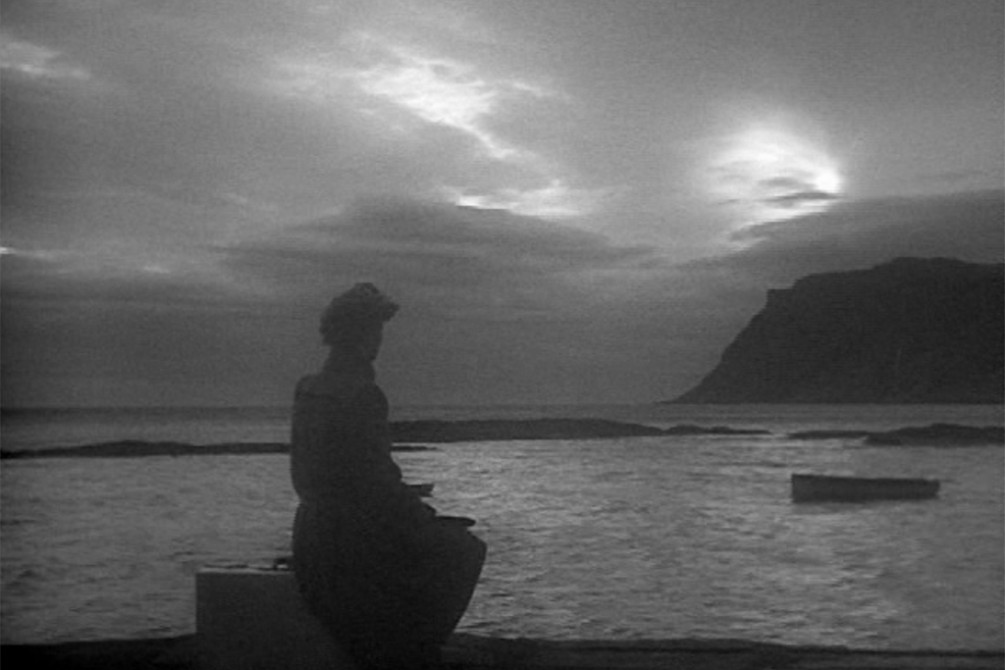
/Emeric Pressburger, 1945) Wendy Hiller stars as Joan Webster, a determined woman whose whole life has been planned out and played out according to her own well thought-out scenario. Now, she's traveling to the Scottish Highlands to marry her industrialist fianceĆ© (head of Consolidated Chemical Industries) on the Island of Kiloran. But to get there—and become "Mrs. Consolidated Chemical Industries"—she must book boat passage from the Island of Mull. But Nature and Fate conspire to keep her Mulling and scuttle her schedule, while the cutely eccentric citizens cast a spell all their own.
 
By all accounts, it should never have been made. Powell and Pressburger were going to make A Matter of Live and Death for the Rank Organization after a request that they make a film that might help cement relationships between the British and Americans. But, the plan was to make A Matter of Life and Death partially in Technicolor (why "partially" is best explained by seeing the movie). But with all the Technicolor cameras being used by the American military for training films, The Archers (the company name of Powell and Pressburger) had to delay filming until they became available.
 
What to do in the meantime?
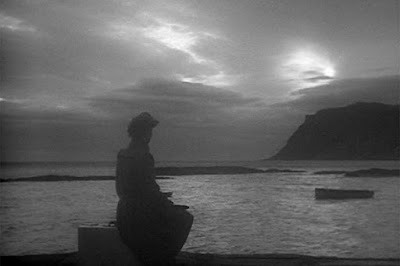
Pressburger knew that Powell loved spending his initial down-time after a movie by going to the Scottish islands and proposed a story about a woman who wanted to make a transit to an island but couldn't and by the time one's available she's made the decision that she no longer wants to go.
Pressburger wrote the story in a whirlwind four days, and Powell and he fine-tuned over a matter of a couple weeks. Initially to star Deborah Kerr and James Mason, The Archers had to navigate their own troubled waters as Kerr had a contract at M-G-M and couldn't get out of her commitment (either that or Powell and Pressburger didn't have the money—they certainly didn't!—to pay M-G-M to loan her out) and Mason didn't want to spend his days "camping out" with the crew in an out-of-the-way location. Wendy Hiller, whom Powell and Pressburger had wanted for The Life and Death of Colonel Blimp—her parts had been played instead by Kerr!—was signed and Roger Livesey was ultimately cast as one of the island's residents (ironically Livesey was doing a play in London and never went to the Hebrides locations, but did his part in the studio filming—Mason needn't have worried about the rough conditions).
For Powell and Pressburger, it was something of a lark, and allowed them to continue an anti-materialist theme that they'd started with their previous film, A Canterbury Tale, of the aesthetics of rural life, while also breaking their four-film streak of making war films. A whimsical love story was just what was needed. A whimsical love-story with a third-act action sequence where our heroes nearly drown in the
 Corryvreckan whirlpool, but a delightful one, nonetheless.
 
Powell and Pressburger create a film concoction with fantasy elements, surreal dream sequences and musical interludes, taking a straightforward story and applying an extremely creative approach to it. The story may seem overly familiar, but not the approach to it which keeps one watching intently to see not so much what will happen, but how. No less an expert as writer Raymond Chandler wrote of it: "I've never seen a picture which smelled of the wind and rain in quite this way nor one which so beautifully exploited the kind of scenery people actually live with, rather than the kind which is commercialised as a show place."
 
It's a lost little gem that shows what a creative force "The Archers", the team that made The Red Shoes, could be. Also, look for a short appearance by a child-actress named Petula Clark. Yup, that one.

Wednesday, July 27, 2022

The Entertainer (1960)

The Entertainer (Tony Richardson, 1960) One thing about Laurence Olivier, he was an actor for all genres. Yes, he was primarily known as a stage and film Shakespearean, probably the greatest, but he also did light comedies, thrillers, period dramas, horror films, the occasional cheese-fest...everything...including the kitchen sink. Kitchen sink dramas, that is. 

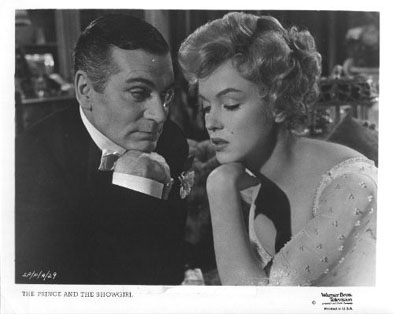
In My Week With Marilyn—the fictionalized telling of the filming of The Prince and the Showgirl—Kenneth Branagh's Olivier announces he's done with directing (after his on-set tussles with Monroe and finding out she's incandescent on-screen, anyway, despite his direction) and is going back to the stage to do a John Osbourne piece. That would be "The Entertainer," the play on which this film is based. On stage, it vacillated between life on-stage for Archie Rice (Olivier), and at home, where...well, he's never really OFF-stage, a needy vaudevillian with an alcoholic second wife (Brenda De Banzie), three kids (>Albert Finney, Alan Bates, and Joan Plowright—who would become the last Lady Olivier), and a slightly more talented, but no more wiser live-in Da (Roger Livesey).
For now, Archie is scraping by, as star/producer of a boardwalk diversion at a seaside holiday camp, in the perfect venue—an old, faded theater, where the air is as stale as his material. His day is only vital in the afternoons and early evenings in the bustling chaos of on-stage and backstage. The rest is the hummest of drums—wife in her cups, son off to war in the Suez, youngest son helping Dad in the dive, and daughter teaches art to a bunch of barely interested teddy-boys and girls. She goes to the seaside, seeking out Father, looking for some form of stability before settling into a perfunctory marriage.
She should have gone somewhere else
. Archie is only accessible on-stage, and when off, he's trying to hustle another season, another venue, another donor, another prospective starlet. Life just isn't good enough for him if a limelight isn't on him and the money's starting to run out to pay the electric bill. Much was made of the play as a comment for the fading empiricism of Great Britain, as personified by the propped-up jolly-good Archie, for whom the show must go on, despite not having any juice in it for years, surviving with a heavy layer of rouge and grease-paint to give the long-distance impression of vitality and youth, blithely ignoring the march of time and pasting it over with the false grin of performance, no matter how desperate it may come across.
Richardson's film opens the play up, puts instance on Archie's transgressions on-screen instead of just being talked about and blubbered over, and Olivier sticks out like a sore thumb—rightly so—apart from the rest of the cast. Where Livesey is old-school formal and the kids are new-broom casual, Olivier sticks to his guns with a theatrical performance which feels appropriately, desperately false, which benefits the film while also making the character of Archie a complete outsider, a role he no doubt relishes. There's only one star in this "revue," everybody else is a bit player. 
For Olivier, it must have fulfilled some need—to slum, maybe, or to reach out to the new material being generated by Osbourne, Richardson and others in the new school of British rebellion. Maybe, after his long string of kings, princes and noblemen, he wanted to explore the has-been's and ignoble men, to cultivate portraits of characters of a more stratified than rarefied stripe. There's also an element that Olivier might have been familiar with—the performer's ennui, bordering on contempt for his audience. 
At this stage in his career, Archie is performing for himself—the money's not great, the material stale, and any creative collaboration is non-existent—the most intimate relationship he has is with his make-up mirror and even that is betraying him. Olivier is not above showing bitterness—he was particularly adept at tartly spitting out the ironic put-down in the guise of civility. And he was acknowledging his age (he was a very old Hamlet in his film of it) and the potential for failure, by portraying it, challenging it, mocking it, waving a red cape at it, maybe exorcising it.  It was a brave interesting role for Britain's leading thespian
.

Olivier as Archie Rice: "The Roar of the Greasepaint"

Wednesday, August 26, 2020

The League of Gentlemen (1960)

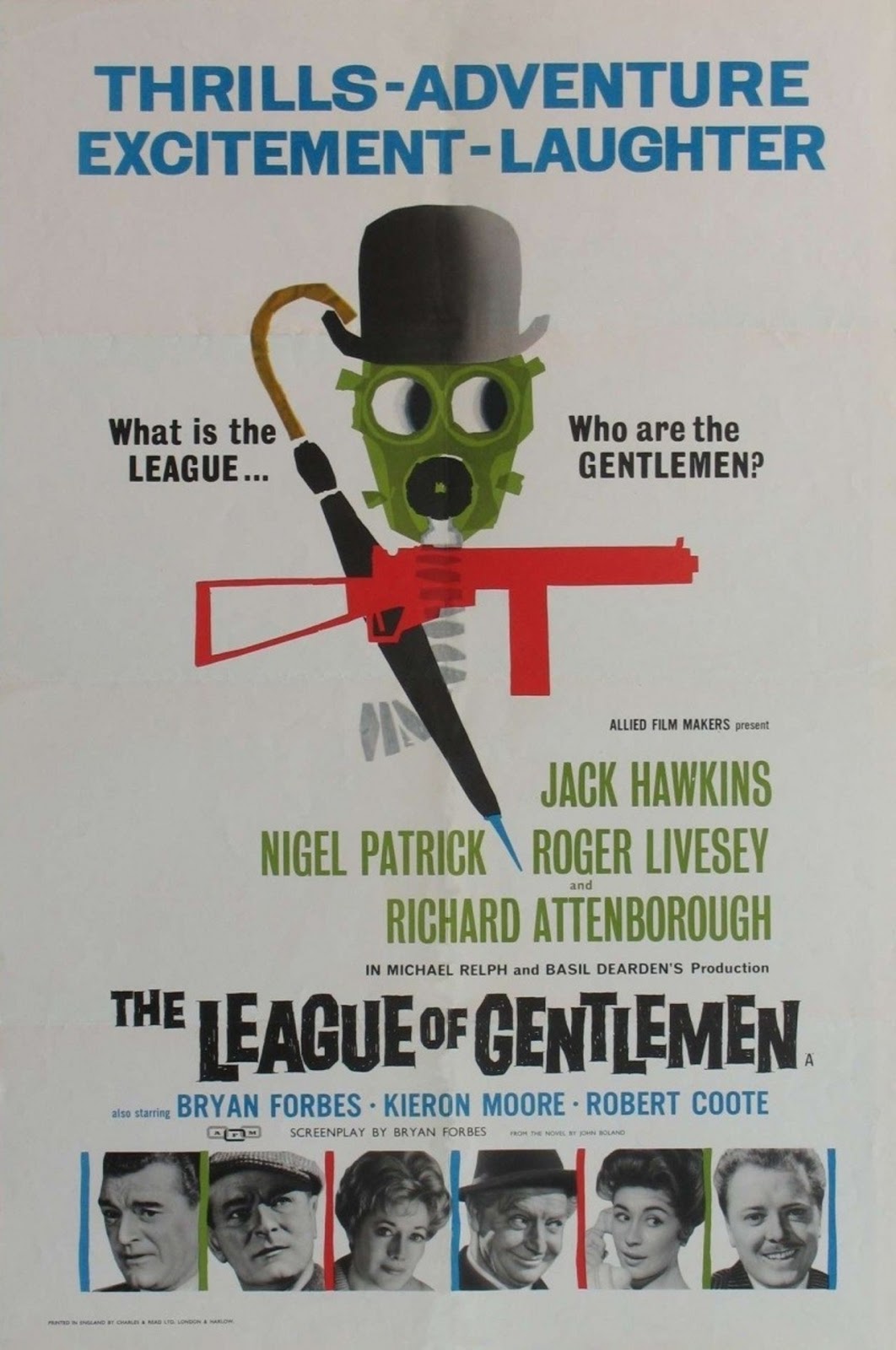
The League of Gentlemen (Basil Dearden, 1960) Basil Dearden's semi-whimsical heist film begins with a sequence that is quite out of whack with the rest of the film but gives a sense of the mind-set behind it. It is late at night on a dark noirish street, and the camera creeps up on a man-hole cover. It pops open to reveal Lt. Col. Norman Hyde (Jack Hawkins) surreptitiously looking about to see if his exit might be seen. Then he climbs out of the sewer dressed in a dinner suit. He then makes his way to a Rolls-Royce and and leaves the area.

It's a visual joke, one that would be expected—and was done—in a James Bond film. The juxtaposition of grime and well-heeled attire is a clever little summation of themes, especially in a society built on class, but except for the visual juxtaposition, it will have nothing to do with the rest of the film. In fact, the little episode is never mentioned again. The film proper begins with the next sequence.
Hyde returns to his home and cuts several £5 notes in half and inserts them, with an invitation from "Co-operative Removals, Ltd." to a lunch at the Cafe Royale, into copies of a paperback book of a crime novel entitled "The Golden Fleece."* He puts each into their separate envelopes and sends them out, seven in all. Their destinations are to seven particular men.
Their intended recipients—"all crooks of one kind of another," "all men of the world"—are disgraced military men, "trained at the public's great expense to do things with the utmost efficiency...which, frowned upon in peace-time are acclaimed in times of war." They are—in the photograph above, left to right: Captain Frank Weaver (Norman Bird), former leader of a bomb-disposal unit, drummed out for trying to defuse a bomb while drunk, which ended up killing four of his men—he now fixes time-pieces in his flat; Major Rupert Rutland-Smith (Terence Alexander), discharged "after some embarrassing mess of yours," resolved by hush-money from his rich wife which has left him hen-pecked and reluctantly accepting of her own many indiscretions; Captain Stevens (Kieron Moore), former fascist, forced out for his homosexual activities, which have made him a victim of blackmail, threatening his gymnasium; the high-toned Major Peter Race (Nigel Patrick), whose black-market activities led to his resignation, and now subsists on gambling and a room at the YMCA; Captain Martin Porthill (League screenwriter and future director Bryan Forbes) was kicked out for killing suspected Cypress terrorists and now makes his living playing the piano in dives and as a gigolo; Captain Padre Mycroft (Roger Livesey, of so many films by "The Archers"), formerly a quartermaster was convicted of "public gross indecency" and now, paradoxically, is a con-man using a contrivance of religious ordinations; finally, there's Lt. Lexy (Richard Attenborough), who sold secrets to the Russians and now runs an electronics repair shop for the lowliest of customers.
Hyde, for his part, "served my country well for 25 years and was suitably rewarded by being made redundant" and the experience has left him bitter and useless—all those skills and nothing to show for it. "The Golden Fleece" proved an inspiration on which he could hoist his revenge; he has researched and planned a bank robbery, and to accomplish he has gathered together a troop of morally compromised men with military discipline and specific skill sets to help plan and carry it out. He gives them a limited time to think things over, and, to a man, they agree ("Your presence here restores my basic disbelief in the goodness of human nature," he remarks); Hyde treats them as a military unit, barracking them in his own stately home for drills, research and to serve as a base of operations. Under the ruse of a food inspection for cover, they split off and while part distract the brass, the others steal guns, ammo, and other supplies making it look like an IRA action...when the loss is found.
Once all is arranged, they move their operations to a warehouse where the details are finalized. The goal is to rob a bank of enough resources that the men can split the money each receiving at least £100,000. Can British ingenuity and a proper military training pull off the raid despite improper motives (and the inevitable complications that pop up in these things?) All's fair in love and war...but war exercises?

Dearden, given the military nature of the heist is efficient and a bit ruthless in his direction—nothing fancy and nothing too rococo in how he plans his shots— Forbes' screenplay is witty and dry, and the actors all fill their niche-roles with Hawkins providing a commanding presence in both senses of the word, as both leader and star. The League of Gentlemen could be seen as a more austere version of such playful British heist films as The Lavender Hill Mob or The Ladykillers, but without their sense of twee or whimsy. Additionally, with such a collection of dedicated rotters, given their falls from grace in the eyes of Society, the film-makers evoke enough "sympathy-for-the-underdog" attitude that allows one to think that they just might pull the job off. 

It gives the film that added sense of suspense right up to the last minute.

* In the novel, the book is not "The Golden Fleece," but a real novel called "Clean Break' (written by Lionel White), which was filmed as The Killing by Stanley Kubrick in 1956.

Friday, June 29, 2018

The Life and Death of Colonel Blimp

The Life and Death of Colonel Blimp (The Archers, 1946) Controversial film for the majority of its life, although looking at it now, one wonders what all the fuss was about.

"Colonel Blimp" was a political cartoon created by cartoonist David Low as a blow against pomposity and complacency, but writer/director team of Michael Powell and Emeric Pressburger ("The Archers") took the name and reputation and turned it into another animal altogether—an epic about manners, regimentation and the Rules of Engagement, both intimate and grandiose.

After serving in the
Boer War, Clive Wynne-Candy (the criminally forgotten Roger Livesey) is embroiled in a sword-duel with a German officer, Theodor Kretschmar-Schuldorff (Anton Walbrook), which results in both men being wounded and a substantial recovery time in the same hospital. The two become friends, and while friendships may last, alliances do not, especially in the European history of the 20th Century. Times change, the borders of countries shift like Teutonic plates, but loyalties...what happens to them? It may seem an odd thing to focus on to American audiences (as we've always fought "dirty" in our wars, bending the rules of warfare to our advantage), but the British throughout that century struggled to maintain a decorum to war, which, if it were not so ingrained, must seem like a flight of fancy.*

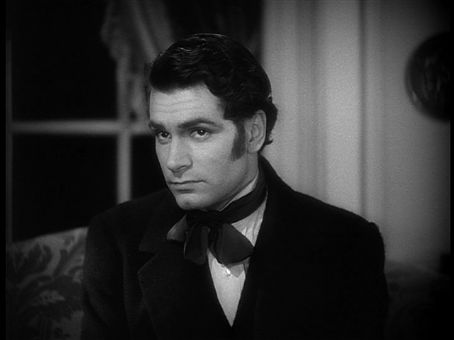
"The criminally-forgotten Roger Livesey"
Flights of Fancy are what Powell and Pressburger do best. And despite mis-understanding by, primarily, Churchill (who must have thought it was about him), the film has been unfairly maligned, and expectations for it blown out of proportion. Satirical it is. But also a melancholy treatise on long life and outliving one's epoch. One walks in expecting brash and finds it sad and sweet. And cleverly inventive, in technique and story-line. Deborah Kerr (in a daunting screen debut) plays three women in Candy's life: the woman he gave away to a friend, the woman he married, and his driver during WWII—the arc of a love in three acts for women who resemble each other, if only in the mind of one man.

If nothing else, The Life and Death of Colonel Blimp is amazing in its look--a Technicolor confection that pops off the screen, a mark of "The Archers.


*However...given the film begins with The Boer War, one can't help but use the word "decorum" a bit sarcastically given the British use of "scorched Earth" policies and concentration camps during that conflict.

Tuesday, September 19, 2017

A Matter of Life and Death


A Matter of Life and Death (aka Stairway to Heaven) (The Archers, 1946) A cryptic reference to "The Archers" (and their ability to seamlessly combine reality and fantasy) crept into my review of Scott Pilgrim vs. The World, and necessitated the completion of a couple reviews I've had in draft stage the last few months, waiting for the creative spark that would ignite them into a full-blown post.

A Matter of Life and Death, coming as it did with the stench of the Second World War still enveloping the planet, is a meditation on, and an impassioned plea for, the value of a single human life at a time when the world had seen so much slaughter. Like it's American counterpart, Frank Capra's It's a Wonderful Life, both films begin in the Heavens for a brief prelude contemplating cosmic predetermination. One man is literally, and spiritually, put to trial for his life, on Earth (as it is in Heaven) when he doesn't die in circumstances that should have killed him. The story proper begins with the protagonist's life in the air. A lone RAF pilot, poet Peter Carter (David Niven) is the last man crouching on a doomed bomber hurtling to destruction. The rest of the crew has bailed out, and Carter, without a parachute, has determined to go down with the plane, hoping to bail out at the last second to avoid death. 
He spends his last fleeting moments in tenuous radio communication with June (Kim Hunter), an American radio operator, who listens, horrified, as Carter banters through his stiff upper lip, and a parallel falling occurs, as the two are linked in life, death and love for those precious few minutes. Nothing can come of it, of course. He's a dead man, for sure.
So, the two are both shocked (though delighted) that Carter survives the fall and is washed up on the beach. It's some sort of miracle.
"Every time the factory whistle blows, an angel gets it's wings..."
Heavens Above...
The Earth Below
Actually, no. It is more of a clerical error, as the being-counters in Heaven (we presume, and it's never stated outright) await Carter's arrival with the rest of his crew (none of them made it). A representative (Marius Goring) is dispatched from Powell and Pressburger's amusing depiction of Kingdom Come (as a sort of empyrean General Motors, an Industrial Age Promised Land), to send Carter packing for Paradise...except...he doesn't want to go. And won't, unless, he's forced to. Of course, that he's seeing time-stopping visions of Heavenly Hosts indicates "chronic adhesive arachnoiditis" suffered from an earlier brain injury, and a battle for Carter's life is fought on two fronts, both dependent on the work of one man: Doctor Frank Reeves (Roger Livesey), who diagnoses the ailment and, before he can perform surgery, is killed, where he can conveniently argue Carter's case for life in a celestial court-room—the highest court of all.
The Highest Court of All
Carter's out-of-body experience on the operating table—a comic highlight

But, it is more than that—it always is with the films of Powell and Pressburger. At the end of the European War, there was bitterness on both sides of "the pond:" Americans were grieving their losses and blaming England for "having to be bailed out;" Britons were bitter of the first American Invasion of the war—their own country, and of the havoc "the Yanks" caused creating their launch-point.
* The Case for Peter Carter becomes, in a deeper and richer sense, a debate centering on "Whither England," and whether the "special arrangement" between The Kingdom and The Colonies should be continued, unquestioned. This odd and whimsical fantasy** becomes a propaganda piece for the very existence of Britain itself, God (or Whoever) Save the King.

The production values are top-notch and imaginative, including an ecumenical escalator that bridges the two worlds...and two photographic processes.  Reversing The Wizard of Oz schema, it is the worlds under the rainbow that glow with rich eye-dazzling Technicolor, while "the next world" is shown in black and pearly-white. 
And you thought "Led Zeppelin" made it up... 
It is rich in humor, rich in thought, and it stands right behind Get Carter(...?) in polls of the greatest British-made film.  This is one of those films you should see before you die...if only so you can get directions. And to make the journey until then...that much more enjoyable and precious.


* A fine film, too often overlooked, about this war on the home-front is John Schlesinger's unusually restrained (for him) Yanks.

** This is one of those films that modern critics would sniff "is inconsistent in tone."  Hey, life is inconsistent, pal!