Showing posts with label Liv Ullmann. Show all posts

Thursday, October 19, 2023

Olde Review: Persona

This was part of a series of reviews of the ASUW Film series back in the '70's. Except for some punctuation, I haven't changed anything from the way it was presented, giving the kid I was back in the '70's a bit of a break. Any stray thoughts and updates I've included with the inevitable asterisked post-scripts.

This is a companion piece to The Fire Within
 
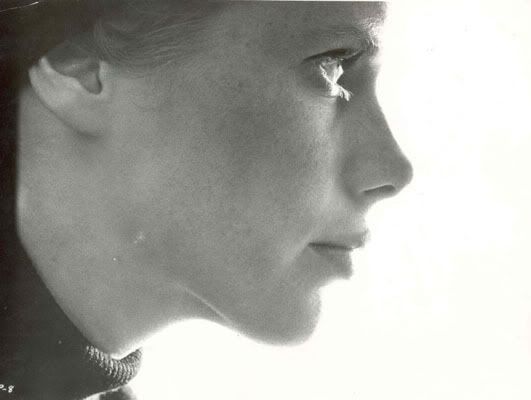
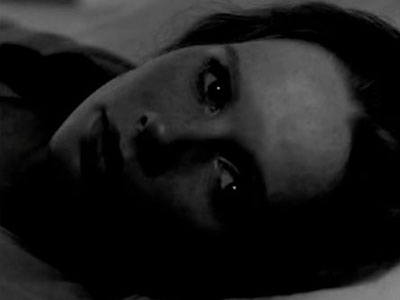
Persona (Ingmar Bergman, 1967) As opposed to the approach Malle takes with The Fire Within, Bergman takes a totally different tack--he lets you know right from the start that Persona is only a movie, not reality at all (and as an ex-projectionist, my sympathy to the fellow who has to show it Saturday night!*). It is another Bergman film dealing with the supernatural. But for Bergman the supernatural does not come from beyond, it exists within us, within our personalities.

An actress
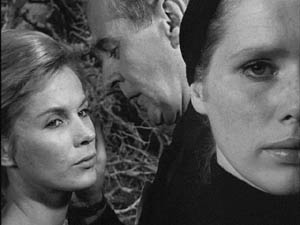
(Liv Ullmann) is admitted to a hospital when she falls silent, unwilling to speak. A nurse (Bibi Anderssonn) is put in charge of the actress' care. For therapy, the two women live at a house on the seaside, and it is at this point that the supernatural forces of the soul take over.
The two women--the nurse, talkative and light; the actress, silent and brooding--begin to resemble each other, to merge psychically, take on each other's characteristics...and I find that I really can't go on with a synopsis of the story. For at this point, what one sees in the film is almost totally subjective. You have to explain what goes on to yourself. I can't do it for you, even if I were to try.**
Bergman can be a light and breezy film-maker as is evident in The Magic Flute and his '50's comedies. But at other times, his films can be claustrophobic and suffocating almost beyond endurance (and I think Bergman realized this in Persona, for at one point he lets up, forgets the story just for a moment, and explodes the creen with fast, fleeting, and irrelevant images***--a filmic explosion to relieve this build-up in tension).
William Bayer in his book "The Great Movies"
**** says this about Persona and its creator, Ingmar Bergman.
"It is not his obscurity that is so frightening about Bergman. It is his intensity. there is such tension in "Persona" that it comes at times to be an almost unbearable experience. One senses a man revealing his anguish at the furthest extremes of cold fire, compelling attention by the blazing sting of total chill. In "Persona," the faces of Liv Ullmann and Bibi Anderssonn are incandescent with this intensity. Their interchange is so intimate that at times we want to avert our eyes." "The Great Movies" (p. 190)

It is all very heavy stuff. And I'm not sure the majority of UW students will be able to understand,be able to deal, with "The Fire Within" and "Persona."

But they are there...as a challenge.
Broadcast on KCMU-FM October 29, 1975 
A little condescending there at the end, I think. Perhaps I should have said I HOPE the majority of UW students would be able to understand or deal with the movies. They're disturbing films, and they resonate more, the older one gets and the closer one gets to the Edge of the Abyss. Perhaps I should have said that. Who knew?
As for what happens in the film: is it an empathy,
a Jungian merging of souls, a familial bond, a lesbian love, possession, a psychic experience? Is it like pet-owners resembling their dogs? Is it the two women influencing each other so much that it becomes impossible to tell where one begins and the other ends?

There's a line from the wonderful Tucker: The Man and his Dream. I've always loved the dialog where Abe Karatz (Martin Landau), Tucker's financier semi-explains why he stays with the visionary auto-maker despite the financial risks: his mother, in her poor English, tried to communicate that you shouldn't get too close to people "or you'll catch their dreams. She meant germs. But she said 'you'll catch their dreams.'"

Maybe it's as simple as that.
 

The view from 2023: Well, good for "the kid." You can tell I'm dancing around it, dispensing possibilities—all that could be legitimate if you're going for metaphors—but, as someone who has "care-taken" since the writing of this, it's seems that Persona's talking about how one can lose oneself in one's charge. Empathy begats symptoms. There are support groups for those taking care of Alzheimer's patients who can succumb to depression. It happens. And then there's always "Student's disease" where you can read about symptoms and go "That sounds familiar..." and begin to think you have the same malady. 

We take on burdens and...and...there's nothing further to say...we "take them on." The concerns of the person we care for or about become our concerns...and we change accordingly. We sacrifice a bit of ourselves for what we care for.

Or...it could be possession. Your viewing is as good as mine.

* That joke's a little "inside"
** It sounds like a cop-out (in the language of that day), but it really isn't--Persona is such a personal film, that one's life-experiences, even one's fleeting subconscious thoughts, will influence what one sees in Persona: is it an empathy, a merging of souls, a familial bond, a lesbian love, a psychic experience? Quite literally, your guess is as good as mine. Bergman could have come out and said something preposterous like "this is based on the Norwegian folk-tale of the two sea-nymphs who become one with nature--of warring clans who find that they have more in common with what separates them, and when you attempt to care for a tyger, you become the tyger!," but what fun would that be? We all bring something unique to the table. Isn't that what a smorgasbord is all about?

*** Irrelevent? I actually doubt that, now. Film is edited together for a reason.

**** Sadly out of print, and not to be confused with Roger Ebert's series of collected essays. I can't even find it mentioned at Amazon.com
.

Wednesday, January 17, 2018

Olde Review: The Emigrants/The New Land

This was part of a series of reviews of the ASUW Film series back in the '70's. Except for some punctuation, I haven't changed anything from the way it was presented, giving the snarky, clueless kid I was back in the '70's a break. Any stray thoughts and updates I've included with the inevitable asterisked post-scripts.

This Saturday's ASUW film program is something very special: Jan Troell's "The Emigrants" and "The New Land"—an unglossed, beautifully done look at a Swedish community's emigration to America.

The Emigrants/The New Land aka "Utvandrarna"/"Nybyggarna" (Jan Troell, 1971) When it was released in Sweden, Jan Troell's film was all of a piece—a several hours epic called "The Emigrants." Americans are notorious for not being able to sit that long to watch one movie, and so for American distribution, it was cut into two parts (as was Richard Lester's The Three Musketeers). Fortunately, the film had a natural break in the middle, as Troell's film was based on two books in a trilogy* by Vilhelm Moberg, so there was little, if any, damage to the story as far as continuity.

And it is quite a story: the tales of how the emigrants left everything they had, searching for a nirvana they heard about called America, and then, when arriving, found the stories were stories and that their struggles had to continue...as there was no way back. (These stories) have always had a special place in the history of film, especially American film. Audiences have long taken an interest in the struggles of their forebears—one of the reasons why ABC's "Roots" has gone through the ratings roof this week. One can possibly attribute this to a kind of lazy pride, clutching the courage and struggles of our ancestors to ourselves. And if so, so what? We're all entitled to a little pride in their accomplishments. It might provide the springboard for some equally courageous acts in our lives. And this pride in the past struggles reaches across racial/religious lines: we can feel proud at the struggle of other peoples' against their misfortunes. Hence, the great popularity displayed by "Roots" this week.

What about the movie, huh?)**

Oh...yeah. Jan Troell's treatment of the sometimes gentle, sometimes violent story of The Emigrants is to treat it gently, "matter-of-factly." He has compassion for his community, but that compassion will not allow him to prevent the cruelties of the journey, the country and the people of America. And there is a poetry in this style. Stanley Kubrick found it in 2001: A Space Odyssey, and Barry Lyndon, and Troell has it throughout The Emigrants and The New Land, with only one exception in the latter.

The film starts in Sweden as Karl-Oskar Nillsson is pressured by family needs to take a wife and we are presented with Kristina. It is Liv Ullmann and her life previous to the marriage to Karl-Oskar is presented to us in a brief, languorous series of shots that entail an entire life of child-like freedom—sheltered, playful and entirely composed of little incidents, little insignificant moments, that thoroughly define her character and will stay with us throughout both movies as we see her struggle and grow old too early with her husband. Those moments remained in my mind through the films, and I saw them a year apart.

Those few moments of insignificance that tell the story are what define Troell's style of story-telling. It means that the actors are put under a great strain to present authentic portraits of people, and the cast led by Max von Sydow and Ullmann come through with a total feeling of lived-in performances. You believe every one of the actors are who they are, that the relationships are real, (and) they are a community. There's not a false moment there in a film that is totally composed of moments suspended in time.
I'm not going to go through a list of favorite moments—there are too many that they are a jumble in my mind. but there is one: Karl-Oskar hacking his way through foliage—surveying—walking through this alien country. He pauses, takes his axe and hacks into a tree. He writes his name on the un-barked portion and then, in a way summarizing the whole of what has gone before, lies under the tree and tips his hat over his eyes, his back supported by the tree—his land. It's a scene of total satisfaction. And you felt that satisfaction with him because you've been through it with him. That scene ends The Emigrants and begins The New Land and I envy anyone who enters 130 Kane Saturday night and can experience—in one sitting—this epic that is only small in scale.

Broadcast on KCMU-FM on January 28-29th, 1977

Thirty-two years on, if you mention The Emigrants to me, that scene is the one that pops up—of Max Von Sydow silently lying under the tree, his hat over his eyes, in a moment of peace and solitude that it has taken an entire movie to achieve. It is remembered fondly. The Emigrants was nominated for four Academy Awards including Best Picture and it's hard to imagine it making its way through the rabble in this day and age to become one of The Five. It's narrative structure (what I was painfully trying to explain here) is supported by its images, rather than a straight-ahead narration. The camera sits back and observes, making no editorial comment, picking up telling details by accident as if it was a documentary—a documentary where the light is just right and everything is extremely picturesque.

But it is no more oblique because of it, and it is presented without pretension or artifice, except to make it all look as good as can be. There was a market for this kind of film in the 60's and early 70's, although one doubts that one could convince today's casual movie-goer of making plans to see these two films about the emigrant experience in early America—that field's been plowed in the minds of today's audience, and it might not be an evening's entertainment to see people working hard to build a life out of the dirt.
But it's worth it, if only to see von Sydow and Ullmann—two of Ingmar Bergman's stökk company—in a couple of their best roles. And there are benefits in seeing a good story well-told.
A couple of observations: "Roots" was on everybody's collective mind when this review was written, so it was probably natural to stem off of it, but there's a bit too much made of it, as the review is about The Emigrants, after all; The comparison to 2001 is apt as far as story-telling style, but not Barry LyndonLyndon has an omniscient Narrator (albeit a rather judgmental and unkind one given its knowledge of history), while The Emigrants does not. The review really doesn't do much service to the films, which are marvelous. After these films, Troell went "Hollywood" for an ill-advised remake of John Ford's The Hurricane (starring Mia Farrow!), then returned to Sweden, where he continues to work today, making features, documentaries and shorts. His most recent work was 2012. The Last Sentence.

* Actually a tetralogy: "The Emigrants" (1951), "Unto a Good Land" (1954), "The Settlers" (1961), and "The Last Letter Home" (1961). (or is it a "quadrilogy?")

** ABT***


*** "About Bloody Time"


Friday, April 1, 2016

The Lost Bergman

There have been many "lost" films, never completed or abandoned mid-filming: Josef von Sternberg's version of I, Claudius or Terry Gilliam's The Man Who Killed Don Quixote. Every so often, there's news of a Stanley Kubrick script that's surfaced—haven't heard about the "Napoleon" mini-series based on his post-2001 research, or the Jim Thompson-scripted "Lunatic At Large" for awhile.

But, the oddest of the "lost" films of famed directors was the comedy begun by director Ingmar Bergman. Feeling he needed to lighten up after an intense period of experimentation, Bergman responded to a fan letter from his country's greatest star, Greta Garbo, who told him that she might consider coming out of her self-imposed exile from the screen to work with him. Bergman was enthusiastic, and was initially hoping that Garbo might consider a psychological drama of a grandmother more in touch with her grandchildren than her daughter and the fracturing of the traditional family prevalent in Sweden.

Garbo, for whatever reason—whether playing a grandmother (she was 63 at the time) or not relishing the thought of Bergman's intense scrutinizing after so long away from the screen—suggested a comedy, not unlike the breaking of perceptions she enjoyed from making something lighter, like Ninotchka.


Bergman was charmed by the idea and began work on a comedy centered around a retreat for teenagers (on the island of Gotland Lans in a quiet resort by the city of Visby) and their rebellious natures, especially in regards to the couple running the area (played by Bibi Andersson and Nils Poppe), who vainly try to keep things under control, even while their marriage is coming apart at the seams.  A rivalry between a rival summer camp (run by Liv Ullmann and Max von Sydow) camps in an end of Summer sports-and-skills competition forms the nexus of the plot. As the couples are having affairs with their distaff camp rivals, the inter-camp competition gets wrapped up in the personal lives of their over-seers in chaotic and vindictive ways.


Poppe's counselor is particularly put upon, because he has a bad relationship with the camp's athletic director (Garbo), who regularly takes advantage of his frequent naps to kidnap him and place him in precarious positions—waking up in the middle of a lake with a paddle-less canoe, or behind the archery targets, or on the roof above the kitchen, face next to the fan-funnel. Garbo's relationship with the kids is like the dark side of Maria with the vonTrapp's in Sound of Music (something Bergman is well aware of—at one point, Maria grabs a guitar during a sing-along and breaks it across a log and throws a ukulele in a camp-fire). And Poppe's frequent disappearances—which aid Andersson's indiscretions—are regularly carried out by the kid-campers under Garbo's directions.


Garbo's athletic director is a dark figure, perpetually dressed in black despite the summer weather. Whether this was a choice by the star or the director is a matter of some controversy (it does make an interesting contrast with the immaculately-dressed children) but Bergman, who already was using call-backs poking at Smiles of a Summer Night, decided to go one better. The Garbo character has visions and hallucinations, and in one—filmed in rather pointless color—plays badminton with Death (Bengt Ekerot, who played the role in The Seventh Seal). Bergman does more cross-cutting in this sequence than three of his other films combined, but ultimately Garbo's character hits the "birdie" out of bounds. The face of Death fills the frame: "Jag har alltid vinner," he intones. ("I always win").


Garbo cracks him over the head with a badminton racket.


The film culminates in the inter-camp competition where despite Garbo's encouragement (at one point her pep talk has the entire camp chanting "Det bara spelar ingen roll!"), they fall way behind until the värmlandskorv-eating contest, which puts them over the top to the somewhat-joyless commendations of the adults, still preoccupied with their own issues, wondering how it will affect their personal relationships at the other camp.

Satisfied with the results, Bergman pushed through with the post-production, and prepared for a robust reception to his first real comedy at select screenings.


There was only one problem.

It wasn't funny.

Preview audiences in Stockholm sat stony-faced, with not even the hint of an encouraging chuckle. Kind witnesses offered that the patrons might have thought this was a serious Bergman film and so refused to laugh and, instead, regarded it studiously. But, when asked if they found it amusing, preview cards said "No." "I don't know what this is," said one remark "Is there a book I can read?" A confused indifference settled over the film. Yes, it was a work-print with no soundtrack (nor would there ever be) and Bergman worked for weeks thinking some editing tweaks might improve the comic timing (and there were rumors Jerry Lewis was hired as a consultant*). It didn't, and instead, merely shortened the film more and more.  The director began to bitterly refer to the still-untitled film as "Persona Non Greta." 

Bergman finally abandoned it, not sure what to do with it, letting the film languish and ultimately burning it during a particularly stringent winter. Not a frame of the film survives. 
Garbo, who had returned to New York after filming, resumed her retirement from films, vowing "never to do THAT again."

But, as will often happen, the unrealized project did not completely disappear, as a rough translation, with essentially the same plot, still made the rounds of the studio script mills without much interest until the Canadian Film Development Corporation acquired it for a vehicle for up-and-coming SNL performer Bill Murray. The resulting non-Swedish film was released in the US by Paramount in 1979.


* In his desperation for a solution, Bergman wired Garbo to ask for suggestions on how to make it more funny. "Put in some clowns," she wrote back."There ought to be clowns." Plans for a re-shoot were scuttled with a cease-and desist order from Federico Fellini.