Showing posts with label Jim Brown. Show all posts

Thursday, April 6, 2017

Ice Station Zebra

Ice Station Zebra (John Sturges, 1968) The movie that was (supposedly) the favorite movie of billionaire-aviation pioneer Howard Hughes—one that he would watch obsessively.

One can only wonder why. It is not exactly inspired entertainment, although somewhat competently directed by John Sturges (who was at his best with genuine location work, rather than with effects-heavy set-bound shows, such as this and Marooned).


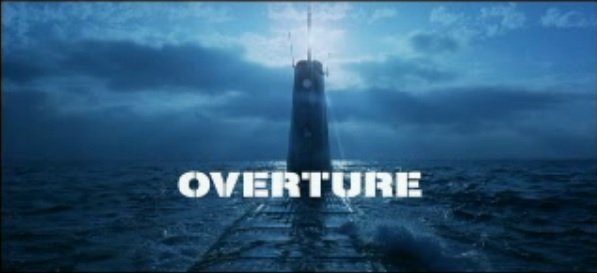
It was also one of the last of the prestigious "roadshow" presentations, shot in "Super-Panavison-70" and featuring "Overture" music and an Intermission at the theater. After this one, the "roadshow" concept was abandoned, in order to squeeze in extra showings per night, sounding the death-knell-by-chopping-block for such ambitious projects as Billy Wilder's The Private Life of Sherlock Holmes and Richard Lester's originally conceived three-hour version of The Three Musketeers. But, beyond that, the film may be one of the dullest thrillers ever filmed. 
Ice Station Zebra has the same stolid air of other adaptations of Alistair MacLean adventure yarns (The Guns of Navarone, Where Eagles Dare). It's just not as adventurous, and the locations—studio-created—are claustrophobic and closed-in, as opposed to having any dramatic vistas or the intriguing foreign locales of other MacLean stories. Here, it's meeting rooms, a submarine and a burned out polar station on a floating ice flow. People don't get out much, and the whole film feels close and boxed-in (quite a trick in "Super-Panavision-70). 
Oh, there are intrigues—it wouldn't be a MacLean story if there wasn't one or two double-crosses thrown in—but they're fairly typical. The sub' has to have a debilitating leak, and as befitting a Cold War drama (the coldest!), there are dueling loyalties and the to-be-expected double-agent (but who?). It never rises from the slightly edgy to the exciting and is mostly cliché-ridden, especially when it comes to the "whodunnit" aspects.
It's a fairly good cast with not much to do except glower at each other, and top-liner Rock Hudson isn't at his best at that, and is ham-strung by the script (by MacLean, Douglas Hayes—he wrote Kitten with a Whip, after all—Harry Julian Fink, and W.R. Burnett, no slouches, any of them) from doing anything interesting, like humor. Patrick McGoohan has one interesting scene where he loses it, but mostly he's clipped and acerbic in hyper-"Danger-Man" mode.  Jim Brown matches him frown for frown—twin performances by actors playing characters hating each other—and Ernest Borgnine does a risible Russian accent. A lot of testosterone, mostly going to waste, in material which is stretched to the ice-breaking point.
Patrick McGoohan recreates my expression watching this movie.
Supposedly there's going to be a remake, so there's a lot of room for improvement.
Given that it's a submarine movie, shouldn't it be called an "Underture?"

Thursday, September 18, 2014

The Dirty Dozen

The Dirty Dozen (Robert Aldrich, 1967) Another one of those films I've had (uh..) dozens of opportunities to see, but never bothered is this, Aldrich's off-set war-genre film, combining the heroics of The Guns of Navarone with the nihilism of The Magnificent 7.  

The Army chooses a loose cannon, Maj. John Reisman (Lee Marvin) to train and command a squad of brig-rats on a suicide mission behind enemy lines before D-Day. The inmates are a motley crew of renegades, degenerates and non-com's (as in non-conformists), who need no training to be bad to the enemy. If they survive, their jail sentences (and for some, death sentences) will be commuted. If they don't, well, war is Hell.

But it's not a cell. And these guys have nothing left to lose, and given the situation, they're American kamikaze's, who might just make it to freedom, like any other soldier...if they make it through.

The movie is top-heavy with male character actors.  Besides Marvin, there's Robert Ryan, Ernest Borgnine, George Kennedy, Robert Webber, Richard Jaeckel, and Aldrich's Mike Hammer, Ralph Meeker. Those are the good guys. The cons include Charles Bronson, Clint Walker, Telly Savalas, Jim Brown, John Cassavettes, Donald Sutherland, and Trini Lopez (hey, where's Don Rickles and Bobby Darren?)
Bronson gets a promotion in this one, becoming the Steve McQueen to Marvin's Yul Brynner, Cassavettes has the biggest character arc and the showiest performance (despite underplaying his death scene) winning a Best Supporting Actor nomination, Savalas has the most colorful role as a Bible-spouting psycho, and Jim Brown has the moment everybody remembers—sprinting across a courtyard throwing grenades down air vents, moving so fast the camera crew can barely keep him in the view-finder.
Aldrich—never one to be very conventional no matter what genre he was tackling—manages to make his anti-war, anti-authority statements in the story set-up; these guys have little choice but to hang it all out in combat, and, ironically, they're the best-suited to do all the dirty work, even if nobody is shooting at them in the initial stages. At the time of its release, the film got all sorts of flack for its violence, which Aldrich manages to get away with by merely suggesting things with quick cut-aways, but it looks extraordinarily tame today (and, in fact, would look tame two years after its own release when The Wild Bunch would take movie violence to a whole new level). It might even get by with a light PG rating today.
But despite the dirt-dog-grubbiness of the whole thing, the director still manages to throw in some testosterone-laced sentimentality into it, then pulls back during the big action sequence as more and more men fall in battle and the director only affords them quick shots in death. Pretty soon, you lose track of who made it and who didn't, and a pre-End-Credits roll-call of the dead is the only verification—not everybody gets their death scene, further undercutting any sense of heroics, despite the war-time setting. And let's face it, most of the deaths occur by trapping the victims (party-guests mostly) in a cellar and burning them alive by drenching them in gasoline, and setting them alight with grenades. It's never made clear why this might help the Normandy Invasion effort, but one shouldn't look too closely at the movie for any sort of authenticity.