This was part of a series of reviews of the ASUW Film series back in the 1970's. Except for some punctuation, I haven't changed anything from the way it was presented, giving the kid I was back in the '70's a break. Any stray thoughts and updates I've included with the inevitable asterisked post-scripts.
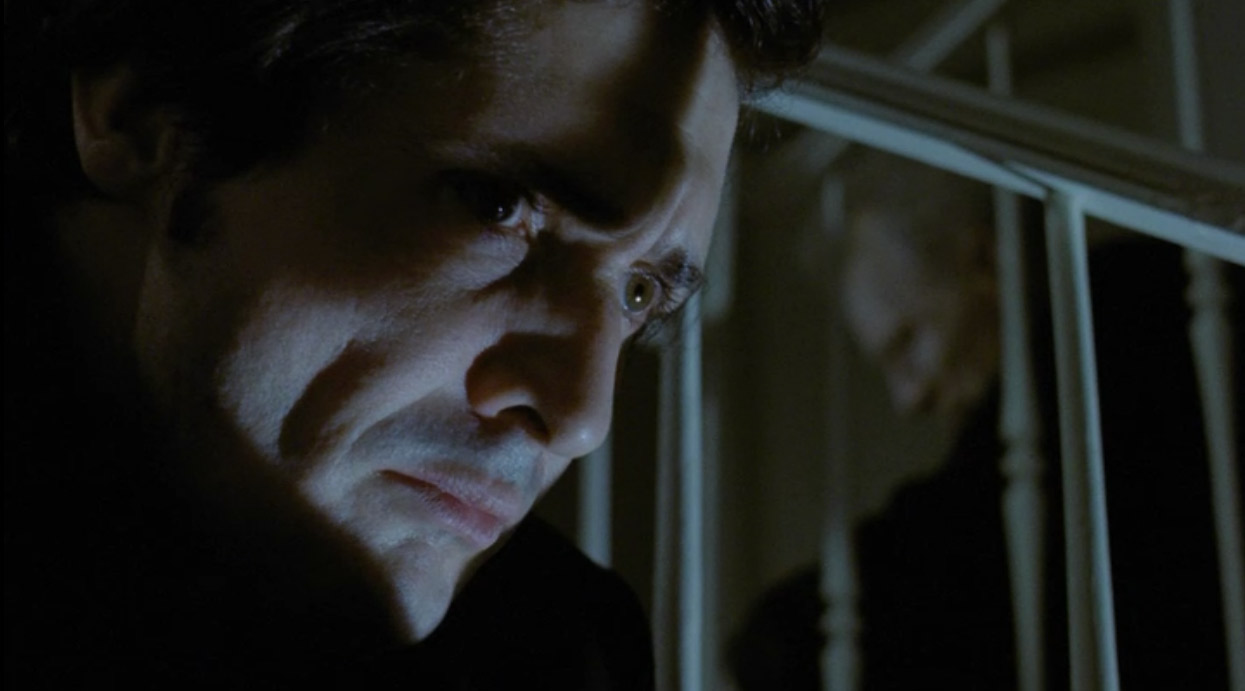
The Exorcist (William Friedkin,  1973) When Ellen Burstyn was in Seattle last year, she was asked why she had chosen to star in The Exorcist. She replied by calling attention the film's first scene after the blood-red titles--the scene which is predominated by an Iraqi morning prayer. That, Ms. Burstyn said, was what she thought the film was about--a call to prayer.
Now, Ellen Burstyn struck me as being a brilliant and sensitive individual. But I'm afraid she was duped, as a lot of us were, by the writer and director of The Exorcist, and by the Warner Brothers promotion department.
When The Exorcist came out we were pummeled by newspaper and magazine articles on the authenticity and "religious significance" of the movie. A major "debate" erupted amongst Christian theologians about the devil's existence and the validity of the movie as a "Christian" document.

Well, in the three years since the film was released the furor has died down, so I think I can say what I'm about to say without fear of ex-communication: The Exorcist is nothing more than a horror movie. What is worse it's a horror movie with religious pretensions. This isn't to say that religious ideas can't enter into a horror movie. It can and can be done well. James Whale turned Frankenstein's Monster into a psuedo-Christ figure in The Bride of Frankenstein, and the religious or anti-religious qualities of Dracula have been dealt with very extensively in the Hammer films with Christopher Lee. But these films' religious associations were in the background of the film, or at least are cliche items with the genre so we don't notice them so much.

They were also done by directors who knew what they were doing. William Friedkin is so hap-hazard about things in this film that he badly slips up with one of his "devices" - a medallion that keeps cropping up in the film, something Friedkin said in an interview would give his film "resonances," has since been the subject of an intelligent article that, because of the medallions' sloppy usage, sees "The Exorcist" as a marriage between Satan and the Church, exactly opposite to the film's supposed religious intentions. Hap-hazard work and a definite lack of thought on Friedkin's part are to blame.

So, The Exorcist is a horror movie with religious pretensions, not unlike 1976's The Omen. The writer of The Exorcist (William Peter Blatty) stated that the film's intention was to "waken" our dormant fear of Satan and sleeping love for God and the innate goodness of man. Instead, The Exorcist sent a number of people to mental institutions and sickened many to the point of vomiting in the theater. Blatty said that the sickness was "healthy, for the film worked on these people's guilts." Many clergymen, notably those who appeared in the film leapt to the film's defense.

One can see by this how religious pretentiousness can pile up like manure in a stable. People didn't throw up because of their sins, they threw up because the film was revolting, disgusting, and at the very least, unsubtle in its depiction of demonic possession and although one can admire the performances of the actors and the very original use of sound in the film, those are about the only things for which the film can be praised.
And looking at the film as a Catholic, I can say that the film did not make me change the belief that there is no personified evil, only the innate evil in various degrees within ourselves. But it did make me lose the belief I held since The French Connection that William Friedkin was a brilliant director.
Broadcast on KCMU-FM on January 21, 1977

Not much to add here, except to say that I am shocked, SHOCKED that Warner Bros. would try to legitimize their little puke show rather than just come out and say "We wanted to scare you so much that you'd plotz, and make a LOT of money!" The Exorcist seems tame these days. The film has had, what, four sequels? (two of them prequels, from the same source material--one from Renny Harlin after Paul Schrader's directed version was considered "not very marketable" (read "didn't have the same amount of gore, violence or queasiness-inducing stuff as in the original") and both were ultimately released to video so folks could judge for themselves, plus there was a "re-possessed" version of the original, with a minimum of new material released domestically which made $40 million) and any number of rip-off's and devil-tail riders in recent years. The immediate sequel—The Heretic—was an unintended laff-riot directed by John Boorman, and Exorcist III was written and directed by Blatty himself, and was—actually—quite good--in fact, the best of the series. All of them experienced studio interference to up the "split-pea soup factor." Christian Document. Call to prayer. Right. Pass the collection plate.

Disclosures about the pedophilic activities of priests and their cover-up by Church authorities does make it seem like there's been a marriage between the Church and Satan to me, and made me lose Faith in any organized religion. Rather than a "lapsed" Catholic, I consider myself a "recovering" Catholic. More fervor was created watching Deliver Us From Evil than The Exorcist. And not the good kind.
And Ellen Burstyn practices Sufism.
Meet the New Boss...




.jpg)


