Showing posts with label Full-Price Ticket. Show all posts

Wednesday, November 13, 2024

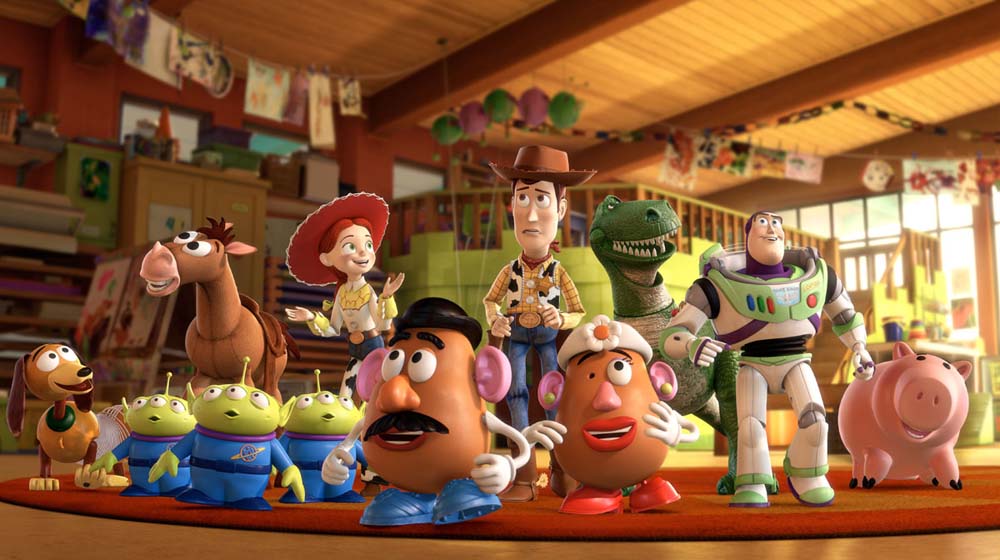
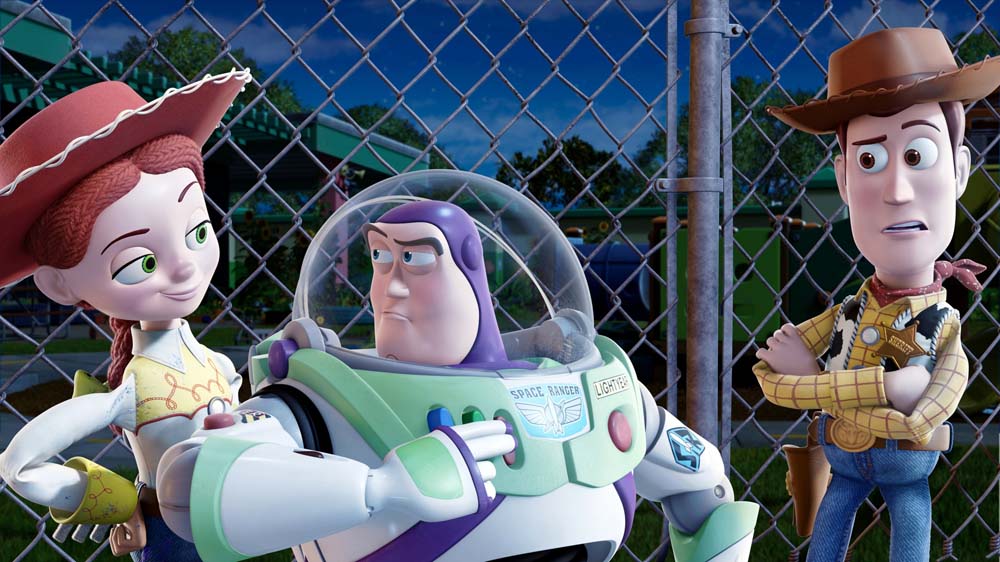
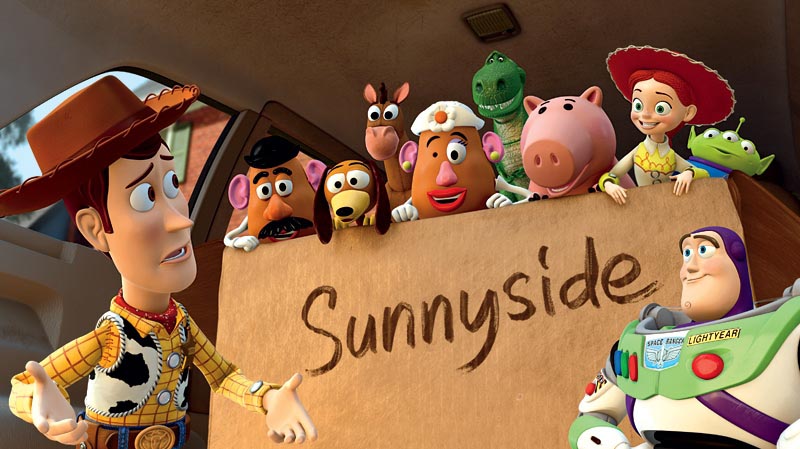
Toy Story 3

A lot of times I write and I "make do." It's alright. I think I got the point across.

And sometimes, I nail it. It's rare, but I'm capable of it. Even if the movie is just about toys. I remember a comment for this post (on that "other" site) was simply "Dude. It's Toy Story 3." (Where are you, Simon?) Yes. And good movies about love can come from anywhere.


Written at the time of the film's release...

"And if You Can't Be with the One You Love, Honey..."

One has suspected a subtle sub-text in the "Toy Story" series—every Pixar film has evoked that feeling (which is why they tower over Dreamworks and every other animation supplier and make even their rivals' three-dimensional films seem more two-dimensional) since the first film premiered (what was it?) fifteen years ago.
 
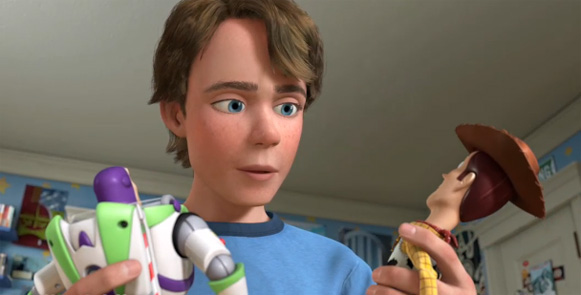
 Toy Story 3 is no less rich in sub-text. Sub-texts like the given that the toys have stayed the same, but their little owner Andy has grown up and is on his way to college by the time we hit 3; First sub-text: Change or be passed over. Any one looking for a job in these troubled times has had to be confronted with their inadequacy in some department while they're winning the daily bread. And like the toys of "Toy Story," time may be their enemy, staying consistent while the world evolves too quickly.
But, at the pace-making heart of the "Toy Story" movies has been one constant, and that is its contemplation of the nature of Love, which puts it in the same movie-case with such seminal works as
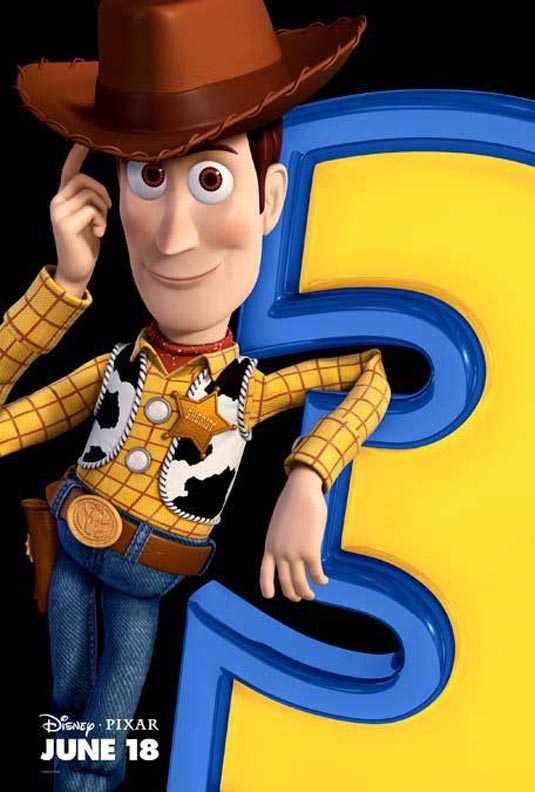
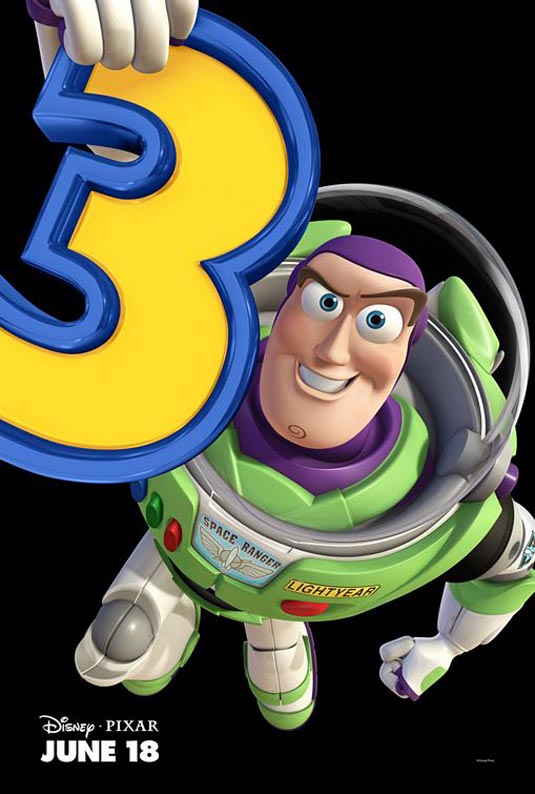
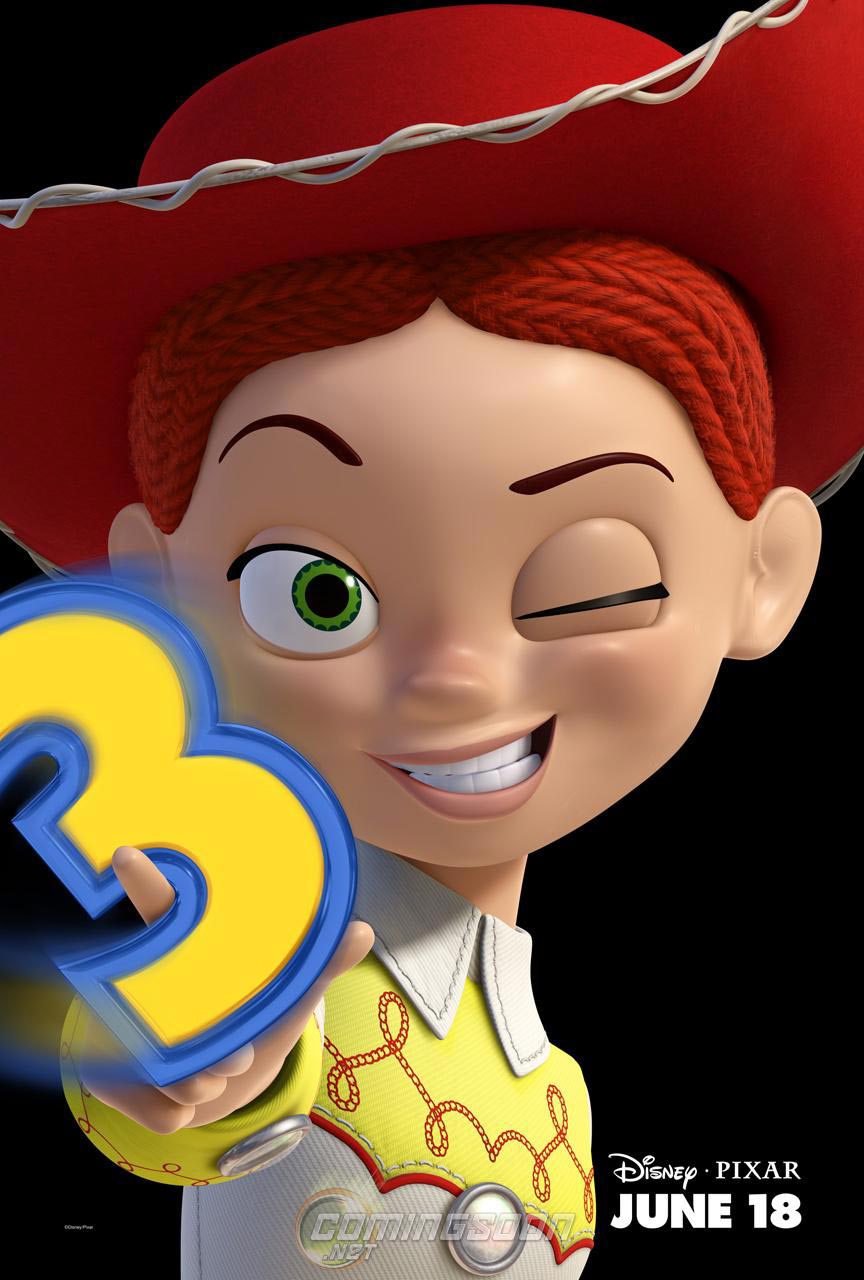
Vertigo and A.I. In the first Toy Story, cowboy-doll Woody (voiced by Tom Hanks) watched in horror as the affection of his beloved Andy was supplanted by the new space-age toy Buzz Lightyear (voiced by Tim Allen). The stakes doubled in Toy Story 2 when we witnessed the discarding of cow-girl Jessie (voiced by Joan Cusack) as her owner grew up and put away childish things (see the video below). And we witnessed Woody turned from an object of play to a rarified objet collectionner, the very definition of a "trophy love." Toy Story 3 takes Jesse's plight and applies it to the entire toy corps, facing abandonment (the attic) and, worse, discarding (at the sidewalk on garbage day). The toy soldiers take action and evacuate the premises first: "Once the garbage bags come out, the army men are the first to go" barks the commander (R. Lee Ermey) before para-sailing out of Andy's bedroom window. 
 
The others are left to contemplate their fate. 
 
Play-time's over.*

There is one axiom I've held to my heart from the moment I first recognized its truth—I'm sure it originates elsewhere, but I first read it from thriller writer John D. MacDonald: "Love is not the opposite of Hate; love and hate are merely two sides of the same coin. The opposite of love is indifference."
 
There are a lot of instances of indifference on display in Toy Story 3 (though certainly not at the hands of the creative team behind it, who have filled it with pithy circumstance and finely-wrought detail in a cartoonish 3-D photo-realism
**). But, so is love, in the through-line from the first movie, first warbled in Randy Newman's opening song "You've Got a Friend in Me." It is the banding together of the community, standing stuffed shirt to plasticene shell through adversity, the toys' answer to "Can't We All Just Get Along?" All the movies have centered around the toys—diverse as they are—keeping the group together, and welcoming the new. That reaches its dramatic climax here as the team locks hands as they face absolute destruction in a truly frightening version of Hell.
The forging of the community has been a theme running throughout the history of film (especially Westerns) since Edison, certainly John Ford, and we've all seen those films where the protagonist loses a family in order to gain another, sometimes not by choice. Those bonds are infused with strength to take on all comers and all challenges, but the heart of that coming-together has always been the one unofficial but over-arching Commandment: Love thy Neighbor.

 
I mentioned putting away childish things earlier. That's from The Bible (1 Corinthians 13), and looking over that verse again, I saw images spring up from Toy Story 3—"And though I bestow all my goods to feed the poor, and though I give my body to be burned, and have not love, it profiteth me nothing," particularly.  But especially its last devastating quality in its check-list of Love's qualities, which always makes me tear up a little when I contemplate it, and I contemplate love and loss. For toys break, batteries corrode, fabric burns and plastic will melt. But Love "never faileth."
 
Love never dies.
 
To Infinity.
 
And Beyond.
 
* How many times have we said that, as adults, mourning the loss of childhood from adult responsibilities?

** But, man, you want to see Pixar push the envelope?  Check out the sophisticated opening short Day & Night, a wordless combination of 2-D and 3-D, line animation and computer graphics, filled with rich imaginative ideas and a brilliant sound design.  The work of animator Teddy Newton, this little gem, puts him at the top of exciting animators to watch.

Thursday, August 27, 2020

The Curious Case of Benjamin Button

Written at the time of the film's release.

"Ah, But I Was So Much Older Then/ I'm Younger Than That Now"

Roger Ebert once wrote that "No good movie is depressing; all bad movies are depressing."

The Curious Case of Benjamin Button is such a fine film, it's painful to watch. Part of that has to do with the central conceit (and this is a conceit, as opposed to a premise) from the original F. Scott Fitzgerald short story of a man who is born old and dies as an infant. One suspects that Fitzgerald was reaching to show the arc of a life in stark contrast to the norm, and how similar to the norm that extreme is ("We all end up in diapers," says his life-partner Daisy...another Fitzgerald Daisy). But Button's life, if anything, is even more tragic for it. When he shows up late in the film, after an extended leave-taking he's told "You're so young." "Only on the outside" is his quiet reply. It's the perfect riposte to that old saw "Youth is wasted on the young."
One worried when approaching this movie that it would be a Forrest Gump situation, where the technology would call attention to itself, and the story would be another collection of paint-by-numbers history awash in the easy sentimentality of the simple-profound. I wasn't a big fan of Forrest Gump, and watched its clumsy march to a Best Picture Oscar with a certain bemusement.The Curious Case of Benjamin Button is nothing like that (even though it shares a screenwriter, Eric Roth). 
While director David Fincher came from the special effects area of film-making, he has now long moved past the days when he would pass the camera through the handle of a coffee pot, and uses the technology at his disposal to create invisible wonders throughout the film. It may come as a shock that during the first 30 minutes of Benjamin Button the character is a seamless merger of Brad Pitt's heavily-made up head and another actor's body. Another thing they say is that a good movie takes some kind of a miracle. This film brings about miracles every few minutes. And Fincher's rigorous direction is assured and formal, juggling the demands of the effects work with the very real human drama of lives that pass in the night. This film has been in development for a long time. Usually that means trouble. For this one, it must have been logistics.
Fincher's moments of magic include a dead-on recreation of old-film look* that has a amazing pay-off for a running joke that wouldn't be nearly as hilarious if it wasn't done as a series of silent movies. I've already talked about the invisible technology behind Button's early/elderly years, but that same CG magic puts Cate Blanchett's face on a prima ballerina and ages or de-ages the principles. It was Red Barber who said that God doesn't count the toys accumulated at the end of a life, He counts the scars. No movie has been so careful as to keep a running track of the lines in a face...or the scars. And when that "only on the outside" moment happens, the face we see is that of Brad Pitt circa A River Runs Through It. I don't know how they did it. It's amazing. As it must be for the people in the movie.
Let's talk about the actors now. Cate Blanchett is a given. She weaves through the movie note-perfect, putting the stages of a life out there to be remembered—the naivete, the coltish confidence, the iron strength necessary for healing. Tilda Swinton is there, though her part isn't as rich as Blanchett's, but she makes an impression. Julia Ormond is there, as Daisy's daughter, perfectly American with just a twinge of her French accent creeping in, as her character hails from Louisiana. And Brad Pitt, who's always seemed to me to be a slightly limited actor, proves himself as adept as Blanchett in showing the arc of a life--but in reverse: playing an innocent in old age make-up, but as he gets younger--the eyes get older and wiser. This and his hilarious work in Burn After Reading shows that Pitt has moved beyond depending on a slightly ethereal quality to suggest depth. There is a scene where Button is informed by Daisy that she's pregnant and the response from Pitt is a wordless mixture of love and pity.
But, my favorite performer is someone who delights me every time she's on-screen. I've talked about her before. The moment Taraji P. Henson** turns up, The Curious Case of Benjamin Button turns into a different movie. She does the same thing as Pitt and Blanchett, but you see her less, and she creates more of an impression than either of them. Her Queenie is a force of Nature, and Henson gives you the impression she's making it all up as she goes. In a film of fine performances, her's stands out.
Finally, The Curious Case of Benjamin Button, finds its place as one of those rare films that takes a middling book by a writer of some note, and turns it into a classic film, far surpassing the meager accomplishments of its source.


Towards the end of the film, I noticed a scratch running down the left quadrant of the film and wondered if Fincher was doing that deliberately!

** It is also one of the first big-screen appearances of the now essential Mahershala Ali.

Wednesday, October 23, 2019

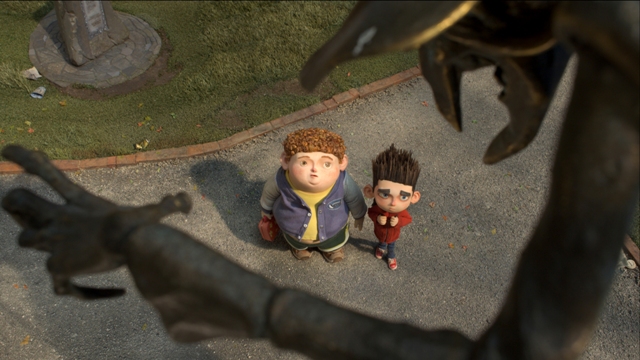
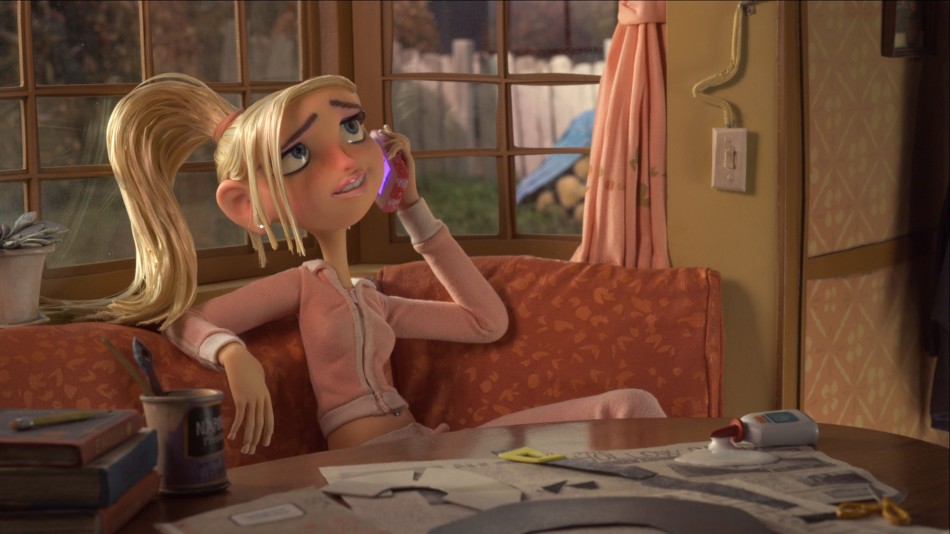
ParaNorman

Written at the time of film's release...

Re-Animators
or
"I See Dead Puppets"

The town of Blithe Hollow depends on the supernatural for its tourist trade. But, what the city fathers probably don't understand is that if you live by the sword...well, let's just say you'd better have a good cleaning crew.

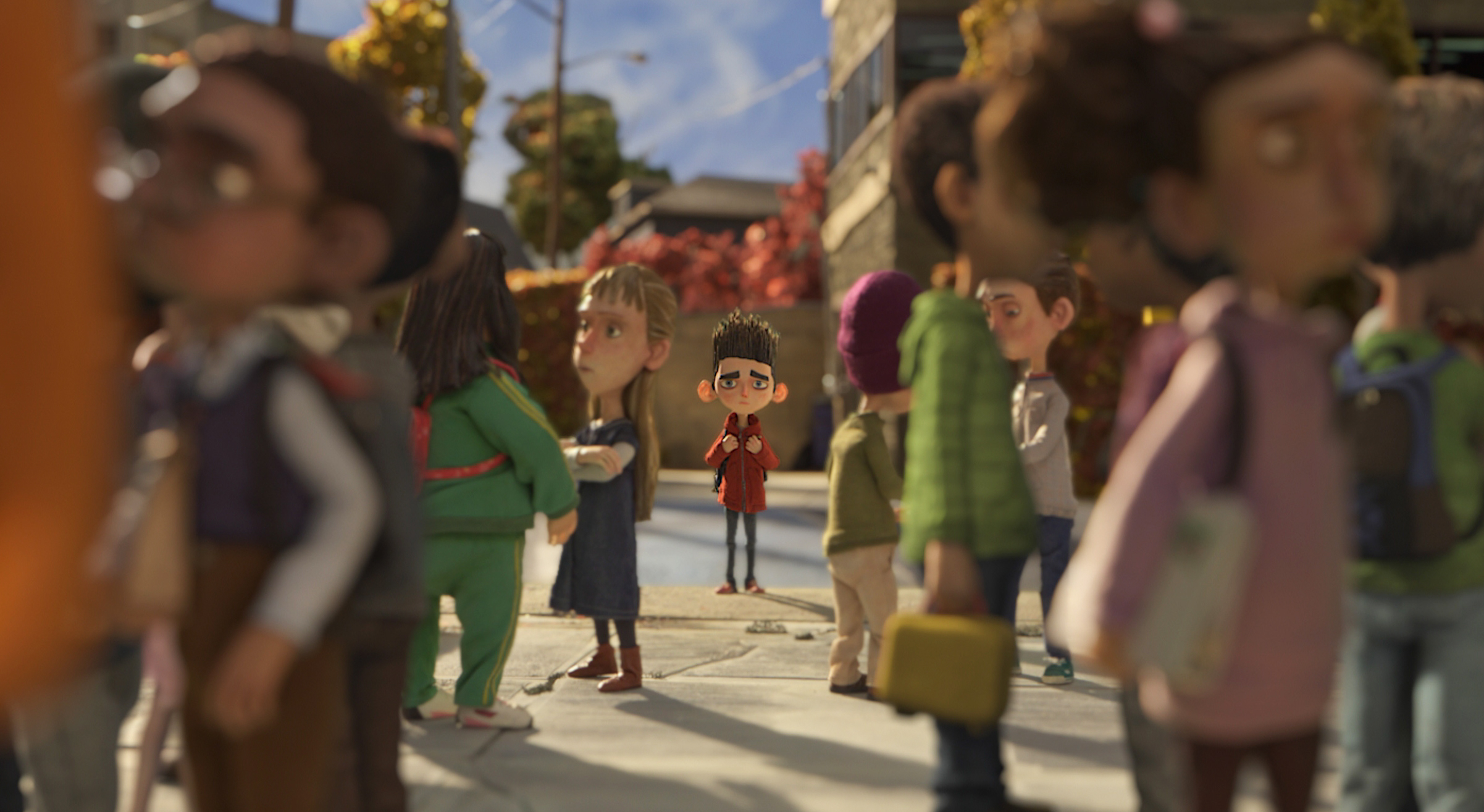
One of the town's citizens is young Norman Babcock (voiced by Kodi Smith-McPhee) and he has a problem—he sees dead people, all of them. He's ostracized from friends, family and reality...from life, really...as most of his acquaintances are non-corporeal and that leads to bullying, loneliness and a general lack of enthusiasm. He'd be better off dead—as the only people he can relate to already are.
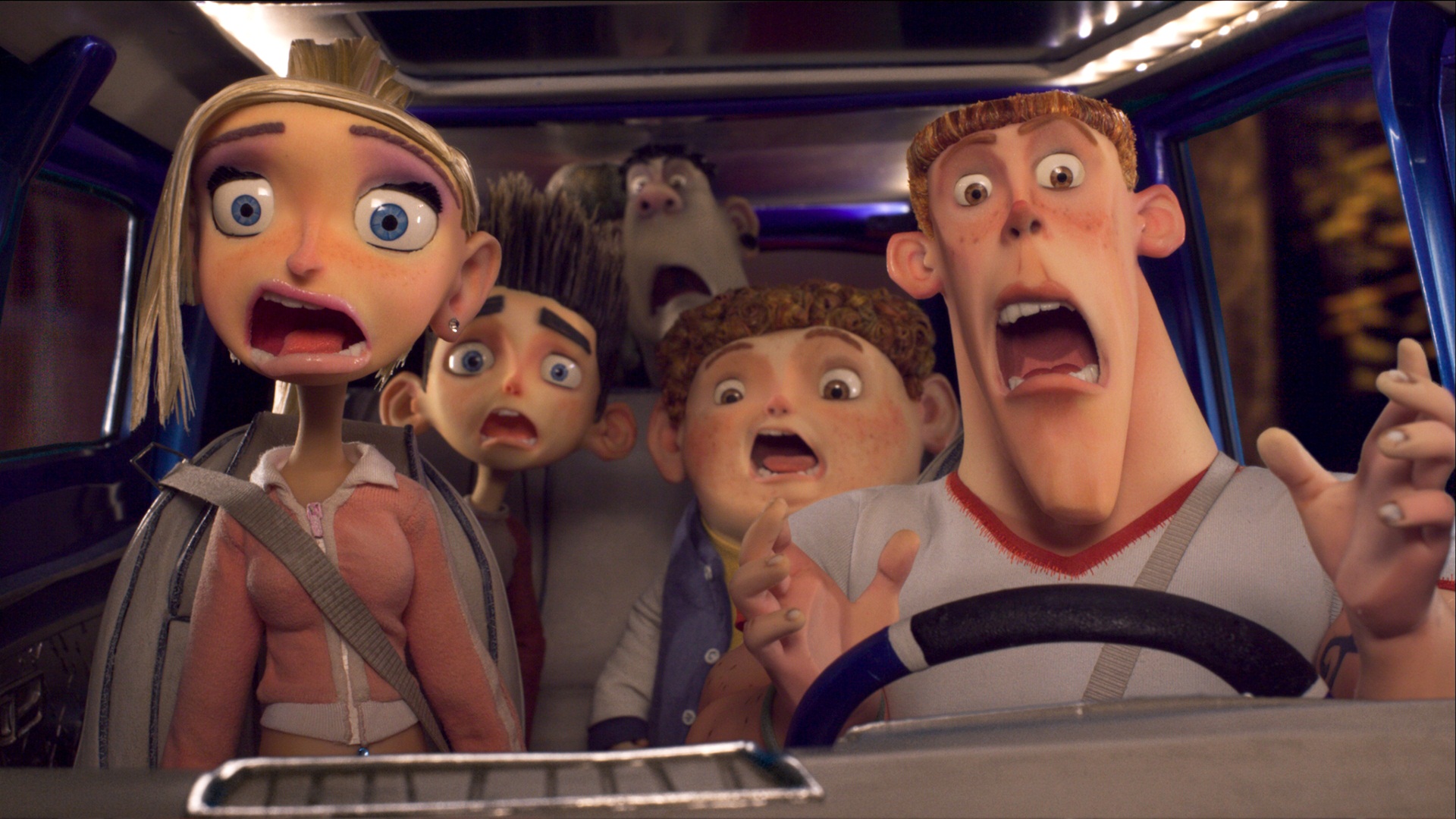
Then, there's his creepy Uncle (a wonderfully comic vocal performance by John Goodman) who tasks him with a special duty—saving Blithe Hollow from destruction by the wrath of the very witch of the town's fame, killed by the city elders centuries before.  To do so, he must go on a hero's journey with unlikely allies, many roadblocks both physical and emotional, while evading zombies, the undead, jocks, bullies and narcissistic big sisters to confront the evil witch.
ParaNorman is hilarious, quirky certainly, but also has a lot of depth and breadth to it.  It would be an easy—too easy—temptation to call it a Tim Burton knock-off (stop-motion animation, horrorific subject matter...it must be a Tim Burton knock-off), but it's actually far more concerned with story over effect than Burton, whose work can become tangentially derailed for a sequence or bit that the director finds funny, even if its a mismatch for the rest of the film and its non-sensibilities. ParaNorman stays on track, managing to brings its humor out of character, rather than despite it, and with a sense of comic timing that's by turns subtle, surprising and goofy. Yes, there are scary bits—it's rated PG, so maybe the littlest of kids shouldn't go—but its horrors are not there to shock, but to thrill. 
And when the film does build up a full head of horror steam at the end, it provides some of the most awesome sights and effects that have been seen in animation in quite some time. A hybrid of the Burton and Aardmann animation studios—directors Chris Butler and Sam Fell worked for both groups, respectively, and you can see aspects of their animation styles meshing, hallmarking the best of both stop-motion worlds—Burton's "antic-ness" and Aardmann's appreciation (and mining the comedic possibilities) of stillness.  Combine that with the story of an outsider who manages to collect a posse of co-adventurers who handle the auxiliary parts of the hero's main mission, and you have a well-rounded story that manages to surpass the limitations of the parts (making it, amusingly, a bit of a zombie-movie itself).  
What's nice is there's enough time in the plot (involving more than just the cemetery variety) to appreciate the artistry behind it—the way the town is laid out with abandoned squalor in the detail, the people with perpetually bemused expressions, and are, like us, anything but symmetrical, the way an ear glows with the back-lighting of sunshine, and in the ending that manages to combine moments of dark beauty and true psychotic scariness. Lots to appreciate. Lots to like. It's a fine film that makes the most of its slim ambitions, and rises above them.