Showing posts with label Economy. Show all posts

Saturday, April 20, 2019

Enron: The Smartest Guys in the Room

Written—in the dark—at the time of the documentary's release...

Enron: The Smartest Guys in the Room (Alex Gibney, 2005) This "buy the book" documentary scrupulously tells the unscrupulous story of Enron, the energy-trading company whose fall was so huge it sucked down the accounting firm of Arthur Andersen, as well as the pensions and retirement accounts of its employees. At the eye of the "Big Suck" was a triumvirate of robber-barons with grandiose schemes on how to shuffle energy it didn't have, and what energy it did have was used to "cook the books." Those smartest guys are now infamous--Ken Lay, Jeffrey Skilling and Andy Fastow. They began as all fortunes do--they came up with an idea no one else had. 

Deficit Financing--don't get rich making a profit, get rich saying you're going to make a profit. And when you don't, offset the loss with dummy corporations set up solely to take the hit. And in this shell-game where money is a concept more than a commodity, the longer you can keep the plates spinning on the sticks, the more successful you might become. You just have to know when the plates begin to fall, then cash in. 

The film-makers have access to company films, P.R. pieces, and, most damning of all, the ribald voice recordings of the taders on the floor, famously yukking it up about gramma freezing in California. Skilling and Lay built up a cult of personality that gives them access to powerful friends who can manipulate the market to their advantage, delay investigations, and blue-sky security ratings (The speculation is that Lay helped formulate the Bush Energy Policy, which is why Dick Cheney has fought so strenuously to keep the names secret). The hubris becomes so great that soon they think they can sell a sunny day--tape recordings have company officials speculating on selling "weather futures." 

There is a damning wealth of information provided on the durth of anything approaching ethics and the depths to which the greedy can sink. One wonders if there's something deeper about Enron's company slogan: "Ask why."

Friday, August 10, 2018

Margin Call

The Economy and how it grinds up people has been on my mind of late. Here are some movies I've written about in that subject matter. 

Written at the time of the film's release.

"When The Music's Over (...And the Band Plays On)"
or
"Momma, There's Wolves in the House"

Margin Call begins like The Company Men and Up in the Air—in the midst of a corporate slaughter—people being fired from jobs they've held a long time. Cut-backs. "Generous" severance. Thanks for your service.  Security will escort you out.

Eric Dale (Stanley Tucci) listens to it all, a little stunned, but tentative. "Uh, listen," he says in the middle of the administering of Last Rights, "I was working on something and I'm not finished yet." Doesn't matter. Go to your office. Empty your desk. Proprietary information. Your losing your phone, e-mail, etc."No, really..." he says.
Doesn't matter. He's out. On the way to the elevator, he runs into two of his turks, Peter Sullivan (Zachary Quinto) and Seth Bregman (Penn Badgley). "Am I safe?" asks Seth (as Seth is wont to do). But Peter walks him to the elevator to tell him how much his mentorship meant to him. Dale cuts him off. "I know. I was working on something. They won't let me finish it," says Dale as he hands him a USB drive. And as the elevator doors shut, he has just enough time to say "Be careful."

Fwump. 

It's the "be careful" that gets everybody's attention. "He said that?"
Sullivan begs off the traditional drinks for the battle survivors and takes a look at Dale's figures. Then he sees something. Digs, does some calculations and then stares at his projections screen. Over the next twelve hours, the world will go to Hell and he's the only one who sees the gate.
Margin Call is a boardroom thriller about our recent financial crisis, but its played like a mystery story. Everybody speaks in code. The night is dark and no one is betraying secrets. No one knows what's around the corner and everybody's looking behind them for the knife. Written and directed by J.C. Chandor (Who? This is his first film and it is an impressive debut*), it plays out like a conspiracy—it is—and if so much of it didn't anticipate the dawn, one would be tempted to call it a film noir; there is a palpable air of organized evil, built of greed and self-interest, that hangs over the film, for what is being planned is the crime of the century.
The cast is uniformly superb—how could it not be with the likes of Kevin Spacey, Jeremy Irons, Simon Baker, Paul Bettany, Demi Moore, and Tucci?—but those performances depend on the great dialog generated by Chandor and the way he presents what should be dry material as drama and intrigue.  These are gangsters in Gucci, cold-blooded, playing the long odds and the fast kill, but instead of "going to the mattresses" they are isolated in fancy cars and well-appointed high-rise board-rooms, their views of the world their actions are affecting armored by safety glass. There isn't much soul-searching (they're business-people, so why look in a dry hole?) about what devastation their actions will bring, except for the immediate future and what it will do "for business."  Even then, loyalty to the corporate mantra of "be first, be smarter or cheat" trumps conscience. That would make a hell of a slogan wouldn't it?
If one could gripe (and there is little to gripe about), one could argue that, if anything, this reverse "Godfather"—where business-people are gangsters, rather than gangsters as business-people—is heavily romanticized. There are no "Masters of the Universe" statements coming from these mortgage titans (as one heard from Wall Street bar-recordings on "This American Life," where these mavens crowed about deserving bonuses from bail-outs because "they're smarter than everybody else"), but, rather, short-term hedges about "dog-eat-dog" survival. No cynical betting against failure schemes, but merely making the best out of a bad situation before everyone else does.  
As bad as Margin Call makes its protagonists, the truth is even worse—there were folks betting on things coming crashing down and profiting from it. It doesn't take a rocket scientist to see that a fix was in and that analysts saw it coming, not, suddenly, seeing it and going "Garsh, this looks bad." And the worst thing that's happened to these people is a little traffic congestion on Wall Street.

That is, if they're working at all.


* Hey, there. James from 2018 here.  Chandor was no fluke nor a flash in the pan. He followed up Margin Call with the Robert Redford masterclass All is Lost in 2013 and the woefully unappreciated A Most Violent Year in 2014.

Wednesday, August 8, 2018

The Company Men

The Economy and how it grinds up people has been on my mind of late. Here are some movies I've written about in that subject matter. 

Written at the time of the film's release.

"The Worst They Can Do..."
or
"Looking Out for No. 1"

John Wells cut his teeth on "China Beach," "ER," and "The West Wing" (his company produced, and had the unenviable task of following Aaron Sorkin and Thomas Schlamme as its shepherds), and excelled at the TV requirements of the easy irony and the clean, unfussy shot. He brings that same sensibility to The Company Men, which at least has the stones to risk box-office disaster addressing the financial meltdown.

While banks are failing and institutions too big to fail do so, Boston's GTX corporation is warding off a possible hostile take-over by fluffing their stock; the most expedient way to do that in an uncertain economy is cut overhead and "redundancies," meaning shoes on the floor. Wall Street looooves a good blood-letting. Bobby Walker (Ben Affleck), a cocky well-to-do sales associate is one of the first to go, getting the pink slip and the complimentary empty boxes on the desk. He's mad. He's angry. He's bitter
Life changes. The wife goes back to work (after he insists that she doesn't). The kids worry (though the parents attempt to keep it a secret). The long process of looking for a job is a full-time life-sucking process, while as time drags on, the cockiness fades, the budget tightens, the possessions fade away and the lying starts. Pride goeth before the fall. But, first go the Porsch', the house, the country-club membership, the perks, then goes to the bone—the self-respect...the self-worth. The things you say you'd never do, you do.
GTX rolls on and over. The CEO (Craig T. Nelson) continues to prop up the corporation in grand strokes of hubris. His ship-building division head, Gene McClary (Tommy Lee Jones) tries to protect his assets, like division chief Phil Woodward (Chris Cooper) and head of HR Sally Wilcox (Maria Bello)—who just happens to be his mistress—but those efforts make him look disloyal to his his boss and friend Nelson. It is telegraphed early on that they're at risk, too, and Wells doesn't surprise by following the most likely story path.
Bobby soon ends up working for his wife's brother (Kevin Costner) in construction, just to make what ends he has left meet, but it's too little too late, and he gets lectured on "how things are:" "GTX's President makes 700 times what the average guy on the floor makes; you think he works 700 times as hard?" brother-in-law asks at Thanksgiving dinner. Pass the cranberries, bro.'  Pretty soon the entire film feels like a lecture on the twin (somewhat negating) virtues of self-reliance and helping others, with the inevitable triumphs and tragedies that the script calls for before the final commercial break—even though this is a theatrical presentation and the commercials come at the beginning. 
It's all Wells and good. The writer-director is helped immeasurably by Coen Brothers lenser Roger Deakins, and he's got a great cast doing varying degrees of cagey work—Costner, in particular, plays his part completely, without sentiment, which is unusual for him and it's refreshing. But, its all a little too little too late. As a summing up of the human consequences of down-sizing, it's a noble effort, but its audience—if they can afford to go—already knows all this and may end up feeling like they've been watching a parrot tell them their lives for two hours (Thanks, John, appreciate the sermon—you don't need a sound designer, do you?).* 
One wishes that someone would mention that these economic bubbles aren't restricted to this one time, but to the cycles that come from risky, if not downright criminal, actions that take place every twenty years. That an increasing life in the fast lane runs the risk of losing control of the vehicle. That, even if one takes the safe, conservative approach, you can still lose everything if the timing isn't fortuitous. That life is a crap-shoot, at times, and the guy who does the best may be that crazy guy who doesn't contribute to the economy, but stuffs his mattress with cash.**
But, that's never said. Maybe it will be in the sequel, The Company Men 2: That Ship has Sailed, which will basically be the same thing twenty years later, when the next crash occurs. And when one says that, one realizes that the real message of Oliver Stone's Wall Street: Money Never Sleeps is that a sequel needed to be made at all.

* I watched your movie; and you did.

** I won't even mention that the messenger for all this comes from a tinsel-towned industry known for its waste and excess.  Kudos that everybody on your film got a wage, but at what proportion to the stars and the execs—as long as we're making comparisons? How's that for irony? Heal thyself, Preacher.

Up in the Air

The Economy and how it grinds up people has been on my mind of late. Here are some movies I've written about in that subject matter. 

Written at the time of the film's release.

"Passing Over"

Down in the lower right hand corner of this review (and every review on BXC) there's a space for meta-data to help readers find similar personnel, year of release, director, major stars—basically general stuff.

But I also like to put the genre of where the film would fit, say, at the video store—nothing too specific.
Jason Reitman's new film Up in the Air is the first one to have me stumped. I lean towards "drama," but it's too clever and funny to meet that description. It's not a "comedy" as it deals with pain and contemporary issues that most comedies (most modern comedies, at least) steer clear of—although it's tempting to say that it's a "Judd Apatow comedy" for adults, taking on his basic "growing up" arc, but with a more mature, melancholy overtone. Yet it made me laugh out loud fairly regularly. And it made me think of what a sorry mess we're in.

Ryan Bingham (George Clooney) is a corporate hit-man for hire. His company (run by a tight-smiled cut-throat Jason Bateman) provides a termination service for struggling companies. Bingham flies to the home-offices and fires the people the weasley exec's are too cowardly to break the news to face-to-face. And business is booming.

"This is the biggest financial melt-down in our nation's history" crows Bateman's CEO. "This is our moment." And to make the most of it, he's hired a new 23 year old tyro named Natalie Keener
(
Anna Kendrick, who gets perpetually lost in the lunch-room in the "Twilight" movies*), who hopes to streamline the down-sizing process by doing it over the internet, rather than in person.
This throws the well-managed world of Bingham into a tizzy. No more frequent flier miles which he collects like office-absconded paper-clips. No more stipends and luxury cars for hire, and platinum service lounges. He'll be flying coach rather than first-class. Worse than that, he'll be stuck in a cubicle going nowhere, considerably worse than coach.
Not only will he have to get his own drinks, he may have to get a life. Bingham is in a groove, as personal and as transitory as the swipe of a card-reader. He is constantly between Point A and Point B and prides himself on finding the most efficient route. His life is reduced to a minimum of baggage—carry-on's with wheels that don't squeak, a packing ritual as choreographed as a Fosse number down to the split-second, and little contact with family. He knows the airport routine cold. And as a sideline, he gives lectures on travelling efficiently in the air and in life. "Our attachments weigh us down," he intones to his conference rooms of drones. "The slower we move, the faster we die. Make no mistake, moving is living. We are not monogamous swans. We are sharks."
Clooney's in full smug mode—a variation of his divorce attorney Miles Massey from Intolerable Cruelty played straight—he practically marches to the beat of "Come Fly With Me" and his smile is as practiced and measured as his patter...with everyone, business associates and family. His character has a part to play and when the show's over, it's "me" time, like the "James Bond" fantasy of living the high life while doing dirty jobs. Everything is first-class and preferred customer, his one goal being a targeted accumulation of miles over a life-time—his own personal best. He has an apartment, but he's never in it and it has the same empty utilitarian ambiance of a Ramada Suite. He's the personification of "fly-by-night" in slip-off shoes.

So are his relationships, such as they are. At the same time that he is forced to show Natalie "the ropes" of the "down-sizing" business, he's established a "ships that pass in the night" fling with fellow traveller Alex Goran (Vera Farmiga, finally getting a role that has more heft than "girlfriend"). Natalie, who probably has a Power-Point presentation for how her life is going to go ("I should be driving an Explorer by 23"), is horrified at the casualness of it all. She's just out of the starting blocks and doesn't know the pit-falls of the track ahead, with all the confidence and brashness of someone who doesn't know what she doesn't know, and how theory reacts when it collides with reality. It's a crash-course in transitioning, on the job and in real life, and the two veterans try to bring the kid down easy—at least to get her to remember to lock her wheels.
There'll I'll leave it, for to tell too much will ruin it. But I admire any movie that acknowledges the mature adult, that attempts to show that a life is segmented, complicated and compromised, where dreams could come true, but mostly don't, where decency is its own reward and the idea of "soul-mates" is a lot of hooey. A lot of hooey to sell soap.

And movies.

Jason Reitman grew up in movies—his father is Ivan Reitman—and with his first three films (the others being Thank You for Smoking and Juno) he has shown himself all too willing to throw sabo's into the gears of the Hollywood Dream Factory,** making contemporary movies of stylish form about tough choices and compromised principles in today's America, while still keeping them highly entertaining and unpretentious. One hopes he can sustain that promise and not flirt with issues of the elite, as so many of his peers have in the past, and buy into the fairy tale myth of mainstream Hollywood.

One hopes he can keep his feet on the ground.

* Kendrick is great, no doubt about it, but one hears a whine of feed-back in the false amplification of her performance. It is nuanced and studied, alright, and just a tinge robotic. The joy in the performance is watching the gears seize, the plugs mis-fire, and the LED's in her eyes dim. It's like watching a puppet turn into a real live girl. But she doesn't blow the other stars away, or "steal the movie." There's just a whiff of Dream Factory hype in this talk. As long as it stays in the publicity and stays off the screen, I'm all for it.

** If you do want an unequivocal happy ending and an example of dreams coming true, stay to the end of the movie. Reitman is a very generous man. And the song manages to perfectly distill the movie.

Tuesday, August 7, 2018

Wall Street: Money Never Sleeps

The Economy and how it grinds up people has been on my mind of late. Here are some movies I've written about in that subject matter. 


Written at the time of the film's release.


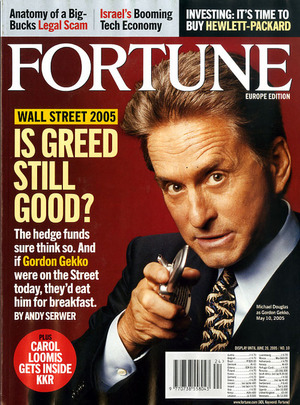
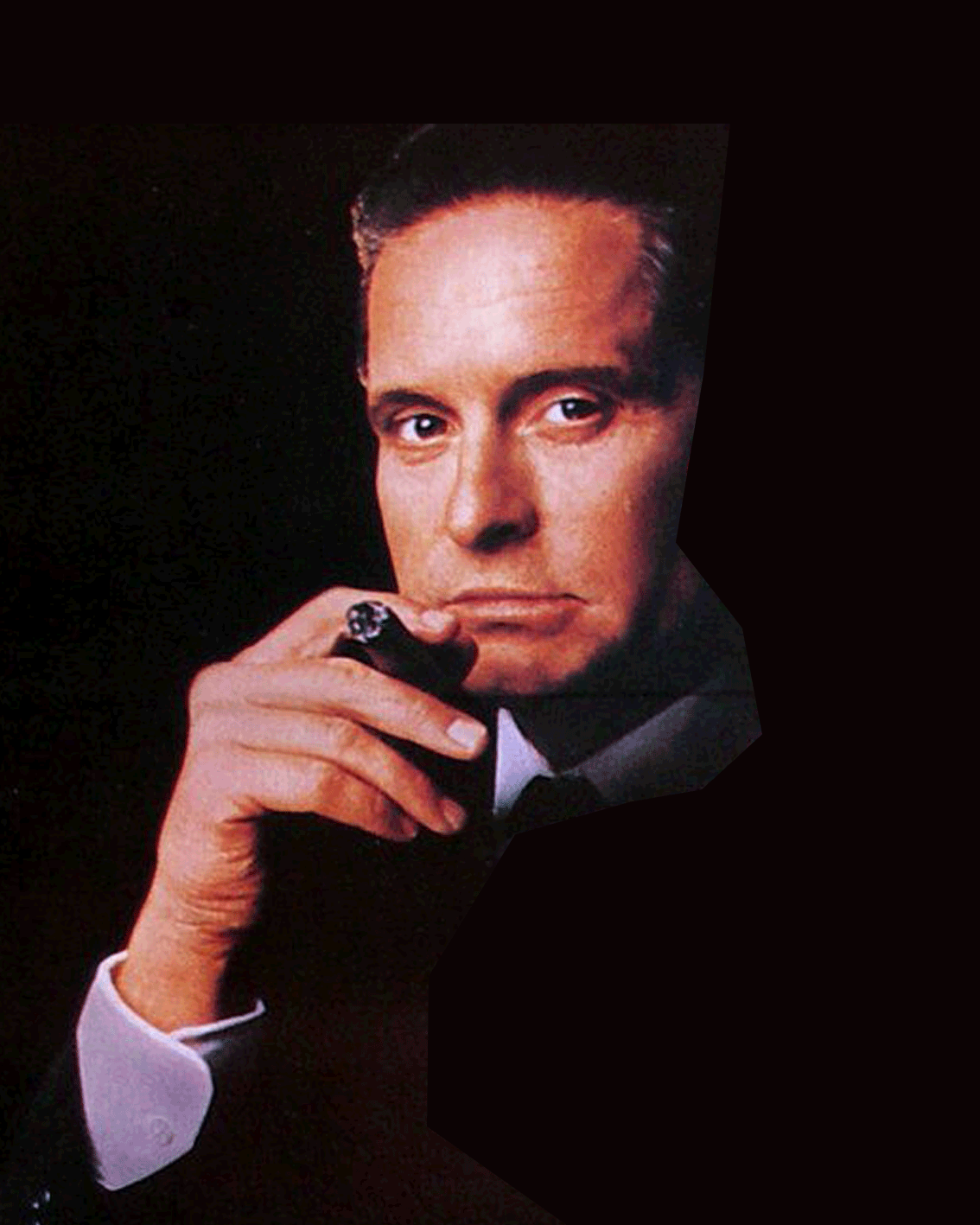
Entering into the third year of the Great Bank Swindle, it was only natural that someone in Hollywood would try and make hay off of it.  Enter Oliver Stone, with a sequel of sorts to his Wall Street film of 1987: Wall Street: Money Never Sleeps (a rather loopy title, in my eyes).  Wall Street high-roller Gordon Gekko (Michael Douglas) is released from prison to find himself alone, short of cash, and unable to get back into the game—the rules, such as they are, have changed, and prison never looks good on the resumé.

Seven years after Gekko is sprung, young Wall Street investment trader Jake Moore (Shia LaBoeuf) finds himself in the middle of the banking crisis, his company folding and his mentor (Frank Langella) commits suicide as a result.  The rootless Moore is then determined to avenge the death of both his Father Figure and livelihood by taking on the entities that led to his firm's collapse.  It was only a matter of time before he ran into Gekko, on a promotional tour for his new book, describing his life on top and behind bars.  Their stars are due to collide for another reason; is engaged to Gekko's daughter (Carey Mulligan), estranged from her father for his sociopathic wheeling-dealings and the subsequent overdose death of her brother.
Already it starts to feel icky.  Stone's original was, much like his Platoon, less about their subjects (Vietnam, insider trading) and more about the writer-director's coming to terms with Daddy issues.  His protagonist in both films (played by Charlie Sheen) had to choose between good and bad fathers in both situations (Tom Berenger and Willem Dafoe in the first, and Douglas and Martin Sheen in the second), hovering about his shoulders like angel-demons, prodding him to go one way or the other, making him choose which Father Knows Best.
Everybody has Daddy problems in this one, to the point where that seems to be the only issue concerned.  Oh, there's some touching on of Green Energy and of the Banking conspiracy, but for the most part it is of the characters pin balling between Male Authority Figures, and the Mentor-Protegé thing (right down to Josh Brolin's character's favorite art-piece).  The only thing left is the kinda squeaky relationship between LaBoeuf and Mulligan, with Gecko acting like some Yojimbo playing all sides against each other.  It's a little disappointing to see Douglas' Gekko-monster being soft-pedaled in this manner—like finding out that Darth Vader (another Dark Father figure!) is merely Hayden Christensen in disguise.  Disappointing if one could get a handle on the character at all.  Douglas vacillates between being a tough-as-nails financier with all the answers and vulnerable Fair-Market Father trying to win back his little girl—that transformation gives Douglas and Mulligan a well-played if ultimately hollow scene in which they come to tearful terms.  He has never been better than that scene, and takes chances that recall his father Kirk's fearlessness in hitting for the bleachers.
If only that were true of Oliver Stone.

For the fact of the matter is, despite being one of our more (self-professed)radical film-makers, the once angry young man has made one of the most conventional of movies.  To be fair, he didn't write it, so the personal complications among the characters that one can see coming a mile away are not his fault.  And though he may trick the movie up with visual legerdemain (including a simple use of split-screen that he abandons fairly early on), pervasive songs by David Byrne and Brian Eno (that are banal), and "cuting" it up with several visual and aural "in-jokes," the film couldn't be more "safe," preaching to the choir, and goo-ing the whole thing up in a veneer of soap-scum. 
If one wants to be a truly innovative film-maker, to push the limits of visual story-telling, tell us something we don't already know.