The Demon Rum
or
Neither Blood Nor Faith
The opposite of love isn't hate; the opposite of love is indifference. I didn't love Ben Affleck's new film Live By Night; I didn't hate it, either. But it did make me indifferent.
That's an odd reaction because I loved, and was impressed by, Affleck's previous adaptation of a Dennis Lehane novel, Gone Baby Gone (which was also his directorial debut and started him on an impressive director career, which culminated in his winning the Oscar for directing Argo—which I found the weakest of his films, until this). One should be careful of high expectations as they just set you up for disappointment, which could be a sub-text for the entire film, if it wasn't such an exemplar of the sentiment.
When we start, Joseph Coughlin (Affleck in the lead) is a veteran of the first World War, one of the "lost generation," who come back to his native Boston to take up a career as a small-time robber. A raid on a high-stakes poker game sets him for a lot of scrutiny both from the Boston police and by a top hoodlum, Albert White (Robert Glenister). Seems that Joe has an "inside man" on the poker heist, that being White's woman, Emma Gould (Sienna Miller). What drives them together one can hardly say. She's pretty, okay, but unconventional more than attractive, and that must be the attraction, because Coughlin is in love, or as his policeman father (Brendan Gleeson) says, "Crazy isn't love."
Maybe that's it. She's everything he's rebelling against—his father, the law, his enemies. Maybe after coming home from the war, he must think he has some magic touch, but he's proven wrong, when after a bank robbery gone haywire, he gets beat up by White and his goons and Emma Gould is murdered, and as the robbery has ended up killing three policeman in a wild chase, his father won't touch him, either (except to maybe lean on the local Inspector to let Joe off with a light prison sentence).
When Joseph gets out of prison, he swears revenge on White and signs on with the Pescatore mob—something he'd previously been unwilling to do, not considering himself a "gangster"—but Pescatore has a burgeoning rum smuggling interest in Tampa, Florida that White is muscling in on, and, working for the Italian, Coughlin becomes an enforcer for the mob, swatting away encumberments that might keep the activities from making a profit, like the local chapter of the Klan, or non-negotiating politicians and the local chief of police (Chris Cooper). Things come easily to Joe, who starts to relax just long enough to start a romance with one of his rum partners (Zoe Saldana), as he tries to thread a more moral path while being a mob-boss, an exercise that ultimately will prove an exercise in futility. What, this guy's never seen a gangster movie?
And it is the same old gangster movie, unfortunately. The only thing that separates Joe Coughlin from the rest of the clans of movie-mobsters is that he is less insular, less xenophobic than most gangsters. Traditionally, in movies, the mobs, the gangs, have always been substitutes for family, Coughlin's estrangement from his Poppa-Cop being the film's catalyst. Whereas most of these films draw lines along racial, religious, or ethnic divides, Live By Night's Coughlin is an equal-opportunity bag-man. Associates are associates by experience, not by blood or faith. So, Joe may be somewhat forward-thinking, grant him that, by fighting such types as Klansmen and opportunistic religious zealots, all the while providing the population with distractions in vice, the impact of which we are not given the opportunity to see.
He might have good intentions, but he's still a criminal, or (as one character puts it) "just a bandit in a suit." Does it really make any difference what his liberal social views are, when they have no basis in any moral fabric than the kind you find in greenbacks?
One feels no kinship with the character, though his heart may be steering him in the right places, his hands are not. I've always found the "mobster with a heart of gold" trope to be absurd, bordering on the laughable, like Al Capone being the defacto Mayor of Chicago. Live By Night carries through-line, straight-faced throughout, without any of the rough or cock-eyed perspective of a creator who might have a more secure moral foot-hold. It wants us to feel sympathy for the devil, but only because they might be less repugnant than his enemies. Even the most glorifying of the mobster-pics, The Godfather, knew enough that, though the story of Michael Corleone is a tragedy, he is still a monster, someone whom we might sympathize with, but never cherish.
Affleck, as a director, has been attracted to moral quandries with no easy answers and tough choices. But Live By Night is such a simplistic, wrong-headed film that he seems to have lost his way in the morally murky Florida swamp. Where before he had a sure directorial hand, here his action sequences are hodge-podge and confusing, especially in a fire-fight in a genteel hotel, where you just have trouble distinguishing the "good guys" from the "bad guys" (if there are any). And though he's gotten good work from his cast and his eclectic director of photography, the eclectic Robert Richardson, too often it's at the expense of "window-dressing," pretty pictures that look impressive, like a shining wax apple, but with none of the pulp, "the juice," or anything at its core.
After The Godfather, Part II, Francis Ford Coppola for many years resisted Paramount's increasing entreaties to make a third film giving as the reason "gangsters are boring." I've rarely seen a boring gangster film, although I have seen bad gangster movies (Gangster Squad and Mulholland Falls, for instance). Martin Scorsese has managed to keep gangster films that both deconstruct, and find new life and depth, in the genre. But, Affleck, even with his past expertise at bringing life to Lehane and his themes, cannot bring anything enlightening to this.
Yeah, I'm with Coppola on this one: gangsters are pretty damned boring.
Showing posts with label Dennis Lehane. Show all posts
Saturday, February 18, 2017
Wednesday, October 1, 2014
Shutter Island
Written at the time of the film's release....
"What's yer Next Move, Boss?"
or
"Tag! You're It!"
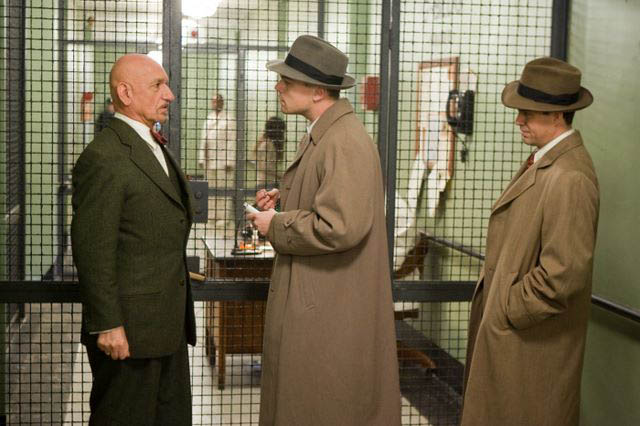
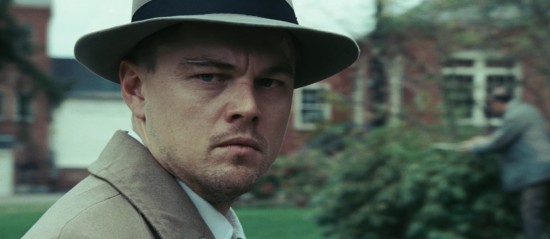
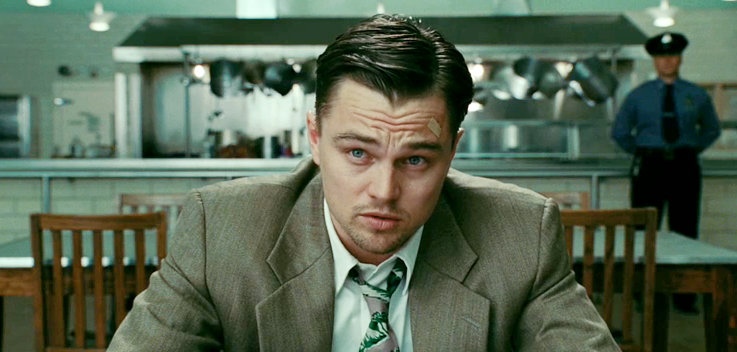
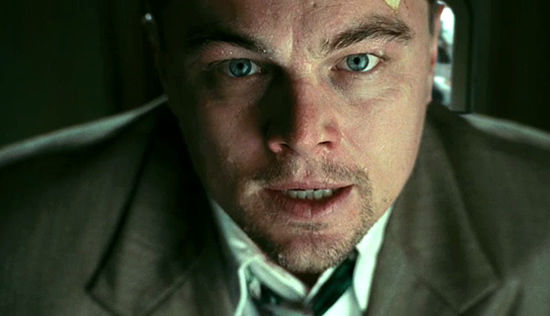
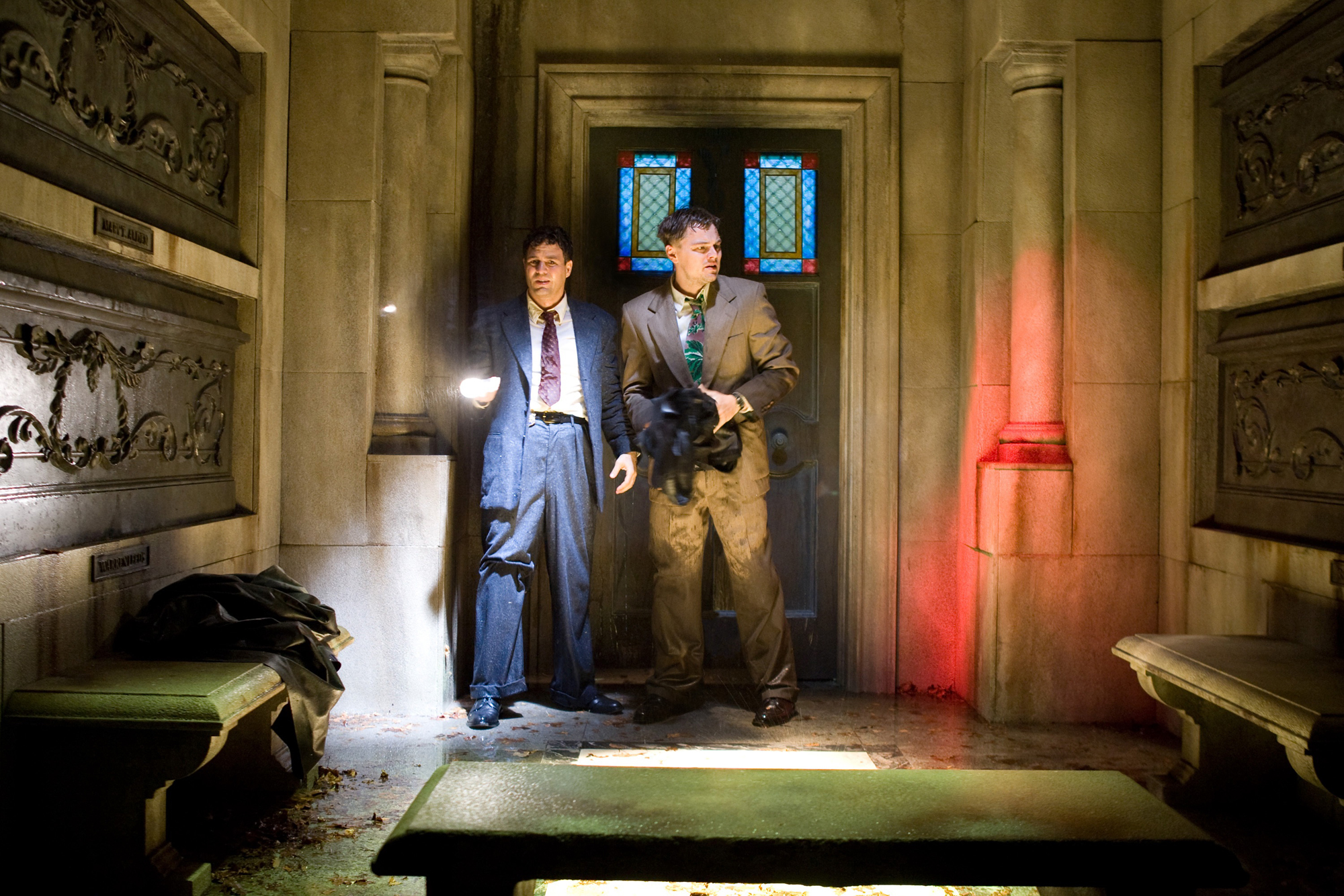
It is 1954, and out of the fog comes a ferry boat carrying two U.S. Marshals, heading for Shutter Island, where squats, in various stages of dis-repair, Ashecliffe, an asylum for the criminally insane. In the ferry's "head," sea-sick,* is Marshall Teddy Daniels (Leonardo DiCaprio), "the legend" as his partner from Seattle Chuck Aule (Mark Ruffalo, who has a rather thick Massachusetts accent for it) calls him. The two are investigating the disappearance from Ashecliffe of an inmate from Ward B, the women's section, and right from the get-go, the detectives are at a disadvantage in this environment.
Upon crossing the electrified fence, their weapons are confiscated by the institution guards, security being what it is. "What?" Teddy smirks at the guard "You act like insanity is catching." The guard only smirks back. That should have been his first clue.
The doctors (Ben Kingsley and Max von Sydow) are helpful to a point, but then they become somewhat diffident and challenging, even obstructing, protective of their "advanced" techniques—"a moral fusion between law and order and clinical care." The missing woman, Rachel Solendo (Emily Mortimer), drowned her kids after her husband was killed during the Normandy invasion and has never acknowledged the act. But she somehow managed to escape from a cell, locked from the outside, and with a guard on duty. Investigating, Daniels finds a cryptic note "The Law of 4. Who is 67?"
But that's all surface. Daniels volunteered for this case because he wanted to get to Shutter Island for some personal business. He's still haunted by the death of his wife, Dolores (Michelle Williams), who died in a fire that was set by an insane fire-bug named Andrew Laeddis (Elias Koteas**), presently incarcerated in Ashecliffe's Ward C—for the most dangerous criminals. Daniels has done some investigating of the facility, and what he's turned up indicates that radical techniques, from experimental drugs to lobotomies, are being practiced, and as funds are being channeled there from the House Un-American Activities Committee, he thinks the government is working on a secret brainwashing program to infiltrate radicals as double agents. Teddy wants to blow the lid off the place.
That is, if Nature doesn't get the chance first. A hurricane is barrelling down on Shutter Island ("It's like f...ing Kansas out there!"), threatening to cut off power to the electrical systems keeping the prisoners locked up and backed off. If the power goes, there's no back-up generator to kick in.
All of this concerns his partner, Marshall Chuck Aule; Teddy's been doing all this investigating of Ashecliffe, the doctors are resisting co-operating, they have no guns, the facility controls the ferry that's their only way out, and there's a storm coming. They're stuck on an island with a bunch of crazy convicts and an administrative staff who doesn't like them much, and wouldn't mind if they just...oh, had an accident or something. And Teddy's starting to get sick—plagued by migraines that Dr. Cawley (Ben Kingsley) diagnoses only too quickly with some handy aspirin nearby. Then, there's the German Doctor Naehring (Max von Sydow) who's the co-director of Ashcliffe and chief diagnostician. Teddy was one of the soldiers who liberated Dachau, so he's immediately suspicious of him. "Do you believe in God, Marshall?" Naehring challenges him. "Ever seen a death-camp, doctor?" Teddy sneers back.
There's a lot of story-point to juggle,*** but director Martin Scorsese focuses on the atmospherics, which is laid down with a heavy hand in the same manner as he directed Cape Fear. When it comes to working on genre features, Scorsese is never subtle, and the film is filled with dark spaces (with things that go KA-BOOM in the night), blinding lightning strikes, dripping facades and the most suggestive of dream-sequences. Before too much has happened, you begin to question everything you see, and at that point the director throws the continuity girl off the cliff and does whatever he wants, reality having little to do with the movie. The secret to this kind of film-making is keeping audiences guessing and Scorsese stretches it out as far as he can (to the point where some audience members will still be questioning it after they leave the theater).
Which is unfortunate. Because the most important thing about this movie (and story) is another of author Dennis Lehane's moral quagmires. That is what one should be discussing, as opposed to "What just happened?"
So, call this another in a series of "minor Scorsese films" (but not so minor that it might win a mercy "Best Picture" Oscar), and we hope (again) that we'll see another film from him with more substance than mere style. One wonders how much Scorsese is sacrificing by hitching his film-making wagon to star Leonardo DiCaprio. DiCaprio is a bankable star so studios are only too happy to finance a Scorsese film starring him and this allows Scorsese to keep working in a youth-oriented market in the most profit-based center of film-making, Hollywood. But DiCaprio the baby-faced star (no matter how much he scowls) is the water to Scorsese's boiling oil. There is a sense, and it may only be mine, that DiCaprio is shoe-horned into Scorsese projects for which he is not suited, and perhaps the two should have a trial separation to see what kind of film the mature film-maker will produce without his too-young star. In the first part of his career, Scorsese's non-Robert De Niro films were Alice Doesn't Live Here Anymore, and After Hours, two distinctive films that, even without the director's frequent collaborator, said something about our lives and times prismed through Scorsese's kinetic view-finder. After his tampered-with version of Gangs of New York, he has produced The Aviator, The Departed, and this film, all with DiCaprio, and they are films more like New York, New York, that accentuate style over substance. Great cinematic rides they may be, but they're flashes in a film-can, that leave you still hungry to see a great movie.
Post-script: I've changed my rating of "Shutter Island" to a matinee and I'm not so sure it is a minor Scorsese film, as it's stayed with me for more than a week, and the images and intricacies keep popping into my brain to slap me upside the head. "Missed it!" I think the "Dicaprio" element still brings the movie down a bit, but a second viewing of Shutter Island shows intricacies that in the first viewing one doesn't know they don't know. That's subtle film-making that doesn't wave red flags at the audience, and the film slots into Scorsese's body of work quite smoothly. Trouble is, I can't go into details about it, or I might spoil the movie for anybody else.
Well, we'll just leave that for a piece down the road.
* Teddy is another Mass. cop who has the shakes about water. In Jaws, Chief Brody's wife tries to be helpful: "There's a technical name for it..." "Drowning" is his quick reply.
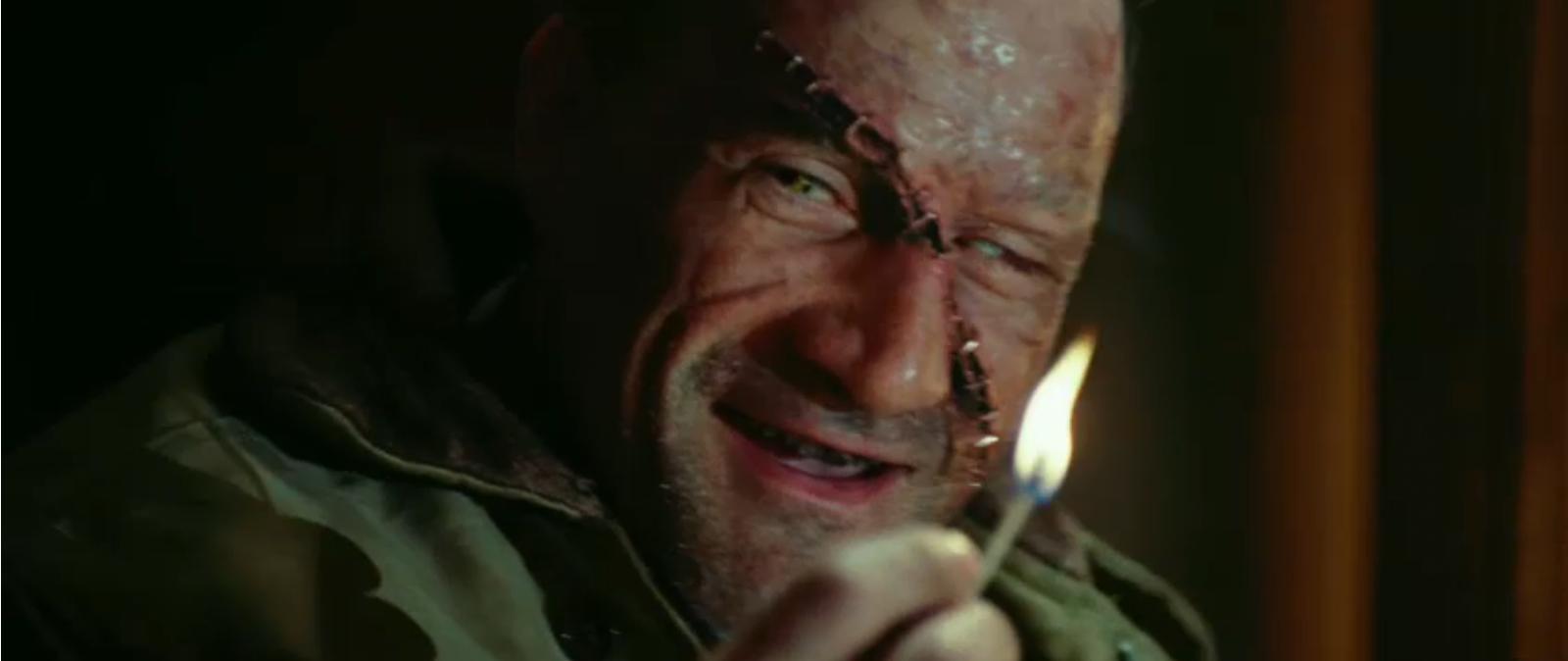
** No, it's not Robert De Niro, although it looks like him in the trailer. It's Elias Koteas...with a really big scar.
*** The script is by Avatar adapter Laeta Kalogridis, who Lehane thought did a masterful job with a difficult assignment. It is.
"What's yer Next Move, Boss?"
or
"Tag! You're It!"
It is 1954, and out of the fog comes a ferry boat carrying two U.S. Marshals, heading for Shutter Island, where squats, in various stages of dis-repair, Ashecliffe, an asylum for the criminally insane. In the ferry's "head," sea-sick,* is Marshall Teddy Daniels (Leonardo DiCaprio), "the legend" as his partner from Seattle Chuck Aule (Mark Ruffalo, who has a rather thick Massachusetts accent for it) calls him. The two are investigating the disappearance from Ashecliffe of an inmate from Ward B, the women's section, and right from the get-go, the detectives are at a disadvantage in this environment.
Upon crossing the electrified fence, their weapons are confiscated by the institution guards, security being what it is. "What?" Teddy smirks at the guard "You act like insanity is catching." The guard only smirks back. That should have been his first clue.
The doctors (Ben Kingsley and Max von Sydow) are helpful to a point, but then they become somewhat diffident and challenging, even obstructing, protective of their "advanced" techniques—"a moral fusion between law and order and clinical care." The missing woman, Rachel Solendo (Emily Mortimer), drowned her kids after her husband was killed during the Normandy invasion and has never acknowledged the act. But she somehow managed to escape from a cell, locked from the outside, and with a guard on duty. Investigating, Daniels finds a cryptic note "The Law of 4. Who is 67?"
But that's all surface. Daniels volunteered for this case because he wanted to get to Shutter Island for some personal business. He's still haunted by the death of his wife, Dolores (Michelle Williams), who died in a fire that was set by an insane fire-bug named Andrew Laeddis (Elias Koteas**), presently incarcerated in Ashecliffe's Ward C—for the most dangerous criminals. Daniels has done some investigating of the facility, and what he's turned up indicates that radical techniques, from experimental drugs to lobotomies, are being practiced, and as funds are being channeled there from the House Un-American Activities Committee, he thinks the government is working on a secret brainwashing program to infiltrate radicals as double agents. Teddy wants to blow the lid off the place.
That is, if Nature doesn't get the chance first. A hurricane is barrelling down on Shutter Island ("It's like f...ing Kansas out there!"), threatening to cut off power to the electrical systems keeping the prisoners locked up and backed off. If the power goes, there's no back-up generator to kick in.
All of this concerns his partner, Marshall Chuck Aule; Teddy's been doing all this investigating of Ashecliffe, the doctors are resisting co-operating, they have no guns, the facility controls the ferry that's their only way out, and there's a storm coming. They're stuck on an island with a bunch of crazy convicts and an administrative staff who doesn't like them much, and wouldn't mind if they just...oh, had an accident or something. And Teddy's starting to get sick—plagued by migraines that Dr. Cawley (Ben Kingsley) diagnoses only too quickly with some handy aspirin nearby. Then, there's the German Doctor Naehring (Max von Sydow) who's the co-director of Ashcliffe and chief diagnostician. Teddy was one of the soldiers who liberated Dachau, so he's immediately suspicious of him. "Do you believe in God, Marshall?" Naehring challenges him. "Ever seen a death-camp, doctor?" Teddy sneers back.
Post-script: I've changed my rating of "Shutter Island" to a matinee and I'm not so sure it is a minor Scorsese film, as it's stayed with me for more than a week, and the images and intricacies keep popping into my brain to slap me upside the head. "Missed it!" I think the "Dicaprio" element still brings the movie down a bit, but a second viewing of Shutter Island shows intricacies that in the first viewing one doesn't know they don't know. That's subtle film-making that doesn't wave red flags at the audience, and the film slots into Scorsese's body of work quite smoothly. Trouble is, I can't go into details about it, or I might spoil the movie for anybody else.
Well, we'll just leave that for a piece down the road.
* Teddy is another Mass. cop who has the shakes about water. In Jaws, Chief Brody's wife tries to be helpful: "There's a technical name for it..." "Drowning" is his quick reply.
** No, it's not Robert De Niro, although it looks like him in the trailer. It's Elias Koteas...with a really big scar.
*** The script is by Avatar adapter Laeta Kalogridis, who Lehane thought did a masterful job with a difficult assignment. It is.
Tuesday, September 30, 2014
The Drop
Noir with the Lights On
or
A Dangerous Breed
I really like Dennis Lehane's writing. I've never read any of his books and I am, in fact, rather leery of starting one (as I am with starting anything by Cormac McCarthy). But the films based on his stuff have been pretty cracker-jack, even if the kernel of his ideas are there when the films have proved less than five-star.
A lot of modern writing is based on a cynical world-view that things are bad and that it is a "given." This is considered hip and "worldly" (to anything other than "Disney"), but I find it safe, unimaginative and, frankly, boring (typical of this is Frank Miller's pulp-style usurpation "Sin City"). I find myself saying "Yeah, yeah, life stinks, so give me an alternative or a solution—just don't ladle on the cynicism and then cop-out with a light at the end of the darkened tunnel. Do something with it." What I like about Lehane is he drops you into that same cynical world-view, does not compromise with it or become "clever," and then yanks the rug out from under you to show you that it's even worse than you thought.
There's a style of film called film noir that appeared after World War II, born of the pulps and the devastation that the cruelty of life (and death), as exemplified by that most horrible of wars, inflicts on the human psyche, good and bad. Film Noir was more than just hard-boiled detective movies in stylized black-and-white (I'm talking to you, Frank Miller). The best description I've read of "noir" is "when the streets are dark with something more than night"—there's a permeating sense of evil, but something worse than evil—of indifference. Film noir exists in a world without God, or even of a presence that offers comfort or protection. In that sensibility, Life's a crap-shoot. And the dice may be loaded. And may have always been loaded.
The latest film based on Lehane's writing, The Drop, is the author's own expansion of his 2009 short story "Animal Rescue." So much of it takes place during the day you could call it "Noir with the lights on." But, despite the sun shining through an overcast sky, it's noir, sure as shooting.
Bob Saginowski (Tom Hardy, amazing in this, but you have to see it to understand why) seems simple. He's generally expressionless, speaks in a flat monotone and when he speaks it's slow, measured and doesn't veer too far from the obvious. For fourteen years he's been steady in a job bartending at his cousin Marv's saloon (Marv is played by James Gandolfini, his last role). Marv's had a bit of bad luck, and he's had to sell the bar to Chechen gangsters (Marv calls them Chechnyans; Bob corrects him) who use the bar as a money-drop for loan sharks and book-makers. Bob's life is solitary, except for his rituals—work at the bar in the evening, morning mass at 8 am.
It isn't a drama if something doesn't disrupt that: first, on his way home from work, Bob hears a whining from a garbage can. Looking in, he finds a battered pit-bull puppy tossed hap-hazardly. Bob takes the puppy from its garbage-kennel and is confronted by Nadia (Noomi Rapace) who's wondering why he's rooting around in her garbage. The puppy is explained, and soon the two are cleanly the dog up and Bob considers what he's going to do with a dog.
"That's a lot of responsibility," he says.
Nadia takes the dog for a couple days, and when Bob takes the dog, she helps him shop for the animal, now dubbed "Rocco" (after the saint, patron of dogs and the falsely accused) so that he can better handle the responsibility.
Then, Marv's bar (actually the Chechen's) is robbed by a couple of masked punks at gun-point. The police come and investigate and Bob tells one of the detectives (John Ortiz), whom he recognizes from church, that one of the bandits had a broken wristwatch. Marv is peeved by this. But, it doesn't matter. Pretty soon, a plastic bag is found hanging from the bar's fence containing the stolen money, as well as a severed arm with a broken wristwatch.
or
A Dangerous Breed
I really like Dennis Lehane's writing. I've never read any of his books and I am, in fact, rather leery of starting one (as I am with starting anything by Cormac McCarthy). But the films based on his stuff have been pretty cracker-jack, even if the kernel of his ideas are there when the films have proved less than five-star.
A lot of modern writing is based on a cynical world-view that things are bad and that it is a "given." This is considered hip and "worldly" (to anything other than "Disney"), but I find it safe, unimaginative and, frankly, boring (typical of this is Frank Miller's pulp-style usurpation "Sin City"). I find myself saying "Yeah, yeah, life stinks, so give me an alternative or a solution—just don't ladle on the cynicism and then cop-out with a light at the end of the darkened tunnel. Do something with it." What I like about Lehane is he drops you into that same cynical world-view, does not compromise with it or become "clever," and then yanks the rug out from under you to show you that it's even worse than you thought.
There's a style of film called film noir that appeared after World War II, born of the pulps and the devastation that the cruelty of life (and death), as exemplified by that most horrible of wars, inflicts on the human psyche, good and bad. Film Noir was more than just hard-boiled detective movies in stylized black-and-white (I'm talking to you, Frank Miller). The best description I've read of "noir" is "when the streets are dark with something more than night"—there's a permeating sense of evil, but something worse than evil—of indifference. Film noir exists in a world without God, or even of a presence that offers comfort or protection. In that sensibility, Life's a crap-shoot. And the dice may be loaded. And may have always been loaded.
The latest film based on Lehane's writing, The Drop, is the author's own expansion of his 2009 short story "Animal Rescue." So much of it takes place during the day you could call it "Noir with the lights on." But, despite the sun shining through an overcast sky, it's noir, sure as shooting.
Bob Saginowski (Tom Hardy, amazing in this, but you have to see it to understand why) seems simple. He's generally expressionless, speaks in a flat monotone and when he speaks it's slow, measured and doesn't veer too far from the obvious. For fourteen years he's been steady in a job bartending at his cousin Marv's saloon (Marv is played by James Gandolfini, his last role). Marv's had a bit of bad luck, and he's had to sell the bar to Chechen gangsters (Marv calls them Chechnyans; Bob corrects him) who use the bar as a money-drop for loan sharks and book-makers. Bob's life is solitary, except for his rituals—work at the bar in the evening, morning mass at 8 am.
It isn't a drama if something doesn't disrupt that: first, on his way home from work, Bob hears a whining from a garbage can. Looking in, he finds a battered pit-bull puppy tossed hap-hazardly. Bob takes the puppy from its garbage-kennel and is confronted by Nadia (Noomi Rapace) who's wondering why he's rooting around in her garbage. The puppy is explained, and soon the two are cleanly the dog up and Bob considers what he's going to do with a dog.
"That's a lot of responsibility," he says.
Nadia takes the dog for a couple days, and when Bob takes the dog, she helps him shop for the animal, now dubbed "Rocco" (after the saint, patron of dogs and the falsely accused) so that he can better handle the responsibility.
Then, Marv's bar (actually the Chechen's) is robbed by a couple of masked punks at gun-point. The police come and investigate and Bob tells one of the detectives (John Ortiz), whom he recognizes from church, that one of the bandits had a broken wristwatch. Marv is peeved by this. But, it doesn't matter. Pretty soon, a plastic bag is found hanging from the bar's fence containing the stolen money, as well as a severed arm with a broken wristwatch.
Then, Eric Deeds (Matthias Schoenaerts) starts nosing around. Bob first encounters him when walking Rocco one day. Deeds passes him and mentions that he's got a nice dog. Then, he shows up at Bob's house and informs him that Rocco is his dog and he'd better give him back. Deeds has a reputation—number one, he's crazy and number two, it's bandied about the neighborhood that Deeds might have been responsible for the disappearance of one Richie Sanders ten years ago, never to be seen again. Deeds is someone no one wants to mess with, especially, when Bob learns that he is Nadia's ex-boyfriend.
| Body language adds to the conversation in The Drop. |
How this all plays out depends on you, the movie-goer, not knowing what you don't know, the gambit behind any mystery story. You're dropped into the story without any past knowledge, no history, and how it plays out is totally dependent on that. In that way, it's a bit more like Mystic River and Shutter Island, with twists, rather than the moral quandries that Lehane proposed in his early writings.
The direction is fairly straightforward, but the performances are quite amazing. Hardy is one of the best British actors out there, but he tamps down his potential theatricality that he's displayed in other roles to make his Saginowski an extraordinarily internal performance. Rapace, who's always had a nervous energy to her, infuses Nadia with a sense of hidden secrets, and Gandolfini is all bitterness and impatience as a frustrated former enterpreneur who can't seem to let go of the past. Schoenaerts matches Hardy in their scenes together with an indifferent menace that knows no boundaries.
![]() |
| "...when the streets are dark with something more than night." |
The Drop shrugs along, adding little clues, telegraphing elements that resonate and ultimately come together to a logical conclusion. It is only at the very end that it tends to fail, adding a hopeful coda that doesn't seem to fit in with the rest of the atmosphere of the film. Still in the dog-days of the autumn movie season before the onslaught of Christmas releases, The Drop is a bit of fresh air, provin there's still some life in the old black dog yet.
Subscribe to:
Posts (Atom)


.jpg)