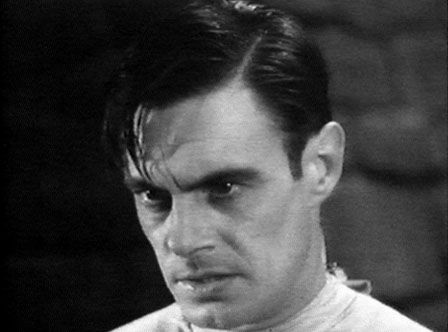
Oh. Yeah. It's October. Guess I better start paying attention to Horror films.
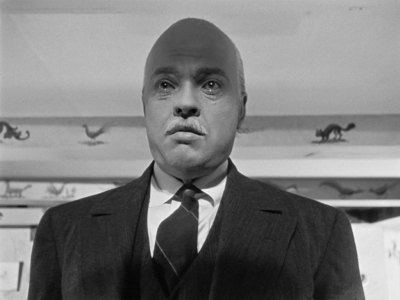
Mad Love (Karl Freund, 1935) It's been filmed many times since the silent era—most recently in 1958 starring Mel Ferrer and Christopher Lee, and another in 1962 as The Hands of a Stranger—but the most famous version of the 1920 French novel (by Maurice Renard) "The Hands of Orlac" is this 1935 version by German director Karl Freund.* Well, "most famous" is a relative term—this one was pretty much forgotten until Pauline Kael exhumed it in her essay "Raising Kane" as an example of what she considered Orson Welles' derivative direction of Citizen Kane. There are similarities, but vague ones—Peter Lorre's mad doctor bears a very slight resemblance to the elderly Charles Foster Kane, and his maid carries a pet cockatiel on her shoulder.**
Big deal, that. Oh, and, of course, it's a deep-shadowed black-and-white film with deep-focus—a bit standard when dealing with low light levels in black-and-white (especially when the cinematographer is Gregg Toland, who worked on both films). Beyond that, Mad Love is a completely different proposition than Citizen Kane and comparisons between the two are desperate and tortured, (as the writer could be at times).
But, that madness aside, Mad Love is a late version of German Expressionism from the silent era of film, and a direct descendant of:

The Hands of Orlac (Robert Weine, 1924) the silent version, re-teaming the director and star of The Cabinet of Dr. Caligari, Weine and Conrad Veidt. Both stories involve the maiming of a brilliant concert pianist in a train wreck. His fiancée, in a desperate attempt to save his career—implores a surgeon to perform a radical double-hand transplant that—by rule of thumb— has unforeseen circumstances. The difference between the two is motivational—in the latter version, the surgeon performs the surgery, not just for the sake of music, but also for his desperate love of the fiancée, an actress in a theater macabre that he devotedly attends every night, going so far as to buy the waxwork figure of her in the lobby as an object of adoration.
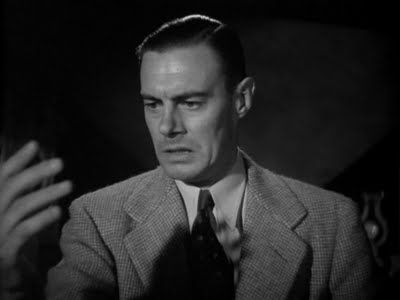
The operation is a success, but on the other hand, it isn't. There's just one hitch, the same one that befell Dr. Frankenstein (coincidentally, the pianist in Freund's version is played by Colin Clive, the doctor in James Whale's version)—be careful where you shop for spare parts. In this case, Orlac's hands are replaced by those of a murderer—a strangler in the silent version, a master knife-thrower in Freund's. Before long, the composer is struggling to do his five finger exercises, and working on other handiwork, as well. Before long, he is implicated in a murder, and beset by nightmares that his hands are out of his control (they are, after all, the devil's playground).
The two diverge at this point, with Mad Love concentrating on the insane machinations (literally in one instance) of Lorre's insane Dr. Gogol—in the silent version, the surgeon's role diminishes significantly at this point—and Orlac's new talents become even more literally "handy."
Both versions weigh heavily on the psychological, as Orlac and his new hands lose their grip on reality, but the first one is quite satisfied with taking the macabre elements so far. The later version, post-Frankenstein and Dracula relishes the more twisted elements of the subject, going places that the original finds fanciful and, frankly, superstitious. Mad Love embraces the possibility that the murderer's hands will, actually, assert their sense memory allowing Orlac to throw pointy things very, very accurately...and the difference between the two films is only a span of seven years. Interesting how an audience's capacity for the weird and supernatural—and Hollywood's willingness to deliver it—could become so prevalent.

* Freund was the German director/cinematographer whose most enduring influence came in the early days of television production when his 3-camera recording technique revolutionized filmed comedy shows (before a live audience)—a concept that started during his days with "I Love Lucy" but continues to be used today.
** Welles used a super-imposed shot of a cockatiel during what he considered a "rough transition" that didn't have enough dramatic impact, and later joked that he did it "just to wake people up."
I've spent quite a few October's on this blog presenting all sorts of reviews of horror films (and the tradition continues this year), but I've never published reviews of the "Big Two" horror films—Frankenstein and Dracula. Well, it's never too late. Time to unearth them from another archive.
Frankenstein (James Whale, 1931)
"We are about to unfold the story of Frankenstein, a man of science who sought to create a man after his own image without reckoning upon God. It is one of the strangest tales ever told. It deals with the two great mysteries of creation – life and death. I think it will thrill you. It may shock you. It might even – horrify you. So if any of you feel that you do not care to subject your nerves to such a strain, now's your chance to – uh, well, we warned you."
Every young boy's horror touchstone—and if we're to believe Víctor Erice's El Espíritu de la colmena every little girl's, too. One of Carl Laemmle Jr.'s ghoul gallery of public domain necromancy movies that spawned dozens of sequels and dozens of imitators, all inferior to the craft of these primitive films, made at the fog-shrouded dawn of the Sound era.
But towering above them all in the pounding hearts, toad-squirming minds, and knocking knees of horror fan-dom is the story of "The Modern Prometheus" and the Monster to whom the public bequeathed his name. Frankenstein boasts odd beginnings. Written by Percy Bysshe Shelley's frail flower of a wife, aged 18 when she conceived it, during a Gothic night's creativity, "Frankenstein's" story and it's several graves-deep inner meanings had been a classic for decades. It had been filmed before (even by Thomas Edison), but Laemmle's production, directed by James Whale has emerged as the one with the biggest boots to fill.
It might be because of its introduction (reproduced above). Edward Van Sloan walks out onto the filmed stage and warns us of the subject matter to come and the blasphemous implications of a man not "reckoning upon God." It's a good tactic—a carnival barker's come-on—for rather than warn us away, it whets the audience's appetite for the terrors to come.
 And James Whale doesn't disappoint. Whale's life has merged with Legend (the movie Gods and Monsters), but his German-expressionism-influenced eye and sense of the absurd (which would come to full flower in the follow-up, The Bride of Frankenstein) created a sinister world of vast-shadowed hallways, spitting whirling laboratories, and castle chambers that resembled gargantuan funeral homes.
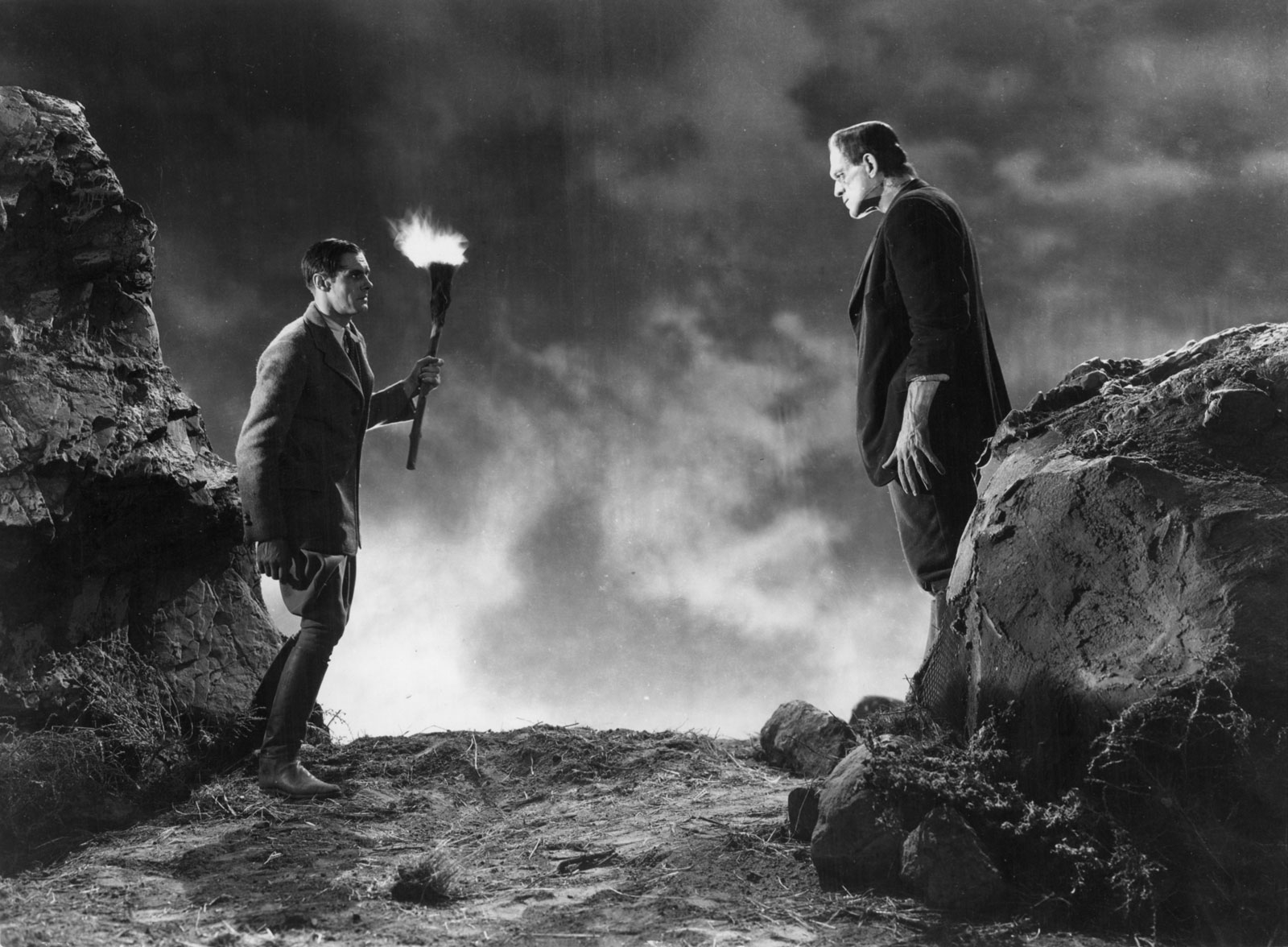
Before going on to the actors, homage must be paid to the craftsmen: Art Director Charles D. Hall, whose bizarre designs for the film give it its scale and majestic decay; and, of course, make-up artist Jack Pierce, who transformed a slight British actor named Karloff into a 7-foot, barrel-chested, electrode-studded,* flat-skulled (and copyrighted) hulk. There have been many subsequent designs for Frankenstein's piece-meal monster, but none have been so iconic as the Whale-Pierce-Karloff version.
Karloff's contribution cannot be slighted—including his removal of an upper dental plate to give the Monster a dented, off-kilter face. But mention should be made of Colin Clive's hyper-bi-polar doctor (he was a wayward medical student in Shelley's tale), prone to manic exultation or fainting dead away in emotional extremis. The good doctor's a bad drama queen. As his house-keeper would say in the sequel, he's a queer fellow.

There's another reason to celebrate the longtime classic-ness of James Whale's Frankenstein. It and it's sequel The Bride of Frankenstein may be two of the greatest gay-themed movies to come out of straight, Hayes Code mainstream Hollywood. I had a film professor who was studying Bride and told of his curiosity about the air of exoticism in the first two "Frankenstein" films, when that "queer" line came out, it was the lightning-bolt that was the key. What is Frankenstein and The Bride of Frankenstein except the story of a man (or two men in Bride, with Frankenstein and Professor Pretorius collaborating) trying to by-pass God (and women) to give birth.**

The melancholy cruelty of Nature and mob-hysteria towards the different permeates both of Whale's "Frankenstein" films,*** and turns Monster into mirror, a figure of identity rather than horror, and occurs whether the audience is gay or straight. There's a reason the shunned figure of Frankenstein's Monster resonates: he's an outcast, yearning but misunderstood, tortured, but sympathetic. And though kept prisoner in a castle dungeon rather than a closet, he would emerge sequel after sequel, never vanquished—indomitable—his super-human will-to-live allowing him to see another day. As they say in Jurassic Park, "Life will find a way."
Frankenstein is one gifted director's roaring protest against the Nature of Things ... and man's intolerance.
* One of the basic copy-rights of the Universal design are the electrodes sticking out of the Monster's neck. Though "Frankenstein," the story, is in the public domain--one of the main reasons Francis Ford Coppola produced a version years ago--and anyone can do a re-make, those electrodes, and the rest of the make-up design, are the commodity of Universal Pictures. When Mel Brooks made his Young Frankenstein in the 70's, he by-passed the neck-studs...with zippers.
**When he presented his theory in class, one of the students remarked "That's kind of mind-blowing..." to which he replied, "I'm glad you said 'mind...'"
*** Christopher Isherwood also used Frankenstein and Pretorius (dubbed "Polidori") to create a more homo-erotic version of the story...for NBC television...when he wrote the teleplay for "Frankenstein: The True Story"