Showing posts with label Zack Snyder. Show all posts

Wednesday, September 15, 2021

Zack Snyder's Justice League

Zack Snyder's Justice League
(Zack Snyder, 2021) Buying the DVD of Zack Snyder's Justice League—his sanctioned "taking-back" of the Warner Brothers "studio-notes" theater version—cost as much as two months of HBOMax, and I must say, in comparison, it was a bargain. I have been reluctant to be swayed into buying into streaming services, maintaining that theaters will come back, and there are very few enticements for having them take money out of my accounts month after month, when the economic model necessitates other means of seeing them.
 
So...(I hear you ask) "is it better?" Yup. And by a wide margin. My initial review of the theatrical version of Justice League was somewhat laudatory—more concerned with knee-jerk backlash towards it—but, in seeing it again a couple times one could see the pacing issues, grating inconsistencies of tone, a certain desperation in the product to compress the content gracelessly and be winsomely attractive. "The Snyder Cut" takes more chances and takes a lot more time doing it. The Warner mandate to cut Snyder's intended two-part 4 1/2 hour opus into a single 2 hour film must have seemed an impossible feat to accomplish (and one must give kudo's to Joss Whedon for even attempting it and managing to meet their specs despite the ham-fisted result), especially when the evidence shows just how much of Snyder's film wasn't in the theatrical version (which we'll simply call "Josstice League"). The story is basically the same, but, good Lord, there are whole completely different versions of scenes throughout the thing, with nary a line repeated. There are bits and pieces in the story-line—the first Earth-war with Apokolips, the Gordon scenes, the confrontation at the "Superman memorial"—but for the most part the shot choices and dialogue are unique to this version. There are far fewer "oh, yeah..." moments than "that's new" moments. And, for me, there weren't any "I miss that" moments...at all.
The length is daunting, which is why I think it was never, ever intended to be one film (that and Snyder has a tendency to make super-hero films that are already prepping for sequels). Still, the overall experience of watching it feels much more organic than the cropped mess of the "Josstice League." Segments progress naturally—they "feel" right. And more importantly, the big action set-pieces—like the fight under the Gotham harbor—finally "work" in how they're shot and edited in sequence—they have geography and you see how things are playing out among all parties and how the stakes rise and fall as they intensify.
What's more, the film hinges on the characters given short-shrift in "Josstice League"—those being Jason Momoa's Aquaman, Ezra Miller's Flash, and especially Ray Fisher's Cyborg. Sure, there's plenty of scenes with Gal Gadot's Wonder Woman and a lot more with the Amazon's, a couple of tid-bits with Ben Affleck's Batman (with even more taken out), less haggling among the heroes, more of Alfred (Jeremy Irons), more of Joe Morton's Silas Stone and his co-hort at StarLabs, Ryan Choi (Ryan Zheng)—these are all improvements utilizing good actors—and you get representations from Jack Kirby's gallery of "Fourth World" villains (most prominently, Kirby's "Big Bad Guy" Darkseid), and a considerable "Steppenwolf" upgrade.
It's the three heroes-in-hiding from Batman v. Superman: Dawn of Justice, that get a lot more coverage and a bit more respect. Momoa's Aquaman has a lot more scenes with Mera (Amber Heard) and now, also Vulko (Willem Dafoe) and there's a bit of a continuity gaff in that here, nobody can talk underwater as in the Aquaman stand-alone film (they have to make air-bubbles to communicate). The Flash is given more background including a rescue of young Iris West (Kiersey Clemons) and the character's annoying geeking is toned down substantially and slightly matured. But, it's the story of Victor Stone/Cyborg that is the most expanded and the most from which the film benefits. Fisher is given much more chance to shine as he goes from bitter accident victim to reluctant super-paraplegic to confident team member.

But, it's not all roses. This version is rated "R" for a reason. There are a couple of prominent "f"-bombs* that may be earned but won't impress the parents of young superhero fans. And the level of carnage is greater with prominent blood spatters (that would have been digitally removed for theaters) and the final disposition of Steppenwolf by Wonder Woman (she is an sword-wielding Amazon, after all) that is far more MPAA-adverse than just letting the bad guy be dispatched by his own minions off-screen. Edgier, but not the way parents, censors (or even the Comics Code Authority) would like. One is always aware that in the movie-world, the film creators are always less concerned with body-counts than the comics-heroes (as dictated in the comics by parental watch-groups) would be.
This prompts the question for whom film-makers are making movies, even though, in this special case, Snyder has had the supported mandate to please himself. With the content far more unconstrained than the behavior displayed in the four-color versions, are they making it for themselves, for the fans, or for the studio? One would say the first, less the second, with the third being the cranky arbitrator between the two. Snyder makes them for himself—what he'd like to see—and for that imagined film audience that wants more realistic, mature versions of childhood heroes (ala the Christopher Nolan model—Nolan is still the exec. producer of this one)** It's interesting to think about, given the many hands involved.
So, I was pleased with what I saw, tarnished slightly by the fact that I'd seen a bastardized version before.*** But, what a difference it does make to have a singular vision, whatever issues one might have with it, rather than an elephant made by committee. In a subtle way the film makes that point, and one hopes that Warner learns it, and that Marvel takes the lesson as a cautionary tale.

 
* One was deliberately added by Snyder in his "new footage" shot for the Snyder version. If he doesn't have to fight over it with the studio, I suppose he said "why the fuck not?" So, Batman says it. And Cyborg says the other one at the height of his bitterness.
** Nolan has been working exclusively with Warner for almost two decades, but the recent rifts over the super-hero movies he and his wife have shepherded there (and the studio's insistence on simultaneous streaming) have had a consequence—Nolan's next film (involving J. Robert Oppenheimer) is being made with Universal. Warner wasn't even being negotiated with.
*** One curiosity I had was the way the theatrical version photographed Gadot's Wonder Woman—it's more sexualized, seeming to concentrate on her posterior than apparent when Snyder and director Patty Jenkins called the shots. And, yes, Snyder had no such prurience in his cut.

Batman gets Frank Miller's goofy Bat-tank.

Wednesday, February 17, 2021

Watchmen (2009)

"Turning Air to Gold: The Transmutation of 'Watchmen' from Graphic Novel to Silver Screen"
 

After years of failed attempts by various studios and directors, "Watchmen", Alan Moore and Dave Gibbons' epic deconstruction of super-hero stereotypes in graphic-novel form has finally made it to the screen. Two studios financed it (with proceeds going to a third) and the director is Zack Snyder, who did an interesting re-make of Dawn of the Dead, and the film adaptation of Frank Miller's "300."

300 (the film) was a somewhat mixed result due to the weakness of its source material, and Snyder's reliance on a bleached CG oppressiveness, but one could see him trying to find interesting ways to make Miller's panoramas and boxes translate to interesting moving images, if not a fully-realized film. When one heard that his next project was to film the unfilmable "Watchmen," there was some cautionary hope: Moore's works "From Hell," "V for Vendetta," and "The League of Extraordinary Gentlemen" were not the movies they should have been, mostly due to liberties taken to Moore's blue-print (and as a result, Moore has refused any interest, personal or financial, from filmed adaptations of his writing—his lack of credit yawns like a big black hole in the film's credits).

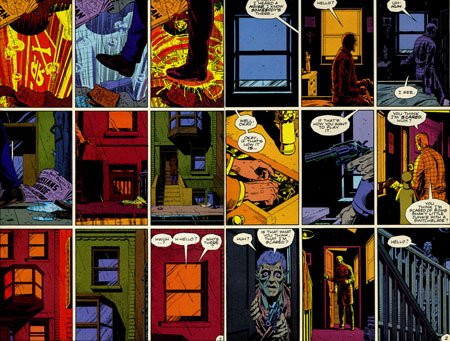
His "Watchmen" is another animal—a sprawling 12 issue serial based on an alternate Earth where masked vigilantes do exist, it crossed eras and locations in a blink, played on nesting cultural references and on-the-nose word-play, while having the look and feel of a movie story-board. It looked like it should be filmed, even though its nudity, ultra-violence and political satire made it somewhat over the heads of the casual movie-goer and beyond the scope of the MPAA. Given Moore's history, the expectations were another bastardization, or, given Snyder's, a by-the-numbers adaptation with nothing new to offer. The result, though, is neither extreme. It's a faithful adaptation that doesn't mind sharing in the fun of creation.*
"Structurally, There's No Difference"
 
Snyder and his scriptwriters David Hayter and Alex Tse have compressed the story, eliminating some second and third-tier characters (although they appear in the movie if you're looking for them), completely eliminating the parallel stories (in comic form) of "Tales of the Black Freighter" and the super-hero memoir "Under the Hood" (which will appear on a separate DVD, apparently) and concentrating on the main thread of the story: "Somebody is killing the Great Retired Superheroes of America."** 
It follows the investigation of never-realized super-group The Watchmen into who might be killing their members, starting with The Comedian, a government-sanctioned vigilante. All the Watchmen are vigilantes and, to some degree, fascists breaking arms and legs in brutal fist-fights that are, in the film, probably the best realized comics-fights yet filmed—like cage-matches in the open air. They all dress in the spandex kicking heads for different reasons and their very differences in attitude, sense of justice and heritage are what make the characters interesting, not the justice dispensed.
There's action aplenty,*** but where Snyder has excelled and made the film his own is to take Moore's example and kick it up a notch. Moore's super-America of 1985 has Nixon still in the White House for an unprecedented sixth term, the Viet Nam War having been won by Watchmen incursion. But Snyder doesn't stop there. There are all sorts of cultural references spread throughout the film mixing History with heroes. TV, political and business personalities are recognizable from their Real World counter-parts. Moore piled on the culture references but Snyder takes advantage of the audio-visual tools he has to provide a great soundtrack of hits from a diverse group of Bob Dylan, Simon and Garfunkle, Leonard Cohen, and Phillip Glass. Compositions and dialog are taken from other movies to sometimes hilarious effect, and although one doesn't want to give away too many of Snyder's surprises, to not acknowledge them would be giving this film's own strengths short-shrift. It is its own animal—a fully functional moving picture that takes the strengths of the comics medium source, but builds on it and takes the viewer between the panels without a sense of filler or extraneous material.
"But my Eyes were stabbed by the flash of a neon light/That split the night" 

Just as Moore nested references throughout the series, Snyder takes visual cues and unites them throughout the film. Where Moore has his "Smiley Face" icon throughout (a device that seems a shade contrived in the film), Snyder's white-bright light flashes carry resonances throughout the film, especially in an ages spanning credit-sequence (which contains one of the best comics call-backs in the film).
Those flashes will carry dramatic weight throughout the movie right up to the ending (which manages to logically improve on the novel's proposition-of course, that's how you solve "the problem," it's been staring us in the face all along).
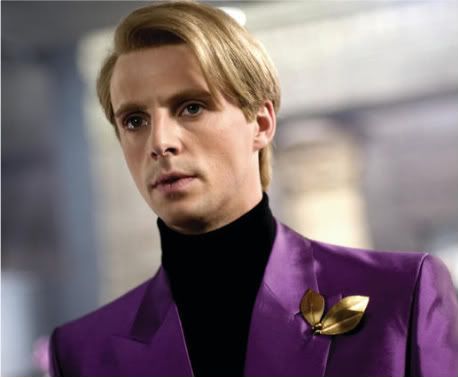
But, you can have all the CG wizardry in many worlds if the organic part of things, the actors, don't breathe life into the characters, and here "Watchmen" excels. Patrick Wilson has spent too much time being the handsomely bland blonde guy that it's a welcome relief to see him stand out appreciably as Dan Dreiberg, The Nite-Owl. Matthew Goode as Ozymandias has a lazy, lithe, slurry quality that shows how used he is to being The Smartest Man in the Room, always. Jeffrey Dean Morgan has the hardest role as The Comedian, but makes it work, as Malin Akerman does for The Silk Specter
But the big raves go to to guys who spend most of the time hidden: Billy Crudup, who manages to make a character of Dr. Manhattan despite the fact that it's all CGI imagery (can you believe they wanted Schwarzenegger for the role?), and Jackie Earle Haley, who does wonders as Rorschach. The stand-out character of the series needed a superb performance and Haley, who's made few mis-steps since re-igniting his peculiar acting career slams it home. One hopes that his talent is acknowledged soon.
I was surprised and delighted by Watchmen, the movie re-creating the same emotions I had reading the book all those years ago. But I wonder how much information one would get from the movie without having read the source. For me, there was recollected information bursting out of every frame, but to someone without the book in their banks those frames might seem over-crowded with useless knick-knacks...instead of pieces of the puzzle. Without that fore-knowledge, is the movie as compelling, or does one take a Manhattan-ish dis-interest?

* There have been some review complaints of "slavish" adherence to the source material. Whole sections have been lifted, but it's only once in awhile when those sections encompass a lot of material (usually from a God's eye perspective). "Slavish adherence" is simply not true. Even if it was, when was that ever a movie sin? Nobody complained when "Lonesome Dove" stuck so close to Larry McMurtry's novel. Why is it an issue now? Nothing else to write about? 

** "Watchmen" grew out of Alan Moore proposing a 12 issue series based on characters acquired by DC Comics when it bought the Charlton Comics line. DC wanted to use those characters in the regular comic-line, but wanted Moore's story, too. So, Moore created new heroes based on those characters: Captain Atom became Dr. Manhattan; Blue Beetle became Nite-Owl; The Question became Rorschach; Pete Cannon-Thunderbolt inspired Ozymandias; The Peacemaker became The Comedian; Nightshade became The Silk Specter. 

*** Watchmen is a hard "R" for moments of sexuality, nudity and stomach-churning violence, for instance, characters are meat-cleavered in the head, one criminal has his hands tied to prison bars and his arms sawed off, not to mention the near-occasion of brutal fights—The Silk Specter breaks an arm so hard the bone pierces the skin — and a prison fight ends when a prisoner is dowsed with boiling oil. The movie begins with a bone-crunching fight between The Comedian and an unknown assassin, leading to his being thrown through a plate-glass window a couple dozen stories high. The movie's lone super-powered hero, Dr. Manhattan, explodes people with a wave of his hand. The show I went to, a couple brought their five year old son. He's gonna be in therapy for months.

Wednesday, February 10, 2021

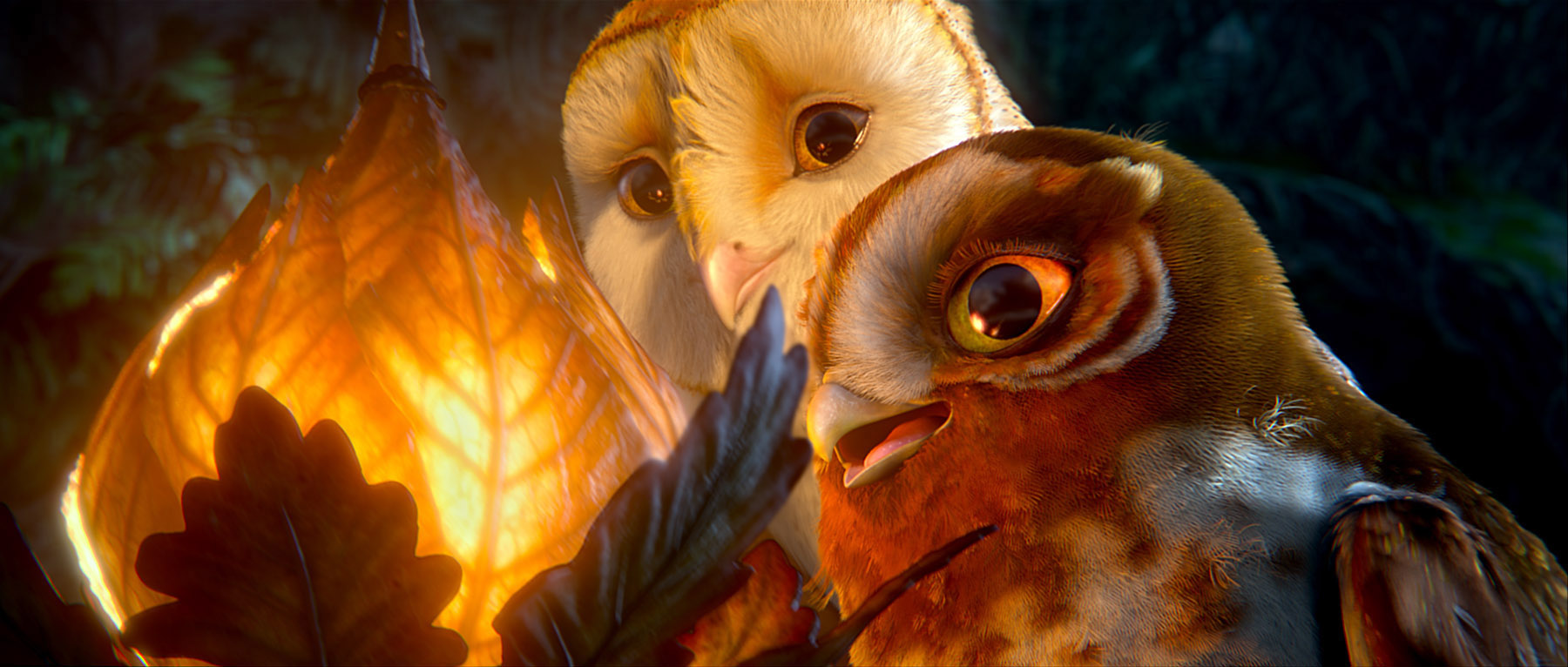
Legends of the Guardians: The Owls of Ga'hoole

Written at the time of the film's release...

"Use the Gizzard, Luke"
or
"Not So Much 'Hoo' as 'What' and 'Why'"


I loves me my fantasy films. You give me a good fantasy film, and I'm back to being 5 years old, giddy with the possibilities of a world-view that has no knowledge of mortgages, property tax, paralyzing self-doubt, and Glenn Beck.* Innocence makes a comeback, the world seems simpler, and it gives us something to aspire to besides not hitting the "Snooze" alarm in the morning. I miss those pre-cynical days.

Which is why a lot of the current crop of kids' flicks leaves me cold. Harry Potter used to be fun, but they've gotten increasingly dark and creepy, and they're going to end with an inevitability that's telegraphed and a bit morose (and I wouldn't be surprised if the last one were just a black screen). I mean, c'mon, the kid has an invisibility cloak and flies a broomstick for crying out loud, what's he got to be depressed about? The Star Wars films were fun before Darth Freud came waltzing in, then they careened into the side of the Death Star trench—impressively, one must say, but they weren't too much fun trying to present their civics lessons.

One goes into these things with that same innocence. Tell me a story. Gladden my eyes. Charm me. Seduce me. Make me not think about the $10 admission and the two hours I'm wasting of my too-short life. Give me something new and let me walk out with a spring in my step and a song in my heart, and maybe...maybe...a fresh, better way of looking at the world. We don't have to be friends, just don't make me regret the time I spent with you. I'm easy. I came to buy.
So, an animated owl movie sounds like just the ticket. I like owls, even though they're predators. They impress me, and I've enjoyed a couple of them as neighbors. But, Legend of the Guardians: The Owls of Ga'hoole (they needed the post-colon part, as the title couldn't be more generic) left me wanting to repeal the Endangered Species Act. Yeah, I know, the thing's popular with kids, but I remember kids used to like Clutch Cargo, which was the lowest form of animation there was

The story is Template No.2 in the Fantasy genre—ostracized something-or-other must prove its worth against big, bad oppressors, while putting aside its childhood loyalties in some small way. But I couldn't help but think the authors just did a cut-and-paste job putting owls into Star Wars (yes, they really DO say "Use the gizzard" as a euphemism for instinct). The complete lack of anything original in the plot can sometimes be overcome by clever film-makers with style.  Zack Snyder, as successful as he can be adapting other media—specifically graphic media—to a cinematic form, seems to be up a tree when making the leap from prose to image. 
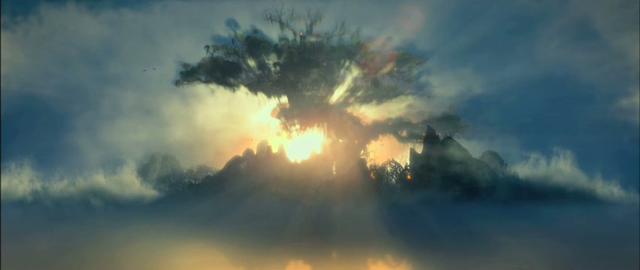
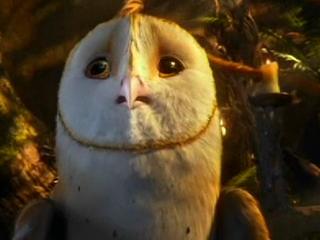
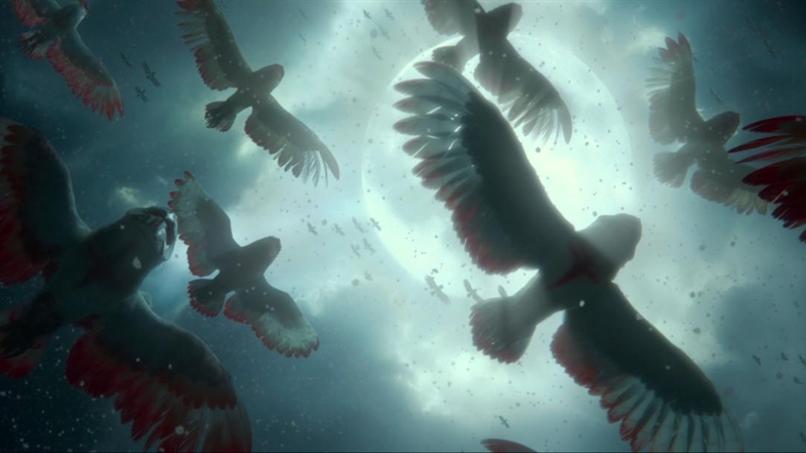
I've often mentioned that graphic novels are movie storyboards with better writing, and it would appear that is how Snyder managed to make good movies out of 300 and WatchmenLOTG:TOOG is a mess. It's an unmemorable mess, that flies out of the mind as if it was searching for a more palatable meal—something with meat and gristle—the only memorable thing about it being its own lack of anything that sticks. The owls look like sock-puppets with beaks, devoid of distinguishing characteristics that allow you to follow their progress in the storyThe flying scenes are choreographed with the intention to disorient, rather than create empathy or epiphanyThe only thing I took note of were the impressive background vistas the critters inhabited, but it is the faintest of praise to say that the best thing about the movie was the stuff you'd see in the rear-view mirrorThis film is totally devoid of charm, and even, coherence.
Now, I'm sure there will be some parent out there who'll read this and immediately take umbrage ("My child LOVED this movie!!"**) and want to go on the attack, as if I was writing this with their precious issue particularly in mind.  For all you potentially psychotic parents, I don't question your child's taste (although I'd be willing to bet they were as fidgety as the kids I saw it with—and as I was—and I'd also wager that if they liked it, it was because they were familiar with the source material, and would be happy if there were a Ga'hoole breakfast cereal consisting of twigs and feathers), but this is a BAD movie. Really bad. 
A reasonable child can like bad stuff (I loved the TV-show "
Supercar" as a kid—which was a marionette show about a flying car, and I never questioned why all the cars were convertibles—so I speak from experience), but this is cotton candy movie-making, spun to give an ephemeral surge of interest, but with zero nutritional value (perhaps the calories should be posted in the End-Credits, I didn't stay to find out). When one considers how much time and money has been spent digitizing (one hesitates using the word "creating") this exercise, you begin to fantasize staking yourself out in a field, wearing a mouse-suit ("Come and get me, owls, you can't do anything worse than you already have!!). Better to salve your inner child with a daily dose of Babe, or Charlotte's Web.

If your child does drag you to this mess, I would suggest texting your friends throughout the entire movie...or even watching another movie.

I can't help but think that Ga'Hoole is a cynical writer's malaprop of "Go to Hell."


* The problem with re-posting old reviews is that there are references the reader might not have any clue about—like Glenn Beck who used to be somebody. Billy Wilder ran the same danger when he put in topical references into his movies. Unless he was very careful, 50 years on people wouldn't know what he was talking about, cultural-reference-wise.

** I still remember the time some parent castigated me for hating Speed Racer.  The movie sucked...and it's a deeply cynical thing to show a child.  I'm unremorseful in my assessment.  (2021 Update: I'll be re-posting reviews of Speed Racer and Watchmen next week).

Wednesday, February 3, 2021

300

Written at the time of the film's release...

"This won't be over quickly. You will not enjoy this" 

Two characters say this in 300, but it might as well have been me when I walked into the theater. I'm not a fan of Frank Miller, the comic-book artist-turned-writer who breathed new life into Marvel's "Daredevil" and DC's "Batman." I enjoyed his work on those, but around the time of his "Sin City" output, I began to think of his work as campily overblown and corrupt. When he ran out of ideas, he'd have one of his characters cut off a limb and do something that defied the laws of physics and that would serve as plot advancement. 

So, upon seeing the extremely faithful film adaptation of his "Sin City" graphic novels years ago, I just hung my head and thought that was the end of Miller doing anything good ever again. His hack-work had become too successful. A second Batman "Dark Knight" series was a sporadically illustrated mess, and his current work on an "All-Star" version of the character has been embarrassing. His scripts for the "Robocop" series were terrible. His co-directorial debut with Sin City was a frame by frame recreation of his original illustrations, and in those, there was power, no matter how thick-headed the concept or eye-rolling the dialogue that accompanied them.* 
It did point out, however, why films are one thing and graphic story-telling is another. Comics have the luxury of leaping from high-point to high-point. They suspend time to make way for mouthfuls of dialogue. They focus the eye and mind. Film does this, too, but at 24 frames a second, rather than the one comics afford. A film has to crash through that white border separating panels, and that's the difference between art and artifice. 
Now, Miller's "300" has hit the screen, and unlike "Sin City," director Zack Snyder has taken the concept, the tone, and Miller's design sense but gone his own way with the direction. Key frames of Miller's book are reproduced, but for the most part Snyder has found a way of taking Miller's tropes and making it move and breathing life into it. And it's Snyder's efforts to connect the dots and make Miller's flat-panels three dimensional that lets 300 rise above most comic book adaptations. 
It's still overblown. Some of the dialogue is not only bad, it's bad for today, much less ancient Greece. Example: When King Leonidas meets his opposing King, the bling-encrusted Xerxes--who's not nearly as gay as Miller made him in the book--he takes a look at the Persian's elaborate transportation and says "Let me guess. You must be Xerxes"--a line more weisen-heimer than kingly. 
But it beats the fade-out line on the eve of the final battle: "Unless I miss my guess, we're in for one wild night!" 

Oy. So bad it stings!
300 is a bit too enamored by the CGI-technology to create blood-spurts, but damn, if it doesn't move and hold your interest! There's one shot--of King Leonidas providing point (literally) to an attack done in one long take, and as he dispatches opponent after opponent, at each impact the film is speed-ramped to a crawl, which is as ingenious a way of recreating the framing ability of comics in a moving picture as has been devised. Sort of like Peckinpah's slo-mo cut-aways but self-contained in a single shot. 
So, what did I think of it? I enjoyed it! I may not like Miller's current writing, but one can't fault his illustrative sense, and Snyder brings it to glorious life. It may be gratuitous "homo-erotic war pornography," but it's sure well-constructed homo-erotic war pornography. It makes one anticipate Snyder's promised version of Alan Moore's "Watchmen," although one quails at the suggestion (and it's only been suggested) of Tom Cruise as the Machiavellian super-hero Ozymandius. Not even a Spartan could face that! 

* Miller did go on to make his directorial debut with a film version of the classic comic character "The Spirit".  It was just plain badness. And not in a good way.