Saturday is traditionally "Take Out the Trash Day"...
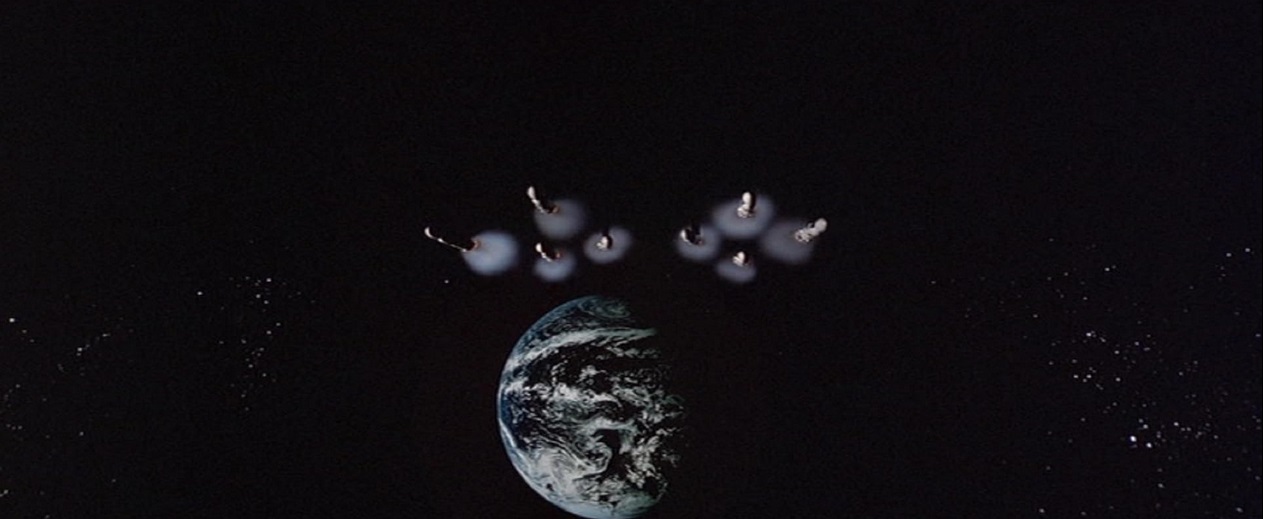
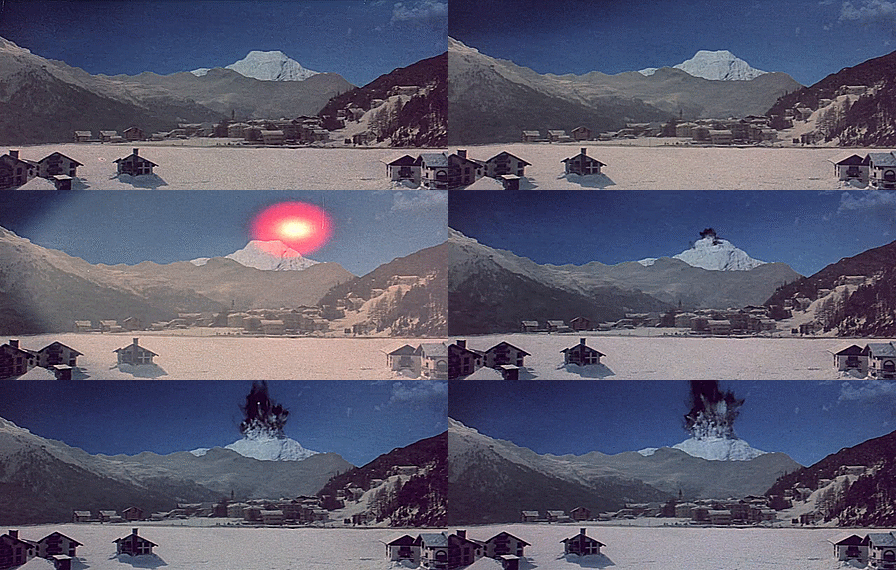
Meteor(Ronald Neame, 1979) A co-production between Shaw Bothers Studios, Warner Brothers, Nippon Herald Films and American International Pictures, featuring a script by Edmund H. North (who wrote The Day the Earth Stood Still and co-wrote Patton) and Stanley Mann (who wrote a couple of Sean Connery's early films) and featuring a cast that probably ate up most of the movie-budget—Connery, Natalie Wood, Brian Keith, Karl Malden, Henry Fonda,Martin Landau, and Trevor Howard all under the direction of Ronald Neame, who directed The Poseidon Adventure. The story was the most high-profile of topics—an asteroid (called "Orpheus") is headed for Earth and American and Russian scientists must cooperate and use their own orbiting nuclear defense systems to destroy it before it hits Earth and creates a global catastrophe.
What could possibly go wrong?
Budgeting. That's what could go wrong.
Although a lot of the writing in Meteor is overwrought, the cast does alright with it, and Neame's direction isn't particularly flashy, but manages to keep things moving briskly.
But, by the time all of that was done, the movie's coffers had little room left for post-production and special effects. It didn't help that by the time attention was being paid to the post-production, the group assigned to do the effects of the large threatening asteroid and the missiles designed to destroy it was summarily fired for the work for being below expectations.*
Now, there's a lot of grousing these days that "special effects don't make good movies." Goodness knows there have been a lot of movies where the special effects were sub-par, even in the 1970's (Logan's Run, for instance), even after the water-shed moment ofthe Star Wars premiere. And one has merely to look at the output of AIP's post-Star Wars coat-tails films to see that their effects work was "made-in-the-garage" quality.
So, one is left with a Frankenstein-monster of a movie: An able cast with a somewhat shaky script (with some truly cringe-inducing dialogue), spliced with sub-par special effects sequences that—despite the many limitations—seem to go on forever, with no real editing scheme to create tension, but plopped into the film to fill the time with the shakiest of continuities.
There's no finesse to it at all—how could there be when the film was being pieced together so close to the premiere? One can only console oneself with a sequence where the all-star cast gets drenched in mud while trying to escape their command headquarters through the New York City subway system. The images call to mind so many derogatory descriptions for the movie. "Disaster" being the kindest one.
Hollywood wasn't quite done with the concept yet: 1998 saw the release of not one, but two "asteroid-threatening-the-Earth" movies: Armaggedon and Deep Impact.
Apparently, there's a lot of "rockery" in neighborhood-space. And nothing new under the sun.
* Actually, two groups of special effects studios were let go, sucking up a lot of the "post" budget and pushing the time-line for the eventual team—they had a mere two months to complete the work before the premiere!
There was another major up-ending of expectations in the post-production: John Williams was given the job of writing the score for Meteor, but the production delays and the revolving door of special effects artists prevented any sort of semblance of "picture lock" for him to compose music for it before he had to go off and work on Steven Spielberg's 1941. Laurence Rosenthal was then hired to compose the score, which ended up being rather good—amazing, given his time-constraints.
While I catch up on the reviews still in "Draft" phase here, I'll re-run a feature I ran when I first started this blog seven years ago,**** when it was suggested I do a "Top Ten" List.
I don't like those: they're rather arbitrary; they pit films against each other, and there's always one or two that should be on the list that aren't because something better shoved it down the trash-bin.
So, I came up with this: "Anytime" Movies. Anytime Movies are the movies I can watch anytime, anywhere. If I see a second of it, I can identify it. If it shows up on television, my attention is focused on it until the conclusion. Sometimes it’s the direction, sometimes it’s the writing, sometimes it’s the acting, sometimes it’s just the idea behind it, but these are the movies I can watch again and again (and again!) and never tire of them. There are ten (kinda). They're not in any particular order, but the #1 movie IS the #1 movie.
It’s a film that chills me right down to my bones and makes me cry every single time.* It throws itself into the deepest pits of despair and within moments, prat-falls into low comedy. It’s a western…about race relations, and in the house of mirrors of a “genre” piece deflects the self-righteous tone of a sermon. It stares into the soul of people at their worst, and exults in their best.
It is arguably John Ford’s best film (and he made many great ones). It is inarguably John Wayne's finest performance on-screen, while completely working against the image that Marion Morrison had built as “John Wayne,” American Hero.
Oh no. We’re talking about The Searchers—a “western” made during the somnambulant 50’s …and with John Wayne, ferchrissakes! How corny can you get?
Back up, pilgrim.
The Searchers has just been re-released (to mark its 50th anniversary**) in a gloriously re-mastered DVD, and has come under critical reviewfor being too corny, too obvious, and more than a little dated.
Worse still, it has been branded a “film-school darling” that has skated too long on an undeserved reputation as a masterpiece.
Bullshit.
LikePauline Kael’s faulty detective work dissecting Citizen Kane and Elvis Mitchell’s naïve un-analysis of 2001, the work in Slate smacks of a critic either looking for something to write about or make a name for themselves bucking “conventional wisdom.” Having to spend a summer reviewing the third X-Men movie, the fifth “Superman” opus AND an entirely superfluous “Pirates of the Caribbean” sequel is bound to make anyone crabby. But it shouldn’t lower one’s standards, and there’s enough slip-shod work in the article to indicate that’s the case. At the very least, it’s a terrible gloss-over.
At the worst, it displays a film reviewer who hasn't even seen the film he was supposedly watching for the prejudices and pre-conceived notions that he would rather cling to rather than objectivity.
The Searchers is a masterpiece—the culmination of decades of film-making experience that John Ford had accumulated since the silent era—while crystallizing Ford’s growing disenchantment with the Myth of the West. In a time when westerns were still basically built around the simplistic formula of “Cowboys vs. Indians,” Ford was starting to speak out more explicitly for the latter sixteen years before such accepted “consciousness-raising” films as Little Big Man or Soldier Blue. Like any masterpiece, it displays the sum of a body of work and breaks new ground, paving the way for the future.
The Searchers tells the story of an obsessive 10 year hunt for a lone family member taken in a violent Comanche raid. It’s led by the worst person possible: the child’s uncle--a hate-obsessed confederate soldier, self-exiled from his family, who still carries his saber on his hip, bitterness in his soul and his heart on his sleeve. Mix in a venomous race-hatred for all non-whites and you have the most flawed anti-hero to appear in movies. Ethan Edwards starts his search to bring his niece back alive, but as the years pass and she matures into womanhood, he gives her up as one of the Enemy, and sets out to kill her. At the center of the film’s black heart is that most archaic and useless word: miscegenation. It’s rough stuff. Rougher still are the attitudes of the settlers towards the Indians that border on hysteria. There’s a haunting scene late in the film where Edwards and his fellow traveler (played by future "Star Trek" Captain Pike and “Teenage Jesus,” Jeffrey Hunter) ride into a fort on the Trail of Tears to inspect some kidnapped white women who have been re-captured—"rescued" they would say—by the Cavalry.
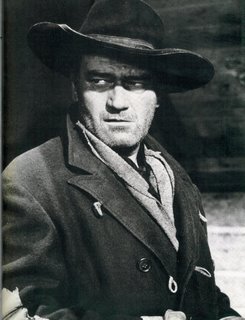
“It’s hard to believe they’re white” a sergeant says. “They ain’t white,” spits Edwards, and at the sound of a shriek from one of the women, he turns to look at her. Ford trucks in the camera fast onto Wayne’s face (mirroring the shot he used to introduce Wayne in their first film together, Stagecoach) and it’s amazing. Wayne was always blessed with a mug that the camera loved***—it could read every emotion that played across it—and in a performance minus the “hero façade” and that turns on the full after-burners that usually blew his co-stars off the screen, this one quiet moment radiates a combination of hate, disgust…and abject fear. No words need to be said to make the point. No words could.
It's what made Ford a great director and Wayne a great actor.
"No, Ethan! No, you don't!"
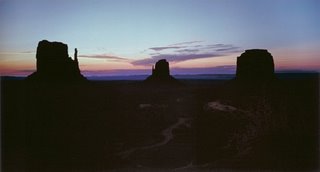
And yet, for all its depths of despair amid bloodshed and the race-hysteria, Ford tries to balance it with entertainment. That’s quite the tight-rope walk. But then, it’s not a sermon. It’s a Western. Ford was never so pretentious to be caught lecturing. He’d say if you want to send a message, use the Pony Express. Better to sneak the lessons into the fabric of the story, and distract with shenanigans about wayward lovers, goony old men, and green cavalrymen with pointy swords. One of the incidents involves the unintended marriage of Hunter’s character to a portly Indian maid. It’s the source of raunchy comedy in the vein of Ford’s The Quiet Man—all roughhouse and bad taste. But when Ford’s good guys “The Cavalry” decimate a Native village and the luckless character along with it, Hunter is left to ask “What’d they have to kill her for? She never hurt anybody!” The question hangs in the air with indictments all around. The Searchersbegins and ends with a black screen. In the beginning, the blackness gives way to the vast magical vista of Monument Valley (which figures in two of my anytime movies. If God lives anywhere on Earth, I think it’s on that vast acreage of land overseen by the Navajo) that to Garry Wills suggests an irising lens, but to these eyes seems more of a proscenium arch. At the end it shuts out Ethan Edwards who is left out of the warmth of a family embrace to wander the desert (Of course, Wayne’s character is going to come in eventually and eat…but Ford chooses to leave Edwards outside). His prejudice does not belong with home and hearth...and society…and Civilization. Yet it is also Ford’s choice to leave the character alive, the wolf always at the door.
It’s as if having made his plea for tolerance, Ford cautions us that it will always exist, somewhere.
Will we ever...finally...lose the hate?
“That’ll be the day.”
Robert McGinnis' portrait of Wayne in The Searchers.
* A comment on this post and movie—when it was stationed at another blog—asked: "The Searchers makes you cry?!?!? Is it because of all the dead Indians?" Sure. Go with that. But, a lot of settlers are killed, too, and the hunt in The Searchers is precipitated by one such massacre, the matriarch of which is the one woman that Ethan Edwards loves. It's what entwines his search into one of need and of vengeance.
No, the thing that makes me cry is the act that comes right before the line "Let's go home, Debbie." That line. From that character. At that time. Despite all evidence to the contrary. It's what gives one a small tiny quantum of hope that belies the sentiment of "That'll be the day..."
** And now, it's a few years shy of its 70th. I wasn't even a year old when it was released. It's like an old friend that's grown up with me. *** Screenwriter Robert Towne has a better term for it, the "camera-love" phrase implying a happy accident that doesn't give enough credit to the actors, their craft and experience. He says that actors like Wayne, Henry Fonda, and Gary Cooper are "ruthlessly efficient" in that they can communicate differing emotions with an economy of expression. Those words are particularly apt for Wayne's performance in The Searchers.
**** And, on Sunday, we'll put up a "Don't Make a Scene" feature from each week's film.
Brainstorm(Douglas Trumbull, 1983) In this age of ever-present social media, it's hard to imagine that scientists and engineers and biologists might envision a life more intimate than what it already is. But they are, unlocking the secrets of the brain, leading to neural pathways controlling prosthetics. We're starting to see the markers in the brain for Alzheimer's, and hooking up devices to bring sight to the blind. New breakthroughs are becoming so matter-of-fact that the conversation wanders to the idea of sharing thoughts and experiences by direct link, which is considered semi-possible (even if you're not Elon Musk). And with exploration of virtual reality becoming more and more sophisticated, it is downright plausible. But what will that do to us? Sensations, sights, sure. But what of sharing thoughts? As it is, the brain is one of the great secret places; what would happen if we should unlock that Pandora's Box, and we have no more place to hide? Would it make us better people, or worse. Would the safety of our Dr. Jekyll's stand the scrutiny of our hidden Mr. Hyde's.
Special effects wizard Douglas Trumbull, who directed Brainstorm, (one of the just two feature length films he made, the other being Silent Running, concentrating his energies on technological advancements) uses that as the basis for this film and somewhat sidetracks the implications of such a device for a direction that is for more ethereal and mind-blowing (and personal for the main character), while also giving him a chance to do a third act special effects tour de force.
But, as the project becomes more sophisticated and the potential expanded, the power of the device becomes increasingly invasive—emotions are transferred, sensations communicated, not just in the reality of perception, but in the stored interpretation, as well. Nightmares can be communicated and transferred. Thus, hard-wired, they can experience another person's recorded memories, thoughts...even emotions...more real than real, with the exception that they're not yours.
For the investors, the value of the brain-scans is obvious—weaponize it. The military could find all sorts of uses for just such a technology (but how are you going to get enemy troops to put on the receivers, geniuses?) Beyond training and communication and some invasive interrogation possibilities, the uses of such a device seem limited, fulfilling only the latter half of "the winning of hearts and minds."
The possibilities soon move beyond precipitous roller-coaster rides and flights over the Grand Canyon, as the scientists do their own beta-testing on themselves. For Brace, it renewshis memories of the first blush of romance with his ignored-for-science wife, Karen(Wood, whose character's job is tostreamline the helmetfor consumerFahrvergnügen).
Everybody who's seen the film remembers this sequence, but I'm including it to boost internet hits.
For another of the researchers, it's straight to sex (The "go-to" place for all new technology among civilians), causing him to suffer a breakdown when he splices an endless loop of "the little death" (Buddy, like they say in the ads, if it lasts more than four hours, call your doctor!), and in the ultimate trip, Reynolds, rather than dial 9-1-1, has the wherewithal to turn on the machine and record her death experiences while suffering a fatal heart attack.
Fletcher's Reynolds shares an out-of-body experience.
That last tape becomes an obsession forWalken's Brace,risking everything to take that journeywith the proviso that he has an "Off" switch for The White Light—a Cosmic Clapper if you will—while everybody else in the company (and seemingly the world) is trying to stop him. For the writers, it's a chance to create a redemptive character arc for Walken's driven Brace, to go beyond his own obsessive drive to complete the work and literally get inside somebody else's head to the Undiscovered Country. For director Trumbull the techie, it's an opportunity to pull out all the FX stops with journeys through memory bubbles, a Boschian vision of Hell, and a slit-scan trip down Heaven's main thoroughfare, complete with angelic Hosts.
Quite the show. But, in its attempts to present its Stairway to Heaven, the art design gets a little busy and too specific in its architecture, while making the actual journey a bit disorienting (for instance, was the trip through a simulated Hell necessary?). It's a bit too high-tech for its own good, as beautiful as it is, for a process that's as old as life itself and seems a little fussy in its side-tracks. Taken in context with the more teasing glimpse of the afterlife afforded by, say, Hereafter, it might be too much of a God Thing.
Presentation is of primary importance to the film, seeing how it is experimenting with themes and film formats—the dramatic scenes are shot a fairly normal (for the time) 35mm with an aspect ratio of 1.7 to 1 while the "machine-scan" segments are shot in Super-Panavision 70 with a widescreen aspect of 2.2 to 1.* Usually films taking on that scheme of things, come off a little cutesy (see More American Graffiti), or have all the charm of a demonstration disc. But, inBrainstorm, the jarring transitions seem necessary, dramatically proper, and perfectly suited to what's happening on-screen.
As ambitious as all of this was, the film never found an audience. Brainstorm has always seemed snake-bit for one reason or another...and unfairly, I think. It is notorious for beingNatalie Wood's last film, as she died in a midnight boating accident during the filming, an event that has always had an element of the unknowable about it. No one knows why she rowed away from her boat in the middle of the night, making it the subject of gossipy speculation, and thus, irrelevant to the film, even as it overshadows it. Some of her scenes went un-filmed, but the majority of her work made it to the finished movie, and there are no continuity bumps noticeable from her absence. But the event did cast a pall over the film, probably to its detriment, as Death is already one of the film's major players.
But there's another reason it's unlucky. It premiered at the dawn of home-video, and if ever there was a film that needed to be seen full-screen in a roadshow presentation, it is Brainstorm. I had the happy occasion to see it at a press preview where it was one of the attractions that would be demonstrating the wide screen glory of the new Grand Cinemas Alderwood, north of Seattle, which, bucking the then-trend of cracker-box multiplexes, were built large in scope and multi-channeled in sound to take advantage of the post-Star Wars spectaculars that were starting to flood theaters, after the previously timid response of the studios to large format fare. The Grand was the perfect place to see it large enough to encompass the full-width of the big-screen sections, but intimate enough to keep you from feeling cheated when the smaller format drama scenes took precedence.
And that was something home-video and cable screenings never could duplicate—the awesome transitions from the scenes of scientists and technicians toiling over the wires and ramifications of their brainwave recorder to the hyper-dimensionality of the gizmo's playback in action. For that is the crux around which the film and its unique formatting revolves.
During the film's initial release on home-video (VHS and BETA), that format juggling was completely abandoned...AND, as was the practice of the time, the film was presented full-screen ("formatted to fit your television screen"), which completely nullified the work Trumbull did to separate the two realities. It wasn't until the advent of DVD's and the trend away from full-frame to widescreen format (the better to fit on your new widescreen television) that people finally saw what all the fuss was about. Further improvements were made when the film was "remastered"
For Trumbull, the experience of making the film under compromised conditions and the death of Natalie Wood during the filming (which delayed the completion of the film and its release two years later), left a personal mark—he has vowed to never make another Hollywood film again.
Douglas Trumbull died in 2022.
The machine's test-pattern.
* Trumbull originally wanted to shoot the "machine'scan" images in his patented "Showscan" format, which used 70mm film recorded at a speed of 60 frames per second, rather than the usual 24 fps. The film's distributor, M-G-M, probably considered the cost and logistical nightmare of supplying theaters with all new equipment and asked Trumbull to compromise, although his original conceit that the "scan" images look more realistic the dramatic scenes is still fairly-well communicated.
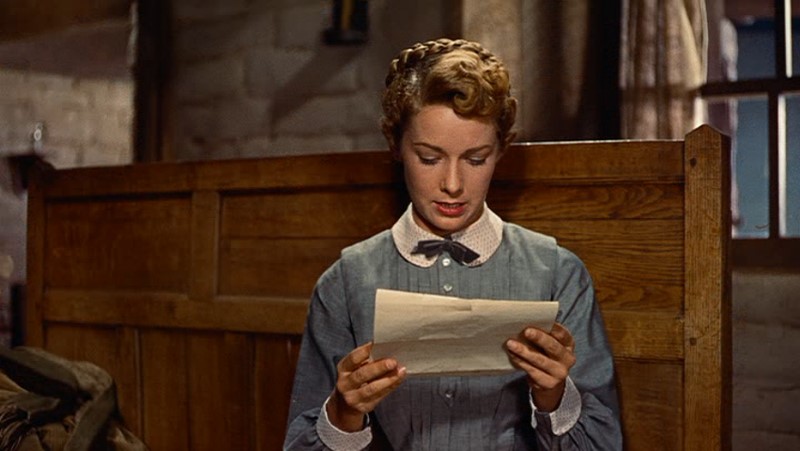
The Ghost and Mrs. Muir(Joseph L. Mankiewicz, 1947) Three years before he would realize his ultimate triumph of All About Eve, Joseph L. Mankiewicz made his fifth film for 20th Century Fox, a fantasy-romance, adapted by Phillip Dunne. Mankiewicz had already worked with star Gene Tierney on Dragonwyck and the two re-teamed here to tell the story of a young widow, Mrs. Lucy Muir, who, to get out from underneath the domineering thumbs of her in-laws, takes her young daughter (played by Natalie Wood) and rents a storied seaside cottage called Gull Cottage. Storied might be too charitable a term. The landlord does his best to warn her that there's been quite a bit of turn-over lately in renter's owing to the rumor that the place is haunted. But, Mrs. Muir loves the place and is undeterred by the stories; she, her daughter and her maid move in.
The first night she is visited by the ghost, in the sepulchral form of Captain Daniel Gregg (Rex Harrison), the first owner of the house. He doesn't take too kindly to the living presences there, but Muir charms him, and he reluctantly agrees to a spiritual version of a renter's agreement—as they're better than past guests, he will allow them to stay, refrain from poltergeistian activities and will only check-in (fade-in) with Mrs. Muir, leaving her daughter undisturbed. Wouldn't do to scare the children, no matter the friendliness of the ghost. And life (and after-life) settles down for the four residents.
There are disagreements, but for the most part, Gregg and Muir get along, and when Muir's in-laws pay an unexpected visit to tell of her of financial troubles that will force her eviction and her return to London, Gregg shows that the spirit is willing by scaring the in-laws out of the house.
To get her out of debt, the two devise a scheme: Gregg will dictate his memoirs to Muir, and she will then publish them and use the proceeds to buy Gull Cottage. Gregg spins a tale of derring-do on the high seas, and his obvious love of the sea and means of expressing it, charms his biographer, and slowly, the two begin to fall in love.
But it's a love that can never be in the real world. The Captain is, after all, dead. And not just figuratively, but really and sincerely...dead. She is young, lovely, and, more to the point, alive. Suitors come and go, and Gregg watches them, disapprovingly, and is, himself, haunted by the opportunities for life that Muir might be passing by. "Life is for the living," they say. So, when Muir meets an urbane man (George Sanders) at the publisher's, Gregg convinces Muir (while she sleeps) that he is only a dream that she's had, and fades from her life to give her life, never to return.
But, life is not all it's cracked up to be. Life is hard for Mrs. Muir, and love is even harder—cruel, in reality. She lives out her life alone, without even the spirit of love she once knew.
It's simple in theme, but complex in emotion and resonance. Mrs. Muir is a widow in love with death. Mourning her husband, she finds love in a kindred spirit, in love with life, so much so that he will sacrifice himself in her interest. It is the oddest, and most haunting of love stories that ends in a love that even death dare not part.
While I have a few reviews "in the works," It's as good a time as any to re-boot (actually transplant from the old movie blog) a feature I started years ago, when it was suggested I do a "Top Ten" List. I don't like those: they're rather arbitrary; they pit films against each other, and there's always one or two that should be on the list that aren't because something better shoved it down the trash-bin. So, I came up with this: "Anytime" Movies. Anytime Movies are the movies I can watch anytime, anywhere. If I see a second of it, I can identify it. If it shows up on television, my attention is focused on it until the conclusion. Sometimes it’s the direction, sometimes it’s the writing, sometimes it’s the acting, sometimes it’s just the idea behind it, but these are the movies I can watch again and again (and again!) and never tire of them. There are ten (kinda). They're not in any particular order, but the #1 movie IS the #1 movie.
It’s a film that chills me right down to my bones and makes me cry every single time. It throws itself into the deepest pits of despair and within moments, prat-falls into low comedy. It’s a western…about race relations, and in the house of mirrors of a “genre” piece deflects the self-righteous tone of a sermon. It stares into the soul of people at their worst, and exults in their best.
It is arguably John Ford’s best film (and he made many great ones). It is inarguably John Wayne's finest performance on-screen, while completely working against the image that Marion Morrison built as “John Wayne.”
Oh no. We’re talking about The Searchers—a “western” made during the somnambulant 50’s …and with John Wayne, ferchrissakes! How corny can you get?
Back up, pilgrim.
The Searchers has just been re-released (to mark its 50th anniversary*) in a gloriously re-mastered DVD, and has come under critical reviewfor being too corny, too obvious, and more than a little dated. Worse still, it has been branded a “film-school darling” that has skated too long on an undeserved reputation as a masterpiece.
Bullshit. LikePauline Kael’s faulty detective work dissecting Citizen Kane and Elvis Mitchell’s naïve un-analysis of 2001, the work in Slate smacks of a critic either looking for something to write about or make a name for themselves bucking “conventional wisdom.” Having to spend a summer reviewing the third X-Men movie, the fifth “Superman” opus AND an entirely superfluous “Pirates of the Caribbean” sequel is bound to make anyone crabby. But it shouldn’t lower one’s standards, and there’s enough slip-shod work in the article to indicate that’s the case. At the very least, it’s a terrible gloss-over.
At the worst, it displays a film reviewer who hasn't even seen the film he was supposedly watching for the prejudices and pre-conceived notions that he would rather cling to rather than objectivity.
The Searchers is a masterpiece—the culmination of decades of film-making experience that John Ford had accumulated since the silent era—while crystallizing Ford’s growing disenchantment with the Myth of the West. In a time when westerns were still basically built around the simplistic formula of “Cowboys vs. Indians,” Ford was starting to speak out more explicitly for the latter sixteen years before such accepted “consciousness-raising” films as Little Big Man or Soldier Blue. Like any masterpiece, it displays the sum of a body of work and breaks new ground, paving the way for the future.
The Searchers tells the story of an obsessive 10 year hunt for a lone family member taken in a violent Comanche raid. It’s led by the worst person possible: the child’s uncle--a hate-obsessed confederate soldier, self-exiled from his family, who still carries his saber on his hip, bitterness in his soul and his heart on his sleeve. Mix in a venomous race-hatred for all non-whites and you have the most flawed anti-hero to appear in movies. Ethan Edwards starts his search to bring his niece back alive, but as the years pass and she matures, he gives her up as one of the Enemy, and sets out to kill her. At the center of the film’s black heart is that most archaic and useless word: miscegenation. It’s rough stuff. Rougher still are the attitudes of the settlers towards the Indians that border on hysteria. There’s a haunting scene late in the film where Edwards and his fellow traveler (played by future Captain Pike and “Teenage Jesus,” Jeffrey Hunter) ride into a fort on the Trail of Tears to inspect some kidnapped white women who have been captured—"rescued" they would say—by the Cavalry. “It’s hard to believe they’re white” a sergeant says. “They ain’t white,” spits Edwards, and at the sound of a shriek from one of the women, he turns to look at her. Ford trucks in the camera fast onto Wayne’s face (mirroring the shot he used to introduce Wayne in their first film together, Stagecoach) and it’s amazing. Wayne was always blessed with a mug that the camera loved*—it could read every emotion that played across it—and in a performance minus the “hero façade” and that turns on the full after-burners that usually blew his co-stars off the screen, this one quiet moment radiates a combination of hate, disgust…and abject fear. No words need to be said to make the point. No words could.
It's what made Ford a great director and Wayne a great actor.
"No, Ethan! No, you don't!"
And yet, for all its depths of despair amid bloodshed and the race-hysteria, Ford tries to balance it with entertainment. That’s quite the tight-rope walk. But then, it’s not a sermon. It’s a Western. Ford was never so pretentious to be caught lecturing. He’d say if you want to send a message, use the Pony Express. Better to sneak the lessons into the fabric of the story, and distract with shenanigans about wayward lovers, goony old men, and green cavalrymen with pointy swords. One of the incidents involves the unintended marriage of Hunter’s character to a portly Indian maid. It’s the source of raunch comedy in the vein of Ford’s The Quiet Man—all roughhouse and bad taste. But when Ford’s good guys “The Cavalry” decimate a Native village and the luckless character along with it, Hunter is left to ask “What’d they have to kill her for? She never hurt anybody!” The question hangs in the air with indictments all around. The Searchersbegins and ends with a black screen. In the beginning, the blackness gives way to the vast magical vista of Monument Valley (which figures in two of my anytime movies. If God lives anywhere on Earth, I think it’s on that vast acreage of land overseen by the Navajo) that to Garry Wills suggests an irising lens, but to these eyes seems more of a proscenium arch. At the end it shuts out Ethan Edwards who is left out of the warmth of a family embrace to wander the desert (Of course, Wayne’s character is going to come in eventually and eat…but Ford chooses to leave Edwards outside). His prejudice does not belong with home and hearth...and society…and Civilization. Yet it is also Ford’s choice to leave the character alive, the wolf always at the door.
It’s as if having made his plea for tolerance, Ford cautions us that it will always exist, somewhere.
Will we ever...finally...lose the hate?
“That’ll be the day.”
Robert McGinnis' portrait of Wayne in The Searchers.
The Searchers Mr. Smith Goes to Washington Chinatown American Graffiti To Kill a Mockingbird Goldfinger Bonus: Edge of Darkness * And now, it's a couple years shy of its 60th. I wasn't even a year old when it was released. It's like an old friend that's grown up with me. ** Screenwriter Robert Towne has a better term for it, the "camera-love" phrase implying a happy accident that doesn't give enough credit to the actors, their craft and experience. He says that actors like Wayne, Henry Fonda, and Gary Cooper are "ruthlessly efficient" in that they can communicate differing emotions with an economy of expression. Those words are particularly apt for Wayne's performance in The Searchers.






.jpg)




.jpg)