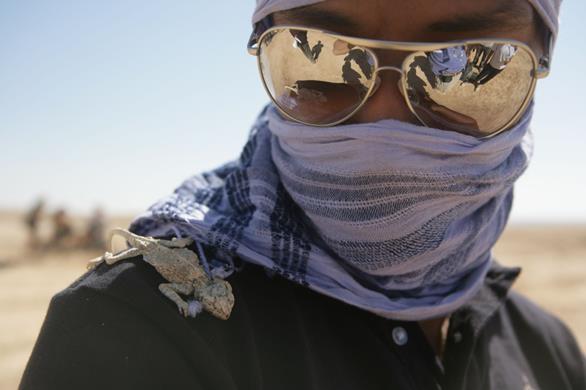
The Oscars are this weekend (Lord, help us!) and there are a couple of Best Picture winners I haven't re-published from "The Olde Site." So, rather than doing anything "newish" I'll opt, instead, for "timely."
I'm not a fan of The Oscars (like everybody), but I watch it (like everybody) and I complain about it the next day (like everybody). You can't seem to have one without the others. People enjoy complaining about them but wouldn't dare miss watching them. Everybody has some Oscar-decision that's an obscenity in their eyes...and there are some that are questionable (my Saturday "Trash" post will be one of them)*. But, most of the time, I just don't care. The Oscars, being voted on within a year of each film's release, are always going to be short-sighted, with absolutely no chance of being able to judge a film's lasting legacy. The decisions are always factored by politicking or prestige. Maybe trendy. But probably not. They'll always be there whether one watches them or agrees with them.
Oh. And this was written at the time of the film's release.
Moonwalking Through the Kill-Zone
or
"Cravin' a burger. Isn't that strange?"
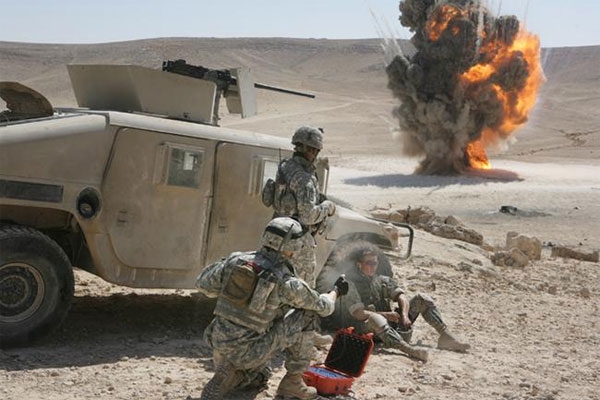
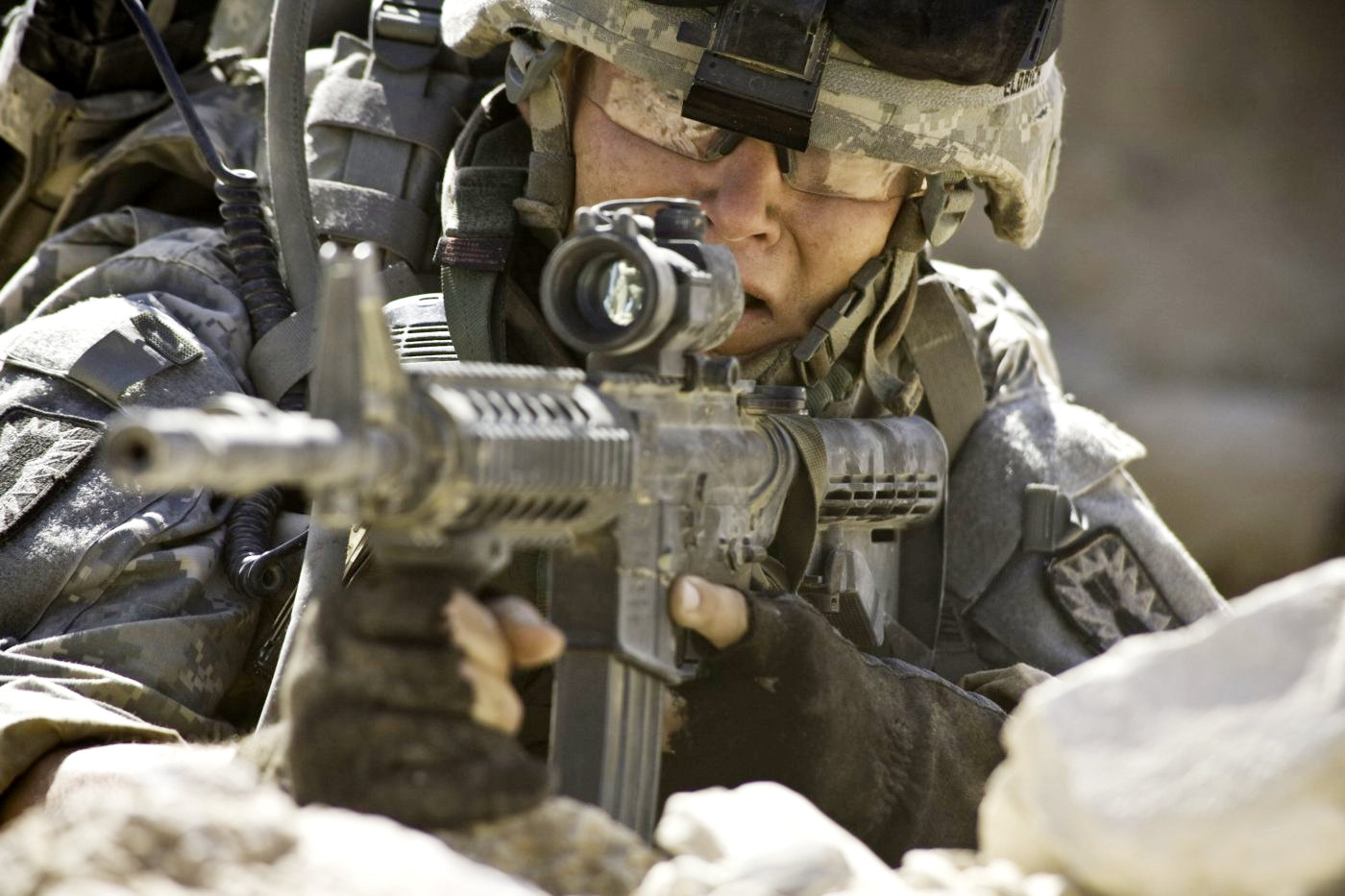
Kathryn Bigelow will probably never be considered a "superstar" director.That's too bad, because she's miles ahead of the so-called "young Turks" doing action movies these days. Instead of following current trends, she adheres to the rock-solid action direction styles of Anthony Mann and Don Siegel: let the audience know what's going on, and one other thing that too many directors these days forget—an audience has to know the territory their heroes walk through to fully present the dangers they face. In The Hurt Locker she may use a hand-held camera a bit too much to re-create the verisimilitude of war-footage, but it comes in handy to lock you into the searching point-of-view of Bravo Company's of Bomb "Tech's" and "Post-Bomb Assessors"—"The Blasters"—in Iraq's Camp Freedom ("They changed it from Camp Liberty to Camp Freedom because Camp Freedom sounds better," says veteran Sergeant JT Sanborn (Anthony Mackie) to the new Team Leader Staff Sergeant William James (Jeremy Renner, looking like a cross between Nathan Fillion and Brendan Fraser, like most of the principals of The Hurt Locker, his performance is understated and full of small nuances). James is described as "a rowdy boy" and "reckless." Before his arrival, "the suit," that cumbersome Kevlar get-up which would protect anyone but the man who needs it most, has been the last resort in a disarmament situation. But that's not good enough for James. He likes to disarm the things by hand, and collect the odd bit of equipment for a trophy that "could have killed" him. He'll go in with "the suit" first, and puzzle the thing out, something that doesn't win him prizes with his team-mates, especially Specialist Eldridge (Brian Geraghty), because the longer it takes James to disarm a bomb, the more vulnerable his team-mates are to snipers. War films have gone through a weird evolution from the time they were conscious enough to move beyond the "good guys vs. bad guys" (while still acknowledging that both sides share their share of casualties. But it's been since the Korean conflict that movies started to go deeper into the psychosis of war—not the PTSD issues, but the psychosis of being inside the conflict. One of the counselors at Camp Freedom ineffectually tells Eldridge "You know, this doesn't have to be a bad time in your life." Easy for him to say. All Eldridge can think about is the best outcome of the war—surviving it. And when his orders come down to "Be smart. Make a good decision" it's tough to say what is a good day and what is a bad day. But lately, war-films have taken a look at the man on the line and what makes a good soldier, and it comes down to a blurred combination of self-sacrifice and controlled psychopathy. Whatever the motivations its the results that count. We've seen that theme in Hell is For Heroes, and Patton, Apocalypse Now, The Burmese Harp, Full Metal Jacket, and Flags of Our Fathers. How the soldier compartmentalizes the war experience to survive and even stay sane through the fire determines his ultimate worth as a soldier and as a human being. It is that perspective, of life is brief increments, that keeps a soldier walking alone in The Now, where "The Big Picture" is unseen in the limited view of his path, unknowable and brutally finite—the past a bitter memory, the future an empty promise, and today is walked with the high of High Noon.
* For instance, there's the case of How Green Was My Valley beating out Citizen Kane for Best Picture of 1942 (as well as Sergeant York and The Maltese Falcon). And yet, I can't kick about the choice because I love both films, and I can certainly see why someone would prefer Ford's classic against Welles "Greatest Film Ever Made."
 and remove any veneer of civility to it and you have Disturbia. The voyeur this time around is a kid with an ankle bracelet and a three-month house probation. After exploring his boundaries and testing his limits, he grows tired of electronics and junk-food, and begins to spy on his neighbors for thrills. Fortunately there're the new neighbors next door with the comely daughter, and unfortunately, there's the creepy older guy (David Morse, who can play good or bad angels interchangeably) who clubs and routinely brings home one-night-stands with one-too-many.
 and remove any veneer of civility to it and you have Disturbia. The voyeur this time around is a kid with an ankle bracelet and a three-month house probation. After exploring his boundaries and testing his limits, he grows tired of electronics and junk-food, and begins to spy on his neighbors for thrills. Fortunately there're the new neighbors next door with the comely daughter, and unfortunately, there's the creepy older guy (David Morse, who can play good or bad angels interchangeably) who clubs and routinely brings home one-night-stands with one-too-many.







.jpg)