Showing posts with label Chris Tucker. Show all posts

Wednesday, July 10, 2024

Silver Linings Playbook

No Dolby; No Squelch
or
"Hey!!..."

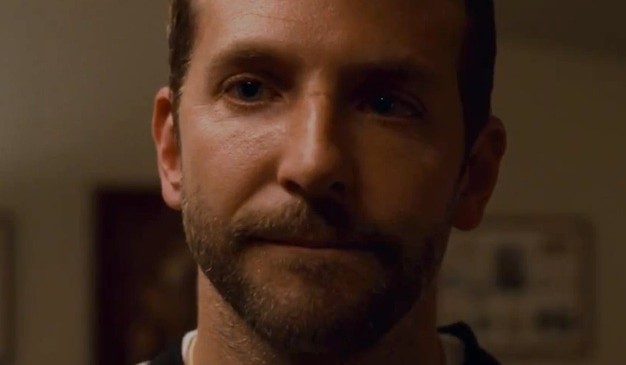
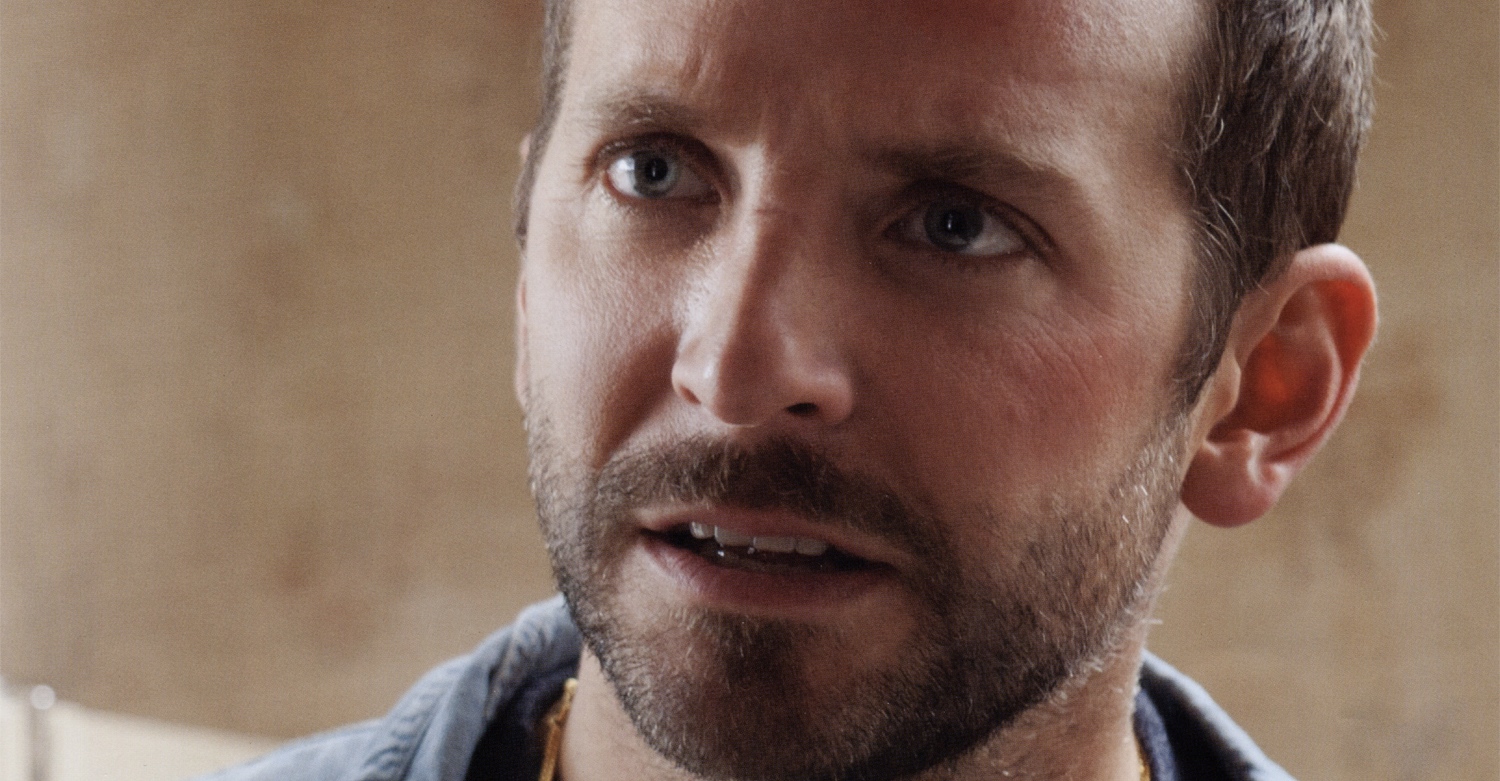
In Silver Linings Playbook, there's a scar above Bradley Cooper's nose that I found myself focusing on throughout the entire movie. It's not like Harrison Ford's chin-scar that has followed him around from movie to movie; this one is just a line-scab that never seems to heal and I found that apt—the movie's all about a guy, Pat Solatano, Jr., whose lost everything and wants to get it back, despite that losing it might have been the best thing that ever happened to him. He's undiagnosed bi-polar, but he keeps wanting to return to the halcyon days when he didn't know he was bi-polar and was married to Nikki (Brea Bee), a schoolteacher, and was living a fairly normal life, or as normal as bi-polar can be, undiagnosed or not.
When he gets out of the Baltimore Psychiatric Hospital, he's focused on getting his old life back—he's whipped himself into shape, goes (reluctantly) to a therapist, stays on (reluctantly) his meds, and is determined to make himself the man Nikki wants him to be—there's just that little thing about the restraining order and the fact that he caught her having sex with a school administrator. And that he caught them making love to their wedding song which was Stevie Wonder's "My Cherie Amour," which sends him into an "episode" every time he hears it.
And there's that focus issue. He's not kidding himself anymore, but his constant stream of truthiness, socially correct or not, keeps getting him into trouble, with his folks (Robert De Niro and Jacki Weaver), his brother (Shea Whigham), his pal Ronnie (John Ortiz) and Ronnie's wife Veronica (Julia Stiles)—who just happens to still be friends with Nikki. Pat, Jr. latches on to them to try and make contact with his ex, and, to do so, agrees to have dinner with them. Also invited is Tiffany (Jennifer Lawrence), Veronica's sister, who has issues of her own, still grieving from the death of her policeman-husband.

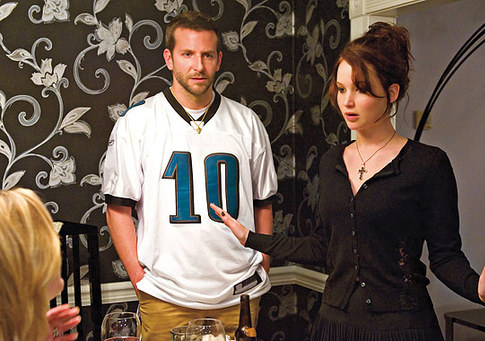
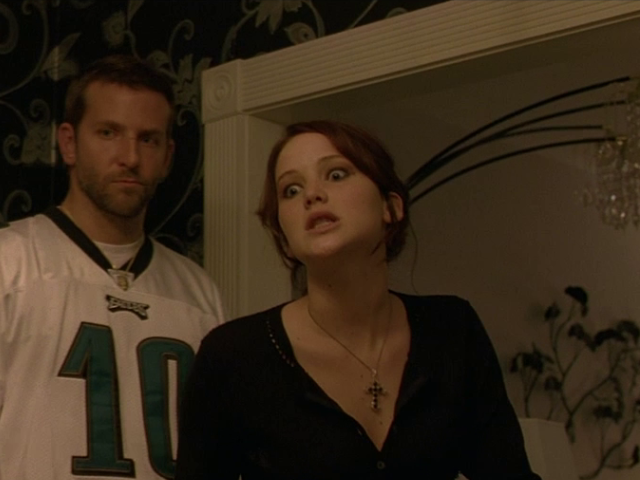
Pat and Tiffany do NOT get along at dinner
, and only connect over their mutual history with anti-depressants. That seems to be enough for Tiffany, as she announces she's had enough family time and asks Pat to walk her home. They share enough information there for Tiffany to be repulsed by Pat, and for Pat to think Tiffany is crazy.  


But, then, Pat thinks everybody is crazy (except for himself).
And...he might be right (except for the last part). He's very quick to point out the eccentricities in others, probably because he possesses those traits himself. He notes his Dad's OCD—he goes through rituals while watching each Philadelphia Eagles game, as he's taken to book-making since losing his job, and has a sports fanatics' passion for football (and probably more so as he's been banned for life from the stadium). In Pat's mind, everybody is dysfunctional, because Pat's mind is dysfunctional. While reading the books on Kiki's syllabus, he tosses "A Farewell to Arms" through his attic window for its downer ending. And his own obsession with his ex-wife becomes a means towards an end for Tiffany when she offers to sneak a letter to Nikki for him—if he'll be her partner in a dance competition.

The director is David O. Russell, who also adapted the book (by Matthew Quick) and did a brilliant job cataloging family feuds in The Fighter. Family seems to be his forte, mining the mania for subtle comedy while not diminishing the seriousness of the hysteria bubbling under the surface. And Russell imposes enough energy in his direction and editing that he invigorates the already simmering outbursts the performers put into it. De Niro we already know can pull a manic act for both comedy and drama and Wilkins manages to keep a look of fret even when happy. The ones who surprise are Lawrence, who's cute as a button and volatile as a cougar in a surprising performance, and Cooper who has a crazy flame in his eyes throughout. His outbursts never surprise; it's his semi-even keel that is interesting to watch, and worry about.
*
Yes, they're crazy. But, in Russell's world-scheme, everybody is in the U.S. of OCD, whether the obsession is sports, gambling, love, and competition. And Russell does a nice job of turning the dark side of rom-coms before the camera, and making decided call-backs to the past for his ending. Despite our relationships with the past and flirtations with the future, hope still vaults eternal in the perpetual grasping for something better, in the hope of no longer clinging to what was.

One suspects, after the movie is over, that that tell-tale scar will start to disappear.

* In the same scheme of things, Russell has cast Chris Tucker as one of Pat's fellow hospital incarcerees.  It's the best performance Tucker has ever given, subtle, scary and controlled. Anybody who's seen his other work, knows what he's capable of  and the effect here is like watching Jerry Lewis do drama, but without the self-awareness and ego. 

Saturday, April 8, 2023

Air

If the Icon Fits (Based on a True Shoe)
or
Crossing That Ol' River Jordan

"Who wants to see a movie about a shoe?" cracked the guy taking his kids to see Super Mario Bros.
 
Parenting kills irony.

Air does seem to have an odd subject for a movie—the efforts by "footwear manufacturing company" Nike to obtain the endorsement of up-and-coming rookie Michael Jordan for their struggling basketball division ("We're a jogging company! Black people don't jog!") doesn't seem to be movie material. A documentary on ESPN, maybe.
 
But, the script for the film had shown up on that gold-mine of movie ideas, "The Black List"*, and its author Alex Convery** did, indeed, craft a smart, ironic, compelling film about something "that changed everything." And not just Nike's fortunes, but also a long-standing deficiency in how athletes were compensated for their exploitation. Maybe you don't give a rip about the fortunes of millionaires (I hear you), but it's something that is making its way down to amateur sports and the inequality of parity in women's sports. It is a big deal. And it started here, with the unlikeliest company—who were just the ones to think outside of the foot-print.
Meet Sonny Vaccaro (a rather doughy
Matt Damon), an executive at Nike's basketball division (which, unfortunately is having a tough "go" at it, losing money, and there's been a lay-off of its employees recently). He's a go-getter, a gambler, and a pal of Nike's idiosyncratic CEO Phil Knight (Air director Ben Affleck), whose zen-Buddhist way of running things is often contradictory and sometimes unfathomable. But, there's something about Sonny that Knight finds valuable, even if he finds him frequently frustrating in how he gets along with his fellow employees.
Like now, for instance. The basketball sneaker division has a budget of $25k to sign a scrimmage of the new drafted NBA players to endorse their product—which is running third in reputation and sales to Adidas and Converse. At a board meeting, Nike marketing director Rob Strasser (Jason Bateman) chairs a meeting to determine who of the "rooks" they'll approach, and the pickings are slim. They're, at least, uninspiring. They're certainly uninspiring to Vaccaro, who does not mince words that the choices are not ones that will inspire sales and product loyalty. He has one guy in mind—this new kid, Michael Jordan. But, he's told to forget it, they can't get him. He's too expensive and he wears Adidas on the court. Don't go chasing a dream. And, especially, don't put all the budgeted eggs in one basketball player.
But, Sonny Vaccaro doesn't listen. He tells anybody in ear-shot of his harangues (even if they're rolling their eyes) that "Jordan" is the one they should get—for the whole budget—despite all the hurdles: Jordan's agent—played brilliantly by
Chris Messina; Jordan's own hesitance, overseen by the protective Jordan family, mother Deloris (Viola Davis) and father James (Julius Tennon—for those people sensitive to "nepo-babies," he's Viola Davis' husband/business partner); the corporate mind-set of Nike in general and Knight, in particular—when times are tough is not the best time to go for broke; and the general consensus that it can't be done (so why try?)
All of which just makes Vaccaro work harder for it. He's not an athlete, but he's dogged, like one. He does his due diligence, talks to people who coached Michael, talks to his agent (for all the good it does), then starts breaking industry "rules" knowing full well that if he fails and Jordan doesn't sign it's business for Nike as usual...which is not good, and his job is probably on the line. But, he's of the mindset that if he can't sign Jordan, he probably shouldn't be there, anyway. It's a three-point shot at the buzzer.
First things first: go see it. It's brilliant (despite being "a movie about a shoe"). And you don't need to be a sports fan to appreciate it (although it might help). Like the brilliant Moneyball, it is a story steeped in the arcana of the sport, which is all throw-away stuff in the end, because it's about something else...something more primal and more important. And it's a movie that you can appreciate for the sheer mastery of the craft of good story-telling.
The script—by Convery***—has crackling dialog that bears repeating outside the theater, and it's smart about showing people, warts and and all, but not caring one jot. It already assumes that the people of the story have feet of clay and doesn't try to portray them as anything but ordinary people in an extraordinary moment in time.
And Affleck's direction is his most assured. His strength as a film-maker is montage and he begins Air with a deep-dive into 1980's culture, combining archive footage with his establishing shots (also steeped in 1980's culture, just to keep the through-line) of life at Nike, Inc. Plus, he's a disciplined editor, who uses the "cut" as an accelerant for scenes that are already delivered at Hawksian speed.
He's helped by the legendary photographer
Robert Richardson (Criminy, he even made Portland look beautiful!), who is less eclectic than he has been in the past, but offers work that could earn him a "co-director" credit. In one scene where Vaccaro talks to coach George Raveling (Marlon Wayans) in a dimly-lit bar, it's done in a couple of long-held "takes" with the camera constantly snapping focus between the two participants, directing your attention. That it's done with such brio, without trying to disguise it, tickled me.
And in another little creative touch, the movie isn't scored, but its soundtrack is  scavenged from 80's scores by Tangerine Dream and Harold Faltermeyer, when there isn't an period rock tune under-laying the action.
It is a great show. One quibble that I know people have been talking about is that the film doesn't really show Michael Jordan (and, in fact, goes out of its way NOT to show him)—there is one line spoken by "him" (and that's over the phone) in the entire movie—but, that conceit is in the Convery script. Leave "the man" out of it. We're talking about potential. And Affleck and Damon's rewrites push the concept of not portraying him all the way.
**** They might have extended it to the title, as well. Convery titled his script "Air Jordan". For months in development, it was known as "The Untitled Matt Damon-Ben Affleck Project." It hits theaters as Air. Simply Air. No Jordan. Not even in the title.
 
But, he's there...in archive footage.The "real" Michael Jordan. All the while, they're making a movie looking at a Master from the vantage point of the future. We know what he did. We know the story. All of it. And they show it in flashes in the best part of the movie. But, we're talking about portraying a time before all that happened, when they're talking about potential...and betting on a future. A future they can't even conceive of.
A future nobody could conceive of in their wildest dreams. 
 
Except, maybe, for Michael Jordan's.
* It was picked "the best un-produced screenplay of 2021".
 
**  It should be noted—even if the WGA doesn't—that Matt Damon and Ben Affleck did an extensive re-write. But, what makes the Convery script so good is still in there. And the good lines, too.
 
*** Convery's script is there, but Damon and Affleck did an extensive re-write, adding one person—Howard White (played brilliantly by Chris Tucker), who heads Jordan Brand now. His character seems essential to the story now. Dam-fleck also eliminated the character of the brilliant Tinker Hatfield, giving the dialog to Creative Director Peter Moore (Matthew Maher, who is terrific). Too many designers, I guess, would have confused people.
 
**** I amuse myself with the idea that it's along the same lines as not portraying Mohammad...or the way clerics worried about the "sacrilegious" idea of showing The God-head" on movie screens. Here, they're respectfully not showing The GOAT. 

Tuesday, December 20, 2016

Billy Lynn's Long Halftime Walk

Kevlar vs. Papier Mâché
or
That's Life in War-Time (That's Life in America)

It's hard to say just how good a film Billy Lynn's Long Halftime Walk is because no one outside of Los Angeles and New York has seen it in the way director Ang Lee intended it. 

His last film, the magical The Life of Pi, took full advantage of the latest film technology—3-D, IMAX, ATMOS-sound system—and the results were astounding, as it created a totally immersive experience, which made all subsequent viewings dull and dissatisfying by comparison. It made me wonder how The Life of Pi compared for viewers who'd only seen the "flat" version. Was the film as impressive to them as it was to me having seen it with all the bells and whistles? More importantly, would my opinion of the film change if I had not seen it in full format. One could tell, just by looking at The Life of Pi, that Lee had chosen camera angles, shot choices and transitions based on their effectiveness in three dimensions. Without that focus, the "flat" version of the film looks a bit disjointed—at least to my eyes.
Given all that, reviewing Billy Lynn is problematic. Ang Lee shot it in an ultra-high-speed format. Most films are recorded (and projected) at 30 frames per second (film was shot at 24 frames per second). Billy Lynn's rate is 120 frames per second (Peter Jackson's "Hobbit" films were filmed at 48 frames per second). I've seen films projected at such a rate—decades ago, actually—and the effect is akin to watching a high-definition videotape, the image is much sharper and more defined. But, it is also more unforgiving than standard projection, HD, or film. New techniques in lighting and make-up had to be devised, and even some of the acting had to be reconsidered for this format. Decisions that made an impact on the film at 120 frames per second ultimately will not make a difference in other formats, and so I'm in the uncomfortable position of reviewing a film that I haven't seen...at least in the way it was intended. Did I, then, actually see the film?
What is there in the 4k presentation is an uneven film that may be that way to allay any artificiality that the 120 frame process might have caused. Lee is no stranger to stylization in whatever genre he's working in. Billy Lynn, however feels a bit petrified in amber—how that might change in its intended presentation is hard to judge.
The story of an extended stateside tour for an Iraq unit that has just come off a well-publicized firefight caught on a reporter's phone-cam has at its basic core the nature of Truth. For Bravo Company, Truth is life and death. One of their own, Sgt. Shroom (Vin Diesel, in one of those performances where he thinks he's doing something very important) has been killed and Lynn was caught on-camera pulling the sergeant out of the line of fire. Now, as Sgt. Dime (Garrett Hedlund, giving what is genuinely the film's best performance—why didn't they peg him to play the young Indiana Jones?) tells his men "By the grace of God and the media, we are the face of the military." So, they are being escorted to the Thanksgiving game of the Dallas Cowboys to appear in an extravagant half-time show (with Destiny's Child, no less). Bravo Company and their story is a hot item; Hollywood's knocking on their door to buy the story (Hilary Swank is interested!) and they have a manager (Chris Tucker) who's doing all the negotiating.
"It doesn't have to be God or Country. Just find something bigger than yourself..."
The film veers between the events of the game and the time in Iraq that got them there and the film drips with irony going from the action in Iraq when boys are taking care of each other, and their PR tour where they're touted as symbols, but are treated as little more than set-dressing. "It's a little weird bein' honored for the worst day of your life," Lynn (newcomer Joe Alwyn) observes at one point. And when one of the Bravo's point out that it's been "a rough tour," they're asked "There or here?"
Shroom starts a mission by telling each one of his men that he loves them.
The last one says "Yeah, yeah. Let's get a middle school named after us."
The Bravo's know the game. "Yes sir, No sir. Look sharp." But, for all the "proud of ya's" there is the sense of false spectacle and hype. The Bravo's are just pawns going from cannon-fodder in Iraq to camera-fodder in Dallas, and there is marked juxtaposition between the very real stakes of war and the superficiality of just about everything stateside. And Billy has to make a choice: stay with his unit for another tour of duty, or jump off and maybe take advantage of the brief amount of fame that he's currently enjoying. How long that might last is anybody's guess, but the superficiality of their brief fling with "the show business" provides a pretty good clue that it will be brief and ultimately meaningless.
The temptations are many. A brief stop-over at his home in Stovall, Texas holds the same dichotomy—the family's proud, but they don't want to hear about the war, except for Lynn's sister (played by Kristen Stewart), who provides a lot of answers to why the 19 year old joined up in the first place. She's conflicted. She hates the war, but loves her brother, and feels an overwhelming guilt for her part in his decisions. She wants him home. They all do, but the rest of the family isn't quite comfortable talking about the war, not wanting to upset Billy, but not so that their sudden displays of temper at the family dinner table might set off his PTSD.
The hanger's-on and money-men behind the Cowboys event just know platitudes and say they're honored and proud and use the Bravo's to bolster their world-views, but aren't so proud and honored that they won't short-change the group for the rights to their story. And then, there's that cheerleader (Makenzie Leigh) who keeps catching Billy's eye who says all the right things, but...
One would expect, given Hollywood's own superficiality that there will be some big "reveal" to add drama. No, there's no big "freak-out" scene, no histrionics, and no epiphany scene, just the alternate views of life in war-time and life in these United States insulated from the war (other than our relationships to the ones fighting it). Ultimately, the ones who really know the war are the ones fighting it, free of illusions and filters. Everything else is just fantasy and platitudes. Fireworks, not flesh and blood. Loyalty, not gamesmanship.
Lee, in his quiet way, shows the difference between words and actions, flummery and truth. As he does with all his films, there is a coming-to-terms with reality versus illusion, a learning process of the self to determine who one is. Sure, it's focus is Billy Lynn, but it could be talking about America, too. It's one thing for us as a nation to say "we honor you" with our words, and belie that with our actions (as, unfortunately, seems to be the case). It's quite another to acknowledge the real sacrifice those that defend our right to be frivolous make. It's why it's entirely appropriate to play "The Star Spangled Banner" before our "oh-so-important" sporting events, to present a song about war-time to remind us exactly what it encompasses for us to be able to waste our time.