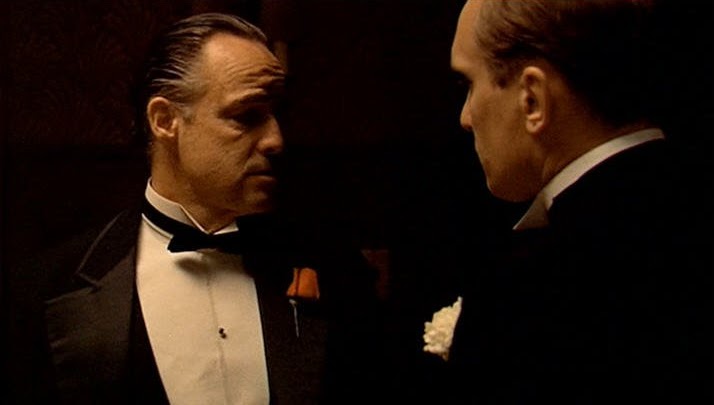
The Godfather, Part III (Francis Ford Coppola, 1990) Francis Ford Coppola defied the Rule of Thumb when his The Godfather, Part II turned out better than the (at the time) all-time box-office champ, The Godfather. But, flush with the success of those two films, Coppola moved on to chart his own course, famously saying that mobsters bored him and that he had said everything that he wanted to say on the subject.
Time and pressure, though. It's not mere coincidence that at one point in The Godfather, Part III Michael Corleone says of his mobster ties: "Just when I thought I was out...they pull me back in." Coppola was tempted by Paramount Pictures to come back for one more go for the same reasons he took on the first film—he was in financial trouble and needed the money. Al Pacino's star was again on the ascendant (after expensive flops like Cruising and Revolution) and Coppola was the one man who could pull the original talent together and make a "legitimate" "Godfather" sequel, with no compromises.* The story takes place with Michael Corleone, now 60, with all the appearances of economic legitimacy although still with long ties to his family's Mafia roots. The old Corleone business is in the hands of Joe Zaza (Joe Mantegna—a rare chance to see Mantegna being "florid"). Now the aging Don, debilitated with diabetes, in the twilight of his life, must come to terms with what he lost in his battle to protect his Family: his family.
 |
| "Family" portrait |
All the "Godfather" films start with ceremony and end with blood-baths, and Part III begins with Michael Corleone accepting a papal honor for his charity work (actually a quid pro quo for bailing out the Vatican Bank, which is in financial trouble, as always in "The Godfather" films, money is the root of all evil). That theme must have hit close to home for Coppola, having to compromise for cash. Money corrupts everything here, even the Church, and doing deals with God's representatives on Earth may be as close to heaven as Michael thinks he'll ever get. And that is the major theme of this movie: what Michael will do to save his soul.
How many movies are about that?

As a recovering Catholic, I may be a bit more sensitive to it, knowing the arcana of the Church, but I found myself watching Godfather III ticking off the moments that Michael might be in a state of Grace to go to Heaven. For the length of the "Godfather" series, Coppola distilled Mario Puzo's original best-selling novel to core themes: the immigrant's American experience and the role crime plays in it; how business is brokered so similarly between criminal organizations and Big Business; how a steadfast paternalism can descend into destruction; how good intentions can be corrupted.
But there is one theme that never made it from the cutting room floor in the theater released films, but is apparent if you've ever seen some of the expanded "Godfather" films, and that is the efficacy of the corrupted soul and how it still can be redeemed. That's Catholic Catechism 101, but in the real world of movie audiences (and mafia hoods) it may not have seemed pragmatic (and perhaps too hard to explain or fathom for non-Catholics). The evidence has always been there, however, from the first film's unused footage of Mama Corleone going to church to light candles for the soul of Vito (Marlon Brando) and the accompanying original End-Titles which featured Kay Corleone (Diane Keaton) lighting them for his son Michael's.**Pragmatism might have been the reason, but the characters had moved on from the original movie and Puzo's book. The scene of Kay lighting candles for her husband added an element to her character of still loving the new Don even while knowing he was a monster, complicit in his crimes. And it was particularly weird when Coppola put it at the end of the more complete television presentation of "The Godfather Saga" after all the heinous crimes committed by Michael in Part II (including the one he finds the most unforgivable—the ultimate negation of his mission to save his family—as he says in "Part III" "I killed my mother's son. I killed my father's son."). But the Church, which presided over Connie's wedding and Anthony's first communion and Michael's papal decree at the beginning of each of the three films, as an instrument of God's Will on Earth, can forgive all sins and cleanse all souls, no matter the crime, no matter the evil. So, half-way through the film, when Michael Corleone is forgiven his sins by the cardinal (Raf Vallone) who will become Pope John Paul I (they needed a VERY holy man to forgive Michael), suddenly...in the eyes of God—or at least the Church—Michael's soul is clean. The marionette strings of the Corleone Family have been handed to his bastard nephew Vincent Mancini (Andy Garcia) who has the quicksilver temper of his father Sonny (James Caan), but is taught a Don's pragmatism under Michael's tutelage.

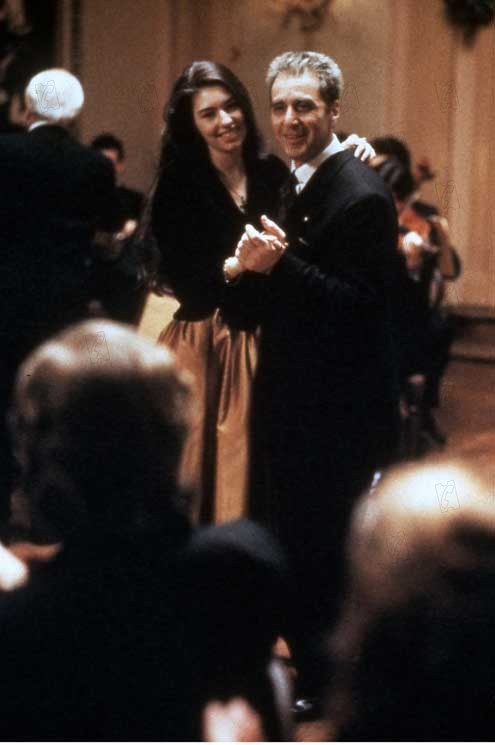
Big themes. Operatic themes. And The Godfather, Part III reaches its climax at an opera—"Cavalleria Rusticana" by Mascagni, a tale of a Sicilian soldier who comes home from war to find that his life has changed and seeks to corrupt the relationships of his past—where Michael's son Anthony who has rejected his father's path is debuting as a singer. It is a cause for celebration, but behind the curtain of happiness, vendettas are carried out, and the sprawling story-line comes to a tragedy's finale. Although Michael's soul is clean and pure in God's eyes, he can't escape Fate, and he pays...dearly.
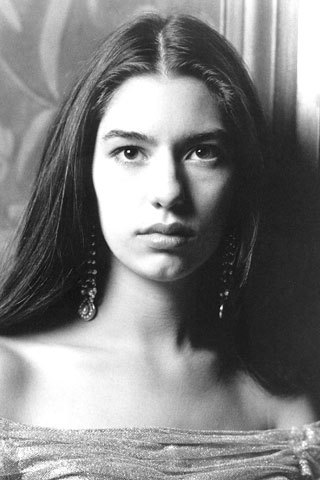
Much was made at the time of Coppola casting his daughter Sofia Coppola in the role of Michael's beloved daughter Mary (Winona Ryder was originally cast, but bowed out pleading exhaustion). It must have seemed natural for Coppola to do so, having cast sister Talia Shire as Michael's sister Connie (Shire has a much bigger role to play in Part III), and Sofia has always been a part of the "Godfather" films.*** The critics were cruelly savage in their denunciation of her performance, and, admittedly, it is a little weak. But, critics seemed to blame the daughter for any weaknesses in the father's work. That the third film does not meet the impossibly-high bar of the first two is not her fault. Blame Coppola's artistic ambitions, and forgetting that "The Godfather" has its true origin in crime-novels and gangster movies, not the opera house. But the daughter bore the brunt. As Michael says sagely in the film "When they come... they come at what you love." Sofia Coppola has more than had her own revenge by becoming a gifted director and Oscar-winning screenwriter, she has also won the critic's respect.
Her triumph, and the grace with which she achieved it, is the true ending of "The Godfather" story.
But, it's never REALLY the end, is it? Not in the digital realm of film...with "Special Editions," "Director's Cuts," and the perpetual re-mastering of movies in ever-increasing bit-rates to negligible ends. They give those directors who are lucky enough to survive their films to forego the pressures they were under to meet a release date to have another "go" at the edit, to touch things up, maybe tweak an effect here and there, even change the color timing of their films—now, film-makers make two edits of the theatrical cut and their preferred edit for the digital release.
And so it is with The Godfather, Part III, which, when Coppola was given the chance on the 30th Anniversary of its release, he re-edited and re-titled the film as The Godfather Coda: The Death of Michael Corleone. The title, which distances the film from the first two films, making it it an epilogue, rather than a part of the story, is a good, if cosmetic choice.
He pared down some sequences, put in some alternate takes, re-tooled the images to be sharper with more color to them. But these are small cuts to the bulk of the movie. But, it is quite different in two specific places. Rather than begin—as Part III does—with shots of the abandoned Lake Tahoe compound while Michael reaches out to his two children to attend his papal order induction, The Coda begins immediately with Michael dealing with Archbishop Gilday of the Vatican Bank to relieve a massive short-fall and receive controlling interest in the massive real estate firm Internazionale Immobiliare,**** and beginning with the words "Don Corleone, I need your help." This cut quite a few minutes from the film, and established the stakes at the beginning, and making Michael's papal honor more of a quid pro quo than it originally was. And the ending is different. In the theatrical cut, the elderly Michael is alone in Italy (holding an orange, naturally), a shell of his former self and dies, slumping to the ground. In The Coda, Coppola leaves him alive...and suffering...an alone, irrelevant invalid...with the memories of the women he betrayed in his head. As the Archbishop who will become Pope John Paul I tells him in the garden "It is just that you suffer."
On the fade to black before the credits, Coppola inserts his own epitaph: "When the Sicilians wish you 'Cent'anni', it means 'to a long life'. And a Sicilian never forgets."
 * Well, there are always compromises: Robert Duvall did not reprise his role as consigliere Tom Hagen, citing the difference in salaries between himself and Pacino. But Coppola has always been adept at writing around such problems.
**That scene is used as the End Credits for "The Godfather Saga"—Coppola's "too much information" re-shuffling of the first two films into a strict chronology. There are lots of little interesting tidbits in that one, including the hospital visit with Don Vito's old consigliere Genco ("You blashpheme. Resign yourself."), more scenes with the undertaker from the first film, and the Corleone family paying a visit to...the Coppola family.*** Mantegna remembers during a scene prep, of Coppola pointing to Sofia and telling him that she was the baby being christened at the end of the first film.**** In the book, "Leave the Gun, Take the Cannoli: The Epic Story of the Making of The Godfather" (by Mark Seal), Coppola revealed that the inspiration for this conspiracy came from Paramount studio head Charlie Bluhdorn who, during the making of the first Godfather, confessed to the young director that he leveraged part of Paramount land interests to the Immobiliare organization to resolve studio debts. Coppola was privately shocked but...filed the information for later use.
 The Godfather, Part III (Francis Ford Coppola, 1990) Francis Ford Coppola defied the Rule of Thumb when his The Godfather, Part II turned out better than the (at the time) all-time box-office champ, The Godfather. But, flush with the success of those two films, Coppola moved on to chart his own course, famously saying that mobsters bored him and that he had said everything that he wanted to say on the subject.


 Bonasera: I believe in America.
 Bonasera:
 Bonasera: She found a boyfriend—not an Italian. She went to the movies with him. She stayed out late. I didn’t protest.
 Bonasera: Two months ago, he took her for a drive, with another boyfriend. They made her drink whiskey, and then they tried to take advantage of her. She resisted. She kept her honor.
 Bonasera: So they beat her...like an animal.


 Bonasera: I went to the police—like a good American. These boys were brought to trial. The judge sentenced them to three years in prison, and suspend the sentence.


 Bonasera: What do you want of me?


 Corleone: That is not justice. Your daughter is still alive.


 Bonasera:....”Godfather?”

 Corleone: Good.
 Corleone: Some day...and that day may never come...