Saturday, May 30, 2015

Olde Review: Sunset Boulevard

This was part of a series of reviews of the ASUW Film series back in the 1970's. Except for some punctuation, I haven't changed anything from the way it was presented, giving the snarky, clueless kid I was back in the '70's a break. Any stray thoughts and updates I've included with the inevitable asterisked post-scripts.

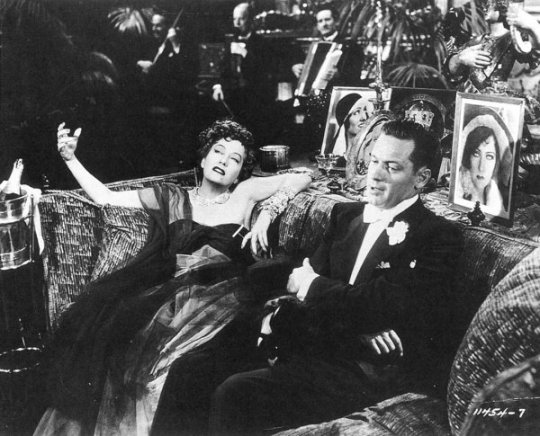
So, ya think being a famous actress is an easy life, huh? Fool! Everything you know is wrong! So learn a lesson from this Friday's ASUW Films in 130 Kane: Billy Wilder's Sunset Boulevard and Joseph L. Mankiewicz's All About Eve.*

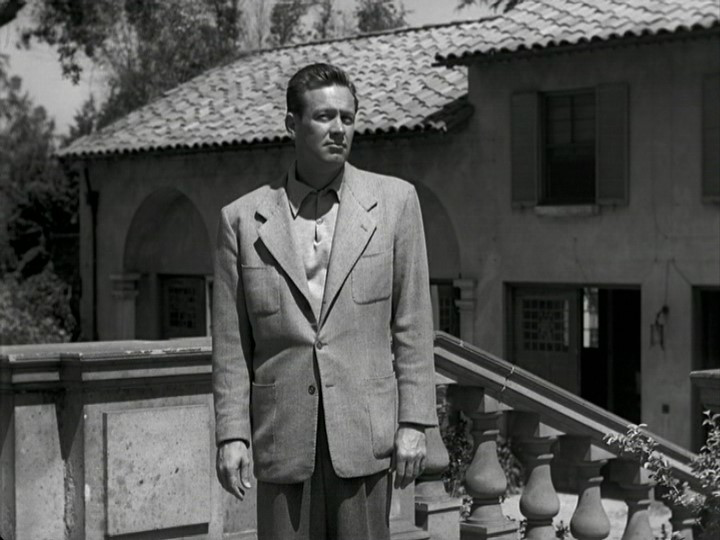
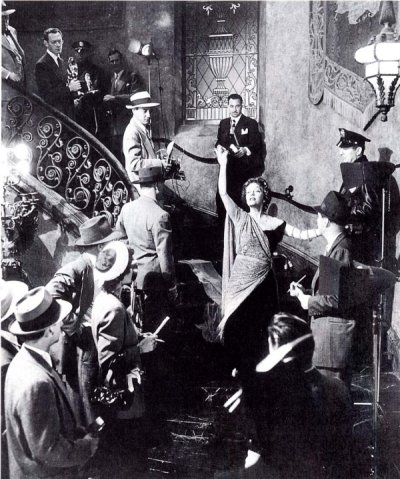
Sunset Boulevard (Billy Wilder, 1950) Sunset Boulevard is probably the most vituperative, back-stabbing, self-hating, malicious and just-plain-cynical look at the glamour of Hollywood. It is also a brilliant film with a capital "B" directed by one of America's foremost directors, Billy Wilder. Joe Gillis, is a down-on-his-luck writer who, when, being chased by his creditors, happens upon the estate of Norma Desmond, a once-great silent film queen.

Now, consider the casting: Norma Desmond, "once-great silent film star" is played (and played brilliantly) by Gloria Swanson, "once-great silent film star." Her servant, Max von Mayerling, once-great-director-destroyed-by-Hollywood's-system, is played by Erich von Stroheim, once-great director-destroyed -by-Hollywood's-system. Hack writer Joe Gillis is played by William Holden who, more than any other actor is director-writer Billy Wilder's cinematic alter-ego. It is cruel in how it treats the old discarded Hollywood, and it is cruel (and probably right) in the view of the 1950's Hollywood being just as bad with its over-eager starlets and corrals of hacks like Gillis. It is filled with a black steaminess—a fetid atmosphere (something I felt again this Summer walking down Hollywood Boulevard). It shows a view of Hollywood as something like a Venus Fly-trap, something that looks lovely and inviting from a distance, but once you get up-close you find that is merely a plot to attract and drag you in
.

Another thing: this movie is full, dense with ideas and brilliant strokes by its creators with reverberations that go beyond the film. When you leave the theater it haunts you even more effectively than a finely crafted horror film. It is a horror movie—with a black widow spider at the hub of a web, dragging everything around her touch into degradation and death. Maybe I should say that, in the first of bizarre touches that create the film's atmosphere, that Joe Gillis narrates the film, even as we see him floating face-down dead in Norma Desmond's swimming pool.

Broadcast on KCMU-FM on February 3-4th, 1976
Quite a few other films (and one highly-rated television series) have used that "speaking from the grave" bit since. It's the ultimate authority for putting things in perspective. But that was Wilder being conservative (as an aside, I find it funny that I call Wilder one of America's great directors--he is/was also Germany's, as well). He initially wanted Gillis to sit up in the police morgue and start telling the story from his slab.

I think you can make a case for Sunset Boulevard being prime
film-noir (and maybe an American Grand Guignol), as Wilder was adept at it—he also directed Double Indemnity and Ace in the Hole, which would be his next picture for Paramount. The only thing leavening the bite a bit is the dark humor of it all, inspired by the excess and fatuousness of the movie-making scene. It's not so amazing that Hollywood let Wilder do this film. Every few years some disgusted writer or director claims to make an expose that'll blow the lid off Hollywood, be it A Star Is Born, or The Big Picture, or S.O.B., or An Alan Smithee Film: Burn Hollywood Burn.

Yeah, yeah. They all pale in comparison to Sunset Boulevard which starts in the gutter and stays there until its last shimmering-with-Vaseline fade to pitch-black. It doesn't surprise me at all that Gloria Swanson returned to movies for this part.** It's a fearless performance, full of self-awareness and assured brio. It would stay with her the rest of her life, and she would play a benign version of the role in what little work she did later on. It is interesting that Erich von Stroheim agreed to his butler role as he was a silent film director (and star) whose career was stalled by the extravagant budgets on his films—in fact, the "Norma Desmond" film that she shows Gillis was directed by von Stroheim (the barely-released Queen Kelly).*** It's also curious that Cecil B. DeMille participated in it, but not really. Although extremely conservative, it gave DeMille an opportunity to trumpet his new version of Samson and Delilah, (and get paid doing it). That's the movie he's shown filming in his scenes.****
It's also neat that Franz Waxman, the movie's composer, snuck in the Paramount News-reel Theme in a couple places in the score. There are lots of in-jokes like that.

Not sure I agree with myself about the Billy Wilder/William Holden alter-ego thing, as you could also apply it to
Jack Lemmon and Walter Matthau


And the movie's DID get small.
 
Sunset Boulevard is one of those must-see films. Just have a shower ready for after.

* We'll post All About Eve next Saturday.

** The part was offered to Greta Garbo, Mae West, Mary Pickford and Pola Negri, who all turned it down, out of vanity or, in Pickford's case, horror at the material. Montgomery Clift was to play Joe Gillis, but quit two weeks before filming began. Clift was engaged in an affair of sorts with an older woman at the time, and probably thought comparisons would have been made.

*** There's a story for you: financed by
Joseph P. Kennedy (father of John, Robert and Edward) who was having an affair with the star, Gloria Swanson, and directed by von Stroheim, who was fired after a third of the picture had been shot. It was originally intended to be four hours long. That was a short subject compared to von Stroheim's original cut of Greed (1924), which ran for 9 hours. MGM's first feature length film, von Stroheim cut it down to 5 hours, then it was taken away from him by the studio and Irving Thalberg had it shortened to 2 1/4 hours. The rest of the film, and all the out-takes were melted down for the silver content. Max von Mayerling could be based a bit on German director Josef von Sternberg, who made Marlene Dietrich a star, and had something of a co-dependent relationship with her. Wilder tapped a rich vein when he wrote Sunset Boulevard, as he did when he took on the press and its role in celebrity in Ace in the Hole, (which, maybe because he didn't spare his scrutiny of the public's ability to be hood-winked, didn't do at all well at the box office. You don't bite the hand that feeds you...not directly, anyway).


**** Later, during the days of the Black List, the conservative DeMille would continually refer to Wilder (who was quite liberal) as "Billy Vilder" accentuating his German roots (as if his accent could disguise it!). The publicity angle is nothing new for deMille; he was a huckster. He started a campaign to have chiseled displays of the ten commandments erected in major city's courts for his 50's epic
The Ten Commandments
. These are the same monuments that conservatives are falling all over themselves to preserve--even though they started out as movie SWAG.

Friday, May 29, 2015

Tomorrowland

Daze of Future Past
or
"Hey, you Kids!  Get Off my Astro-turf!"

Tomorrowland made me grumpy.  Not as grumpy as George Clooney's character, Frank Walker, in Brad Bird's new film, but pretty damned grumpy.

It starts out confusedly, picks up a little ray of goodness, then abandons it and turns into a run-of-the-mill action movie with a touch of futurism and a lot of casual sadism in it. It wants to inspire hope, but instead spends so much time quashing it that when it tries to revive that feeling later on in the denouement, it's already destroyed the innocence that might make such an epiphany possible. It's too smart for its own good, and I don't mean "smart" in a good way.  It's too self-aware, too, to be anything less than "sophisticated" in a cynical "yeah-I-don't-really-mean-it" attitude that shows a lack of commitment to its own "up with the future" underpinnings. And that is its downfall. It buries the future to dwell on the past, while being a little too present.
"The Clooney" being grumpy...or imitating me watching this movie.
Basically, the story should be called "Saving Frank Walker," as the major story-arc is his. We see him as a bright youngster (Thomas Walker) showing up at the 1964 World's Fair,* toting a bulky back-pack to a panel (comprised at the time of Hugh Laurie in the role of David Nix) looking for inventions. L'il Frank pulls out a home-made jet-pack made from an Electrolux vacuum cleaner. This is where the main thought behind Tomorrowland is revealed, and where the execution of that idea manages to burn its feet with jet-pack exhaust. Little Frank plops the jet-pack down in front of Nix with a clank, and he says "Does it work?"  Frank says "Almost," and Nix says "Then what use is it?"

"It's fun!" says little Frank.

Sure, it is! Who (whether they've sat in a traffic jam or not) hasn't wanted a jet-pack to cut through the clutter and get there? Nix (good name), however, nixes it, but it is noticed by a small girl Nix calls "Athena" (Raffey Cassidy, who is weirdly wonderful) who takes note of Frank and leads him to follow her, Nix and some other mickey-mucks on-board the "It's a Small World" ride (did I mention this was produced by Disney?**), which debuted at the '64 World's Fair. That ride is a portal to another dimension/time/planet—who can say as it's a bit nebulous, especially given the shaky foundation the creators of Tomorrowland (the city) have envisioned.

Once there, little Frank gets his pack repaired and he takes a solo tour around the place. Here's what that looks like—it's the best part of the movie:


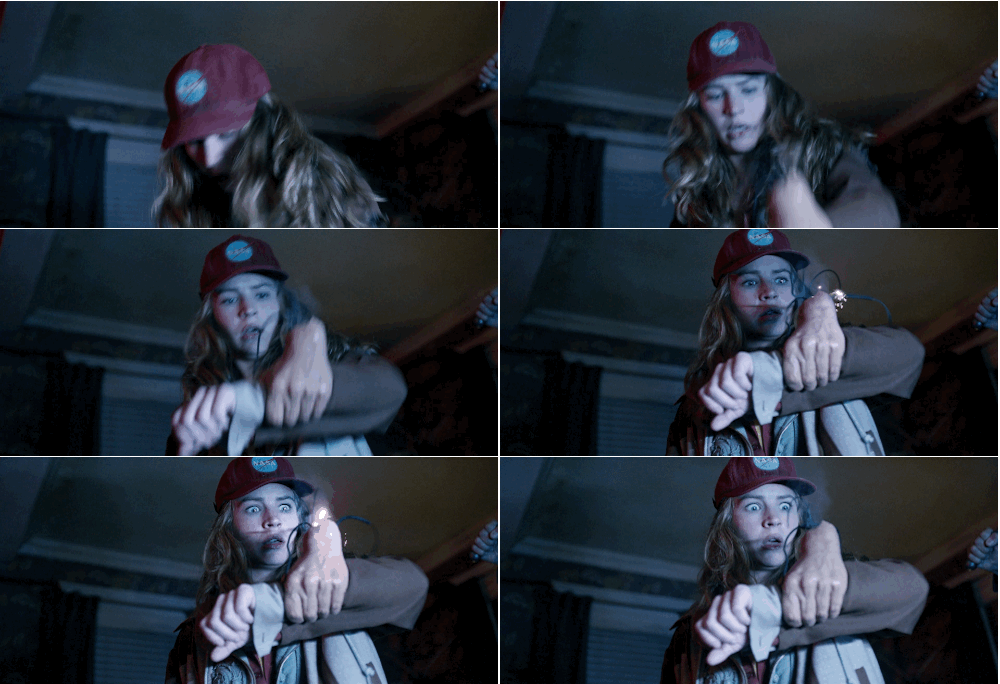
That is fun. But we don't stay there. Instead, we go back to wherever "we" are and consider the case of young Casey Newton (Britt Robertson), who, in protest of Society's Lack of Vision (oh, and her Dad (Tim McGraw?) losing his NASA job), is trying to sabotage the demolition of a Canaveral launching pad. She's caught by security, and when released, given her personal effects back. But, there's something extra there—a pin. With this logo.
When she touches it—ZAP!—she 's in a large open wheat-field and in the distance, standing like Oz, is the city of tomorrow. She lets go of the pin—FWUMP!—she's back in the real world. It causes some nice juxtapositions with simple editing.
Turns out she's been chosen by that same "Athena" 50 years after Walker made it to Tomorrowland, but when she shows up to get Casey out of a particularly nasty little jam, she hasn't aged a day, and she drives Casey to Walker's humble-looking house. It is anything but...

Neither is Frank. He does not want to be disturbed and he's set up all sorts of gee-whiz-how-does-he-do-that defenses to keep everyone out...everyone, of course, except Casey, who gains entry by showing him that pin, which no longer has its transporting powers.
It's here where Tomorrowland, which already has some disorienting pacing problems, starts to go South. While at the Walker place, Casey and Frank are attacked by some pretty lethal "audio-animatronics" (© Disney) who have followed her from an earlier close encounter of the lethal kind and "think" nothing of blasting away at anything with disintegrators that shred people to atoms, including some cops just doing their job investigating that earlier altercation.  

Um...that seems wrong-headed, not to mention gratuitous...and especially so in these times. It isn't exactly Tomorrowland yet.
Neither is the one depicted in the movie. These A.A.'s are sent by Tomorrowland to dispose of anybody wanting in and are a nasty reflection of retro-thinking, betraying a lack of inclusiveness and feeling a bit like the old racial and religious covenants of the past (hopefully, it's the past) only backed up with a gun—the "I'm in, now I'm going to keep you out" kind of mentality. Maybe that's Bird and co-scenarist Damon Lindelof's point—any gleaming utopia can be tarnished like brass by the wrong entity in charge. We've had plenty of examples of that, thank you, in movies and in real life. Lesson learned, and in too much abundance.

And it's here where I should just leave the plot behind and get into the big problems I have with the movie: Tomorrowland, the place and the movie, are just not all that special.

However high its architectural and idealistic pedigree, however vaunting its dreams, Tomorrowland is just like here (and I'm not sighting "the gleaming city on the hill" political concept but the real world in which we live—everywhere) however good the intention, it's still corruptible. In which case, why go?  For jet-packs? Pfft! For anti-grav swimming pools? They're all wet! Tomorrowland LOOKS nice, but it seems to be just a haven for the 1% rich and the 2% smart (and the 90% unfashionable). Is there a government? It LOOKS like a dictatorship, or a fascistic corporation with the same sort of protectionist mania. Even if there is a collectivist wisdom there (and there is no evidence of it), clearly some are more equal than others. Sure, it looks fun, but killer-robots (even the concept of them) ain't. If anything, it reminds me of the floating halo of Elysium, just as privileged and just as protectionist, skin-deep pretty, but the very antithesis of altruism at its heart. It did not compel me, certainly not at its worst, but also at its best. One gets the impression (maybe because Clooney and Laurie are so reminiscent of each other in their manner and method) that any regime-change at Tomorrowland will just be a case of "Meet the new boss/same as the old boss."
That lack of any reason for really caring, yearning, about the place makes the movie give off the stink of a corporate pigeon-hole movie, all flash and no substance, another commercial to attract folks to a theme park, like so many of Disney's movies are nowadays. In a concept movie like Tomorrowland, it is especially galling, because the thing should ring with the chimes of freedom and creativity, not the cheap bell of a cash register.

After the sputtering ending of "Lost" (which I never got into for the same flash over substance unsustainability) and his work contributing (if I can use the term) to Prometheus and Star Trek Into Darkness, it's about time Damon Lindelof started writing shallow novels about his megalo-maniacs rather than making messes of other people's movies. Let him have a cult following, and leave mainstream media alone. Let's have him and Akiva Goldsman work together on something. Perhaps have the ratings board create their own warning rating for his movies. 

All I know is Tomorrowland, for all its blue-sky speeches of dreaming and hope ...is hopeless. What use is it?


Unused animation sequence explaining the "origins" of Tomorrowland.
It's actually more compelling than the film!
 
* The '64 fair (like the '62 fair in Seattle, and like most of them) was a celebration of the possibilities of the future and a look to a glorious tomorrow. The remnants of the Seattle World's Fair are still there as the Seattle Center, a thriving hub of activity.  The bones of the New York World's Fair rot in an abandoned field.  Advances in technology and the promise of industrialization and mechanization ring a little hollow these days, unless backed by large corporations and NCA's.  When something revolutionary does come along (Napster? YouTube?), usually the industrializers go out of their way to quash it...or buy it.

** Here's the logo they use:

Tuesday, May 26, 2015

Mad Max: Fury Road

The Mother of All Chase Movies
or
My Sister Looks Cute in Her Mech-Arm and Boots,
A Hand-full of Grease is Her Hair.*

Kinetic.

That one word sums up Mad Max: Fury Road—itself a film of few words, made up of a story-line propelled by images of such kinetic energy it feels like an assault.  

We've had a lot of those lately, but the difference between this latest "Mad Max" installment, the fourth,** shepherded (the appropriate term) by its originator, the now-70 years old Dr. George Miller, and your typical action movie—say The Avengers: Age of Ultron—is that the action is part and parcel of the story, and rather than being a one hundred twenty minutes-long diversion, with hyper tent-poles to goose the movie along, it is the story, the images communicating the message, as most superior movies do...as most movies should.
The energy is so palpable, in varying frame-rates for emotional intensity, that it almost feels like one of the "Crank" movies of Neveldine and Taylor (except Miller was doing these tricks when they were just kids).  But, it's more than frame rates. Miller's post-apocalyptic films feel relentlessly imaginative, sometimes repulsively so—you are frequently shocked by what he shows (and that's been true, even from his first "Max"—shocking, yes, but darned good ideas, nonetheless), and this latest is just as tough and unsentimental, even if the base subject matter is The Movies' most obvious road to sentiment.
Tom Hardy takes over the role of Mad Max from Mel Gibson
The previous Gibson "Max's" have dealt with vengeance (in the first, road cop Max Rockatanski has his family murdered and brings the street racers responsible to pay for it).  In the second, the world has gone through a nuclear disaster, and gasoline is a precious commodity.  In this one, it's raw power and influence.  In the third, it's water...and basic human rights—specifically, women's rights (Stop rolling yer damn eyes, boys. Let me explain).
Not sure where we are in continuity here—methane is a main source of power as well as human labor, but gasoline can still be found in Gas Town and ammunition at a place called The Bullet Farm. Max is alive, hair long and shaggy (as it was in Thunderdome) and still in possession of his MFP Pursuit Special (he was driving a camel-powered wagon in Thunderdome) and is looking out over a bleak landscape of desert. A two-headed lizard appears behind him and Max steps on it and eats it. So much for survival. He gets in the PS and is being pursued by a vehicle gang from The Citadel. Max is out-chased and taken captive, his skills and stats tattooed on his back for reference. His job is to be a "blood-bag," catheterized up to one of the many raiding party "War Boys," Nux (Nicholas Hoult), the sickly son of the Citadel's leader Immortan Joe (Hugh Keays-Byrne), absolute ruler over the many slaves of the Citadel, controlling the only known water supply (from deep underground) and farming breast-milk from the Citadel's women—several of whom are kept aside as "breeders" for Joe. One learns early on in Fury Road that your only identity is by your usefulness
Hugh Keays-Byrne returns to the Mad Max series as Immortan Joe
Joe's lieutenant, the imperator Furiosa (Charlize Theron) is charged with leading a convoy to Gas-Town for supplies. She looks hard and seems very capable despite that her left arm is gone from the elbow and has been replaced (when necessary) by an armored robotic arm. With a variety of vehicles on-guard, she takes the point in a converted 18-wheeler War Machine, but before reaching Gas-Town, she declares to the War-Boys watching for attacks that they're going to take a little detour and veers off the road.
Meanwhile, back at The Citadel, Joe realizes that his breeders are missing. Being no sign of them, he believes Furiosa might be behind their disappearance (especially as she has not kept the appointment at Gas-Town. So, with a flotilla of vehicles, he and the Mad Boys go off to the desert in pursuit. Max is taken along as blood supply, strapped to the front of Nux's car, like a bizarre hood ornament, given a front row seat to the chase.

That chase, like the movie, is relentless, violent, savage...and a lot of brutish fun. Done with little CGI and employing an army of stunt-persons (even some Cirque Du Soleil performers) it is a series of challenges and explosive results, done practically (I use that term semi-seriously—a lot of budget and design work goes up in wanton fiery smoke—hardly practical) with little or no digital enhancement, save for some editing crunches and picture-tinting. The rest of the movie is taken up with the chase, with little respite or breathing room. Like The Road Warrior before it, Fury Road thrills, surprises and horrifies, and sets nervous legs pumping with adrenaline all through the theater, while also hiding in plain sight Miller's message amid the pyrotechnics.
And what is that message? Well, that Immortan Joe is right in his paranoia: Furiosa has, indeed, smuggled the women, all pregnant, in the War Machine, and her ultimate goal is the same as in the other "Mad Max" movies—to find Valhalla among the madness. In this case, it is the home Furiosa was stolen from as a child—The Green Zone. There, the women have a chance of raising their children in a sane environment, out of the control of the male despot who has fathered them. The movie is one hell of a protracted custody battle.
Super-models and Elvis' granddaughter are the precious cargo
in Mad Max: Fury Road
Having a feminist message inside Mad Max is hardly surprising. Miller likes strong female characters, whether in this series or any movie he makes—The Witches of Eastwick, Lorenzo's Oil—and he cleverly couches it in an action movie...a bit like hiding runaway brides in a tanker-truck. Miller has said his "Mad Max" movies are basically westerns—and they do recall high-octane versions of John Ford's hell-bent-for-leather cavalry chases through Monument Valley, combined with the more female-empowering leanings (as opposed to his usual worshipful regard) of The Master's last film Seven Women.***  The chasing War Boys are all albino-pigmented (to favor dad) and have all the individuality of crash-test dummies (handy for the stunts!), but the "Mothers of Detention" are all distinctive and diverse (with the exception that they're all attractive)—their very appearance takes them out of the norm and makes them visual rebels.
Summing up Mad Max: Fury Road in one image.
It is Max's role (as it has been in the other "Mad Max" movies, save the first one) to shepherd these new heroes to the point where they can be heroic—to start anew amidst the rubble of the old, to strike a beginning out of the ruins of Man and start fresh, apart from the devastation, and then, having accomplished the task to disappear out of sight, back to the ruins that he still belongs in, becoming a part of History...even of Myth. 

In a Summer season of movies that has begun rather inauspiciously, the sheer brio and audaciousness of Mad Max: Fury Road is a welcome relief—a bit of oasis in a desert of unremarkable and disappointing entries so far. That it does so with such energy and visual acuity makes it even more remarkable, the work of a true artist of movies, more interested in the power of the medium and reaching its potential, than merely racing to a release date. That it does so with a statement hidden in it just makes it that much more special and appreciated.

Remember that it's called "Fury Road," as in "Hell hath no..."
The two release trailers for Mad Max: Fury Road.
Actually, the pace of them is only a little faster than that of the entire film.
* The soundtrack for Mad Max: Fury Road is pretty darned magnificent, but the thing in hindsight seems to jam to "Saturday Night's All Right for Fighting" in its sheer frenetic forward energy.

** They are, in order, Mad Max (1979), The Road Warrior (1981) and Mad Max Beyond Thunderdome (1985), all starring Mel Gibson in the title role.

*** ...which, itself, is a tip of the director's fedora to the films of fellow-director Howard Hawks with their girls-will-be-boys bent and the "strength of many" point of attack.

Sunday, May 24, 2015

Don't Make a Scene: Saving Private Ryan

The Story: "Could you do that?" That was the question. I sat across from another recording studio engineer, just a shade younger with a wife and kids. "Could you do that?" We had both just seen Saving Private Ryan and after marveling at the technical skill of the thing, and focusing on the D-Day sequence, we both got quiet. We told our war stories, or rather our father's war stories.

"Could you do that?" And we both looked at each other as men and wondered. It was a different time. Folks wanted to believe their government. That they were fighting the Good Fight, and even without the knowledge of The Holocaust, it was obvious that Hitler was a menace, and he would have to be fought, if not there, then here.

And the answer is: there isn't an answer. We were lucky enough to be able to ask the question, a luxury our fathers didn't have. The answer is: you might not have a choice. You would have to. Among the blood and the guts and mud and no sleep and bad food and seeing your buddies dying and all the rest, you would have to. And you marvel at the fathers and brothers who did do that and now also, the wives and mothers and sisters.

They're us. They're the Shield. They're the Sword.

But they're us.

I loved this simple scene of relationships in war-time, the existing and the passed, and how one of those common people in charge of the lives of kids lives with the responsibility—copes with the charge. How does he live with the line-up of dead faces he's seen, that he's ordered into the teeth of battle?

The Higher Good. The Greater Cause. For Captain Miller, it's his job. If he does it successfully, just like his civilian job, he can go home. And that's all there is to it. It's a great scene and Hanks throws all his comic timing into it, despite the lack of humor. The moment he reveals the number of kids he's lost in command, is a little miracle of timing and nuance. The way when he starts laughing at the memory of Vecchio, and he takes a glance back at his troop to make sure he's not waking anybody up (the Medic is awake, grabbing the only time he has to make good the slain Carpazo's letter to his family) is a great moment of selfishness and unselfishness combined. It's a respite from the trudging march of death, there in the rubble of a church. There, 71 years ago, on the night following D-Day.

The Set-Up: Captain Miller's (Tom Hanks) new orders, having just secured a beach-head at Normandy is to find the one remaining son of a family who has four in the service. They don't know where he is, or where to find him, and they have the worst place to look for a missing person--in the heat of battle. Of the men on the mission, they've already lost Carpazo (Vin Diesel) to a sniper's bullet. And while cadging a couple hours sleep in the relative protection of a church, Miller sums up the day with Sgt. Horvath (Tom Sizemore).

It starts as a lot of scenes start in Saving Private Ryan--with a tremor in Miller's hand.


Horvath: What’s with your hand?
Miller: I dunno. Started in Portsmouth when they brought us down for embarkation, and it comes and goes.
Horvath: Well, you may have to get yourself a new line of work. This one doesn’t seem to agree with you any more.
(Miller starts to laugh)
Horvath: What? What?
Miller: What was the name of that kid?
Miller: ...in Anzio, the one that was always walkin’ 'round on his hands, and he was always singin’ that song, ya know, about the Man on the Flying Trapeze?
Horvath: Vecchio...
Miller: Vecchio! Yeah. Yeah, Vecchio.
Miller: He was a goofy kid.
Horvath: ‘Member he used to pee a "V" on everybody’s jacket? For Vecchio. For Victory.
(Miller cracks up, they're both laughing now)
Horvath: He was short.
(In the corner, by the light of a flashlight, the Medic is re-copying Carpazo's letter home to a sheet of paper without blood on it.)
Miller: He was a midget, wasn’t he?
Horvath: How’d he get to be a Ranger? Got shot in the foot once, and he was walking on his hands?
Miller: Yeah, well, he could walk faster on his hands. He could run faster on his hands than…(Horvath cracks up)
Miller: Vecchio. Yeah. Caparzo.
Miller: You see, when you end up killing one of your men, you see...
Miller: ...you tell yourself it happened so you could save the lives of 2 or 3 or 10 others. Maybe a hundred others.
Miller: Do you know how many men I’ve lost under my command?
Horvath: How many?
Miller: 94.
Miller: But that means I’ve saved the lives of ten times that many, doesn’t it? Maybe even 20, right? Twenty times as many?
Miller: And that’s...how simple it is. That’s how you...
Miller: ...that’s how you rationalize making the choice between the mission and the men.
Horvath: Except this time the mission is a man.
Miller: This Ryan better be worth it. He’d better go home and cure some disease or invent a longer-lasting lightbulb or something... ‘cause the truth is I wouldn’t trade ten Ryans for one Vecchio or one Caparzo.
Horvath: Amen.
Miller: Look. There it goes again.
Horvath: Sir. Are you alright?
Miller: Now, look, we’re gonna move out in two hours. Why don’t you get some sleep?


Saving Private Ryan

Words by Robert Rodat

Pictures by Janusz Kaminski and Steven Spielberg

Saving Private Ryan is available on DVD from Dreamworks Home Video