Showing posts with label John Carpenter. Show all posts

Thursday, March 31, 2016

Get Off the Lawn, You "Damned" Kids!

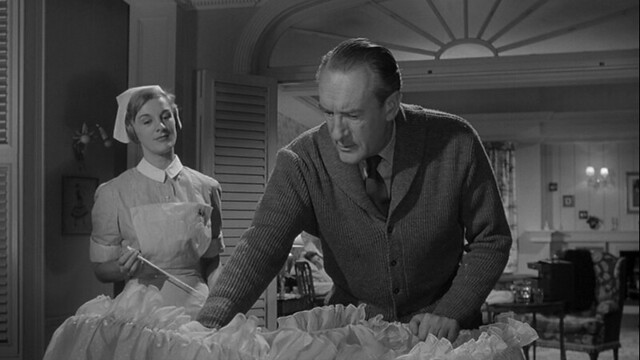
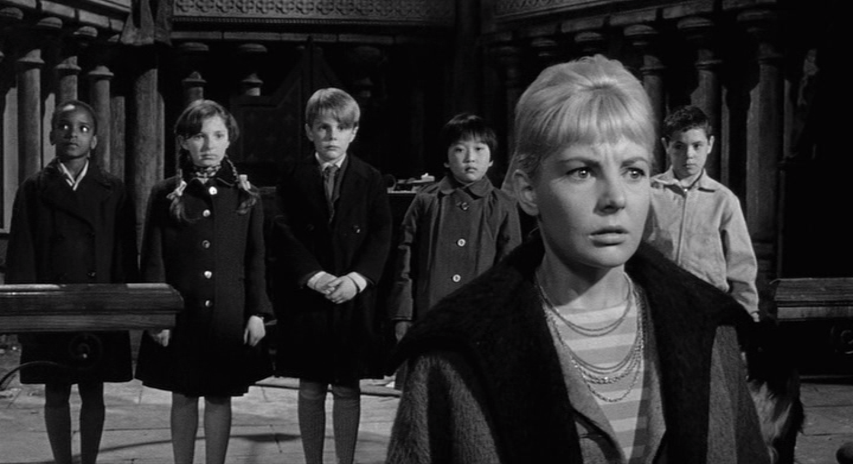
Village of the Damned (Wolfe Rilla, 1960)  Based on the John Wyndham sci-fi novel "The Midwich Cukoos," adapted by Stirling Silliphant and director Rilla, Village of the Damned* is a curious mixture of sci-fi and horror—a combination of pulp sensibilities, but with a strange sub-text that could be taken as religious, mystical, or invasive, and then has the audacity to not answer any of the questions and leave you hanging as the suppositions swirl through your head. Both it and its sequel are fascinating things to watch, but each in their different way.

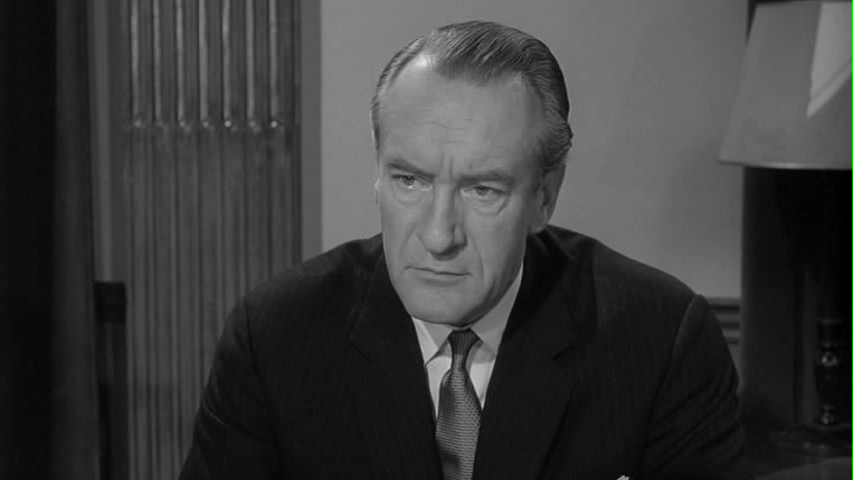
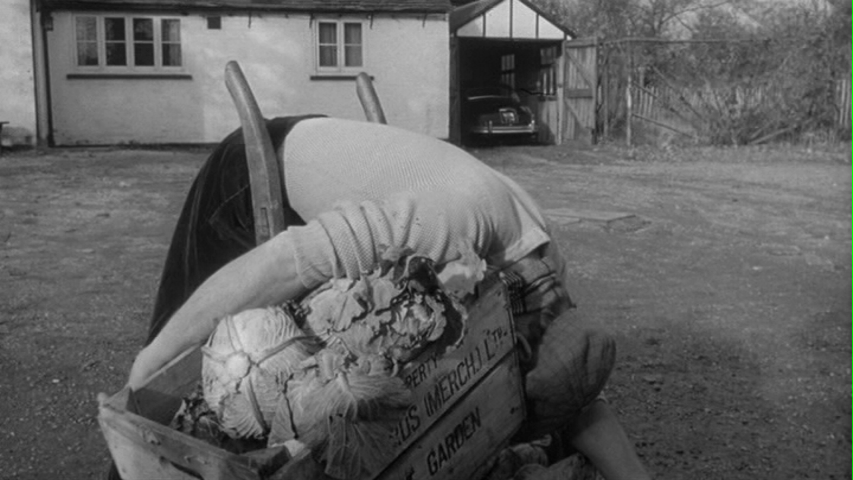
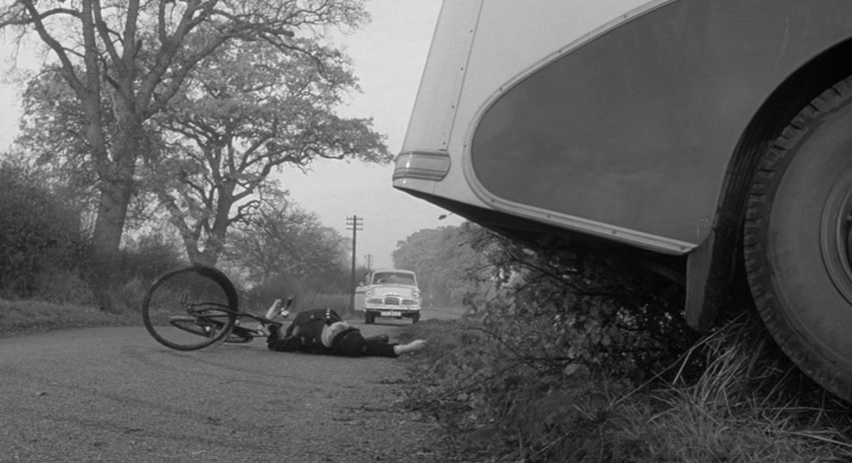
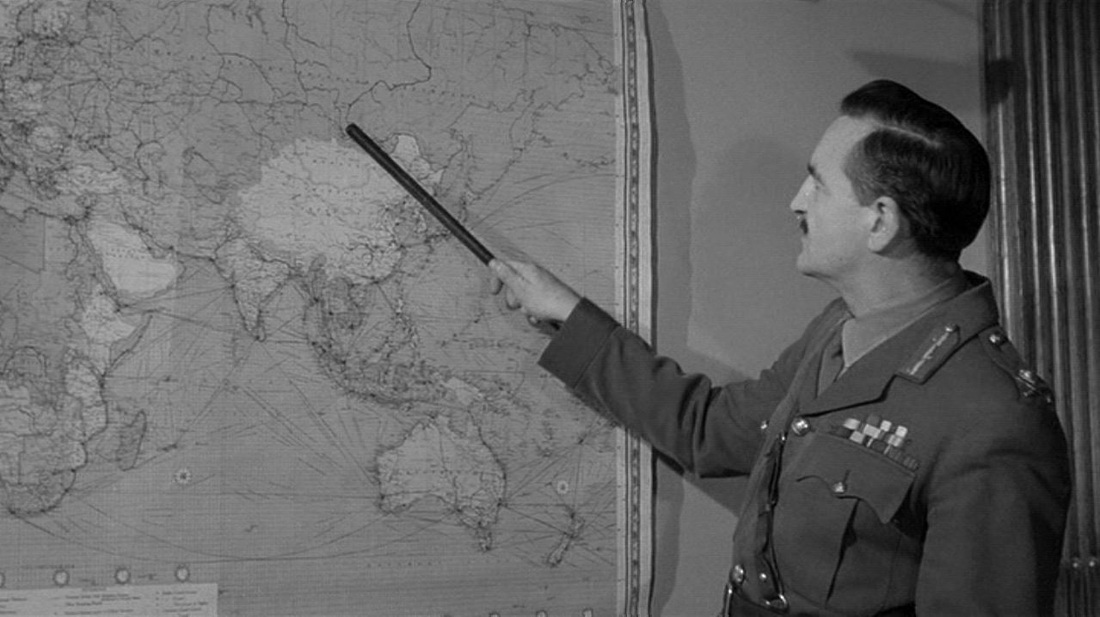
In the town of Midwich, professor Gordon Zellaby (George Sanders) is making a call to his brother-in-law Alan Bernard (Michael Gwynn) when all of a sudden, he falls unconscious. So does the family dog. Bernard is alarmed at this and can't raise anyone in town, so he investigates and being in the military he doesn't do it subtly. What he finds is that everyone within a few mile radius of city center is unconscious...or will become unconscious (even taking preventative measures like gas-masks) if they enter within that "zone"—aeroplanes flying overhead will have their pilots drop off, the planes crashing.  

It's a mystery
. Why this town? Why this effect? But, two hours later, everyone awakens, mystified. They felt a cold sensation before they dropped, but that was it. The disturbance is forgotten.


Until two months later, when it's determined that every woman "of child-bearing years" in Midwich is pregnant. For Zellaby and his wife (Barbara Shelley), it's a miracle though it's a little late in life for him. But, for the unmarried women in town, and for the women with husbands away, it's not only embarrassing, it has to be some bizarre mistake...and when it's confirmed it makes things uncomfortable, socially. For awhile they're stigmatized, but before long (and with the doctor's confirmation) it's determined that all the women are pregnant...and they don't how.

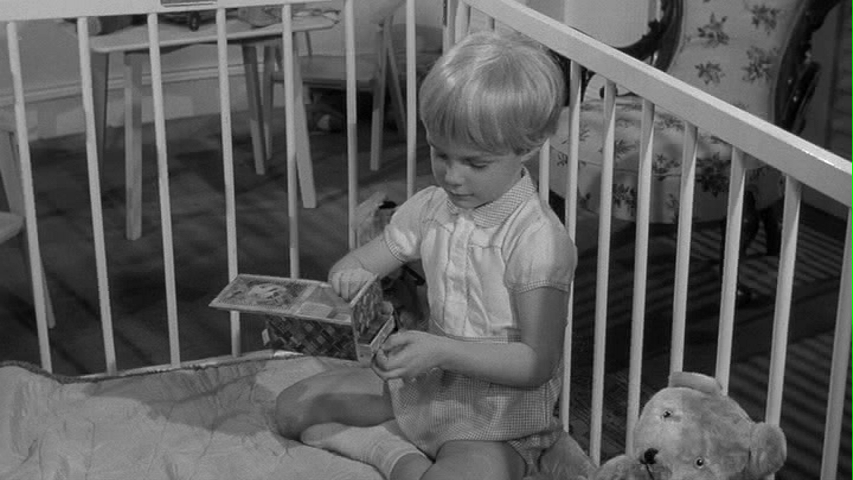
Out of this mass-immaculate conception, the village is seriously creeped out, but the children appear to be normal, if gestating at an accelerated rate. And all are born on the same night, all premature by normal standards, but all around ten pounds, all with white shocks of hair and something "weird" about their eyes, totally black. The kids grow quickly and they learn quickly, being able to figure out chinese puzzle boxes while still toddlers. Give it to one, and then another, sight unseen, will be able to figure it out, as if by telepathy or shared mental faculties.

And...if things don't go their way, they can influence the thoughts and actions of others, an act apparent when their eyes begin to glow white. The children, as they grow older and become more sophisticated, become even odder—walking as a group by themselves, dressing themselves, speaking in a tone, sophisticated and cold.**

What to do about them...and who "is" them, anyway? No one has any answers, but reports around the world suggest Midwich isn't the only village on Earth to experience this. Some of the places have murdered the children. One isolated village in Russia is trying to instruct the children to the best they can. What is the answer: to eradicate, or to exploit? 

The military doesn't want to do anything subtle, but Zellaby, with doubts as to their origin, staves off their eradication by seeing if he can teach them in their own segregated school (naturally). The trouble is, the children don't want to do anything subtle, either, and these kids are of a mind to stop the problem of bullying by any means necessary.
This is a great film, which doesn't shirk societal issues at the same time it doesn't pin down exactly what the hell is going on here. The fact is the kids are here and dealing must begin. But how, never mind why. Plus, it's a genuine horror-fest, making one web-site's list of "10 movies pregnant women should never watch."
*** Apt. And one curious anomaly about the film is that the strange glowing eyes that signal some heavy brain-work on the part of the children (and figures in the denouement) is only seen in American prints of the film. Interesting, as they seem to appear in the British posters for the film.

But, those curiosities aside, it's well-worth seeing, and pondering.  
 
One further note, young Martin Stephens who gives such a calmly mature performance as little David Zellaby in this (and The Innocents) left acting while still a child and became an architect. Yes, he has a web-site.

°° °° °° °° °° °° °° °° °° °° °° °° °° °° °° °° °° °° °° °° °° °° °° °° °° 
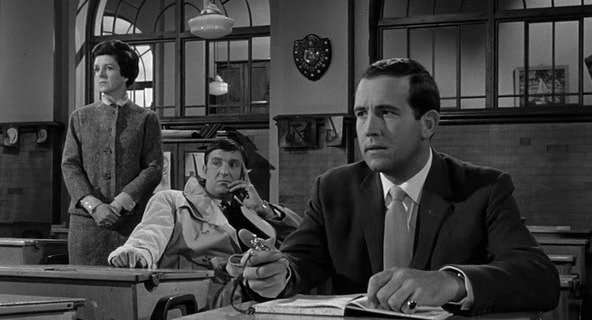
Children of the Damned (Anton M. Leader, 1964) If Village of the Damned leaves things unexplained, Children of the Damned just complicates the issue, rather than coming up with any concrete answers. The six titular children have the same powers and intellect, but not the same attributes. None of them has the tell-tale white hair or the slightly high browline as the first crop of kids. And there's only one child from Britain; the others, flown in by the UN, come from Russia, China, India, America, and Nigeria and their abilities are only discovered by a UNESCO survey on child development. The lead investigators in England, psychiatrist Tom Llewelynn (Ian Hendry) and geneticist Dr. David Neville (Alan Badel, laconically ironic) are looking into the why's and wherefore's of young Paul Looren (Clive Powell), a child of extraordinary learning skills that are frankly off their charts. A visit to his single mother only ends with her tossing them out and their disbelief in her claiming she was never "touched by a man."
Llewelynn and Neville make an odd duck duo,
**** the shrink earnest and straightforward and the geneticist cracking wise with every line. Their investigations come up with no reason why these kids have these abilities, they just do, and when Britain's Secret Service tries to take control of young Paul, he sets up a distraction and scampers, seeking out the other five children and taking up residence in an abandoned church, with Paul's aunt (Barbara Ferris) as hostage/mouthpiece. The various embassies want each of their children back to exploit them, weaponizing them, in effect. Llewlynn is thunderstruck by the idiocy of that: "As soon as one of them knows your plan, then the others will know it." So much for Cold War secrets.

Neville and Llewelynn, U.N. observers...observing
Still the various countries want their kids back, and the kids want nothing of it, attacking from their stronghold in the church, devising a broadcasting "thingie" using the church's pipe-organ to incapacitate anyone attempting to remove them, leaving their attackers dead or "wishing they were."

Children of the Damned is slightly diminished from its original, but on its own is one of those great science fiction films of limited scope and budget that still manages to evoke the sense of a much larger concept, despite narrowing down what the children "are," while giving the film a sense of cautionary tragedy that the first film doesn't have.  Less a horror film than a story of sociological and political paranoia, Children of the Damned features good performances and an efficiently crackling script (by John Briley—he would go on to write Cry Freedom and Gandhi) and manages to stand on its own terms, apart from the first film, as an entertaining, if very unsettling film.

...and what they're observing. 
°° °° °° °° °° °° °° °° °° °° °° °° °° °° °° °° °° °° °° °° °° °° °° °° °°

Village of the Damned (John Carpenter, 1995) This updated version of the original follows the same plot structure of the first, with less emphasis on the mysterious circumstances that cause the "immaculate" pregnancies in the town of "Midwich, California," less stigma—it is the '90's, after all, there's even the subject, given the circumstances, of aborting the children—and more emphasis on the children and the violence they mete out on the town. In color, and sporting a good cast of stars (with Christopher Reeve—his last role before his crippling riding accident—Linda Kozlowski—she of the "Crocodile Dundee" series—Michael ParĂ©, Mark Hamill and Kristie Alley), these kids are more pointedly accusatory, speak in archly threatening whispers,***** and action-oriented, and unusually vicious in the way they have their victims destroy themselves—impaled on a broom, blinding an eye-doctor, having one of the parents driving into a propane tank (rather than a brick wall), another performs an autopsy on herself, and the botched military intervention in another country alluded to in the first film is dutifully played out with all the blood-bags the budget can allow—and Carpenter doesn't cut away as the original did. There's no implication here, which (as it usually is) isn't as powerful as leaving your audience's squirming imagination to do the dirty work. 
Christopher Reeve's doctor hates talking to kids.
On the plus side, it's less of a man's world this time out on both sides: the chief investigator of the phenomenon is a woman (Alley, whose a bit cavalier in her dealing with the kids) and the leader of the children is one of the little girls, Mara (Lindsey Haun) daughter of Reeve's local physician and his wife (Karen Kahn).
This time out, the children pair off, boy-girl, with one of the children (Tom Dekker) left partnerless because one of the children is stillborn, and, as a result, being the only one to develop any empathy at all. The other kids are little monsters who, when forced to go up against an adult with any will at all, will have the pinwheels in their glowing eyes go from green to red to white, then, just to stack the deck against them further, their faces glow red into a demon's visage.
In other words, what was subtle and thought-provoking in the first film doesn't have the same effect in this one. And the reason is you're being beaten over the head with it, and rather pointlessly. There's no ambiguity here. There's no mystery. It's just a simple formula: strange is bad=kill it. Carpenter can be a good film-maker and stylist—he wrote the playbook on the post-Hitchcock slasher film (which may not be much of a recommendation—until you compare it with his imitators). Maybe this was just a case of studio expectations for meeting a carnage quotient. But whatever it is, the 1995 remake of the Village of the Damned takes all the fun...and the seriousness out of the story.

And that's a "Damned" shame.


* There is another film done by the Hammer group, and directed by American director Joseph Losey, starring McDonald Carey and Oliver Reed called (depending on which version you see) These are the Damned or The Damned, and are unrelated to this film series, although it does involve children, with special qualities.

** It was odd watching it this time around, as the children, particularly Martin Stephens, reminded me of no one so much as Sheldon Cooper, Jim Parson's character on "The Big Bang Theory."  Sorry, DR. Sheldon Cooper.
 
*** That article has met its internet death, and with the recent glut of horror films since, Village of the Damned has been knocked off the Top 10 List...but it's still on IMDB's list on the topic...where it's 29.

**** And no, I don't think they're gay, even if they do share a flat in London (separate rooms, mind you).  Both are on assignment from Unesco in London.


***** Unfortunately, the kids' performances are melodramatically threatening, a bit like Patty McCormick in The Bad Seed.

Thursday, July 24, 2014

Now I've Seen Every "Thing" Dept.

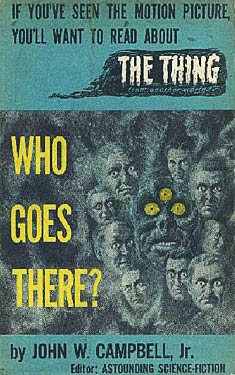
"Who Goes There?" by Don Stuart (a pseudonym for sci-fi pioneer John W. Campbell) is one of the acknowledged "great" stories in speculative fiction.

Part science-fiction, part horror and part psychological thriller, it tells of an isolated Antarctic research facility that discovers a flying saucer long buried in the ice.  Investigation leads to finding the saucer's sole inhabitant not too far away and taking the
BEM-sicle back to the Ice Station for analysis.

Of course, it escapes and this particular ET has a special talent—it can "pretend" to be anyone it has killed and "absorbed." Hiding in plain sight, the "Thing" starts picking off the scientists one by one, while the humans among them start to worry which of their (dwindling) number could be the wolf in sheep's clothing.

Paranoia strikes deep, but "The Thing" strikes deeper, able to replicate the men down to their blood-cells, which provides them with a nifty test to see who's genuine and who's a "Thing"-a-ma-job—take a blood-sample and dip a hot wire into it, and the alien-cells react and start to metamorphose, while the human hemoglobin merely sizzles.

Eventually, the alien is trapped by the scientists, while it is constructing an anti-grav ship to escape, forcing it outside into the cold, where it is torched by the scientists. Humanity triumphs that the alien has been thwarted from fleeing or spreading itself to another outpost. All's right with the world, especially considering that no other visit has occurred since the first ship crashed twenty million years before. No other invasion is expected anytime soon. The end.

From its origins in the August 1938 issue of "Astounding Stories," the tight, compact story was first adapted for the screen by Charles Lederer (with assists from Ben Hecht) and the film's producer, one of the great directors of American film, who put such a personal stamp on it that, to this day, there is debate about just how much work on it the listed director of record actually did.  And that man's influence has taken over the DNA of his film's clones, so powerful is his influence and legacy.
The researchers take a measurement of the saucer.
Hawksian team-work in The Thing (from Another World)
  

đŸ˜€đŸ˜€đŸ˜€đŸ˜€đŸ˜€đŸ˜€đŸ˜€đŸ˜€đŸ˜€đŸ˜€đŸ˜€đŸ˜€đŸ˜€đŸ˜€đŸ˜€đŸ˜€đŸ˜€đŸ˜€đŸ˜€đŸ˜€đŸ˜€đŸ˜€đŸ‘½đŸ˜€đŸ˜€đŸ˜€đŸ˜€đŸ˜€đŸ˜€đŸ˜€đŸ˜€đŸ˜€đŸ˜€đŸ˜€đŸ˜€đŸ˜€đŸ˜€đŸ˜€đŸ˜€đŸ˜€đŸ˜€đŸ˜€đŸ˜€đŸ˜€

The Thing (From Another World) (Christian Nyby, 1951).  Yes, it says "Christian Nyby" in the credits, but the film is such a prime example of Executive Producer Howard Hawks' style that folks just assume he had a hand in directing it as well.  He almost certainly re-wrote the script, as it crackles with wit, banter, and includes the requisite "Hawks woman" who's tough enough to play with "the boys."  In fact, the dialogue and human interplay are better than the film deserves and is more entertaining than the "monster movie" that is at its frozen core

Hawks puts it in the arctic, then tossed out Campbell's psychological element—his military/scientific crew are Hawksian professionals and suspicions about each other would drive a wedge into that mix (it's enough that one scientist want to emphasize research over self-preservation to cause some heated exchanges*), fraying the team-spirit necessary to get through the crisis and the simple goal of staying alive. Nope. It's simple. The "Thing" is bad. "It" wants to kill us. We kill "it" before "it" kills us. Research? That's what autopsies are for!
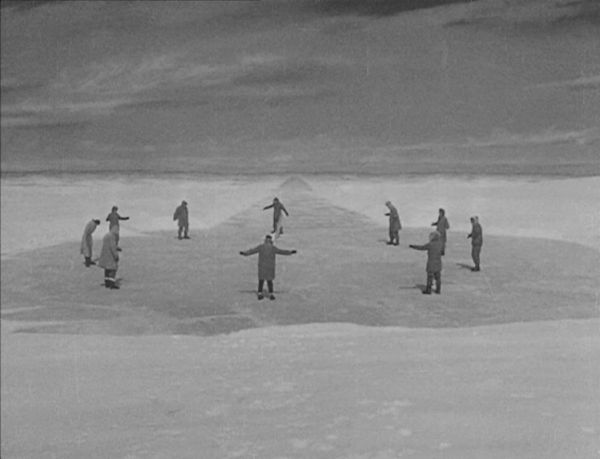
So, The Thing (From Another World) is much more of a monster movie than the study of paranoia the story is. Teamwork towards a common goal is emphasized—you can say that a lot of Hawks' films are analogies to the disparate gypsy-camp of film-makers working together to create a single film—and it boils down to survival. Besides the interplay of the characters, the film also boasts some iconic scenes: the Air Force officers and scientists spreading out on the ice to determine the size of the saucer;
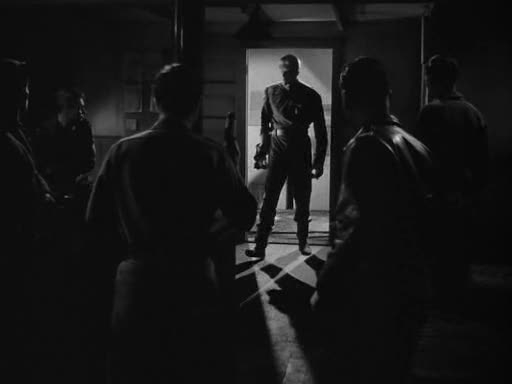
the sight of "the creature" (explained in simple unscientific jargon by one of the researchers as "an intellectual carrot") silhouetted in light as it kinetically bursts open the door of the room hiding the crew; the truly eerie scene of growing blood-sucking creature-clones like they were lethal daisies.


The Thing (From Another World) is a tough, no-nonsense monster movie with sides clearly drawn: us against them. But the only hint of the original tale's paranoia comes from the film's final line: "Watch the skies!"
Braised carrots are on the menu at the arctic station tonight.
James Arness (in a role he hated) gets fried in The Thing (From Another World)

đŸ˜€đŸ˜€đŸ˜€đŸ˜€đŸ˜€đŸ˜€đŸ˜€đŸ˜€đŸ˜€đŸ˜€đŸ˜€đŸ˜€đŸ˜€đŸ˜€đŸ˜€đŸ˜€đŸ˜€đŸ˜€đŸ‘½đŸ˜€đŸ‘½đŸ˜€đŸ‘½đŸ˜€đŸ‘½đŸ˜€đŸ‘½đŸ˜€đŸ‘½đŸ˜€đŸ‘½đŸ˜€đŸ˜€đŸ˜€đŸ˜€đŸ˜€đŸ˜€đŸ˜€đŸ˜€đŸ˜€đŸ˜€đŸ˜€đŸ˜€đŸ˜€

The Thing (John Carpenter, 1982) Director Carpenter has long been a disciple of Howard Hawks (his Assault on Precinct 13 is an urban remake of Rio Bravo, and Halloween is merely The Thing in costume), so it was only natural that he would take on the sole horror movie in Hawks' CV.

Bill Lancaster's script hews a little closer to Campbell's story, re-introducing the character conflicts and the assimilating alien (and eliminating Hawks' lone female character, making the station very much a "boys' club," comprised of Carpenter's "go-to" top-liner Kurt Russell—as chopper pilot McReady—and a "who's who" of veteran '80's character actors, Wilford Brimley, T.K. Carter, David Clennon, Richard Dysart, Charles Hallahan, Donald Moffat, Keith David, and Richard Masur).

In the Hawks version it was "us against them;" with Carpenter, it's back to "we have met the enemy, and he could be one of us."

Kurt Russell as MacReady in Carpenter's version
The tone is decidedly different, too. Carpenter's film is dark and brooding and creepy, punctuated by sequences of crazily unnerving violence concocted by make-up wizard Rob Bottin's creative realizations of the creature's ability to turn any part of a human's anatomy into a potential source of weapon or defense. It's icky and gooey and strangely goofy to see heads sprouting spider legs and skittering through the facility, or to see the detached head of one of the researchers pull itself along by whipping its tongue around a table leg and pulling itself out of harm's way.
Rob Bottin's creature creations for The Thing (1982) emphasize
a strange versatility when utilizing its human hosts.
Ultimately, though, for all the anarchic lunacy of the monster sequences, the movie boils down to a claustrophobic, paranoid fight between the men amongst themselves in their search for who is the monster among them, and Carpenter ends the film on a decidedly down note as the survivors of the carnage eye each other, each suspecting the other of being a creature, while they await certain death from the freezing elements, their previously secure station decimated by the events of the previous hours, providing no safety, no sanctuary or any warmth. There are no winners in the decidedly small intergalactic battle zone. 
And, though we're left with no ending and only a stalemate, we can be assured there will be no survivors, either. Any victory is hollow, and one is left pondering if any "thing" human came out of it.

đŸ˜²đŸ˜²đŸ˜²đŸ˜²đŸ˜²đŸ˜²đŸ˜²☹️☹️☹️☹️đŸ˜¬đŸ˜¬đŸ˜¬đŸ‘½đŸ‘½đŸ‘½đŸ‘½đŸ‘½đŸ‘½đŸ‘½đŸ‘½đŸ‘½đŸ‘½đŸ‘½đŸ‘½đŸ‘½đŸ‘½đŸ‘½đŸ‘½đŸ‘½đŸ‘½đŸ˜¬đŸ˜¬đŸ˜¬☹️☹️☹️☹️đŸ˜²đŸ˜²đŸ˜²đŸ˜²đŸ˜²đŸ˜²


The Thing (Matthijs van Heijningen Jr., 2011) A direct prequel to Carpenter's film,** but basically the same plot. Spaceship found. Creature in the ice. Thaws out. Starts absorbing people.

What's interesting is that van Heijningen also pays tribute to Hawks, by turning the sex-tables on the story, making paleontologist Kate Lloyd (
Mary Elizabeth Winstead from Scott Pilgrim, who looks unnervingly like Zooey Deschanel and can rock a mean flame-thrower) the "guy-in-charge" after the official authority structure breaks down. Just as Hawks up-ended The Front Page by casting Rosalind Russell in one of the men's roles for His Girl Friday, van Heijningen provides an interesting dynamic by putting a woman in control of a station full of panicking men.
One doesn't have to have seen the Carpenter version to appreciate what is going on in the film, but if one has there are touchstones that one can appreciate (and check off if one is a "completist" or continuity-obsessive) along the way—especially at the end once the credits have started rolling—there's the merged double-creature that is briefly seen in the earlier film, the axe in the door, the suicide, the fleeing dog pursued by snipers. But, the giddy, manic quality of the creature-creations has been muted for straight-out horror effects—van Heijningen even has a cheap-shot "Boo" effect early on that still makes one jump—but Carpenter's (and Campbell's) blood-test sequence is neatly sabotaged for a simpler, more organic, and slightly creepier, test that anticipates a potential attack every time someone opens their mouth.
It does its job well, but one is left feeling it really wasn't necessary to make this entry, as it its only function seems to be to ride the coat-tails of its predecessor and fill in some blanks of an already competent version that left some audience-members behind (in the same way that
2010 did for 2001).

Kate Lloyd (Mary Elizabeth Winstead) rocks a flame-thrower.


* And we all know how disastrous heated exchanges can be at an ice-station!

** The film literally ends where Carpenter's begins, with a Norwegian helicopter  and gunman chasing a dog over the Antarctic wastes.