The Never-Ending Battle for Truth, Justice, and the American Way
or
(The Best Two Out of Three)

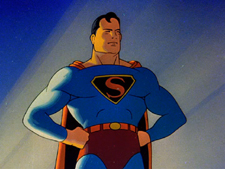
The silver screen has chronicled his "never-ending battle for Truth, Justice and the American Way," starting in the 1940's with feature cartoons, moving into serials, and then landing on the silver screen in legitimate films. Here's a look at them.

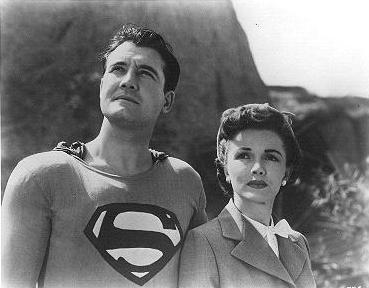
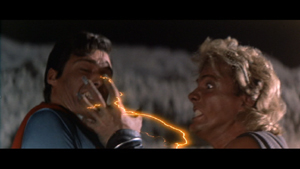
Superman and the Mole-Men (Lee Sholem, 1951) A black-and-white short film (running just under an hour), Superman and the Mole Men was a trial-run (a pilot, if you will) for the subsequent "Superman" television series starring George Reeves as the Man of Steel. Metropolis Daily Planet reporters Clark Kent (Reeves) and Lois Lane (Phyllis Coates) are assigned to cover the world's deepest oil-well, and find that something, or some "things," have come up through that well to see what's on the surface poking around their habitat. It being the 50's (of course, we were so backward then!) the town's populace fears the Invaders (probably around before them!), and set up a vigilante mob to deal with them. But Superman (being an unpapered alien, himself) pleads the case for tolerance--by turning the mob's guns into pretzels. Shot on a shoe-string budget (a ray-weapon carried by the Mole men was made out of an Electrolux vacuum cleaner!), Superman and the Mole Men is long on exposition, but short on costly super-heroics. Still, given the material, the actors give it their all.
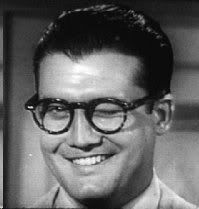
Coates was always my favorite Lois Lane, tough as nails, and more prone to kicking an assailant in the shins than shrieking back in horror. And Reeves is all steel-jawed seriousness as Kent and Superman. There's none of the winking-at-the-audience that would come later in the series--Superman is all-business and Reeves plays the Man of Steel absolutely straight, like it's a mission. And because he believes in it, you have to take him at face value, even if the trappings that surround him aren't too convincing. Reeves would go on to play the Man of Steel until his death by gun-shot (ruled a suicide) in 1959.


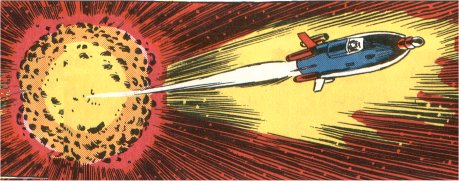
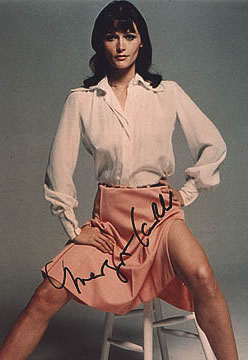
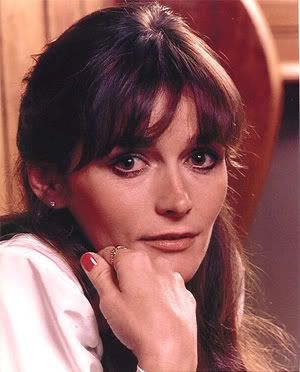
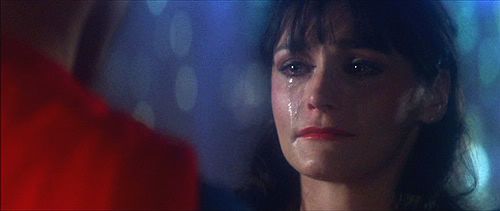
 Superman: The Movie (Richard Donner, 1979) For a movie that promised "You'll believe a man can fly" it couldn't be more elephantine. The Salkind family of producers bought the movie rights to Superman, and in an orgiastic frenzy to garner investors hired Godfather scribe Mario Puzo to write the script (sure seems like a natural!) and hired Marlon Brando and Gene Hackman to star. They had a movie! Well, sort of....Puzo turned in a massive script, Brando had his usually odd ideas to avoid work, Hackman was getting a little nervous. Things started to gel when Richard Donner was hired to direct. First, he settled things down. The script, which had been worked on by the Bonnie and Clyde team of Benton and Newman, was hammered into shape by Tom Mankiewicz. Then they hired the big guns, Lois Lane and Superman. For Lois, they picked Margot Kidder—not a glamour-puss, but a dame, who could convincingly play the "goes-all-gooey" side of the
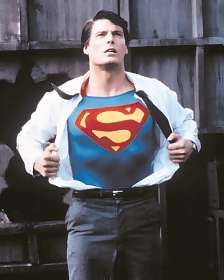
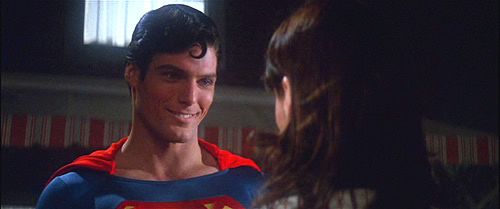
  Daily Planet reporter. And for Superman/Clark Kent, they picked a skinny up-and-comer named Christopher Reeve, who wasn't all that sure he wanted the job. But Christopher Reeve made a fine, slightly self-deprecating Superman, and Superman made him a star.
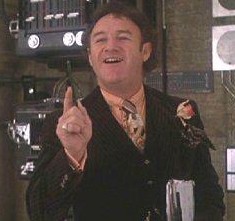
The movie's all over the map, but moves at such a clip, you're not allowed time to notice. There's the austere Krypton section that ladles on the tragedy with Marlon Brando playing it absolutely straight. There's the Smallville segment with Glenn Ford, and an America so archetypal that they had to film it in Canada. And then there's the loopy Metropolis section, as Superman (who seems to enjoy the effect he has on ordinary mortals) must battle the nefarious Lex Luthor (Gene Hackman, clearly enjoying playing comedy) and his curiously buffoonish aides-de-camp (Valerie Perrine and Ned Beatty). The thing should fly apart at the seams, but Donner's rock-solid direction, Stuart Baird's don't-blink editing and John Williams' anthem-pumping score keeps the momentum going so the thing never touches the ground. It's a little bit of a miracle.

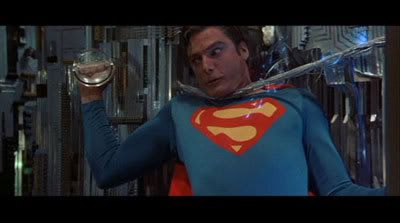
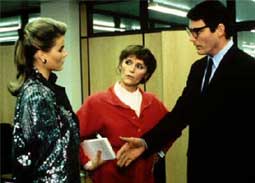
 Superman II (Richard Lester & Richard Donner, 1980) Superman: The Movie was a miracle, but a costly one. Financed to be two movies, Donner was forced to concentrate finishing the one at the sacrifice of the second—sequences were re-shuffled* to meet the Christmas release date, and some things just weren't shot. Donner accomplished his primary goal, though, the first one was a flying success, and Donner was rewarded...by being fired. "Production consultant" Richard Lester--who directed the Salkind's near-perfect "Musketeers" movies--was brought in to finish Part II...with some provisos—to be considered the director of note, he had to have directed at least 50% of the picture. That meant scrapping some of the Donner footage. Hackman wasn't coming back, and Brando's already-shot footage was shelved, to relieve the producers of any financial burden. A lot of fans prefer II to the first one. But...they're crazy. Lester's touch is far more goofy and slap-stick than Donner's, to the point of silliness. Plus, Superman is given a whole roster of new powers to defeat the Kryptonian villains (and zap Lois into forgetting Clark is
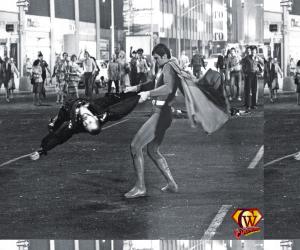
  Superman). Some scenes like a super-brawl on Broadway are impressive, but others like the Krypton Trio in a poor-excuse-for-Mayberry not only don't play well but are insultingly juvenile. Plus, Superman sleeps with Lois. Hold that thought. You'll need it later.
After years of wondering what the Donner Superman II would have been like, the director was given unprecedented access to re-edit Superman II "his way," restoring long-abandoned scenes and even restoring Marlon Brando to the story! The result? Not very successful, but an interesting curiosity. The problems besetting Superman II were more than just digital editing could solve. It is neither a vindication for Donner, nor a smack-down of Lester. That would come later.

 |
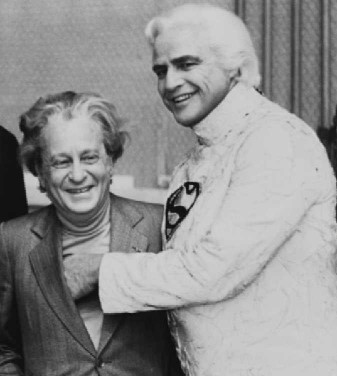
| Above: York as Lara in Lester's version Below: Reeve and Brando in their only scene together from Donner's cut |
Superman III (Richard Lester, 1983)
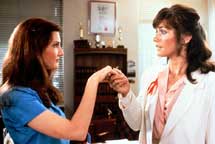
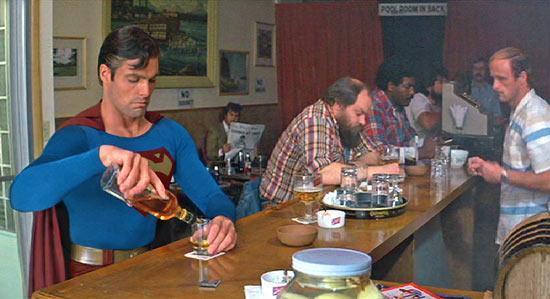
 Just like the dumb idea of giving Superman extra powers he had never previously displayed or needed, at some point it was decided by the Salkind producing team that Superman alone wouldn't draw crowds. The solution? Bring in another box-office star, and one of the most beloved at the time was Richard Pryor, who had a knack for bringing in audiences. His improvisational brilliance had rescued poor material in the past, but even Pryor had little to work with here. He plays a computer savant who is coerced by evil magnate Robert Vaughn (who doesn't have quite the comedic chops of Gene Hackman) to build an evil empire run by a super-computer that could even kill Superman. That's one part of the movie. The other is that Clark Kent goes back home to Smallville to attend a high school reunion and re-links with his old sweetheart Lana Lang (Annette O' Toole, trying vainly—she went on to play Martha Kent on TV's "Smallville"). Lois makes the briefest of appearances, either because her story had run its course—or Margot Kidder was in salary disputes with the producers, depending who you talk to. At one point, Pryor's Gus Gorman creates some half-baked synthetic kryptonite that turns Superman into a super-creep. As much as Reeve might have found it dramatically freeing to play Bad-assuperman, it's disheartening. The whole movie is.
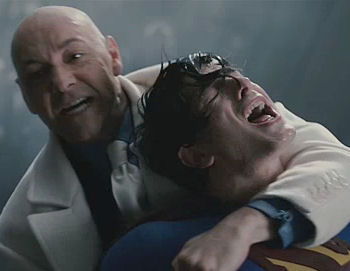
 Superman IV: The Quest For Peace (Sidney J. Furie, 1987) III is bad, but it's better than this one. Produced by fire-sale film company The Cannon Group, the franchise was taken out of moth-balls with a story idea by Reeve where Superman decides to become a one-man disarmament program, taking all of Earth's nuclear weapons and throwing them into the Sun. One problem, though: Gene Hackman is back as Lex Luthor, and he's got a new plot to become the greatest arms manufacturer the world has ever seen. But first, he has to kill the Man of Steel, so he creates a Frankenstein's monster of a sun-powered strongman. Things get a bit hazy at this point, because prior to release, the film was edited by some 45 minutes making it practically unintelligible. Oh, well. Lois Lane appeared. Mariel Hemingway is there as a romantic rival for Clark for some reason...and Superman gets some even newer powers--this time, Great-Wall-of-China-rebuilding-vision. Flying and being able to squeeze diamonds out of coal doesn't have the same thrill it once had, apparently, especially when the effects are as flat and badly thought out as they are here (dare I say that the effects in Superman and the Mole-Men are more convincing?). Superman IV: The Quest for Peace pretty much killed off the series for close to twenty years, marking the last time Reeve would play Superman.
Superman Returns
 (Bryan Singer, 2006) Years in development that saw rumors of a Tim Burton version starring Nicolas Cage, a Kevin Smith script, and other wild schemes were finally brought to a screeching halt when Bryan Singer jumped from the "X-men" franchise to tackle his dream project--bringing back Superman. His Superman. The Superman from the earliest Reeve films. So Superman Returns has an oddly nostalgic feel to it--almost morosely nostalgic. By this time Brando was dead, and Christopher Reeve had finally succumbed to complications from his spinal injury. At times, Superman Returns feels like a wake. It doesn't help that Singer has so much love for the first
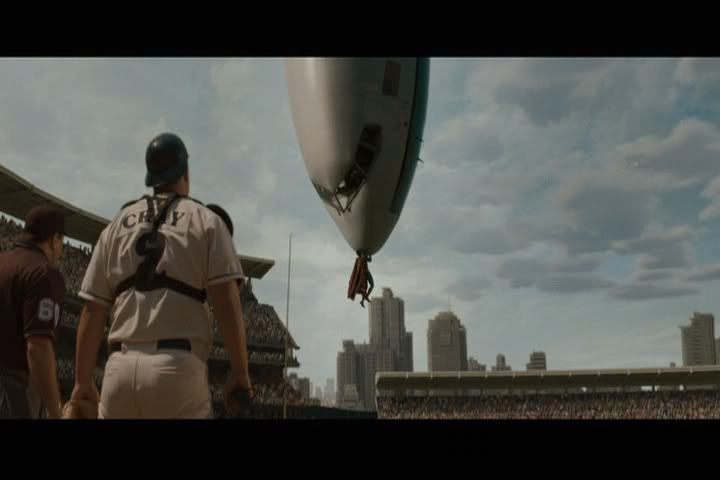
  two films that he can't treat it with anything less than an almost religious devotion. This Superman is treated like a tragic, lonely god, but it's tough to feel sorry for him when he's the most powerful guy on the planet. If Superman can get the Kryptonite blues, what hope do the rest of us have? Vintage Brando footage is restored for Kal-el's father. Kevin Spacey fills in Gene Hackman's shoes (inadequately) as Lex Luthor. And Kate Bosworth is a more mature, less fun Lois Lane (she lacks Kidder's almost-macho fire). The film only has a proper feel when Supes is doing some incredible stunt, like saving a falling airplane (easily the best sequence in the film). Also SR takes up a few years after the timeline of Superman II, so...that little Supes-Lois tryst? There's a little issue that goes with it. Brandon Routh looks and talks so much like Chris Reeve it's down-right haunting. Despite being a success at the box-office, it was still not the blockbuster that Warner Bros. expected, and Routh's turn in the suit ended at one (although he would return in the "Crisis" crossover event on the CW).
 |
| When Superman says he "has to catch a plane..." |

Snyder made what is probably his best film, leaving his green-screen obsession for just the Krypton scenes, and using honest-to-gosh real locations for the story of Kal-el's journey to hero. An apt choice, as was the decision to revamp the conception of Krypton (and Kal-el), making the character an outlier on both worlds. The other good thing about it, in association with the first, is the veering away, at least temporarily, from the usual super-hero tropes. This is an alien invasion movie where the Kryptonian villain Zod (Michael Shannon) and his minions come to Earth seeking the natural-born son of Jor-el (Russell Crowe) and Lara (Ayelet Zurer), an abomination in his eyes and the source for bringing Krypton (or something like it) back from extinction. And the Super-man (Henry Cavill) is not wearing tights while saving kittens from trees, he's wandering the country doing extraordinarily skilled manual labor jobs, until he has to "save the day" then disappears, heeding Earth-father Jonathan Kent's (Kevin Costner) warning that his uniqueness makes him susceptible to the whims of power.

That's all well and very good, but Man of Steel descends into the biggest brawl-fest between two super-beings ever put on screen, which, while momentarily interesting (and far superior to the struggles in Superman II), wears out its welcome very quickly and becomes as dull as a "Transformers" movie—while also bringing up the question (as Metropolis lies in ruins) "Why are super-heroes a GOOD thing, again?" This is not something you want to ask in a super-hero movie. Sure, you can believe a man can fly, but you shouldn't believe you'd prefer him in a town other than yours. It negates the whole "hero" thing...
When last we see him, he has set himself up as a reporter for The Daily Planet in Metropolis, but despite staving off an attack from survivors of his home planet, he now must contend with the suspicions of those on his adopted world.
 |
| Like any alien invasion movie, the military draws down on the threat—an aloof and separate Superman |


Besieged from all sides, the Last Son of Krypton, feels truly alone. But, taking example from what he thinks is his worst enemy, he learns the true lesson of sacrifice, giving his all, and falls in battle.


Zack Snyder's Justice League (Snyder, 2021)
Evidently, bringing Superman back to life is a lot harder job than it would appear, at least if you're a Warner Brothers executive.
 Where Superman falls into play in both versions of the Justice League story is that it is decided—by Batman in the short version and "the team" in ZSJS—to use Kryptonian technology and Flash-powers to bring Superman back to life. This is done far more easily than one would think, but, when revived, Kal-el is more than a bit pissed off. The timely arrival of Lois Lane—by design in JL; by accident in ZSJL—grounds him enough that he is able to snap out of his memory-lapse and returns to help the League finish the job of dispatching the minions of Apokolips. Both films feature a less-grim Superman than the previous versions with Cavill, although he's far more larky and jokey in Whedon's cut, as well as wearing the traditional blue-red Super-suit (Snyder places him in a funeral-black version).
By now, everyone knows the story: Snyder had planned two Justice League movies and filmed them back-to-back. Warner Brothers, responding to the less-than-anticipated box office of Batman v. Superman, changed their minds and wanted just one movie to be less than two hours and far less dark than BvS. It was a logistical nightmare and then Snyder withdrew due to a family tragedy. Warner hired Joss Whedon (because: Avengers) and it was his job to bring in a half-sized Justice League, have it make some sort of sense, and be lighter in tone. Not an easy job, especially with a lot of re-shoots needed to close gaps and bridge sequences.
Still, the Snyder version is the fuller story—not short-changing the Aquaman, Flash, and (especially) Cyborg stories—bringing in Big DC Bad-Guy, Darkseid, and generally making a more consistent DC Universe. And Whedon's Superman is almost TOO happy after being raised from the dead and everything.

Superman (James Gunn, 2025) When James Gunn was handed the super-keys to the DC Universe (after directing two Guardians of the Galaxy films and a quite bonkers version of DC's Suicide Squad), the question was "what would he do with it?"). This is the former Troma-guy who wrote and directed Super. His movies were weird, "out there" and somewhat heretical to slavish fan-boy expectations. So, what would he do with the "too-invulnerable-to-crack" Rosetta Stone character who'd been turned into a mopey, grim-and-gritty version of his former self by the last couple guys who tackled him? Gunn declared he was going to return Super-guy, who was "not cynical. And I think that one
of my fears about doing Superman — because I was offered Superman seven
years ago, and I was afraid it was too mainstream for me, too
Pollyanna, too good natured, that I'm an edgier filmmaker than that. And
the truth is, there's nothing more edgy than him not being cynical, just
being a good-natured, kind guy. Because that is absolutely going
against the grain in this world today. And I love that part of the
movie."


Then, Gunn does what Gunn does. Pulls out some of the sillier aspects of the DC magazine universe and stirs them into the mix, making Superman's world more diverse, more chaotic, and in contrast to our hero's sense of normalcy.
I like it. It's not definitive. But, it'll do to have him around for awhile.


Supergirl (Jeannot Szwarc, 1984) Back in the days after Superman III, but before IV, when it was kind of tough to pin Christopher Reeve into coming back to play Superman, the producers Salkind had it in mind to expand the franchise by creating an off-shoot, featuring Kal-el's cousin Kara Zor-el, whose family also survived the destruction of of the planet Krypton in the
 protectively-domed Argo City. Forced to flee the city in space to retrieve a misplaced power source, the Omegahedron, she comes to Earth as Linda Lee, but follows in her cousin's flight-path as Supergirl.
 The filmmakers do try to make it work. Helen Slater is a real charmer as The Maid of Might, and the cast is surrealistically amazing: Peter O'Toole, Faye Dunaway, Mia Farrow, Peter Cook, Brenda Vaccaro, but David Odell's script is a godawful fantasy mess. The vet's try their best with Dunaway's work feeling like an audition to play Cruella Deville...or her subsequent role as Joan Crawford. Composer Jerry Goldsmith gives a taste of what his "Superman" score would have been like--he and John Williams were trading off being assigned to it during its extended production. Supergirl is a bit better than Superman III and IV, but that's not saying an awful lot.


But, even though his parents were killed on Krypton, Superman isn't an orphan (being raised by the Kents). Kara is. And her period of mourning is intense, and she has nothing to be grateful to Earth for. So, she drifts. And this story based on Tom King's comic-series "Woman of Tomorrow" tells of her pulling herself out of her funk, and doing some good. Of course, saving her dog Krypto is the motivation (hey, it "works" in the "John Wick" series), and if that doesn't attract the fan-boys, an extended cameo of Jason Mamoa in his dream role of cosmic-biker Lobo, is tossed in to amp up the testosterone.
Alcock is great, but Mamoa made a better Aquaman, and the thing feels like it's marking time rather than doing something that's unique in the "superhero" genre, which is getting fairly standard with the glut of "spandex" movies.

"Captain, we've lost an engine!...Oh!..Wait! Found it!"


* (Spoiler alert) The solves-all-problems time-reversal ending of II's script was thrown onto I, and the cliff-hanger ending of I (the space-bound nuke hijacked by Lex Luthor unwittingly frees three Kryptonian villains from "The Phantom Zone") was jettisoned--no one knew for sure there would be a Superman II though it was promised at the end of the 10+ minutes End Credits