Showing posts with label Jeremy Strong. Show all posts

Thursday, January 21, 2021

The Trial of the Chicago 7

"'Fictionalizing History and Sorkin It Out"
 or
"Give Me a Moment, Would You, My Friend? I've Never Been On Trial For My Thoughts Before" ("It's a Revolution. We May Have to Hurt Some Feelings")

The Trial of the Chicago 7 has been in the works since somewhere around 2006 when Aaron Sorkin was introduced to the idea of writing it by Steven Spielberg, who wanted to make it as a directing project. Seemed like a good fit; Sorkin is the "dean" of writing compelling court-room dramas and has a knack for putting emotional juice into "wonk" arguments. That work results in some rapturous writing, even if one feels like opposing arguments are given short shrift for the "slam-dunk" moment. With him, it's a—you know—"a thing"

One wonders what Spielberg would have done with it. One knows it would have been a much more precise directing exercise. One hopes that Spielberg might have taken the script and roughed if up a little, textured it with a bit more grit, and thus friction, and thrown in some ambivalence to make the thing more of a courtroom "shit-show" (as it was) than anything too neat and tidy. Maybe an "anti-polish" of the script by the Coen Brothers could do that.

Because the way Sorkin tells it, it's all very neat and tidy with a wildly "boo-yah" finish, where the defendants are convicted on one of the charges—to incite a riot (rather ironic post-01/06/2021)—but their post-conviction statement is such a rousingly heart-felt protest that the crowd in the court-room (and even the prosecution!) gets up to applaud in solidarity.

In a word..."Nah!"

To be fair, trying to organize the ramshackle case number 69 Cr 180 The United States v. David Dellinger et al. into a coherent timeline of pertinent facts that has "a wow finish" is an almost impossible task. Yes, the case was a slap-dash collecting of "usual suspects" at the behest of the Nixon Administration, so that a consistent charge was specious at best. Yes, the trial went on despite one of the defendants not having the benefit of counsel. And, yes, that defendant ended up being bound and gagged for a good section of the trial. Yes, Judge Julius Hoffman was out of his depth trying to juggle the cats involved, ending up charging 175 combined contempt charges among the defendants and their lawyers, indicating not so much that there were violations, but rather that the judge had no control over his court.
What actually happened, you can find here and here. There are so many feints, fibs, and sleights of hand in Sorkin's "portrait" (rather than "a picture" he's said about the script, something he also said about his script for Steve Jobs) that I could write the rest of the review going over them. But, they're well-documented (the least of which is that there were eight defendants counting Bobby Seale, not seven—the man was only in Chicago to give a speech, but he was lumped in with the others because putting a Black Panther on trial was "good optics" for a cynical Department of Justice, until the optics turned horrifying).
It is a "given" that, unless someone is making a documentary, film-makers will swerve away from the facts (and even documentary film-makers will cherry-pick from their sources). No one was there in the room taking down notes for dialog (although, in this case, Sorkin did have the trial transcripts), so we don't know what was said behind closed doors. There's a writer's term/cop-out for making things up: "Writing to Silence," because there is no one around to object.
Except, of course, the audience.

What is the creator's responsibility—to the audience or to truth? Tough question. It should be kept in mind by any discerning audience member that when the line "Based on a True Story" appears that it is a hedge against accuracy: the actual Perdicaris taken hostage in The Wind and the Lion was a man, not a plucky widow, and we don't know what Neil Armstrong was doing by that moon crater, even though First Man has him completing an emotional story point in the film. It might be some dramatic license to make a better story, to tie up a dramatic loose end. Or, changing the facts might be some cathartic wish-fulfilment as Quentin Tarantino provided in Inglourious Basterds or Once Upon a Time in Hollywood.
John Ford famously used the sentiment "when the legend becomes fact, print the legend" even as, in his later films, he sought to negate it.

Sorkin is not above re-writing history for the perfect dramatic punch-line...he did it quite a bit in "The Newsroom," blending real-life events with a parallel universe news organization. And one can't forget the point in A Few Good Men when he ginned up false drama by making Tom Cruise's defense attorney appear unsure and faltering before delivering his final gavel blow. It makes no sense, other than to show his protagonist at his lowest point before his turn-around to triumph. He "had" to get one more dramatic beat in to make the ending suitably triumphant. Audience manipulation. Nothing more.

But, now—after this particular Inauguration Day—perhaps we should reflect on the responsibilities to Truth. Even if it makes the side you favor look bad...or less righteous. False narratives and wishful, even magical, thinking does not make it so. Rhetoric is the art of persuasion, but that art has to stand on the fundamentals of truth. Not just how we want the truth to be. No matter who's side you're on.
Well! "Other than that, how was the play, Mrs. Lincoln?"

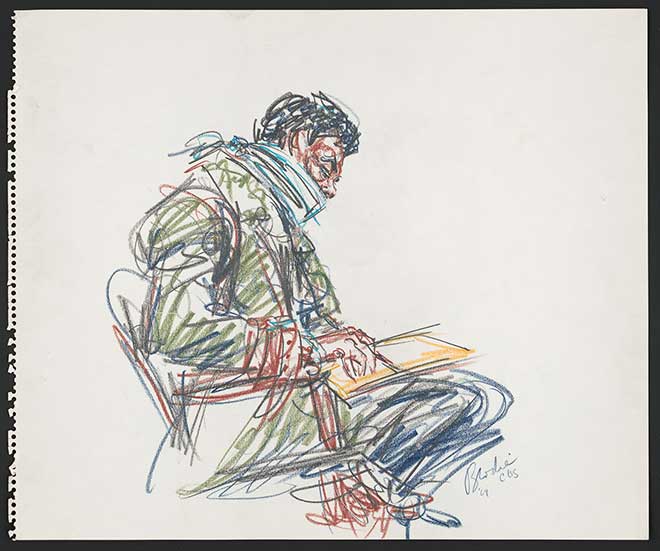
Sorkin does a good job mixing in contextural news footage (and some of Haskell Wexler's footage from Medium Cool) from the times, with his DP Phedon Papamichael. Given the amount of material he has to cull from, Sorkin, as both writer and director manages to keep the personalities he's interested in—that is anybody except John Froines and Lee Weiner, who are given short shrift—engaged and sparring. Acting stand-outs negotiating the dialogue are Eddie Redmayne's Tom Hayden and Mark Rylance's William Kuntsler (Jeremy Strong's Jerry Rubin is a bit of a buffoon, unfortunately). But, the stand-out is Sacha Baron Cohen's Abbie Hoffman, not so much in how good he is portraying the trial's Merry Prankster, but in how good he is in the dramatic scenes, when the veneer drops and the words become measured and sharp as a knife.

Thursday, December 28, 2017

Molly's Game

Upping Aaron's Ante
or
"Do You Know Who Circe is?"

Aaron Sorkin is one of the better writers in Hollywood and he's had a good number of directors shepherding his screenplays—Rob Reiner, Thomas Schlamme (on "Sports Night" "The West Wing" and "Studio 60 on the Sunset Strip"), Mike Nichols, David Fincher, Bennett Miller, and Danny Boyle, an impressive roster—But, with his latest screenplay, Molly's Game, he has decided to take the helm himself.

The results are impressive—very—especially for someone making their first movie behind the camera. He's had some excellent teachers along the way, but their trademarks do not show up in the camera work of Molly's Game, nor does any effort to "show off" behind the camera. Sorkin, quite rightly, is in service to the story, letting it and his actors shine, while he does the necessary prop work and keeps the pace, filling in gaps, and allowing moments to breathe and sink in. At times, his directors have clashed with the material, but Sorkin knows every beat, rhythm and nuance, and, as opposed to say, David Mamet's direction of his own work, it is a perfect match of source and interpretation.

We are introduced to Molly (Jessica Chastain in another remarkable performance that she carries with an outward calm that looks like it could shatter at any moment) with a preamble: "A survey of three hundred individuals asked "what's the worst thing that can happen in sports?" She foes over a list of things—losing in the seventh game, being swept in four, as well as "losing to Argentina"...in anything—but she lands on "Coming in fourth in the Olympics." She then talks about her own experience in fourth place to make the Olympic ski team...if she can just "nail" this one freestyle run, which turns into a disaster that does severe damage to her spine, which had already had surgery done for early onset scoliosis. But, despite the injury, she walked off the ski run, defeated, and probably never to ski again. "Whoever said the worst thing that can happen is fourth in the Olympics? SERIOUSLY. Fuck You!"
Cut to years later. She is on a promotional tour for her book "Molly's Game" which details her years hosting high stakes poker games in Los Angeles and New York when she receives an early morning phone call. It's from the FBI, who are right outside her door and about to arrest her. She gives up without a fight and takes a look at the indictment for running an illegal gambling organization—"United States of America v. Molly Bloom." "I'd lay odds on the favorite." she mutters.
Molly hides the headlines so her potential lawyer's daughter won't see it.
That first sequence is a stunner. A carefully intricate assemblage of anticipatory shots before Molly's big run that ends with a disastrous accident where the million to one odds of what went into the making of it are laid out so that both the chances and the impact of it are made clear to the audience. It's a combination of Molly's special circumstances and just bad luck that contribute to it. It is an editor's nightmare, but a storyteller's dream and both jobs come off smoothly and successfully. A lot of what Sorkin brings to the mix is how to tell us a story and anticipating the "needs-to-know" and placing them where they make the most impact. The viewer becomes part of the storytelling process. It is a strategy—and a talent—that will be utilized in great abundance throughout the entire picture.
Molly is having trouble landing a lawyer—it's a little tough when you've written a book admitting to the crime that you're being charged with. But, Charlie Jaffey (Idris Elba—finally, finally, in a part that shows how good the man is) of the law firm of Gage Whitney (Hey! That's Sam Seaborn's law firm!) has an interest in the case. He's been reading Molly's book and finds it more interesting for what she doesn't say than what she does. He's non-committal; he's not sure he wants to be her lawyer—she's said too much in public, she's too high-profile, and there's the more-than-likely suspicion that the prosecution is just using her to crack some bad sorts in Russian organized crime and other high-rollers in international crime sects. No way. No how.

Bloom's first court appearance—Jaffey has arranged bodyguards for her protection,
and hasn't decided to take the case, but, to advise her, he keeps switching with the bodyguards.
That's Graham Greene—"Kicking Bird" from Dances with Wolves—as the judge.

Now...this is "based on a true story" (the title card that makes me the most suspicious these days) and in the End Credits says it's based on Bloom's book, but the main story-line takes place AFTER the book has been written and published. Sorkin is furrowing new ground here, but also reading between lines  of that book and doing his due diligence—he goes way back into Molly's background with little nuggets—like that her father, a psychology professor (played by Kevin Costner—never better) would video-tape his kids in an ongoing questionnaire while they were growing up (Geez, MOST parents just use a ruler and a pencil-mark on the wall) that he uses to great advantage—it may not seem important at the time you first see it, but out of sight/out of mind...and when you come back to it, it's devastating.
It's the book scenes that most people will be preoccupied with and those are outlined as past discussions to fill in Charlie and give a taste of what that high-stakes life style was like. It doesn't matter what anyone is wearing and who's who (Michael Cera plays"Player X" a celebrity named in the book as Tobey Maguire, who basically is in it to destroy people) as Molly enters this world as a personal assistant for a propped-up financier (Jeremy Strong) who runs a weekly game at "The Cobra Club" (The Viper Room) for a select few. She treats the poker game as she does any job and gradually learns enough that she finds a way to better it, stealing away the financier's players in a hostile takeover engineered by "X". 
But, poker is not a game of luck. It's a game of skill. And as Molly's fortunes rise and fall and balloon on the East Coast, she starts to compromise, succumbing to her own gambler's greed and a bit of hubris, even inheriting a bit of Player X's "take-no-prisoners" gambiting. All the while in "Real-Time" land, the stakes of her case are becoming more and more dire.
Doesn't seem like much, does it? But Sorkin makes it fascinating and he has thoroughbreds pulling off the artifice while he keeps all his dishes spinning on sticks, never keeping the audience out of the game by—sparingly—going into quick poker tutorials whenever something gets a bit technical, or runs a danger of seeming inconsequential. You always learn something from a Sorkin script (for instance, that scientists have concluded the center of the galaxy smells like rum and raspberries...the movie says "strawberries," but, hey, Hollywood....). But for all the ruthlessness and cold-heartedness displayed in the thick of a green felt battleground, the film has a soft spot. In fact, I dare you to get through Costner's "three years of therapy" scene with Chastain ("See what you can do when you're not charging by the hour?") without at least throat-lumpage occurring. 
No, it doesn't seem like much. However, if the film was released at any other time, poised at any other cusp of our social fabric evolving, Molly's Game would still resonate—maybe not as much as Spielberg's upcoming The Post does in terms of the role of the press and big "T" Truth—with the issue of the base dynamics of power—between men and women, between bosses and subordinates, between government entities and those of us caught between the gears of them—of the high-stakes games of bluff and threats that make up the dark matter of our everyday Universe. And the Evil that can be done in the atmosphere of it. Molly's Game hits it. And hits it hard.
Now, it may be too early to say that Molly's Game is the movie of the year—there's a lot of good things that haven't even opened in my area yet—but, so far, it's one of my favorites if not THE favorite, and I'd lay serious odds on it.

Thursday, November 20, 2014

The Judge (2014)

Father Thy Honor
or
"You're a Big Boy"

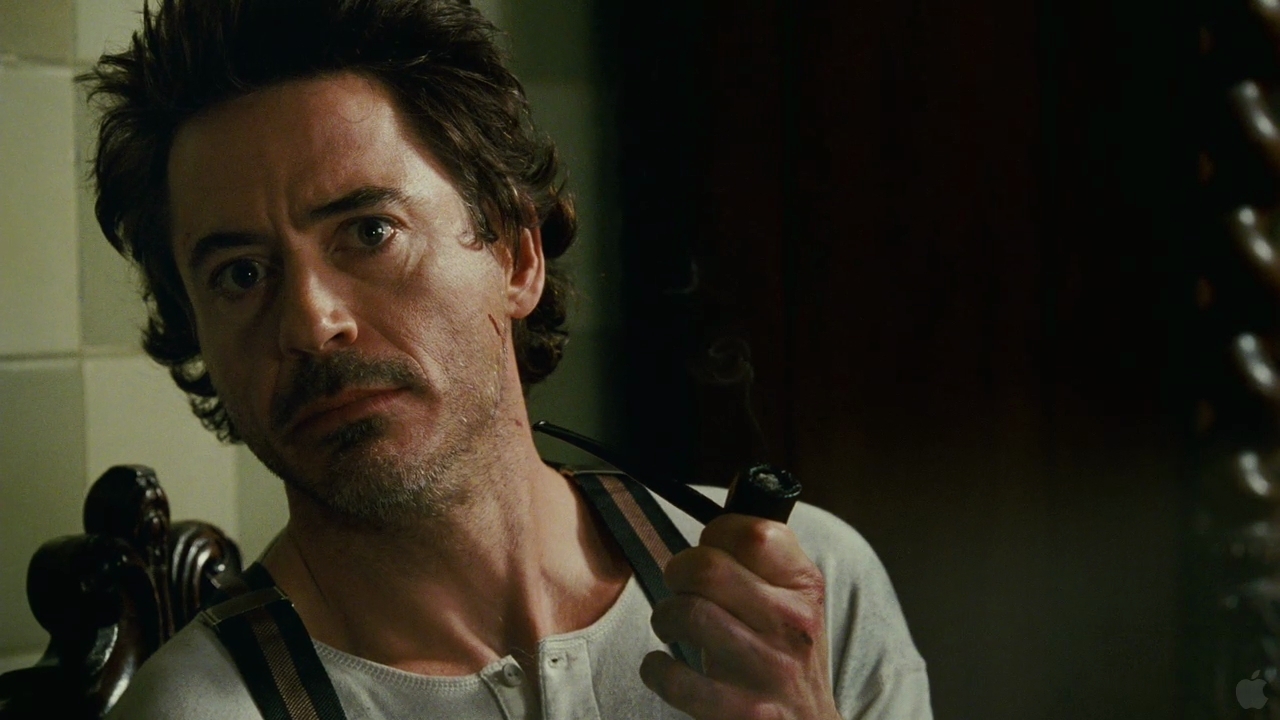
Robert Downey Jr's production company, Team Downey, produced its first feature, The Judge, and the verdict is a little mixed. One might dismiss this as a "vanity" project—he is headlining it, after all, if it wasn't such an effort to allow him to stretch out of his comfort zone as an actor (and Downey could hardly be said to have a "comfort zone") out of the iconic roles (Iron Man, Sherlock Holmes) that made him the most popular and successful actor in Hollywood.

And it is a bit of risk-taking on the actor's part. His smart-ass lawyer, Hank Palmer, is good—almost too good—at what he does in the courtroom. When asked how he feels defending the guilty, he shoots back "Innocent people can't afford me." Outside of the oak chambers, though, he's a bit of a mess. A lone wolf due to his off-putting sardonic nature, he's estranged from any family he's known; his wife is cheating on him and they're in the pre-nup phase of a divorce, and he has no contact with his family in his hometown of Carlinville, Indiana ("Grampa Palmer is dead to me," he says to his daughter when she asks why she can't go back there with him).
That's a particularly cruel and snarkily ironic way to say it to her, given the circumstances. Because he is going back home to Carlinville. His Mom is dead, and not just in a relationship way. She is dead, and he's been called home for the funeral after a decades long leave of absence. He hasn't been called by his father (Robert Duvall), who is a judge in Carlinville, but by his older brother Glen (Vincent D'Onofrio), who has never left. And so, Hank reluctantly but dutifully, drives to Indiana, knowing that disaster awaits him.

He doesn't know the half of it.

It's around this time (about fifteen minutes in) that The Judge gets in trouble, both in its story-line and behind the camera. Director David Dobkin (Shanghai Knights, Wedding Crashers) does a tight shot of Palmer driving back to Carlinville, pulls back from the SUV, then swoops around the vehicle to a high-overhead tracking shot of the surrounding (legitimately, quite lovely) countryside. It's a nifty high-tech shot, a combination of studio shot, motion graphics tracking and CGI.

But why? One could reach for an answer (moving from Palmer's self-contained city-view to the more bucolic , slower-paced country life of his youth), but...we're not there yet, and neither is the character. There is a lot of effort made to impress, and all quite unnecessarily. Dobkin is gilding the cinematic lily and without much rationale. That's a problem prevalent throughout The Judge, with an awful lot of craft going into too little art (one could say this about a lot of superhero movies, too). It times it distracts from what is going with the true focus of the story and where its strengths lie—situation and performance. Perhaps Dobkin didn't think he had enough to do, in which case, he hasn't learned one of the best rules of directing—do as little as possible. This flaw extends to camera placement and lighting, which is too often too dramatic—especially in the inevitable courtroom scenes, where it would appear none of the attorneys could actually read their notes, so dark and brooding is the lighting in these scenes (Spielberg's "prestige" cinematographer Janusz Kaminski did the photography).
"Justice is blind" they say
—probably because they didn't turn on the lights in the courtroom.
Yeah, it is dark in there, but one could say not much light is shed on the judicial process—this is more of a family drama, with familial conflicts representing the conflicts between judging and defending. Here, it's all tied up in a nice little bow. Soon after the funeral, the two Palmer's are locking horns, until the elder is placed under arrest for vehicular homicide—a felon the judge put away several years previously is out of jail and killed on the street, and the judge's car bears the marks of a collision with a body. The judge does not remember the incident—he swears he does not remember. And the animosity between father and son bubbles to the surface and becomes inextricably tangled with the advocacy/adversarial nature of court proceedings. Dad doesn't approve of his son's methods and so shuns his services for a defense; the son distrusts the father while also desperately seeking the approval the judge rarely dispenses. It's a torturous analogy—the two can only link and come to an understanding through the reversal of roles of judge to defendant and defense to prosecutor, and rely on their ingrained judicial respect to get at "the truth, the whole truth, and nothing but the truth."
So help me, God, I found the whole experience a little precious. Yes, there are interesting complications to distract: why the judge is reluctant to discuss the case for reasons physical, philosophical, and practical; the smarty-pants prosecutor (Billy Bob Thornton, bless him) whose ideals make him a vested opponent of the whole defense team; the victim's family whose vehemence only excludes torches and pitch-forks; and the township, which is divided between supporting the life-long judge and bringing him down for the justice he has meted out over the years.
The direction is problematic, but the performances can't be faulted across the line. Even Vera Farmiga, one of our best actresses, who is reduced to "the girlfriend" role, manages to rise to the occasion, and Downey and Duvall are well-matched flinty combatants, who, even as their characters veer off into territories that are hard to comprehend dramatically or logically (do either of these guys have any sense of self-preservation?) still manage to invest their characters with a sort of truthiness just short of perjury that makes one suspend disbelief...at least while the movie is going on. It's only in the cold light of deliberation that one comes up with a hung jury.