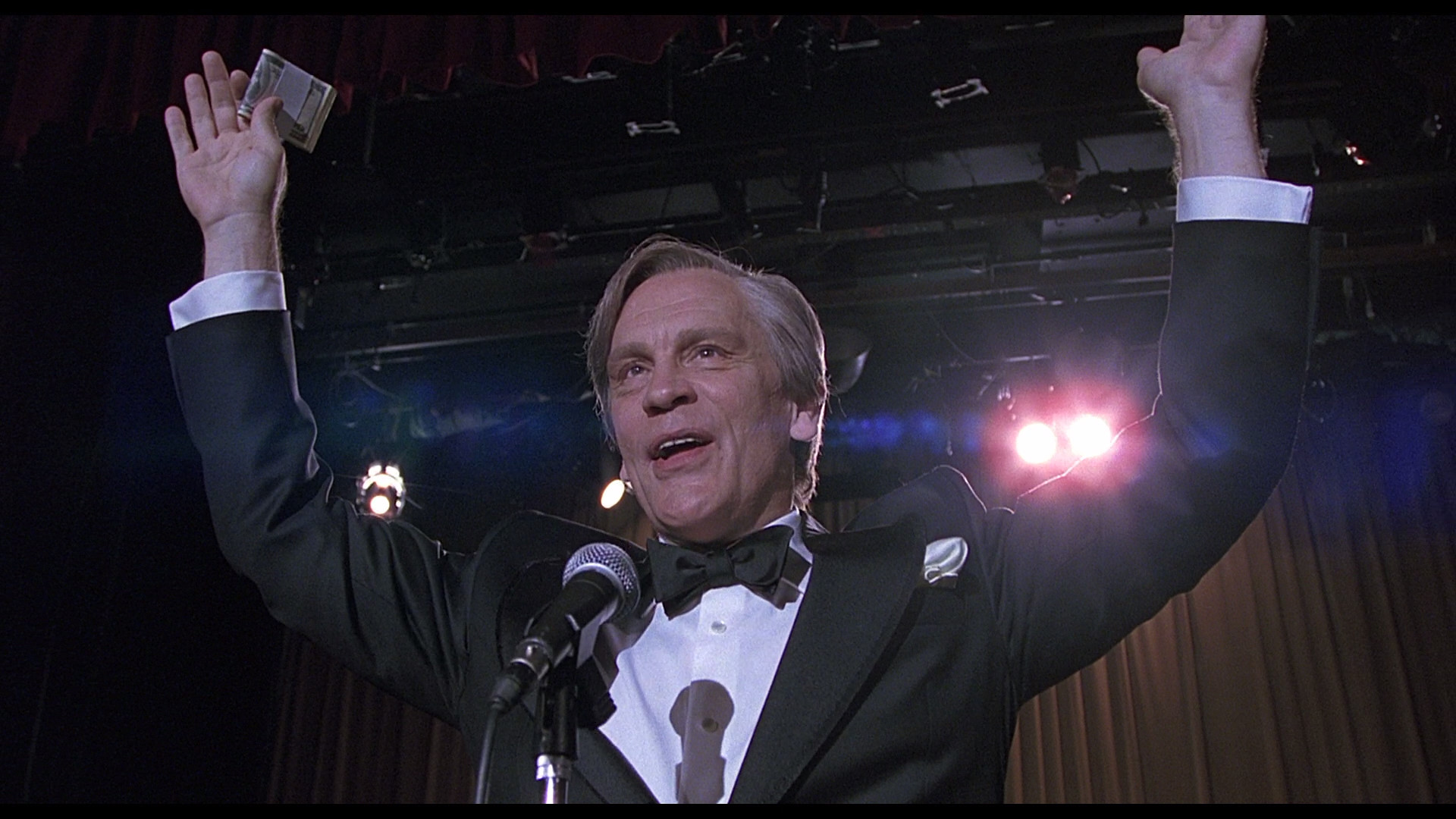
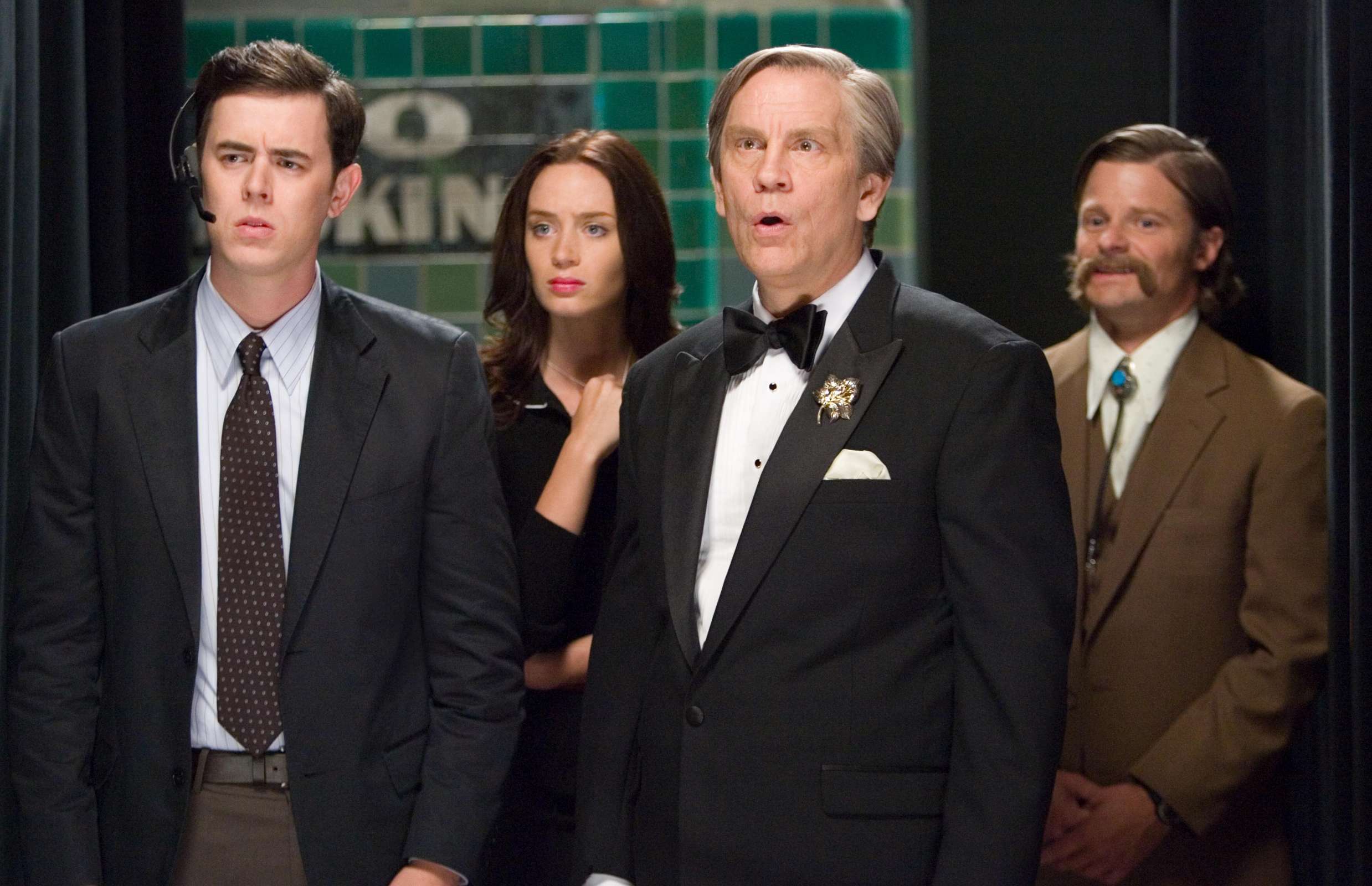
The Great Buck Howard (Sean McGinley, 2008) Writer-director McGinley spent some time as the road-manager to The Amazing Kreskin and that formed the basis for his script for this, a production of Tom Hanks' Playtone Pictures.
Looking at the promotional videos associated with the DVD, it would appear that Kreskin is fine with this, even though, in details, McGinley strikes rather close to the psychic bone here—yes, Kreskin in his hey-day appeared 61 times on "The Tonight Show with Johnny Carson." Yes, he would close his shows by guessing where an audience member had hidden his pay-check (and he always got paid). That's all duly served up as quirks of The Great Buck Howard, played somewhat petulantly by John Malkovich. But are the other things in the movie like this—the grandiose ego, the out-sized self-importance, the schticky "I love this town" facile platitudes, the dismissive photo distribution, the intolerance for deviation from formula, and the truculence that borders on vengefulness. Oh, Buck can be a good guy...on occasion...but mostly he's in one big perpetual snit that you don't need a mentalist to see coming. Which makes one wonder why someone would take the job in the first place.
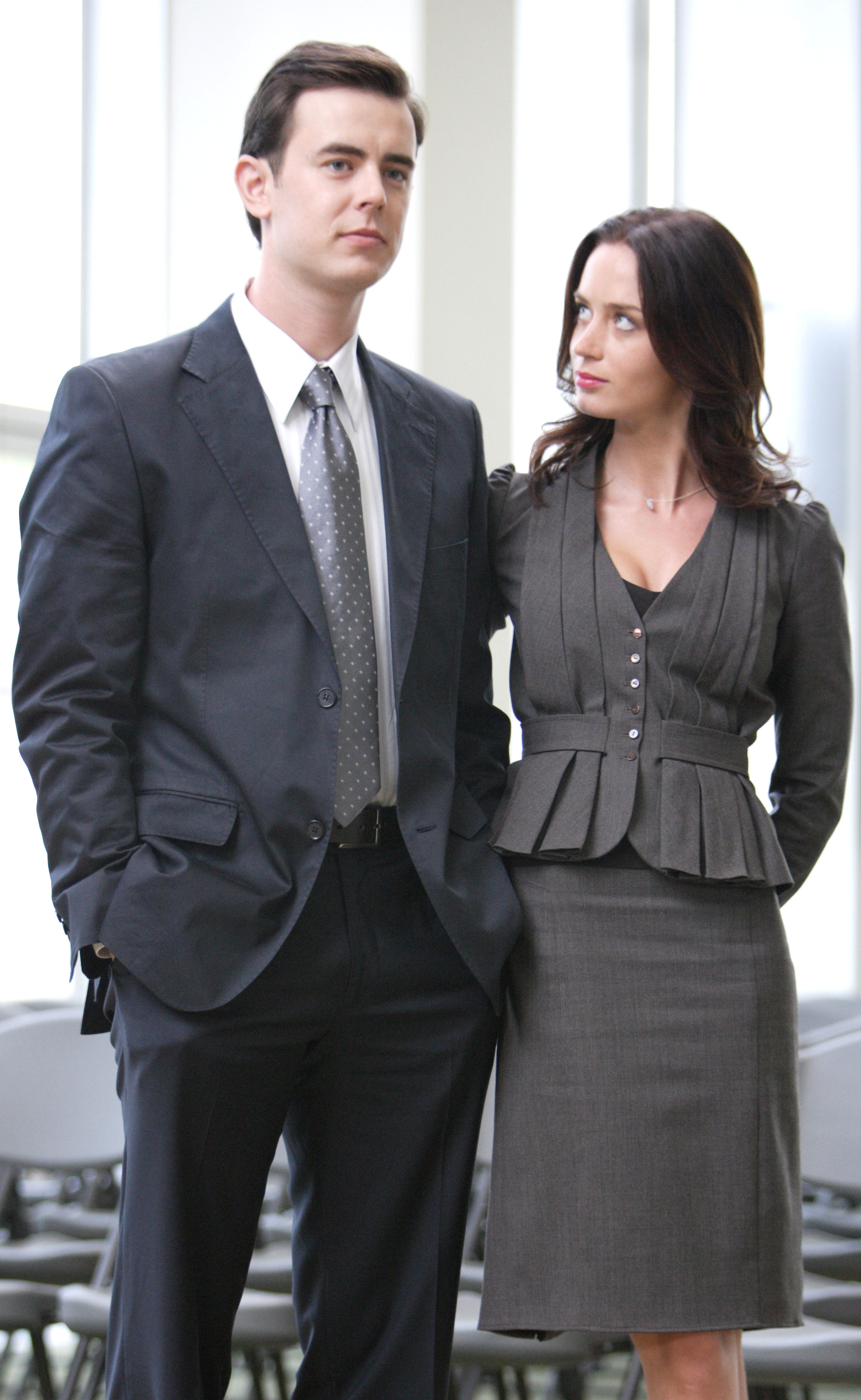
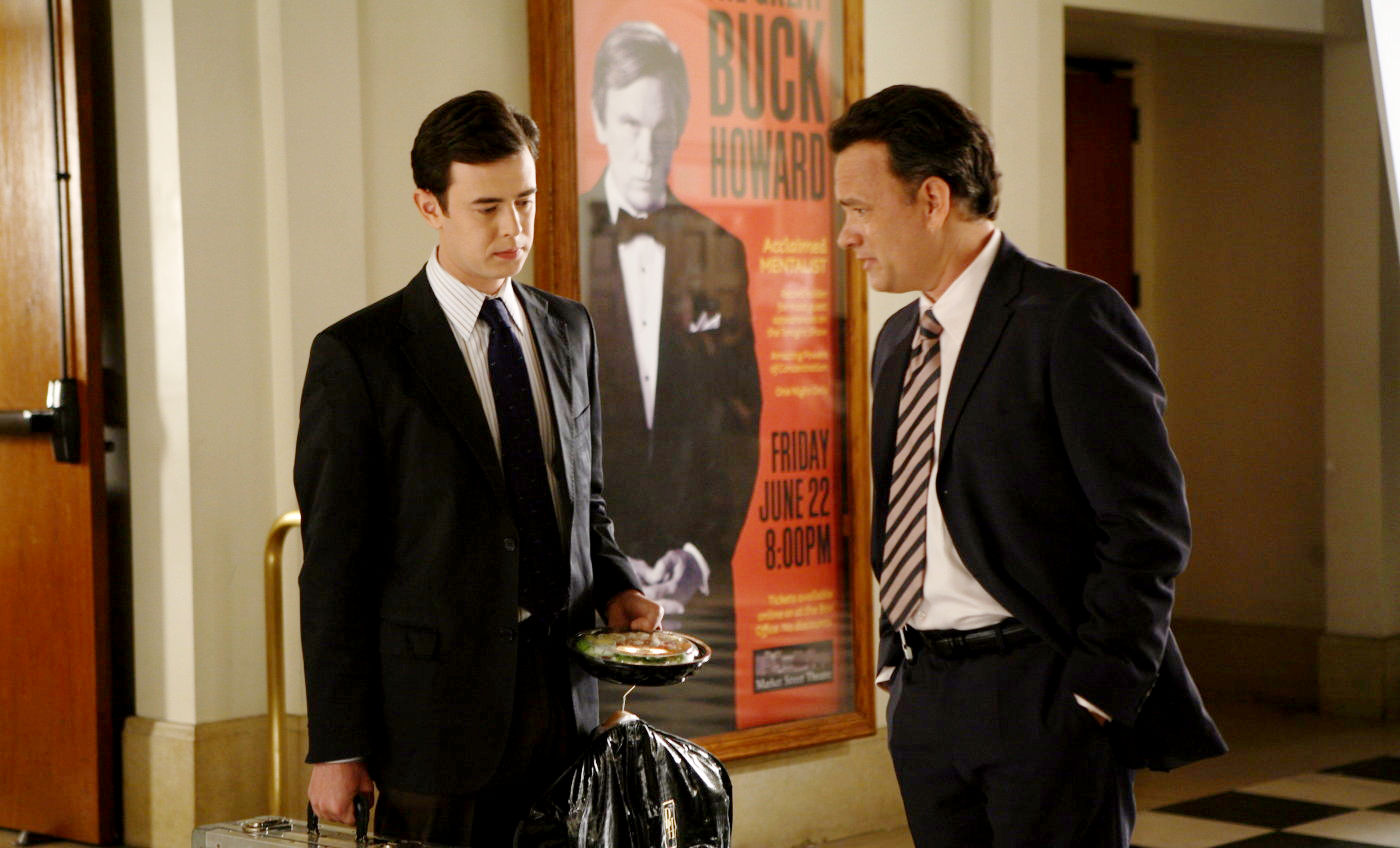
Troy Gable (Colin Hanks) drops out of law-school to be the personal assistant for "The Great Buck Howard," who is doing a cross-country tour of small town America, hoping to re-kindle some of the old magic of his mentalist show, when he was more famous...or famous at all. A publicity agent (Emily Blunt) is hired as point-person for interviews and "events" that tend to fizzle out, but she's only as effective as her sorcerous subject and he works best in a controlled environment, one under his control and can anticipate, and any deviation might throw him off.
The film has its charms for a one-sided coming-of-age story, mostly in the casting with Hanks the younger (Hanks the older plays his skeptical father in a nicely subdued and flinty cameo) as a fine, callow presence (most of his performance has to be done in the eyes in the course of observing the shenanigans, and, appropriately, Troy never takes his eyes off Howard, when the job might more appropriately call for his attention to be elsewhere. Blunt is great, as always, even if she isn't doing much more than 'love interest," and Malkovich does a tender walk between comedy and psychosis, cruel and entertaining in one flow. There's also some nice touches by Steve Zahn (a favorite of mine) and Ricky Jay, as bumps on the road-trip.
Still, the Kreskin connection bothers me, especially as the movie's mentalist is a bit of a jerk, never himself coming of age. I remember the film coming out and listening to Hanks (the younger) and McGinley do "press" and never once mentioning Kreskin. Nor did I hear anything else about the man through the film's admittedly short run. To see him come up so specifically and directly on the DVD was a bit of a surprise.
In fact, I don't remember him ever mentioning it, before I saw that supplemental feature.
Hmmm. Perhaps he is a clairvoyant, after all.
Showing posts with label Colin Hanks. Show all posts
Saturday, April 15, 2017
Wednesday, May 4, 2016
Elvis & Nixon
Mr. Tiger and The Boss Man
or
We Can't Go On Together With Suspicious Minds.
One of the most requested photographs in the history of the American National Archives is also one of the most unlikely and the one of the most trivial. Yet, that image is sold by the government on T-shirts, coffee mugs, magnets, totes, and (if they set their mind to it) could probably solve the National Debt just by the merch from this one image alone. Until such a time that the Archive starts selling Trump-Steaks, probably this one image—this one weird, unsettling image—has done a lot to generating income for the U.S. Government.
That, and Elvis stamps.
Which, by the way, is more than related. I'm talking about the not historic meeting on December 21, 1970 between Richard M. Nixon, President of the United States, and Elvis A. Presley, The King.
"The King of what?" grouses Nixon (Kevin Spacey) in the new version of the event, Elvis & Nixon (directed by Liza Johnson from a screenplay by Joey and Hanala Sagal and "farm boy" Cary Elwes). Presley is wondering that himself. He's getting heat from "'Silla," father Vernon, and the Colonel* for spending so much money on lavish Christmas gifts. When we first see him (in the form of Michael Shannon, a bit too grizzled for the role but not without its soft-spoken sympathies), he's alone, watching TV in the "television room" of Graceland, Dr. Strangelove (his favorite movie) on one screen, and the news on the others, giggling at one and becoming depressed to the point of shooting out the screen of the others.
Time to get a little air. For Presley, that usually means going out with his driver to get a maple bar, but in this case, it means going to the airport to book a flight back to LA. That's not a problem—money's not an issue and the gal at the ticket counter is only too hyper-ventilating to help—there is an issue with ID, as Elvis doesn't have any, save for a deputy badge from Shelby County, Tennessee. And then there are his guns, one in his shoulder holster and one in his boot. That gets him sent to security and a phone call is made to one of his "Memphis Mafia," Jerry Schilling (Alex Pettyfer), who is trying to make a career for himself behind the scenes in Hollywood. Schilling is a boyhood friend of Presley's, is aware of his eccentricities but also his power—"Does he have any kids?" is his question. A photo with the security head's daughters gets Elvis clearance to fly and he and Schilling meet up to talk about his real plan—to get a federal badge from the Bureau of Narcotics, which he thinks will give him carte blanche to fly whenever he wants without restrictions. He also thinks that being designated an undercover drug agent will give him freedom to deflect any questions about traveling. With the family coming down on him, freedom is on his mind. He is the King, after all...but he's not feeling very kingly at the moment.
But there is nothing more grandiose than the dreams of kings. Presley and Schilling jet off to Washington D.C. with the idea to request a badge from the President (who better?) or, barring that, from the head of the DEA. This causes a bit of a conflict with Schilling, who has to take time off work but also because he had plans later in the week to have dinner with his fiancee's family to ask for her hand in marriage. Both men on the flight have a sense of urgency to get the matter done in as timely a fashion as possible. On the plane, Presley writes a letter to Nixon requesting a meeting and consideration as an undercover narc, for the good of the country.
All true and documented. And so wildly preposterous that it really does seem like a true dream of kings. One wishes that the movie was more widely seen—it started disappearing from screens two days after it opened, probably because, really, who wants to see a movie about Nixon, and Michael Shannon is nobody's idea of a baby-faced Elvis—because it is an interesting, and funny, examination of power, perceived or otherwise. Everybody has an agenda, some more realistic than others, whether it's to curry favor by association or to just get an autograph for a family member ("The leader of the free world is taking orders from a 22 year old college student" Nixon grouses—again— at one point). Because what's the point of power—of celebrity or office—if it doesn't do some good for somebody.
There is no transcript of the meeting—Nixon hadn't started taping yet**—save for Egil "Bud" Krogh's (played by Colin Hanks) notes. So, it's mostly conjecture and projection (Here's something not in the movie—when Nixon ordered Krogh to get Schilling and Sonny West souvenir White House cuff-links, Elvis piped up "They have wives, too..."), but it's not a stretch to think both men did an uncomfortable dance around each other like the movie portrays, Elvis more comfortable with the privileges of largesse and using them, bending protocol, Nixon seeing similarities between the two as regards to the down-side of notoriety and maybe being a little swayed by Elvis' country charm and bullshit.
And they both had kids and soft-spots for them.
So, how are the actors? Spacey's the best, most accurate portrayal of Nixon I've ever seen and his mannerisms are seared into my memory, so all the faux-Rich Little impressions in the past (including Anthony Hopkins' miserable Oscar-nominated turn in Oliver Stone's film, and Bob Gunton's burlesque in the 1997 comedy version of the events, Elvis Meets Nixon) read more like caricatures and cartoons than any semblance to a real person. The same can be said with Presley (an entire industry has been built up around impersonations of Elvis and the male Sagal of the writing team has portrayed him in the past and plays an EP-impersonator to the polite amusement of the "real one" in a scene in the film), and one can say that this is one that doesn't fall back on cliché (except for a couple of "THENkew's"). His Elvis is a bit introspective, melancholy but plays the game, and has bursts of inspiration where he knows his personality can bridge gaps genuinely, even if most of those he encounters will never see him for who he is or was, only what he has become, very much a politician in his own right. A funny, wise little film about the oddness of power.
** The movie has a hilarious tagline: "On December 21st, 1970, two of America's greatest recording artists met for the first time."
or
We Can't Go On Together With Suspicious Minds.
One of the most requested photographs in the history of the American National Archives is also one of the most unlikely and the one of the most trivial. Yet, that image is sold by the government on T-shirts, coffee mugs, magnets, totes, and (if they set their mind to it) could probably solve the National Debt just by the merch from this one image alone. Until such a time that the Archive starts selling Trump-Steaks, probably this one image—this one weird, unsettling image—has done a lot to generating income for the U.S. Government.
That, and Elvis stamps.
Which, by the way, is more than related. I'm talking about the not historic meeting on December 21, 1970 between Richard M. Nixon, President of the United States, and Elvis A. Presley, The King.
"The King of what?" grouses Nixon (Kevin Spacey) in the new version of the event, Elvis & Nixon (directed by Liza Johnson from a screenplay by Joey and Hanala Sagal and "farm boy" Cary Elwes). Presley is wondering that himself. He's getting heat from "'Silla," father Vernon, and the Colonel* for spending so much money on lavish Christmas gifts. When we first see him (in the form of Michael Shannon, a bit too grizzled for the role but not without its soft-spoken sympathies), he's alone, watching TV in the "television room" of Graceland, Dr. Strangelove (his favorite movie) on one screen, and the news on the others, giggling at one and becoming depressed to the point of shooting out the screen of the others.
Time to get a little air. For Presley, that usually means going out with his driver to get a maple bar, but in this case, it means going to the airport to book a flight back to LA. That's not a problem—money's not an issue and the gal at the ticket counter is only too hyper-ventilating to help—there is an issue with ID, as Elvis doesn't have any, save for a deputy badge from Shelby County, Tennessee. And then there are his guns, one in his shoulder holster and one in his boot. That gets him sent to security and a phone call is made to one of his "Memphis Mafia," Jerry Schilling (Alex Pettyfer), who is trying to make a career for himself behind the scenes in Hollywood. Schilling is a boyhood friend of Presley's, is aware of his eccentricities but also his power—"Does he have any kids?" is his question. A photo with the security head's daughters gets Elvis clearance to fly and he and Schilling meet up to talk about his real plan—to get a federal badge from the Bureau of Narcotics, which he thinks will give him carte blanche to fly whenever he wants without restrictions. He also thinks that being designated an undercover drug agent will give him freedom to deflect any questions about traveling. With the family coming down on him, freedom is on his mind. He is the King, after all...but he's not feeling very kingly at the moment.
But there is nothing more grandiose than the dreams of kings. Presley and Schilling jet off to Washington D.C. with the idea to request a badge from the President (who better?) or, barring that, from the head of the DEA. This causes a bit of a conflict with Schilling, who has to take time off work but also because he had plans later in the week to have dinner with his fiancee's family to ask for her hand in marriage. Both men on the flight have a sense of urgency to get the matter done in as timely a fashion as possible. On the plane, Presley writes a letter to Nixon requesting a meeting and consideration as an undercover narc, for the good of the country.
All true and documented. And so wildly preposterous that it really does seem like a true dream of kings. One wishes that the movie was more widely seen—it started disappearing from screens two days after it opened, probably because, really, who wants to see a movie about Nixon, and Michael Shannon is nobody's idea of a baby-faced Elvis—because it is an interesting, and funny, examination of power, perceived or otherwise. Everybody has an agenda, some more realistic than others, whether it's to curry favor by association or to just get an autograph for a family member ("The leader of the free world is taking orders from a 22 year old college student" Nixon grouses—again— at one point). Because what's the point of power—of celebrity or office—if it doesn't do some good for somebody.
There is no transcript of the meeting—Nixon hadn't started taping yet**—save for Egil "Bud" Krogh's (played by Colin Hanks) notes. So, it's mostly conjecture and projection (Here's something not in the movie—when Nixon ordered Krogh to get Schilling and Sonny West souvenir White House cuff-links, Elvis piped up "They have wives, too..."), but it's not a stretch to think both men did an uncomfortable dance around each other like the movie portrays, Elvis more comfortable with the privileges of largesse and using them, bending protocol, Nixon seeing similarities between the two as regards to the down-side of notoriety and maybe being a little swayed by Elvis' country charm and bullshit.
And they both had kids and soft-spots for them.
So, how are the actors? Spacey's the best, most accurate portrayal of Nixon I've ever seen and his mannerisms are seared into my memory, so all the faux-Rich Little impressions in the past (including Anthony Hopkins' miserable Oscar-nominated turn in Oliver Stone's film, and Bob Gunton's burlesque in the 1997 comedy version of the events, Elvis Meets Nixon) read more like caricatures and cartoons than any semblance to a real person. The same can be said with Presley (an entire industry has been built up around impersonations of Elvis and the male Sagal of the writing team has portrayed him in the past and plays an EP-impersonator to the polite amusement of the "real one" in a scene in the film), and one can say that this is one that doesn't fall back on cliché (except for a couple of "THENkew's"). His Elvis is a bit introspective, melancholy but plays the game, and has bursts of inspiration where he knows his personality can bridge gaps genuinely, even if most of those he encounters will never see him for who he is or was, only what he has become, very much a politician in his own right. A funny, wise little film about the oddness of power.
* Born Andreas Cornelis van Kuijk in The Netherlands: fun fact.
** The movie has a hilarious tagline: "On December 21st, 1970, two of America's greatest recording artists met for the first time."
Subscribe to:
Comments (Atom)