Il Bidone (aka "The Swindle") (Federico Fellini, 1955) The Italian maestro in his hey-dey.
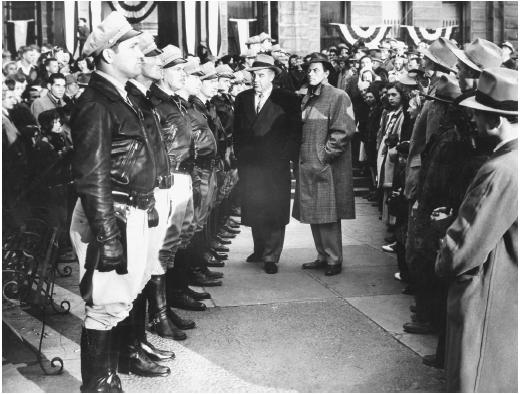
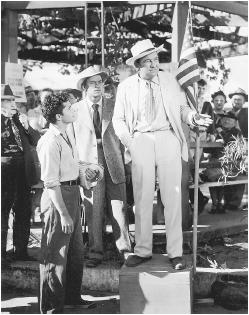
This 1955 film follows a trio of grifters—Augusto (Broderick Crawford), Picasso (Richard Basehart), and Roberto (Franco Fabrizi)—who are low-level con-artists in search of the Big Score—even a Ponzi scheme will do. They drive into a small village, all pomp and circumstance, with as much respectability as a disguise or a decent suit can buy. Then, with guile and a healthy disrespect for people's own need for "easy riches" or a "too-good-to-be-true" deal, bilk the citizenry out of as much cash as they can find lying around. As priests (using the respectability of the Church), they convince simple farm-folk of "buried treasure." On a grander scale, they're developers collecting down-payments on rooms to a vapor-hotel that will never materialize ("The economy's bad and we've suffered some set-backs").

For Picasso, there are dreams of becoming a famous painter (but in the mean-time he can forge a few masterpieces to get by, much to the chagrin of his long-suffering wife, played by the wonderful Giulietta Masina). Roberto, their chauffeur/get-away driver, is young to the game and is always looking for new angles so he can set off on his own crime-spree, free of "the losers" he thinks might be holding him back.
But, the leader of the group, Augusto, is feeling the advance of age and getting a little desperate; he hasn't achieved any real fortune, just what can be piffled away on a falsely high lifestyle and an evening of prospecting at the clubs (he's not a high-roller, but he has to play one and that can get "spendy"). He is torn. He wants the respectability that a really big perpetual con (like the kind found in government circles and among the constabulary) can bring. In essence, what this overlarge, over-age boy in big pants wants in reality is what he only play-acts in his livelihood—a man of respect, a high roller, an adult, or his imagining of what that is. For Augusto, he hits "the brick-wall of Reality," in the presence of his very real daughter, for whom he wants most to be seen as a man of accomplishment, instead of the fraud he pretends to be.

I started out this review saying "the Italian maestro in his hey-dey" and have come to this point wondering if that is true. I've often dismissed his latter films as inferior if more complicated and less grounded in reality to his 1950's films, which are more aspirational in nature. They're about wishing and hoping for success which eludes their protagonists—the street-performers of La Strada, the drifting men of I Vitelloni... and Cabiria. When director Federico Fellini became film-maker "Fellini," international artist, he seemed to lose that touch of "becoming," replacing it with observations of his new life "having made it," and finding it difficult to maintain as well as being empty, and finding it wanting. In a sense, Fellini was compiling an autobiography of his journey to success and beyond. Even his wife (Messina) complained that his Juliet of the Spirits wasn't about a woman's issues, but about his own. His movies about the glitzerati felt hollow and self-absorbed (appropriately).

But, the director still aspired, although he struggled for subject matter (see 8½) or funding, especially in his later years, despite his international reputation. He retreated to fantasies and circuses, reality being not enough—and maybe not too sure anymore about what reality actually was, surrounded as he was by reputation, the expectations of fame, and the glare of the spotlight. Simple virtues and humble origins cannot be found on the soundstages of Cinecitta, or the boardrooms of Titanus.
But, the aspirations continued. As if documenting Shakespeare's seven stages of life, Fellini's vision, aimed ever inward, began looking back, becoming nostalgic for those early times of "wanting" dreams, trying to reclaim them, make them real again. The films were not so much aspirational anymore, but seeking the times and memories of aspiration, when the world was full of possibilities, when wonder was more than kleig-lights and grease-paint, a fraud wanting to be real.