"Once upon a time in certain sections of the United States there were feuds that lasted from generation to generation. Men of one family grew up killing men of another family for no other reason except that their fathers had done so."
It's 1810 and the bitter feud between the Canfield's and the McKay's has been going on for some time. One night, Jim Canfield goes to the house of John McKay to kill him, but the confrontation leaves both men dead: McKay's wife takes his infant son away from the city of Rockville to New York to raise him in peace; Canfield's brother Joe (Joe Roberts) vows vengeance for his sibling's death. Trouble is there are no more Canfield's on which to take that revenge. Yet.
Twenty years later, young Willie McKay (Keaton) receives a cable from Rockville to claim his late father's property. Willie decides to go back to Rockville on a rudimentary proto-train that has none of the considerations of grading, geography or, for that matter, comfort. The bumping and jostling makes it very difficult to wear a top hat.


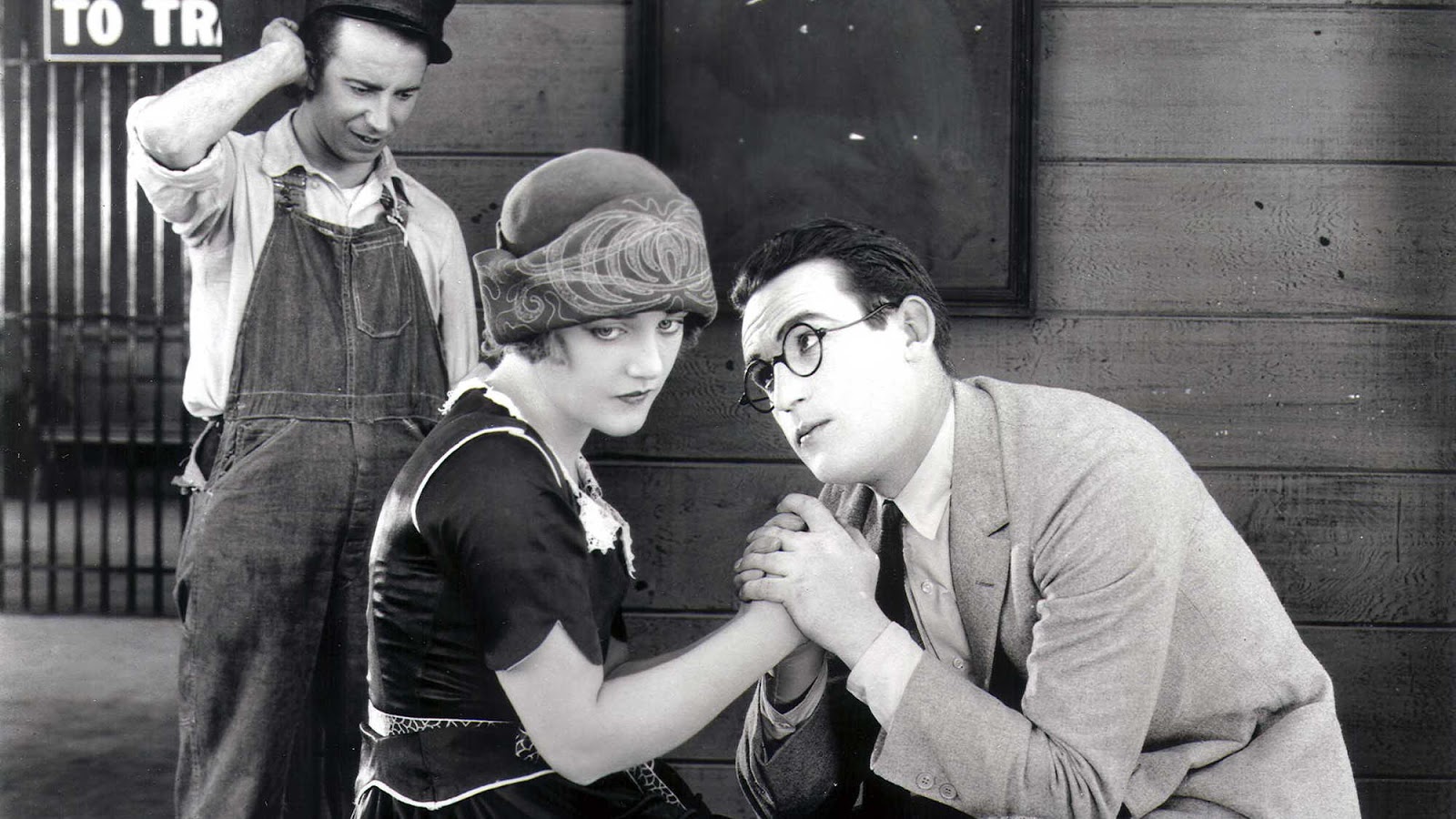
Keaton makes the most of it. And as it is set in the past with limited means of carrying out any murderous activities, the attempts can be rather tortured and frustratingly inept. And the comedy is built around Willie McKay's return to Rockville, where, first, he becomes quite infatuated with the elder Canfield's only daughter (played by Keaton's wife Natalie Talmadge*) and he makes himself attractively useful. Then, when he gets there, he saunters around town, coming into contact with Canfield sons—who have no idea that he is one of the hated McKay's.

For awhile, Keaton's McKay can walk around town without fear, but soon, he is recognized and the Canfield males take turns trying to shoot him with single-shot pistols, which need to be loaded before they can be shot again, and their range is limited, as shown in a sequence where McKay is shot at repeatedly, but nothing comes close, and McKay can only wonder what it might be that is hitting a nearby tree trunk.

But, the central absurdity is the core at the majority of the movie. Virginia Canfield invites Willie to dinner at her house to meet her family—she has no idea that he's a McKay. This complicates things. The Canfields are nothing if not traditional. Though they are surprised—and slightly appalled—to be hosting the young McKay for dinner, they would not think of trying to kill him while he is in their house. That's no way to treat a guest. However, should he step out of the house, he is an easy—and handy—target. This conceit inspires McKay to draw out his stay under the Canfield roof for as long as possible and avoid crossing the Canfield threshold. Despite this, there are many opportunities, either planned or accidental, to get McKay out of the house.

The other source of comedy is that Virginia, smitten with McKay, has no idea that her family wants to murder him, and all the males under the Canfield roof are united in the common deceit of who he really is. And when McKay does escape under disguise from the Canfields there begins a wild chase with a lot of stunts that involve sheer cliffs, dangerous rapids, and a precipitous water-fall, which becomes the setting for one of the best-timed and most dangerous stunts Keaton ever pulled off.

The transition from short to feature did nothing except show more Keaton—the gags and sequences are just as fast, just as dense, and just as entertaining. But, Keaton found that he could sustain a feature with a layered story-line, while maintaining his flexible every-man character, despite where he placed him.
Out Hospitality also has bit of the inspiration for Keaton's eventual masterpiece, The General. Buster Keaton, the director, was just getting started.

* Our Hospitality, centered around family, is a bit of a family affair. Not only is Keaton's wife featured as the romantic interest, but his father, Joe, plays the train engineer. And who plays Keaton's character as a baby? Buster and Natalie's son, Buster Jr.