Wednesday, March 4, 2015

Mr. Turner

"Hrn."*
or
"I Saw a Rohmer film once. It Was Kinda Like Watching Paint Dry"**

Mike Leigh's new film Mr. Turner is a 2 1/2 hour exploration of the habits, work and otherwise, of painter William J.M. Turner (portrayed by Timothy Spall), who was a catalyst for the transition from romantic realism to impressionism, work that suggested a subject while not imposing a strict technique to the work. The subjects were landscapes and reflected reality but did so in an unnatural way. Turner employed the most mixed of media—paint, water-colors and texturing from all sorts of sources, egg-whites, spit, dirt, grit, whatever it took to give substance to form, while satisfying the needs of patrons for an evocative scene to hang in the entryway that suggested the natural in man-made settings.

A man of unconventional technique would, naturally, have unconventional habits and Turner was everything but conventional. He could walk among the gentry and the hoi-polloi, putting up a good front of civility when comfortable. But, in private moments, he was a growling, harrumphing potato of a man, letting civility drop and being a very flawed human being.
It's always an issue making a movie about painters—at one time, you have to make the process of painting an interesting visual representation, evoking inspiration and artistry; at the same time there is the need to contrast the art and the life, creating drama that is lacking in the creative process.
Think about past flicks about painters—Lust for Life (Van Gogh), Moulin Rouge (Toulouse Lautrec), The Agony and the Ecstasy (Michelangelo), Pollock (mm-hmm), Girl with the Pearl Earring (Vermeer)—they succeed when they tell the story of a single work, and lose their way when trying to do a broad overview (except when psychosis is involved).
But psychosis is, at least, interesting. Self-possessed sloth is not. It is interesting to watch Spall wandering around seeking inspiration wherever he finds it—on the sea, in a brothel, in the street with Leigh trying to match the visual strategy (texture, color) with Turner's vision of the world. But, there isn't much of an arc of character in the film, merely in the public's perception of his work, which downgrades as its subject matter becomes more obscure and less tangible.
And less understandable. Not that Turner, the man, is any more penetrable, mostly unreadable, expressing himself with noncommittal grunts and growls. As Turner goes on his sorties, observing Nature, sketching the shape of things, experimenting with texture and color, we see the observation but not the process—we're never given the understanding, the interpretation, because Turner is so uncommunicative. We are privy to the inspiration and, once in awhile, the end result, but how it's gotten there remains a mystery.
Leigh seems to be aware of this, knows it's hopeless and illustrates the issue by putting in, as a major character, Turner's maid Hannah Danby (Dorothy Atkinson) who cleans, keeps inventory, cooks and provides the occasional sexual distraction; their relationship is one of mute complacency and compliance, and despite his name being the title, it is she you are left contemplating long after the movie ends. She is the only (other) character focused on throughout the entire movie. She is certainly the most sympathetic.
It draws me back to something writer John D. McDonald wrote to his correspondent, the comedian Dan Rowan (and documented in the book "A Friendship") about the latter's statement that he hated his soon-to-be-ex-wife; McDonald wrote "Love is not the opposite of hate; they're merely two sides to the same coin. The opposite of love is indifference."*** Turner is indifferent to just about everything except his appreciation for the artistic potential of Nature for subject matter, as well as the one warm relationship shown—to his father. Everything else is a manifestation of indifference, a limited focus of caring.  
It may be why his paintings are scarce of people, of figures in the landscape, and when they do appear, they are diminished, small and lost in the bigger picture. It's his preferable world-view, a pretty, dramatic world, certainly in motion but empty of life. It is a tough movie to sit through, and though it does inspire a plethora of post-screening thoughts, the actual sitting-through of it is (well) a lot like watching paint dry.
James Bond (Daniel Craig) contemplates Turner at The National Gallery
from Skyfall.
Mike Leigh's CGI recreation of that scene
from Mr. Turner.

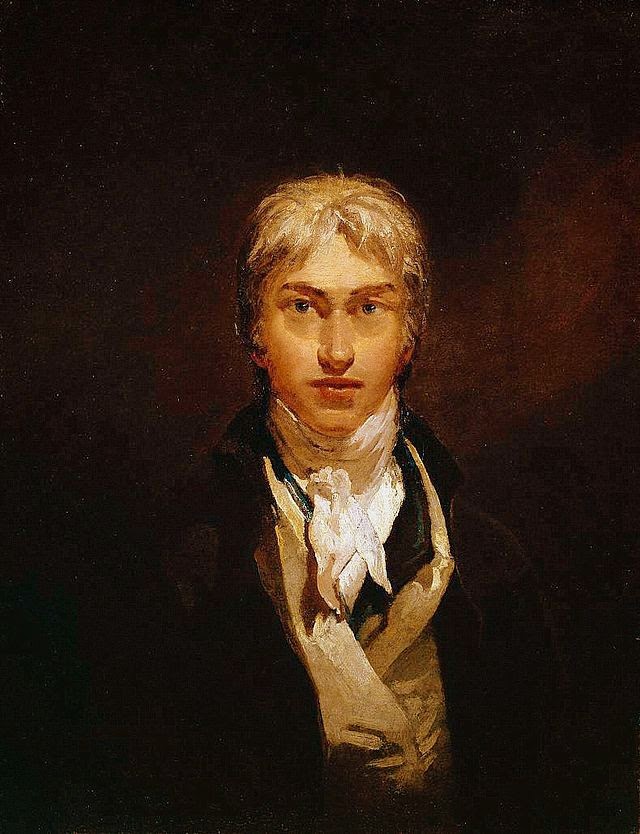
Portrait of the Artist as a Young Man

* That's the way Grant Morrison spelled an intrigued Batman grunting in his run on Justice League.

** From Night Moves (1975)

*** Elie Weisel used this observation in his 1986 Novel acceptance speech and is often credited with its creation.  MacDonald wrote it to Rowan in 1971—the book was published in 1986.

Tuesday, March 3, 2015

The History of John Ford: Drums Along the Mohawk

When Orson Welles was asked what movies he studied before embarking on directing Citizen Kane he replied, "I studied the Old Masters, by which I mean John Ford, John Ford, and John Ford." 

Running parallel with our series about Akira Kurosawa ("Walking Kurosawa's Road"), we're running a series of pieces about the closest thing America has to Kurosawa in artistry—director John Ford. Ford rarely made films set in the present day, but (usually) made them about the past...and about America's past, specifically (when he wasn't fulfilling a passion for his Irish roots). In "The History of John Ford" we'll be gazing fondly at the work of this American Master, who started in the Silent Era, learning his craft, refining his director's eye, and continuing to work deep into the 1960's (and his 70's) to produce the greatest body of work of any American "picture-maker," America's storied film-maker, the irascible, painterly, domineering, sentimental puzzle that was John Ford, John Ford, and John Ford.

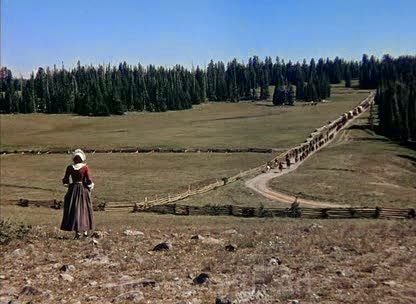
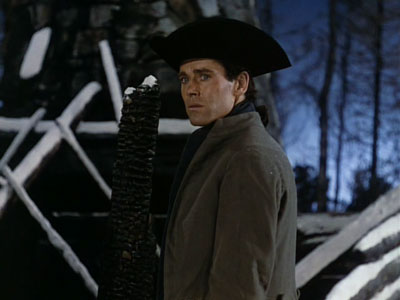
Drums Along the Mohawk (John Ford, 1939) "Every generation must make its own way—in one place or another"—so director Ford caps the start of his career-long history of the United States...with a wedding, for this earliest episode in that timeline. The year is 1776, but instead of the politicians haggling over language in Philadelphia meeting rooms, he's—again—on the frontier, a couple day's ride from Albany, New York. Gil Martin (Henry Fonda) and his new wife Lana (Claudette Colbert) are embarking on a mission, just as the newly formed states are, "to form a more perfect union."  

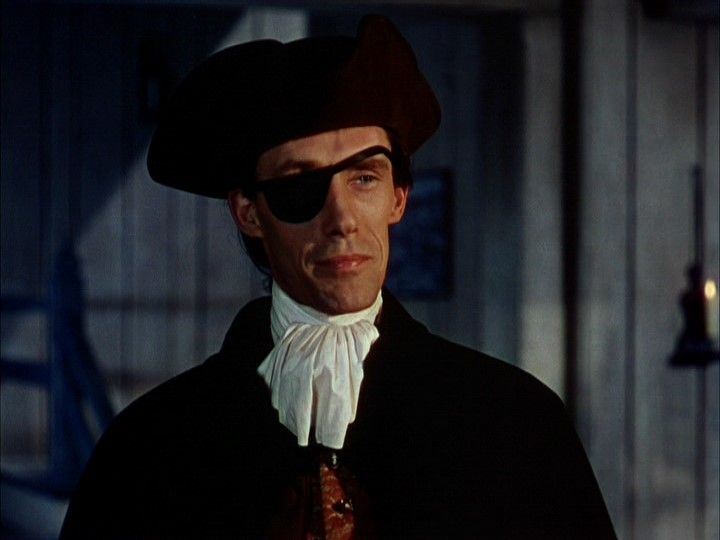
It won't be easy for either organization, with threats, both internal and external. There are attacks by Natives against the encroaching settlers (but, even here, Ford has them blameless—if brutally opportunistic—as the Iroquois are taking their orders from a Tory agent, played by an eye-patched John Carradine, who is paying the tribe for their berserker destruction of the homesteads, burning everything—buildings, crops and possessions—down to the bare Earth, leaving nothing, not even anything the tribe could steal or profit by), internal strife among the villagers, and the hard-scrabble existence that tests the fiber of the town-folk.
Before long, the citizens are driven to the local fort housing the militia, always at the ready for a call to arms from General Washington. In the meantime are the struggles to maintain a family, order, and petty grievances that threaten to disrupt the community from within. But, a shared sense of purpose—community-building reflecting the larger picture of nation-building, pulls the majority of them through.

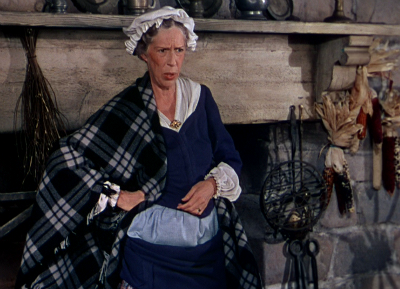
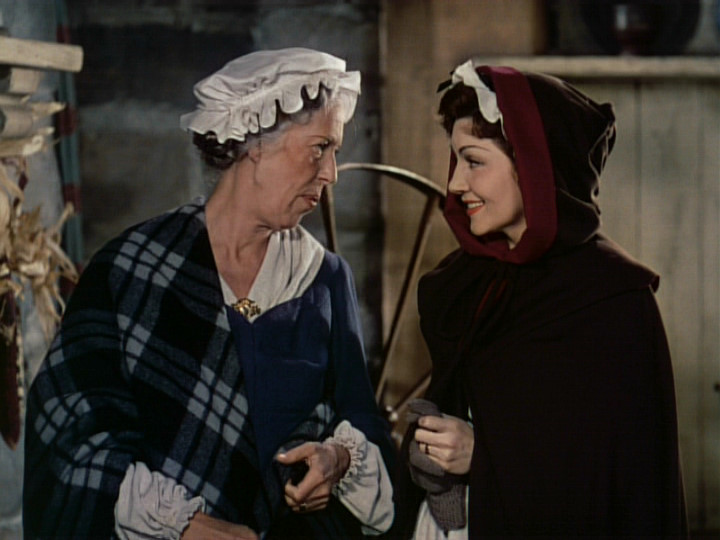
Early on, Gil and Lana are burned out of their humble cabin-home, built by Gil. They take up lodgings with the widow McKlennar (Edna May Oliver) as workers and soon, are back on their feet, on a par with everyone who has suffered hardships.
This is Ford's first film in color, and it's eye-popping Technicolor, and the director, who was discriminating in his choice of which format to use—his last two were in monochrome—fills the screen with detailed color; the very first shot, after the needle-pointed credits, is a pull-out from the bouquet that Lana is holding at her wedding, and there are fiery sunsets and sunrises framed in the same Ford-fashion, with just the right amount of horizon for contrast. The greens are the most verdant, and fire seems to play an important part of the scheme of things, the flaming colors unnatural against a pastoral backdrop.
Fire figures in a violent double-whammy that strikes one unexpectedly towards the end of the film, as a scout (played by Francis Ford, the director's brother) is wheeled out in front of the fort in a wagon of straw, which is then set alight by torches and flaming arrows.* Just when that scene is set in the mind, one of the settlers (played by Ford stock-player Ward Bond) is shot in the shoulder with a flaming arrow. A flaming arrow. Okay, sure, the arrow is a special effect on a wire, but the fire is real and Bond and his clothing are just as flammable as the next guy and his clothing. The level of violence is turned up just a notch from what one might expect, and one is taken aback by it.
Ford could do that—make you feel all-complacent and tear the Navajo-rug out from under you.

But it's a great movie. Action-oriented, with the only difference being that the significant events—the bigger picture—is all happening off-screen, rather than being part of the tapestry of events. Ford would be doing that in the future (both in his career and the events that shaped the country), but this is a very fine beginning.
Ford's first film in color—and Technicolor, at that—does not disappoint.


* It works just as dramatically here as it did in 1987, when Kubrick used something similar in Full Metal Jacket.

Sunday, March 1, 2015

Don't Make a Scene: Passion Fish

The Set-Up: "Tell Me a Story." During the month of February, (and beyond, as it turns out) we'll be showcasing scenes that feature a story in the midst of the narrative. That story may couch the plot in a new light; it may illuminate themes or present a back-history. It may be just a distraction. It may be a side-story that resonates throughout the film and casts its teller (or its subject) into the affections or disaffections of the audience, making him immortal no matter how short their amount of screen-time.  

"I didn't ask for the anal probe."  

Back when I worked for a recording studio, I heard a lot of stories. A lot of stories from actors, who were complaining about conditions they were working under—the usual reaction from people is "So what, you're an actor!"

But my reply was always "I didn't ask for the anal probe," which usually got me quizzical looks. It was always said in sympathy and solidarity, but I usually had to explain that it came from John Sayles' little seen but lovely movie Passion Fish. A lot may be forgotten about this film, but this scene has never left me. It is a gold nugget in a fine film, that shows up, plants itself in your memory and leaves (as does the character) never to be seen again.

The actress doing the monologue is Nancy Mette, who had worked with Sayles before, and she is given this little gem of a scene, all for herself, the camera by and large on her, her moment in the sun. This scene is immortal. And Mette's playing of it is brilliant, combining a full range of emotions, but ultimately melancholy and comic.

I hope somewhere actors are using this scene for auditions (although it would be a real acting challenge to try to top Mette), if only as a little defiant education to directors and casting agents about the casual crushing that is done on a daily basis.

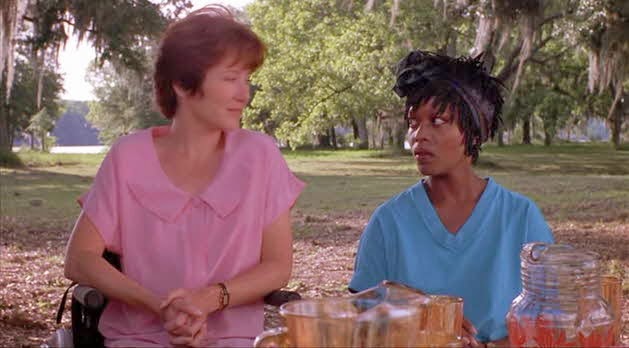
The Set-Up: Successful soap opera actress May-Alice Culhane (Mary McDonnell) is paralyzed in an automobile accident and becomes wheelchair-bound. No longer able to act, she moves back to her Louisiana family home to get away from her previous life and the reminders of what she has lost. After a series of failed caregivers, she is able to move past her grief with Chantelle (Alfre Woodard) and the two women develop a friendship beyond their roles as patient and nurse. One day, May-Alice is visited by some actress-colleagues from her soap days.

Action (gimme a series of three).
KIM: One more year of daytime.  Save my money. I am going to quit. 
KIM: I'm going to go back to class, and I'm going to do theater.
RHONDA: Ah-hah!  I think I've heard this one before.
MAY-ALICE: I've said that one before.
NINA: "I didn't ask for the anal probe." 
NINA: Hm. 
NINA: Four years starving in New York, doing showcases I had to pay for myself.
NINA: That was my first big break.
(Nina shakes her head ruefully and laughs)
NINA: My first feature -- this, like, zero-budget movie about people who were taken up into alien spaceships and given physicals against their will -- 
NINA: I go in for the audition and the director is really intense and mysterious, and he has me sit with my eyes closed and free associate, right? We do these improv's about the aliens representing our most primal fears and...it's great!
NINA: Finally, some real acting! And they tell me before I leave that I've got the part! 
NINA: Only I don't know what it is yet, but I'm so thrilled because it's this feature, you know? It's not a student film or anything. So the agent gives me my script and I go through it looking for Margaret, the part that they say I have, and I've got my yellow underliner marker in my hand, only it's drying out, and finally I find only one page with the corner folded over, 
NINA: ...and I'm in this therapy group of these people who have had these alien physicals, and I've got only one line: 
NINA: "I didn't ask for the anal probe."
MAY-ALICE: Not much to build a character on...
NINA: But I'm a professional, right? 
NINA: I prepared! I had backstory on this woman! I knew that she had been to the hairdresser before she came to the therapy group. 
NINA: I knew that she didn't trust that guy who sat next to the fuchsia. I knew that she turned the TV set on the minute she got back to her apartment, just for the sound of it. 
NINA: And I even had my boyfriend, my boyfriend at the time...with a thermometer, you know, um, for the sense memory, right? 
NINA: I was loaded for fucking bear! 
NINA: So finally it comes time to shoot the scene. And they do one take of the wide shot and they stop before my line!
NINA: I was terrified that they were gonna cut it. They move in for reaction shots, close-ups, mostly things that mean that I have to go and sit outside because the camera is set up where my chair is. Well, by the time they get to me,... 
NINA: ...the crew is grumpy because it's late...
NINA: ...and they're non-union and they don't get paid extra for overtime.
NINA: The lead actor is gone. He's got his shrink appointment and...
NINA: I'm alone! 
NINA: And I'm staring at this piece of tape stuck to a stand next to the camera and... 
NINA: ...the director says, "Okay. Uh. Let's try it a few times without cutting and, uh, show me a few different colors."
(Nina pauses dramatically) 
NINA: "I didn't ask for the anal probe." 
(pauses again) 
NINA: "I didn't ask for the anal probe!" 
NINA: (Pauses again, makes an angry face) "I didn't ask for the anal probe!"
(Pauses, looks sad)
NINA: "I didn't ask for the anal probe." 
(She breaks character.) 
NINA: That was it.
(smiles)


Passion Fish

Words by John Sayles


Pictures by Roger Deakins and John Sayles


Passion Fish is available on DVD from Sony Pictures Home Entertainment.